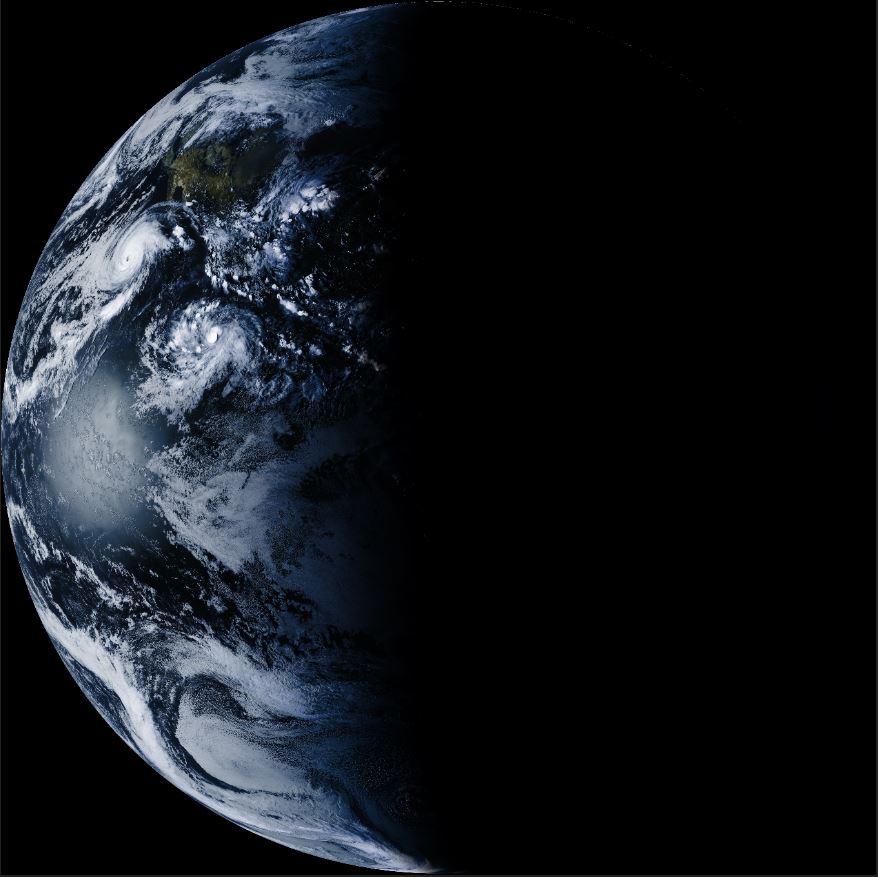
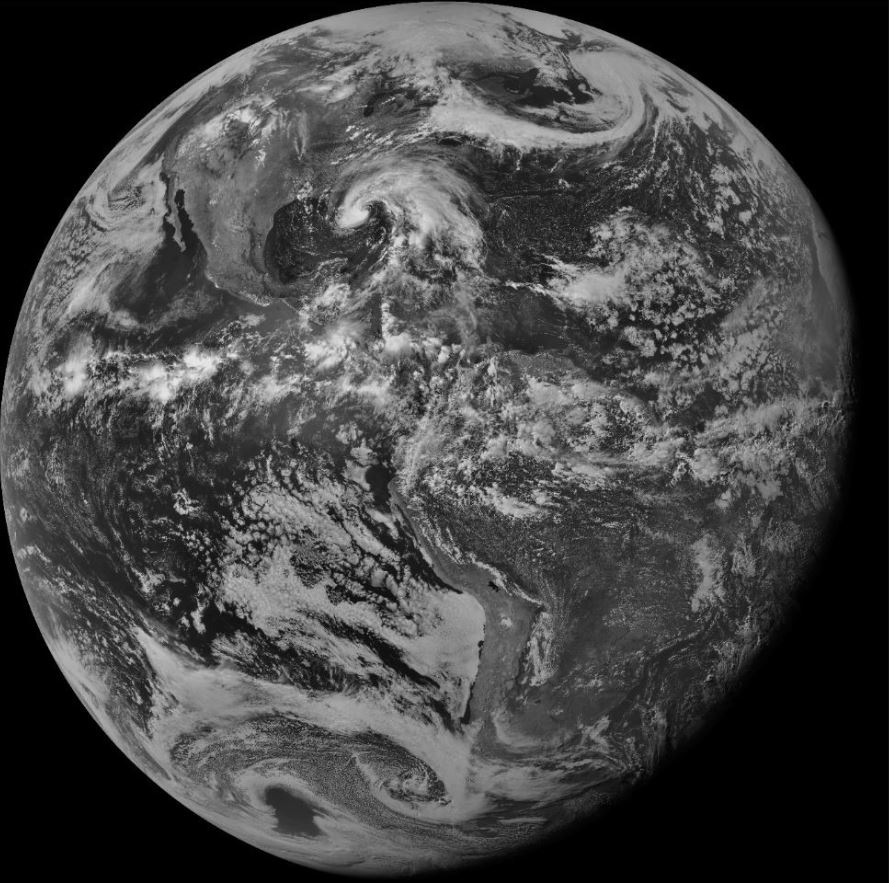
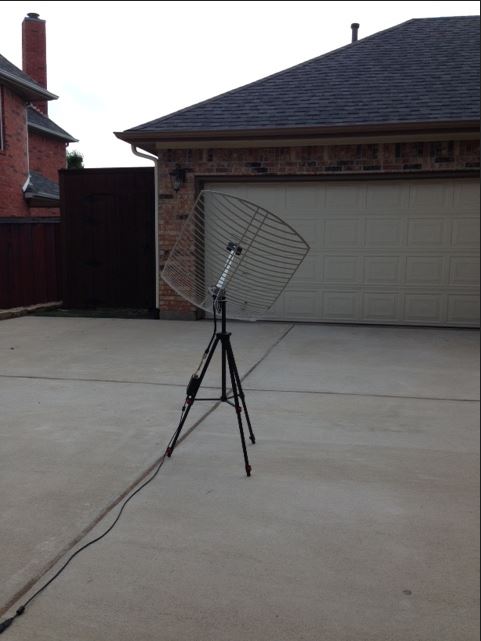
USA-Satcom has just released v2.1.0.0 of the XRIT Decoder. Along with enhancements for the XRIT Decoder, a new RSP Streamer X has been released and is operable with the RSP1A, RSP2, and RSPduo – new features include operation with two streams simultaneously (provided that the PC being used has sufficient processing power and an RSPduo or more than one compatible RSP are being used). Also new is the XRIT File manager which allows for improved operation with both LRIT and HRIT files, improved LUT for excellent false color images, user-selectable automated black filling of the white background on full disk visual and false color HRIT images, and country as well as state map overlays.
Small satellites, which typically refers to spacecraft in the kilogram to a few hundred kilograms range, have become in the past few years a large and growing part of what is happening in space. Smallsats have actually been around since the start of the Space Age. Just a few years after Sputnik reached orbit, the first amateur satellite reached orbit as well. (See A Brief History of AMSAT.) Note that “amateur” here refers primarily to the involvement of the amateur radio community and the use of amateur radio bands for communications with the satellites.
For decades, smallsats remained a niche activity carried out mostly by AMSAT and university student teams. Now companies like Planet and Spire operate hundreds of satellites in orbit for commercial purposes and constellations with thousands of satellites are set to be deployed during the coming years.
After referring to the 84 kg Sputnik, launched in 1957 as a “small satellite,” Dr. Patterson discusses the three keys to the growth of the small sat industry: affordability, responsiveness and shorter development cycles. And because the barrier to entry is so much lower for small satellites, more and more small companies begin to come online bringing a lot more competition, which brings a lot more good ideas to the table.
This setup uses off-the-shelf components, is really easy to put together, and is comparatively low in cost. A key component of the low-cost HRIT/LRIT system is a new LNA [Low Noise Amplifier] for GOES satellite reception that NooElec, Inc. has been developing (currently described as the SAWBird GOES, though the name is subject to change when it goes into volume production). The SAWBird GOES was obtained as an Engineering Sample (for a fee) from NooElec, Inc. through their support department. The key elements of the system are as follows:
Check out the exotic sounds of Saturn as derived from the radio transmissions generated by waves in the plasma (ionized particles) between Saturn and the rings and the satellite Enceladus:
New research from NASA’s Cassini spacecraft’s up-close Grand Finale orbits shows a surprisingly powerful and dynamic interaction of plasma waves moving from Saturn to its rings and its moon Enceladus. The observations show for the first time that the waves travel on magnetic field lines connecting Saturn directly to Enceladus. The field lines are like an electrical circuit between the two bodies, with energy flowing back and forth.
Researchers converted the recording of plasma waves into a “whooshing” audio file that we can hear — in the same way a radio translates electromagnetic waves into music. In other words, Cassini detected electromagnetic waves in the audio frequency range — and on the ground, we can amplify and play those signals through a speaker. The recording time was compressed from 16 minutes to 28.5 seconds.
Much like air or water, plasma (the fourth state of matter) generates waves to carry energy. The Radio Plasma Wave Science (RPWS) instrument on board NASA’s Cassini spacecraft recorded intense plasma waves during one of its closest encounters to Saturn.
“Enceladus is this little generator going around Saturn, and we know it is a continuous source of energy,” said Ali Sulaiman, planetary scientist at the University of Iowa, Iowa City, and a member of the RPWS team. “Now we find that Saturn responds by launching signals in the form of plasma waves, through the circuit of magnetic field lines connecting it to Enceladus hundreds of thousands of miles away.”
Sulaiman is lead author of a pair of papers describing the findings, published recently in Geophysical Research Letters.
The interaction of Saturn and Enceladus is different from the relationship of Earth and its Moon. Enceladus is immersed in Saturn’s magnetic field and is geologically active, emitting plumes of water vapor that become ionized and fill the environment around Saturn. Our own Moon does not interact in the same way with Earth. Similar interactions take place between Saturn and its rings, as they are also very dynamic.
The recording was captured Sept. 2, 2017, two weeks before Cassini was deliberately plunged into the atmosphere of Saturn. The recording was converted by the RPWS team at the University of Iowa, led by physicist and RPWS Principal Investigator Bill Kurth.
The GRL research is available on the American Geophysical Union’s website:
The Cassini-Huygens mission is a cooperative project of NASA, ESA (European Space Agency) and the Italian Space Agency. NASA’s Jet Propulsion Laboratory, a division of Caltech in Pasadena, manages the mission for NASA’s Science Mission Directorate, Washington. JPL designed, developed and assembled the Cassini orbiter. The RPWS instrument was built by the University of Iowa, working with team members from the U.S. and several European countries.
The astronomer, Scott Tilley, spends his free time following the radio signals from spy satellites. On this occasion, he was searching in high-Earth orbit for evidence of Zuma, a classified U.S. satellite that’s believed to have failed after launch. But rather than discovering Zuma, Tilley picked up a signal from a satellite labeled “2000-017A,” which he knew corresponded to NASA’s IMAGE satellite. Launched in 2000 and then left for dead in December 2005, the $150 million mission was back broadcasting. It just needed someone to listen.
Scientists who had worked previously on the IMAGE ( Imager for Magnetopause-to-Aurora Global Exploration) project are hoping to resume their studies with the satellite, which had been quite productive:
Prior to its failure, IMAGE was already considered a successful mission. The half-ton satellite’s instruments served as a sort of telescope, providing a global view of charged particles captured in Earth’s magnetic field. IMAGE’s instruments captured energetic neutral particles ejected by collisions of atoms in the inner magnetosphere, creating a broad-scale picture of that region and its interactions with the sun. It’s a capability that has never been replaced, Reiff says. “It is really invaluable for now-casting space weather and really understanding the global response of the magnetosphere to solar storms.”
During its extended mission, however, IMAGE’s signal winked out just before Christmas in 2005. The mission had been working perfectly up to that point; NASA eventually attributed the loss to a misfire of the controller providing power to the satellite’s transponder. It remained possible, however, that IMAGE could reset itself during points in its orbit when Earth eclipsed its solar panels for an extended time, draining its batteries. Such eclipses occurred last year—and 5 years ago—perhaps triggering its rebirth.