Category Archives: Education

Story Time from Space – ISS astronauts read children’s space books

In the new Story Time From Space (STFS) project, ISS crew members will read from a selection of books aimed at kids. There is a  a Kickstarter campaign to fund STFS publicity and distribution of their materials.

Story Time From Space
Now Available to the Children of Earth

Stories read by astronauts on the International Space Station now available online.

HOUSTON, TX, May 7, 2014 – In another space flight first, Story Time From Space (STFS), partnered with Center for the Advancement of Science in Space (CASIS), has debuted the first children’s book reading from the International Space Station on www.storytimefromspace.com.

“What you cannot imagine, you cannot do,” said Alvin Drew, NASA Astronaut and co-founder for STFS. “It is incredible to see this exciting concept finally debut online. The videos paired with the cross content curriculum will be a powerful tool for educators and families”

Five books by astrophysicist and author Jeffrey Bennett launched to the International Space Station on January 9 aboard the Cygnus spacecraft. The first book making an appearance on the website is “Max Goes to the International Space Station” read by astronaut Mike Hopkins from the space station’s seven window observatory known as the Cupola. The story follows Max the dog as he learns about life on the space station and explores the unusual effects of microgravity.

The books were selected by the founders Alvin Drew and space educator Patricia Tribe for their solid science and inspirational stories. The content makes the books a perfect spring board for the coming science demonstrations that will be flown in the fall. Nine experiments designed by veteran astronaut Bjarni Tryggvason will be conducted on the space station then used to develop curriculum to complement the science concepts in each book.

“The equipment we are building to fly to the space station is fairly sophisticated,” said Bjarni Tryggvason, veteran astronaut and lead science developer for STFS. “For instance, we are flying a spectrometer that will measure wavelengths of light as the sun rises and sets through the Earth’s atmosphere. This information gives us fantastic data on the atmosphere’s composition and has interesting applications for understanding climate change.”

Story time From Space is a project of the Global Space Flight Education Foundation, a 501(c)(3) nonprofit and plans to make the STFS content available for free to families, schools and libraries. To fund the distribution and program expenses, STFS has launched a Kickstarter campaign.

###

About Story Time From Space:
Story Time From Space (STFS) is a project of the Global Space Flight Education Foundation, a 501 (c)(3) nonprofit. The group has partnered with NASA and CASIS to have books read in space as part of an innovative program to combine science and literature. For more information visit www.storytimefromspace.com

About CASIS:
The Center for the Advancement of Science in Space (CASIS) was selected by NASA in July 2011 to maximize use of the International Space Station (ISS) U.S. National Laboratory through 2020. CASIS is dedicated to supporting and accelerating innovations and new discoveries that will enhance the health and wellbeing of people and our planet. For more information, visit www.iss-casis.org.

About the ISS National Laboratory:
In 2005, Congress designated the U.S. portion of the International Space Station as the nation’s newest national laboratory to maximize its use for improving life on Earth, promoting collaboration among diverse users, and advancing STEM education. This unique laboratory environment is available for use by other U.S. government agencies and by academic and private institutions, providing access to the permanent microgravity setting, vantage point in low Earth orbit, and varied environments of space.
Payload Carrier for small experiments ready for XCOR Lynx flight test

An announcement from Citizens in Space:

New Space Research Platform Ready For Flight Test
Lynx Cub Payload Carrier Developed at Texas A&M

College Station, Texas (May 7, 2013) – The United States Rocket Academy announced the delivery of the first Lynx Cub Payload Carrier, a new research platform which promises to dramatically reduce the cost of access to space for small scientific and education payloads.

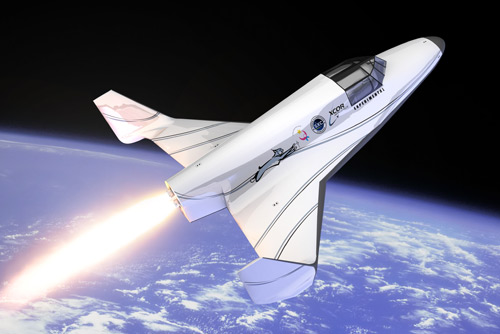
The Lynx Cub Carrier will fly on the XCOR Lynx spacecraft, which is now under construction at the Mojave Air and Space Port.

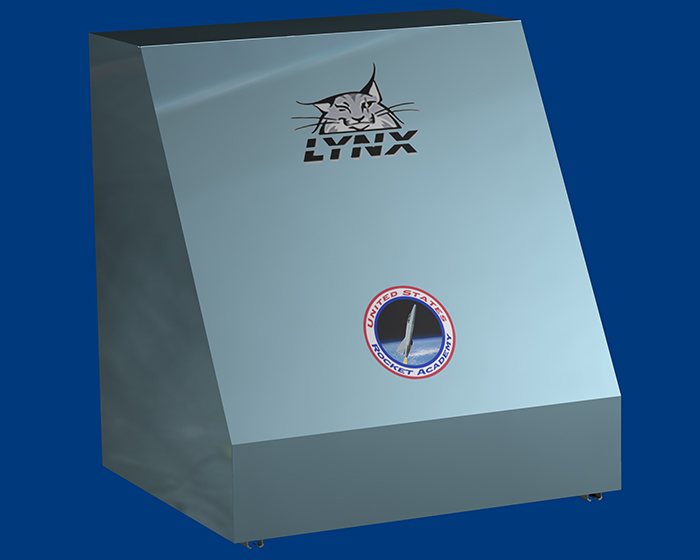
Lynx Cub Payload Carrier (artist's concept)Lynx Cub Payload Carrier

“The Lynx Cub Payload Carrier is a versatile system that installs in the Lynx cabin, behind the pilot’s seat, allowing small experiments to be carried as secondary payloads on any Lynx flight,” said United States Rocket Academy chairman Edward Wright. “The Cub Carrier can be installed and removed quickly for frequent, low-cost flight opportunities.

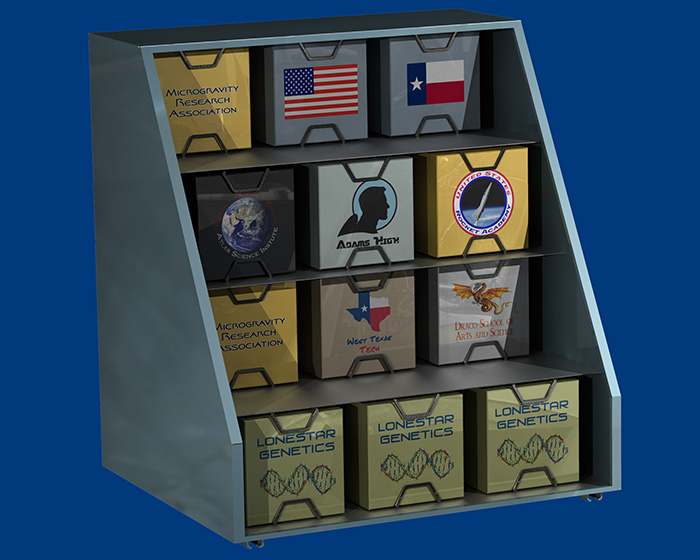
“The Lynx Cub Carrier is an ideal platform for small materials-processing, fluid-physics, life-science, and engineering experiments. University teaching and research, K-12 education, citizen science, government and industrial R&D will all benefit from the convenient simple interfaces, rapid integration, and affordability of Lynx Cub experiments.”

Lynx Cub Payload Carrier (artist's concept) internal viewExperiment payloads in the carrier

The Lynx Cub Carrier was developed by the United States Rocket Academy and the Space Engineering Research Center, part of the Texas A&M Engineering Experiment Station (TEES), with support from XCOR Aerospace. Design and fabrication of the Lynx Cub Carrier were performed by Texas A&M faculty and students and TEES researchers.

Citizens in Space, a project of the United States Rocket Academy, will use the Lynx Cub Carrier on 10 Lynx missions. The Lynx Cub Carrier will also be made available to other XCOR customers, as ready-to-fly hardware or as an open-source hardware design.

“Lynx Cub payloads are based on the popular 1U, 2U, and 3U CubeSat form factors, which are de facto international standards for small scientific payloads,” said Chip Hill, Director of the Space Engineering Research Center. “The payload carrier provides physical accommodations, electrical power, and limited thermal control for Lynx Cub experiments.”

The Lynx Cub Carrier will be part of the XCOR Lynx flight-test program, which is expected to begin later this year.

new_11-07-21_lynx-new-ascent-500xXCOR Lynx

“For the test flights, we will load the Lynx Cub Carrier with payload simulators, accelerometers, gyroscopes, and environmental sensors,” Wright said. “While XCOR is proving out the vehicle, we’ll be gathering baseline data on the thermal environment, acoustical environment, acceleration, vibration, and other parameters — data that will help guide experimenters in their payload design.”

“I am excited by the connection to K-12 education,” said Dr. Justin Yates, a professor at the Texas A&M Department of Systems and Industrial Engineering who served as a project lead. “I am proud that Texas A&M University industrial engineers could play a part in this project, which will excite, engage, and educate the next generation of scientists.”

“The Lynx Cub Carrier development was a great learning experience,” said Austin Goswick, a senior Systems and Industrial Engineering student who worked on the project. “This project tested me in every way, advancing my communication skills as well as my engineering skills. I can’t wait to hear how it performs in the flight test.”

The Space Engineering Research Center, part of the Texas A&M Engineering Experiment Station in College Station, is also a member of XCOR’s global network of payload integrators, which provides value-added services for Lynx payload customers. TEES is an engineering research agency of the State of Texas and a member of The Texas A&M University System.

XCOR Aerospace, which is developing the suborbital, fully reusable Lynx spacecraft for a variety of scientific and commercial missions, is currently headquartered in Mojave, California. The company will relocate its headquarters to Midland, Texas later this year.

The United States Rocket Academy, a non-profit educational organization that studies and promotes the scientific, military, and commercial applications of human spaceflight, is also located in Texas. Citizens in Space is the United States Rocket Academy’s flagship program.

New SpaceX Falcon 9 model rocket + More about LittleBits SpaceKit

SpaceX has added a new model rocket kit based on the latest Falcon 9 rocket design: Falcon 9 and Fairing Flying Model Rocket Kit – Featured

Falcon9AndFairingModelKit

===

I recently wrote about the LittleBits SpaceKit: Assemble your own space program that allows you to assembly many types of fun space-inspired gadgets from a set of electronic modules. Here’s an article about the SpaceKit: Build a Spacecraft at Home with NASA-Approved Space Kit – Space.com


Virtual SpaceTV 3D – May 2014

Here is the latest episode of The Virtual SpaceTV 3D show with Amanda Bush. The programs are created by BINARY SPACE (www.binary-space.com) with story content from HobbySpace.com.

In this show Amanda reports on the following topics:
01:32 — 02:48 SpaceX Falcon carries a Dragon to the ISS
02:49 — 05:12 The Falcon first Stage becoming reusable
05:13 — 06:17 Earth-sized Exoplanet found in habitable Zone
06:18 — 08:14 A Comet aims at Mars
08:15 — 09:24 A Mars Wind Cleansing

Previous Virtual SpaceTV 3D shows are available on the  HobbySpace Youtube Channel.

These videos are intended as educational programs and as demonstrations of an experimental technique for generating animated presentations. The show was generated autonomously by software according to a text script. The project is described in the Virtual Producer whitepaper (Release 1.1, Oct.2013, pdf). For further information contact info@binary-space.com.

Video: Music from ISS and NASA JSC

I  mentioned recently plans for a concert involving an ISS astronaut and Texas music students. The event took place on May 2nd and here is a video of it:

Students from Pearl Hall Elementary school joined Astronaut Cady Coleman, Houston Symphony violinist Sergei Galperin, and Bella Galia founder & violinist Kenji Williams in a live linkup between the Johnson Space Center and the International Space Station. Expedition 39 crew member Koichi Wakata joined Kenji Williams for a space-Earth duet of Gagaku music.