Check out the marvelous imagery shot by high speed cameras of SpaceX Falcon 9 rocket launches and landings:
===
Speaking of rockets, here is an intro to “rocket science” by James Macfarlane of the UK company Airborne Engineering given at the recent at the Electromagnetic Field event in Guildford.
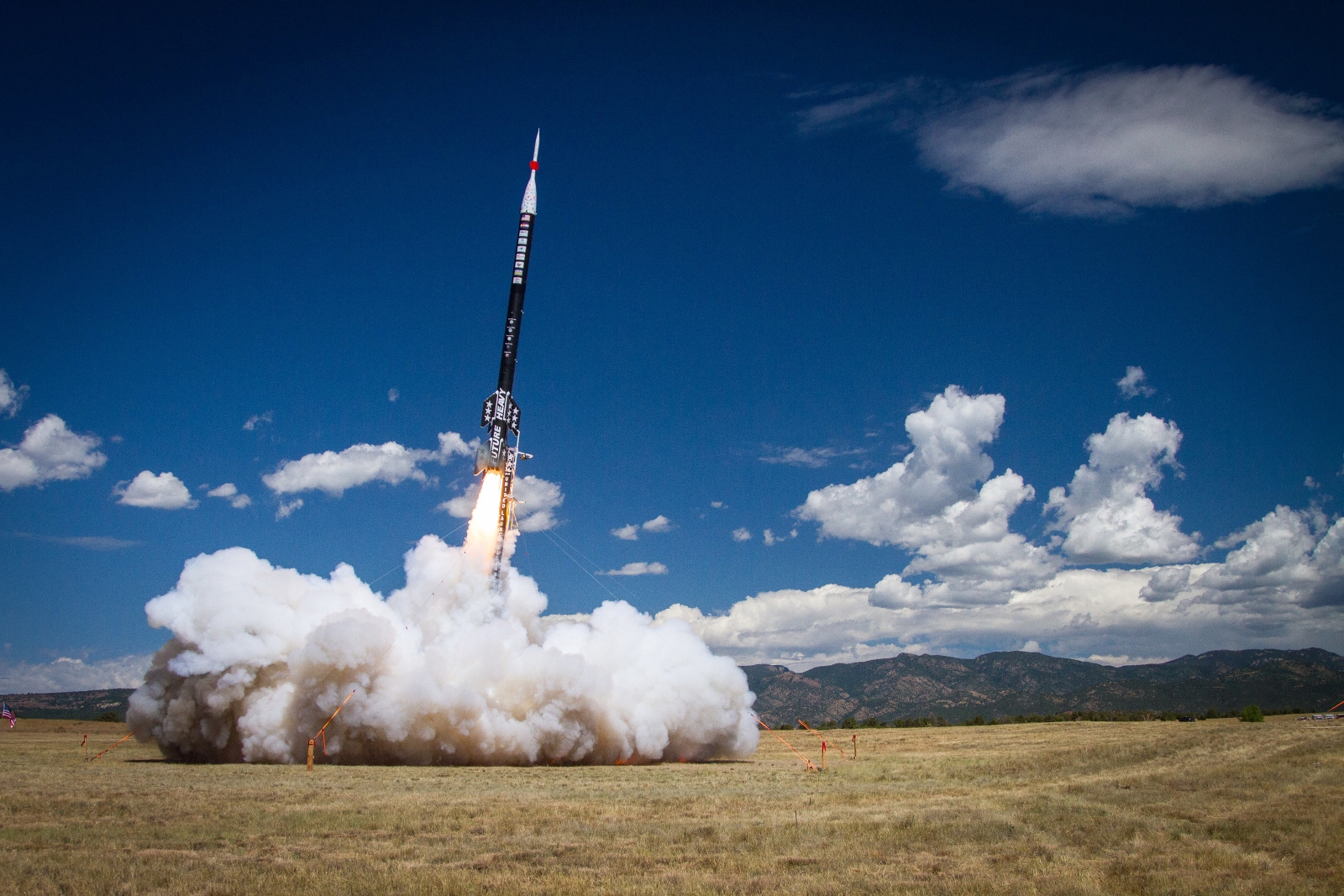
On Sunday, interns at United Launch Alliance (ULA) and Ball Aerospace in Colorado flew a 50 foot (15.24 m) rocket that they built this summer. The “Future Heavy” rocket carried 16 payloads developed by interns and students as well.
Below are the initial entries in a space documentary series of videos on Youtube:
Dr. Kaii is proud to present a new series where he finally gets to give over all the wonderful ideas, facts and knowledge about the galaxy that are just waiting to blow your minds.
Using the photo-real sandbox tool Space Engine, this is a whole new type of documentary, with the potential for hundreds of effortless episodes, with the ability to demonstrate the size and awe of the universe in ways never seen before.
Subscribe and follow, I can’t imagine any scenario where you’d regret it 😉
The company NanoRacks has a system installed in the Japanese Kibo module on the Int. Space Station that ejects small CubeSat satellites into orbit. Over 100 satellites have now been deployed by NanoRacks. This video shows the deployment of satellites in 2014:
CubeSats fly free after leaving the NanoRacks CubeSat Deployer on the International Space Station on May 17, 2016. Seen here are two Dove satellites. The satellites are part of a constellation designed, built and operated by Planet Labs Inc. to take images of Earth from space. The images have several humanitarian and environmental applications, from monitoring deforestation and urbanization to improving natural disaster relief and agricultural yields in developing nations. A total of 17 CubeSats have been released since Monday from a small satellite deployer on the outside of the Kibo experiment module’s airlock. CubeSats are a new, low-cost tool for space science missions. Instead of the traditional space science missions that carry a significant number of custom-built, state-of-the-art instruments, CubeSats are designed to take narrowly targeted scientific observations, with only a few instruments, often built from off-the-shelf components.One of the CubeSats deployed in the past week includes STMSat-1, which was assembled and tested by elementary students at St. Thomas More Cathedral School in Arlington, Virginia: Elementary School Students Make History with Help from Orbital ATK.
St. Thomas More Cathedral School is now the first elementary school in the world to launch a CubeSat into orbit thanks to financial and volunteer support from Orbital ATK’s Space Systems Group. Over the last three years, 400 pre-kindergarten through eighth grade students have participated in all aspects of the project, from design, to construction, to testing.
The CubeSat, officially known as St. Thomas More (STM) Sat-1, will photograph the Earth and transmit images to remote ground stations throughout the country, engaging more than 10,000 grade school students who will participate via Remote Mission Operations Centers.
The CubeSat, STMSat-1(Credit: St. Thomas More Cathedral School)
Joe Pellegrino, Orbital ATK engineer, NASA deputy project manager and a parent at the school, served as the team’s mission manager and led the students through all aspects of getting a mission off the ground.
“Usually these are built by universities or even grad students, so it’s quite remarkable that we’ve been able to do this with grade students,” said Pellegrino. “We taught the students about design philosophy how to do computerized design. The students also helped us with a vibration test. We even did a high altitude test in the parking lot of the school.”
St. Thomas More Cathedral School students gather to watch their CubeSat deploy from the International Space Station. (Credit: St. Thomas More Cathedral School)
The CubeSat is four inches long and weighs close to three pounds. It was carried to space on Orbital ATK’s Cygnus cargo resupply spacecraft as part of NASA’s Education Launch of Nanosatellites IX mission in December of 2015. Along with CubeSats from the University of Colorado Boulder and the University of Michigan, STMSat-1 deployed from the NanoRacks CubeSat Deployer on May 16. The students expect to start receiving their first images this week.
STMSat-1 (bottom right) deploys from the International Space Station on May 16, 2016. (Credit: NASA).