Category Archives: Education

MPL3D Solar System offers interactive 3D space simulation

Check out the latest version of MPL3D Solar System – an interactive 3D space simulation –

MPL3D Solar System is a visual tool to arouse interest for astronomy and to divulge science in an entertaining way.

MPL3D Solar System maps out the majority of the close known universe. Stretching beyond our own Solar System, it reaches out to include another 120 extrasolar planets amongst over 10,000 mapped objects in this interactive simulation. Based on scientific data, every planet has been carefully reproduced as a visual representation, alongside the technical details. You can explore our own planets, exoplanets, nebulae, star clusters, several galaxies and even Sagittarius A*, the black hole that exists at the centre of our own galaxy.

MPL3D Solar System (Touch) v1.5” includes now touch enabled capabilities and a customizable spaceship mode, allowing the user to fly all around the galaxy with Newtonian physics for the space flight.

This is the 5th version of the MPL3D saga, that keeps on with a continuous improvement of the original idea: An astronomy tool for the whole family.

Better textures for celestial bodies and improved graphic effects, including 7 combinations of HDR/Bloom, heat haze for stars and spaceship engines, and revised effects for nebulae, star clusters and galaxies.

Touch control adds a new feeling of intuitive, natural handling, bringing a new experience to the final user.

Spaceship mode enhances the entertainment side of the simulation, and even a fabulous 3d asteroids mini-game has been included. Spaceship control mode has all the common options in this type of simulations, which also include joystick and touch control, to allow a better control of the spaceship.

On the spaceship graphics side, seven configurable cameras, dozens of effects and up to eight light sources. The cockpit includes all kind of gauges for the three crew members, like gyroscope, g forces indicator, mission time, and even a 3d radar of the solar system.

A more extensive overview of the program:


=====

RocketSTEM Magazine – Sept.2016

The latest issue of RocketSTEM magazine is now available online: Issue #13 • September 2016 – RocketSTEM

RocketSTEM-sept-2016-front-cover[1]

Articles include:

  • Mining the sky – A race is underway to profit from mining asteroids for water and resources.
  • Destination: Bennu – Spacecraft to retrieve a piece of an asteroid for analysis on Earth.
  • Ticket to space – The KSC Visitor Complex lets people get up close to real space hardware.
  • Jupiter’s mysteries – Juno has arrived and begun its scientific analysis of the solar system’s largest planet.
  • Mission to Europa – If life exists in our solar system beyond Earth, then the best place to find it may be here.
  • Revealing Pluto – Discoveries abound even as New Horizons continues to send back data from Pluto.

The magazine is

geared towards teachers, students and parents as well. The publication blends space history – past, present and future – with interviews, career paths, astronomy lessons, aerospace and astronomy news, museum features, NASA technology spinoffs, and educational resources; along with explanations of the mathematics and physics of all things to do with aerospace and space travel.

Videos: High-speed camera views of SpaceX launches/landings + An intro to rockets

Check out the marvelous imagery shot by high speed cameras of SpaceX Falcon 9 rocket launches and landings:

===

Speaking of rockets, here is an intro to “rocket science” by James Macfarlane of the UK company Airborne Engineering given at the recent at the Electromagnetic Field event in Guildford.

The presentation is also available at C3TV – It’s Only Rocket Science

Video: An overview of the SETI Institute

The SETI Institute has a clever new logo:

As indicated by the variety of Institute seminar videos that I post here, the Institute is involved in an amazing variety of world class research projects and outreach activities ranging from astrobiology to exoplanet research.

The radio and web podcast program Big Picture Science has become quite popular.

Of course, the search for extraterrestrial intelligence is still the primary activity.

The CEO Bill Diamond gives an interesting overview of the Institute and its wide ranging programs and projects:

BTW, Diamond mentions that the Institute’s Allen Telescope Array in northern California welcomes visitors. Check out setiquest.info to see webcam shots of the site:

ATA Webcam 1

====

Videos: Nexø I launch review + ULA/Ball Aerospace interns launch 50 ft rocket

Here’s a short video showing highlights of the Nexø I launch and recovery by Copenhagen Suborbitals  on Saturday (see earlier posting):

===

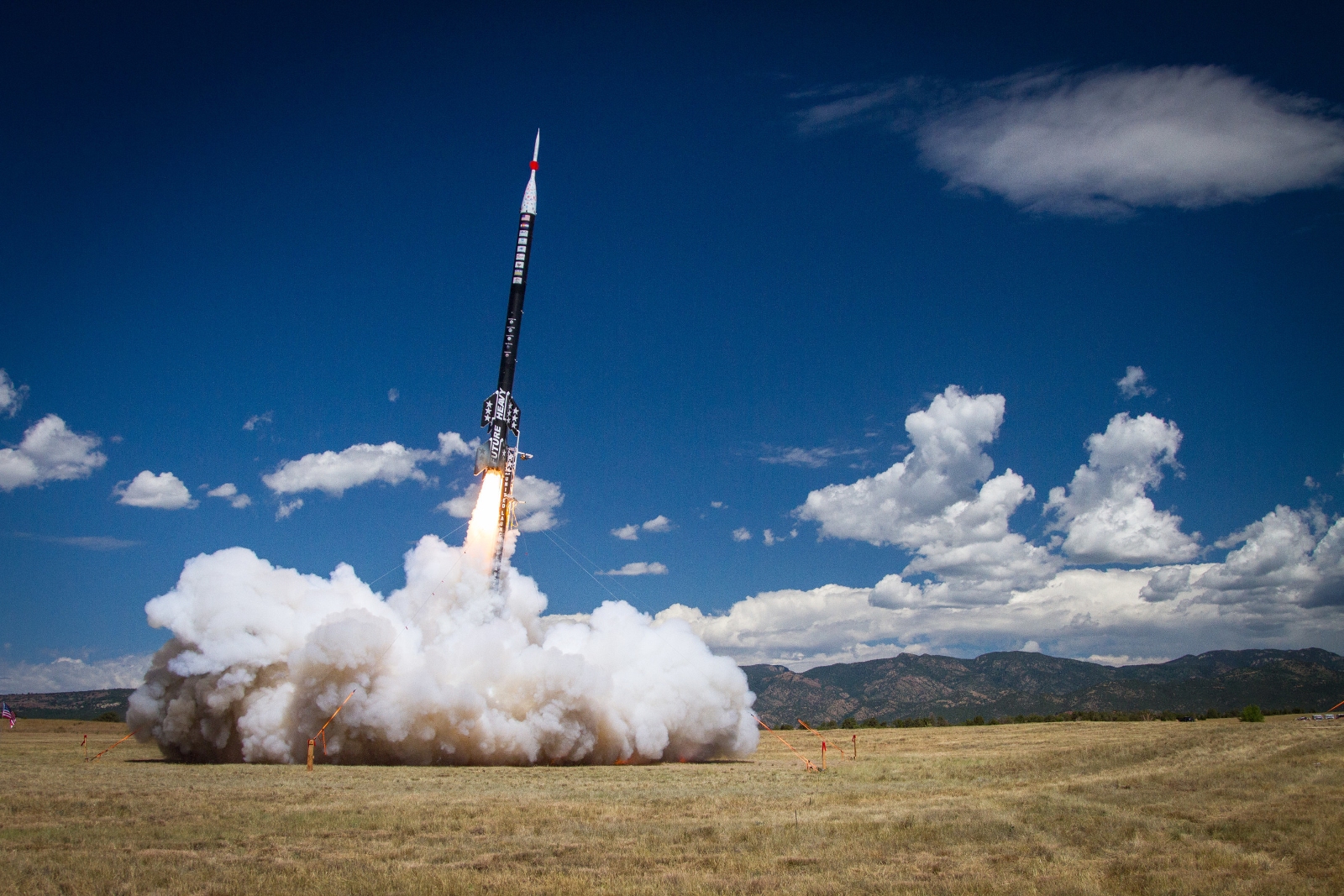
On Sunday, interns at United Launch Alliance (ULA) and Ball Aerospace in Colorado flew a 50 foot (15.24 m) rocket that they built this summer. The “Future Heavy” rocket carried 16 payloads developed by interns and students as well.

Here is a press release about the launch: United Launch Alliance and Ball Aerospace Interns, Colorado Students Participate in Record-setting – ULA –

FutureHeavyInternRocket