A sampling of recent articles, press releases, etc. related to student and amateur CubeSat / SmallSat projects and programs (find previous smallsat roundups here):
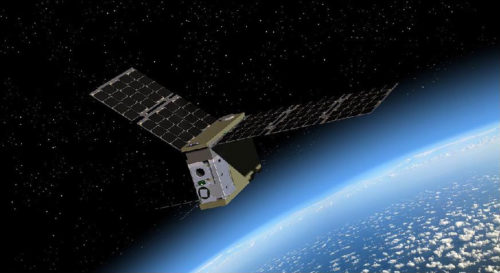
** University of Tokyo’s AQT-D: AQUA Thruster-Demonstrator was delivered to the ISS in the HTV-8 cargo module launched by a H-IIB rocket on Sept.24th. The student built CubeSat will be deployed from the station later this year. The goal is to demonstrate the AQUARIUS (AQUA ResIstojet propUlsion System) water micro-propulsion system, which is suitable for smallsats.
A sampling of recent articles, press releases, etc. related to student and amateur CubeSat / SmallSat projects and programs (find previous smallsat roundups here):
CubeSats are highly versatile satellites built up by 1 or more units measuring just 10cm along each side. Learning how to best use these tools is a valuable skill, so ESA Academy has hosted the CubeSats Hands-On Training Week 2019. Running from 16 – 20 September 2019 at ESA Academy’s Training and Learning Centre, ESEC-Galaxia, Belgium, the event was attended by 26 university students from 15 different ESA Member States and Canada.
The Training Week had a clear objective: transfer hands-on knowledge to university students who are keen to start their own educational CubeSat initiatives, or who are already at the conceptual or preliminary design stage of a CubeSat project at university. To achieve this aim, ESA Academy assembled a team of experienced tutors to lead the course. These included ESA experts, the Fly Your Satellite! (ESA’s educational CubeSat initiative) team, and two engineers from Theia Space (Universidad Politecnica de Madrid) delivering laboratory sessions with high-grade model CubeSats, called Educational Satellite models (ESATs).
One of the main objectives of the UAE Space Agency is to build capabilities in the space sector, in space engineering and sciences, especially within the university community. MeznSat, initiated in 2017, began as an education programme to design, build and operate a satellite, but at an educational level.
There is a global trend in space education programmes, encouraging the use of CubeSats or nanosatellites to engage students in satellite and space research. However, what started as an educational trend is now slowly turning commercial with private agencies and companies using satellites built by student bodies for commercial purposes.
The UAE Space Agency followed up on this trend with the founding of the MeznSat programme, a 3U CubeSat that will be used to study the environment and also look at greenhouse gas emissions over the UAE, especially methane and carbon dioxide. The programme is founded and run by the UAE Space Agency with participation by two local universities, Khalifa University and the American University of Ras Al Khaimah (AURAK).
The timetable is indefinite, starting this fall. The project is supposed to take two years. Desmond expects to start with sixth-graders; the curriculum team hasn’t decided whether the second year will continue with the same students in seventh grade or hand over to the new sixth-graders.
The question the students will try to answer is whether the frequency or location of lightning strikes is changed by global warming. Sub-questions include whether the northeastern United States can expect more frequent or severe lightning strikes; if that answer is yes, what negative (like more forest fires) and positive (like more nitrogen fixing to improve soils) consequences might occur; whether energy could be captured from the lightning; and whether, if lightning is more frequent, housing codes should be adapted.
A sampling of recent articles, press releases, etc. related to student and amateur CubeSat / SmallSat projects and programs (find previous smallsat roundups here):
15 CubeSats into orbit on October 21 as part of NASA Educational Launch of Nanosatellites (ELaNa) Mission 25. Some will carry Amateur Radio payloads.
TJ REVERB, developed by students at Thomas Jefferson High School in Alexandria, Virginia, will carry a 145.825 MHz APRS digipeater.
HuskySat, a University of Washington – Seattle project, will be boosted into a 500-kilometer (approximately 310-mile) orbit via the Cygnus external deployment device. HuskySat will carry a V/U linear transponder provided in cooperation with AMSAT.
The Taurus-1 (Jinniuzuo-1) CubeSat carrying an Amateur Radio FM-to-Codec-2 transponder was launched on September 12 from China’s Taiyuan Satellite Launch Center. The CubeSat was developed by Aerospace System Engineering Research Institute of Shanghai for youth education and Amateur Radio.
Professor Andrew Dempster of UNSW’s School of Electrical Engineering and Telecommunications has been developing and trialling a new type of receiver that looks for satellite navigation signals bounced from the Earth’s surface in a process called reflectometry.
…
As he explains, reflectometry looks at the GPS signals that come directly from satellites as well as where, and at what angle, the signals bounce off the earth’s surface. He and his colleagues have built four generations of receivers that are designed to look for these bounced GPS signals from satellites overhead.
“This most recent generation of our GPS receivers we have put into space aboard CubeSats,” Professor Dempster says, who is also director of the Australian Centre of Space Engineering Research.
… Over the past 5 years the team has seen over 100 members work on the project, including students, staff and volunteers. The project has produced at least 18 student theses, dozens of conference papers, launched new research areas for UNSW winning two new ARC grants, and the UNSW team alone has attracted many hours of media interest both locally and internationally.
How NASA saved two tiny Mars satellites | SPACE INTERVIEW
Mars Cube One (MarCO) lead engineer, Andy Klesh, joins us to chat how two tiny CubeSats gave us real-time data from the latest landing on Mars. We talk about what led to naming the spacecraft after the Disney characters Wall-e and Eve, and how both Wall-e and Eve lost contact with Earth just few hours before it was their time to shine.
A sampling of recent articles, press releases, etc. related to student and amateur CubeSat / SmallSat projects and programs (find previous smallsat roundups here):
Aerospace Engineering Assistant Professor Pauline Faure and Computer Engineering Senior Justin Nguyen traveled to Cambodia in August to visit the Liger Leadership Academy in Phnom Penh.
Students there wanted to build and launch a softball-sized CubeSat, along with a mini-ground station to communicate with it.
The Hill Space Systems Laboratory in Learned Hall features a 12-by-12-foot clean “white room” where students don protective clothing while they build nano-satellites, which weigh in at just under 10 kilograms, for a planned launch into Earth orbit. A second room in the same lab is stocked with computer equipment so students can design and test their creations.
“We’re hoping to have student satellite launches — microsatellites, nano-satellites — every other year,” said Rick Hale, Spahr Professor and chair of the Department of Aerospace Engineering. “The first launch could be as early as spring 2020.”
[Noemí Miguélez Gómez’s] current CubeSat project with Dr. Eduardo Rojas in the Embry-Riddle Wireless Devices and Electromagnetics (WiDE) Laboratory is focused on bolstering communication using deployable antennas. Small research CubeSats may offer only one-tenth of a cubic meter of space, and therefore “you don’t have a lot of power for communications,” Miguélez Gómez explained. To improve communication, she has been working on a foldable antenna that would reflect signals in space to improve transmission performance. The work involves 3D printing and testing dozens of components. This antenna is part of an academic-industry partnership.
The newly opened WiDE lab is located in the John Mica Engineering and Aerospace Innovation Complex, or MicaPlex, the cornerstone building in Embry-Riddle’s Research Park. It gives students like Miguélez Gómez access to a design room with state-of-the-art software, advanced manufacturing equipment including 3D printers, and a testing area, among other perks.
… how smallsat technology is being used in innovative ways to solve technical challenges faced by the military, science community, and industry. Find out how custom sensor, software, hardware, and thermal management solutions are making significant contributions to national defense and scientific discoveries. Hear about the programs where this technology is being applied to better understand global temperature changes in the thermosphere, identify the population of potentially hazardous near-Earth objects (NEOs) and mitigate the adverse effects of space weather.
A sampling of recent articles, press releases, etc. related to student and amateur CubeSat / SmallSat projects and programs (find previous smallsat roundups here):
Utah State University’s Space Dynamics Laboratory announced today that it has delivered a small satellite designed for NASA to measure the microphysical properties of cloud water and ice particles.
The HARP CubeSat satellite was built by SDL to carry the HyperAngular Rainbow Polarimeter payload built by the University of Maryland, Baltimore County under the direction of principal investigator J. Vanderlei Martins. HARP is currently being prepared for launch by International Space Station small satellite launch service provider NanoRacks, LLC. HARP is scheduled to launch to the ISS in October aboard Northrop Grumman’s robotic resupply space freighter Cygnus at the Mid-Atlantic Regional Spaceport. HARP will be ejected into space following its placement on the ISS.
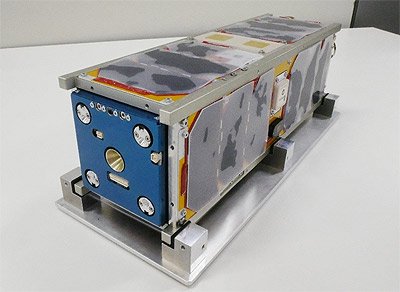 Find more about AQUA and other water based propulsion systems in Water propulsion technologies picking up steam – SpaceNews.com.