Category Archives: Astronomy

Dark matter doesn’t much notice other dark matter

Dark matter appears to be even weirder than previously thought.

NASA’s Hubble, Chandra Find Clues that
May Help Identify Dark Matter

Using observations from NASA’s Hubble Space Telescope and Chandra X-ray Observatory, astronomers have found that dark matter does not slow down when colliding with itself, meaning it interacts with itself less than previously thought. Researchers say this finding narrows down the options for what this mysterious substance might be.

15-046

Here are images of six different galaxy clusters taken with NASA’s Hubble Space Telescope (blue) and Chandra X-ray Observatory (pink) in a study of how dark matter in clusters of galaxies behaves when the clusters collide. A total of 72 large cluster collisions were studied. Image Credit: NASA and ESA

Dark matter is an invisible matter that makes up most of the mass of the universe. Because dark matter does not reflect, absorb or emit light, it can only be traced indirectly by, such as by measuring how it warps space through gravitational lensing, during which the light from a distant source is magnified and distorted by the gravity of dark matter.

To learn more about dark matter and test such theories, researchers study it in a way similar to experiments on visible matter — by watching what happens when it bumps into other objects. In this case, the colliding objects under observation are galaxy clusters.

Researchers used Hubble and Chandra to observe these space collisions. Specifically, Hubble was used to map the distribution of stars and dark matter after a collision, which was traced through its gravitational lensing effect on background light. Chandra was used to detect the X-ray emission from colliding gas clouds. The results are published in the March 27 edition of the journal Science.

“Dark matter is an enigma we have long sought to unravel,” said John Grunsfeld, assistant administrator of NASA’s Science Mission Directorate in Washington. “With the combined capabilities of these great observatories, both in extended mission, we are ever closer to understanding this cosmic phenomenon.”

Galaxy clusters are made of three main ingredients: galaxies, gas clouds, and dark matter. During collisions, the gas clouds surrounding galaxies crash into each other and slow down or stop. The galaxies are much less affected by the drag from the gas and, because of the huge gaps between the stars within them, do not slow each other down.

“We know how gas and stars react to these cosmic crashes and where they emerge from the wreckage. Comparing how dark matter behaves can help us to narrow down what it actually is,” said the study’s lead author David Harvey of the École Polytechnique Fédérale de Lausanne (EPFL) in Switzerland.

Harvey and his team studied 72 large cluster collisions. The collisions happened at different times and were viewed from different angles — some from the side, and others head-on.

The team found that, like the galaxies, the dark matter continued straight through the violent collisions without slowing down much. This means dark matter does not interact with visible particles and flies by other dark matter with much less interaction than previously thought. Had the dark matter dragged against other dark matter, the distribution of galaxies would have shifted.

“A previous study had seen similar behavior in the Bullet Cluster,” said team member Richard Massey of Durham University in the United Kingdom. “But it’s difficult to interpret what you’re seeing if you have just one example. Each collision takes hundreds of millions of years, so in a human lifetime we only get to see one freeze-frame from a single camera angle. Now that we have studied so many more collisions, we can start to piece together the full movie and better understand what is going on.”

With this discovery, the team has successfully narrowed down the properties of dark matter. Particle physics theorists now have a smaller set of unknowns to work around when building their models.

“It is unclear how much we expect dark matter to interact with itself because dark matter already is going against everything we know,” said Harvey. “We know from previous observations that it must interact with itself reasonably weakly.”

Dark matter may have rich and complex properties, and there are still several other types of interactions to study. These latest results rule out interactions that create a strong frictional force, causing dark matter to slow down during collisions.

The team also will study other possible interactions, such as dark matter particles bouncing off each other like billiard balls and causing dark matter particles to be ejected from the clouds by collisions or for dark matter blobs to change shape. The team also is looking to study collisions involving individual galaxies, which are much more common.

“There are still several viable candidates for dark matter, so the game is not over. But we are getting nearer to an answer,” said Harvey. “These astronomically large particle colliders are finally letting us glimpse the dark world all around us, but just out of reach.”

The Hubble Space Telescope is a project of international cooperation between NASA and ESA (European Space Agency). NASA’s Goddard Space Flight Center in Greenbelt, Maryland, manages the telescope. The Space Telescope Science Institute (STScI) in Baltimore conducts Hubble science operations. STScI is operated for NASA by the Association of Universities for Research in Astronomy, Inc., in Washington.

NASA’s Marshall Space Flight Center in Huntsville, Alabama, manages the Chandra program for NASA’s Science Mission Directorate in Washington. The Smithsonian Astrophysical Observatory in Cambridge, Massachusetts, controls Chandra’s science and flight operations.

For images and more information about the Hubble Space Telescope, visit: hubble

For more Chandra images, multimedia and related materials, visit: mission_pages/chandra/main

===

See also

Dust cloud survives fly-by of monster black hole at Milky Way center

The latest report from the European Southern Observatory (ESO):

Best View Yet of Dusty Cloud Passing
Galactic Centre Black Hole

The best observations so far of the dusty gas cloud G2 confirm that it made its closest approach to the supermassive black hole at the centre of the Milky Way in May 2014 and has survived the experience. The new result from ESO’s Very Large Telescope shows that the object appears not to have been significantly stretched and that it is very compact. It is most likely to be a young star with a massive core that is still accreting material. The black hole itself has not yet shown any increase in activity.

eso1512b_520x371

This composite image shows the motion of the dusty cloud G2 as it closes in on, and then passes, the supermassive black hole at the centre of the Milky Way.

These new observations with ESO’s VLT have shown that the cloud appears to have survived its close encounter with the black hole and remains a compact object that is not significantly extended.

The blobs have been colourised to show the motion of the cloud, red indicated that the object is receding and blue approaching. The cross marks the position of the supermassive black hole.

Credit: ESO/A. Eckart

A supermassive black hole with a mass four million times that of the Sun lies at the heart of the Milky Way galaxy. It is orbited by a small group of bright stars and, in addition, an enigmatic dusty cloud, known as G2, has been tracked on its fall towards the black hole over the last few years. Closest approach, known as peribothron, was predicted to be in May 2014.

The great tidal forces in this region of very strong gravity were expected to tear the cloud apart and disperse it along its orbit. Some of this material would feed the black hole and lead to sudden flaring and other evidence of the monster enjoying a rare meal. To study these unique events, the region at the galactic centre has been very carefully observed over the last few years by many teams using large telescopes around the world.

A team led by Andreas Eckart (University of Cologne, Germany) has observed the region using ESO’s Very Large Telescope (VLT) [1] over many years, including new observations during the critical period from February to September 2014, just before and after the peribothron event in May 2014. These new observations are consistent with earlier ones made using the Keck Telescope on Hawaii [2].

The images of infrared light coming from glowing hydrogen show that the cloud was compact both before and after its closest approach, as it swung around the black hole.

As well as providing very sharp images, the SINFONI instrument on the VLT also splits the light into its component infrared colours and hence allows the velocity of the cloud to be estimated [3]. Before closest approach, the cloud was found to be travelling away from the Earth at about ten million kilometres/hour and, after swinging around the black hole, it was measured to be approaching the Earth at about twelve million kilometres/hour.

Florian Peissker, a PhD student at the University of Cologne in Germany, who did much of the observing, says: “Being at the telescope and seeing the data arriving in real time was a fascinating experience,” and Monica Valencia-S., a post-doctoral researcher also at the University of Cologne, who then worked on the challenging data processing adds: “It was amazing to see that the glow from the dusty cloud stayed compact before and after the close approach to the black hole.”

Although earlier observations had suggested that the G2 object was being stretched, the new observations did not show evidence that the cloud had become significantly smeared out, either by becoming visibly extended, or by showing a larger spread of velocities.

In addition to the observations with the SINFONI instrument the team has also made a long series of measurements of the polarisation of the light coming from the supermassive black hole region using the NACO instrument on the VLT. These, the best such observations so far, reveal that the behaviour of the material being accreted onto the black hole is very stable, and — so far — has not been disrupted by the arrival of material from the G2 cloud.

The resilience of the dusty cloud to the extreme gravitational tidal effects so close to the black hole strongly suggest that it surrounds a dense object with a massive core, rather than being a free-floating cloud. This is also supported by the lack, so far, of evidence that the central monster is being fed with material, which would lead to flaring and increased activity.

Andreas Eckart sums up the new results: “We looked at all the recent data and in particular the period in 2014 when the closest approach to the black hole took place. We cannot confirm any significant stretching of the source. It certainly does not behave like a coreless dust cloud. We think it must be a dust-shrouded young star.”

National Geographic marks Hubble’s 25th year in space with a great image collection

The Hubble Space Telescope was placed into orbit by the Space Shuttle Discovery on April 24, 1990. To celebrate this 25th anniversary, the National Geographic

features “Hubble’s Greatest Hits” in the new April issue. Hubble’s imaging team lead Zolt Levay has curated his top 10 celestial views of all time for the feature. The  also shares the fascinating photo coloration process that help Levay and his team create Hubble’s stunning images. And writer Timothy Ferris shares background on the program in the related article.

Find more amazing images in this gallery as well.

Odd nova of 1670 now explained as collision of two stars

A new report from the European Southern Observatory (ESO):

Colliding Stars Explain Enigmatic Seventeenth Century Explosion
APEX observations help unravel mystery of Nova Vulpeculae 1670

New observations made with APEX and other telescopes reveal that the star that European astronomers saw appear in the sky in 1670 was not a nova, but a much rarer, violent breed of stellar collision. It was spectacular enough to be easily seen with the naked eye during its first outburst, but the traces it left were so faint that very careful analysis using submillimetre telescopes was needed before the mystery could finally be unravelled more than 340 years later. The results appear online in the journal Nature on 23 March 2015.

The nova of 1670 recorded by HeveliusThe nova of 1670 recorded by Hevelius

Some of seventeenth century’s greatest astronomers, including Hevelius — the father of lunar cartography — and Cassini, carefully documented the appearance of a new star in the skies in 1670. Hevelius described it as nova sub capite Cygni — a new star below the head of the Swan — but astronomers now know it by the name Nova Vulpeculae 1670 [1]. Historical accounts of novae are rare and of great interest to modern astronomers. Nova Vul 1670 is claimed to be both the oldest recorded nova and the faintest nova when later recovered.

The lead author of the new study, Tomasz Kamiński (ESO and the Max Planck Institute for Radio Astronomy, Bonn, Germany) explains: “For many years this object was thought to be a nova, but the more it was studied the less it looked like an ordinary nova — or indeed any other kind of exploding star.”

When it first appeared, Nova Vul 1670 was easily visible with the naked eye and varied in brightness over the course of two years. It then disappeared and reappeared twice before vanishing for good. Although well documented for its time, the intrepid astronomers of the day lacked the equipment needed to solve the riddle of the apparent nova’s peculiar performance.

The remnant of the nova of 1670 seen with modern instrumentsThe remnant of the nova of 1670 seen with modern instruments

During the twentieth century, astronomers came to understand that most novae could be explained by the runaway explosive behaviour of close binary stars. But Nova Vul 1670 did not fit this model well at all and remained a mystery.

Even with ever-increasing telescopic power, the event was believed for a long time to have left no trace, and it was not until the 1980s that a team of astronomers detected a faint nebula surrounding the suspected location of what was left of the star. While these observations offered a tantalising link to the sighting of 1670, they failed to shed any new light on the true nature of the event witnessed over the skies of Europe over three hundred years ago.

Tomasz Kamiński continues the story: “We have now probed the area with submillimetre and radio wavelengths. We have found that the surroundings of the remnant are bathed in a cool gas rich in molecules, with a very unusual chemical composition.”

As well as APEX, the team also used the Submillimeter Array (SMA) and the Effelsberg radio telescope to discover the chemical composition and measure the ratios of different isotopes in the gas. Together, this created an extremely detailed account of the makeup of the area, which allowed an evaluation of where this material might have come from.

Wide-field view of the sky around Nova Vul 1670This wide-field view shows the sky around the location of the historical
exploding star Nova Vul 1670. The remains of the nova are only very
faintly visible at the centre of this picture.

What the team discovered was that the mass of the cool material was too great to be the product of a nova explosion, and in addition the isotope ratios the team measured around Nova Vul 1670 were different to those expected from a nova. But if it wasn’t a nova, then what was it?

The answer is a spectacular collision between two stars, more brilliant than a nova, but less so than a supernova, which produces something called a red transient. These are a very rare events in which stars explode due to a merger with another star, spewing material from the stellar interiors into space, eventually leaving behind only a faint remnant embedded in a cool environment, rich in molecules and dust. This newly recognised class of eruptive stars fits the profile of Nova Vul 1670 almost exactly.

Co-author Karl Menten (Max Planck Institute for Radio Astronomy, Bonn, Germany) concludes: “This kind of discovery is the most fun: something that is completely unexpected!”

Zooming in on the location of Nova Vul 1670 in the constellation of Vulpecula

Lunar flash and plume seen by amateur astronomers

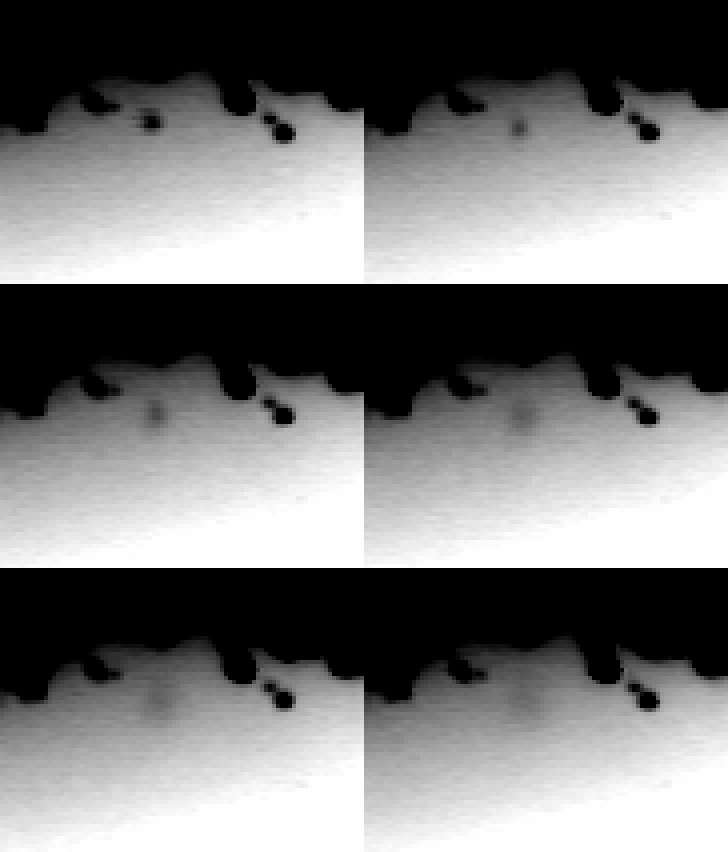
Selenology Today – 2015 (pdf) and Lunar Networks blog report on a flash seen on the Moon by three members – Marco Iten, Raffaello Lena, Stefano Sposetti – of the Geological Lunar Research Group, an Italian group of advanced amateur observers. The flash was apparently produced by a meteoroid impact: Mare Nubium impact with plume captured and analyzed – Lunar Networks –


2015_02_26_213522_Iten_blackSee the flash and plume in top right,

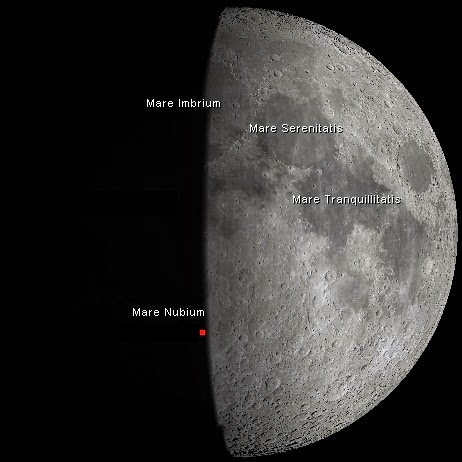
Abstract: We report the detection of an interesting luminous event most probably generated by a meteoroidal impact on the lunar surface occurred at 21h 35m 22.871s ± 0.010s UT, the 26 February 2015. The position of the flash was along the terminator at selenographic coordinates 7.9° ± 0.6° W; 26.1° ± 1.6° S. The brightness of the flash 0.16 s after the initial detection was +8.0 magV. After the main lightdrop a successive residual diffuse light lasted for several seconds.

Under the assumption of a meteoroidal impact we argue that this post luminous event and its ever growing dimensions was likely caused by the sunlight reflection on ejected materials released by the impact. Thus, future high resolution orbital data, e.g., from LRO spacecraft (NAC images) could allow the detection of this crater. Because this event was captured only by one observer, we checked for satellite glints and evaluated the likelihood of a meteor hitting head on our atmosphere.

2015_02_26_213522_Iten_4x

This map shows the location of the flash at Mare Nubium:

VMA-Lippershey_P-200