ARRL Foundation funds student space telerobotics initiative

An announcement from the ARRL Foundation and the Amateur Radio on the International Space Station (ARISS-USA) organizations:

ARRL Foundation Grants First-Year Funding for
ARISS *STAR* Keith Pugh Initiative

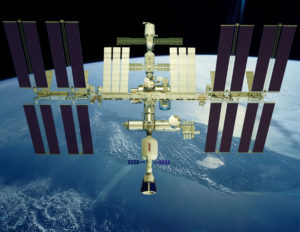
A $47,533 ARRL Foundation grant will fund the initial phase of the Amateur Radio on the International Space Station (ARISS‐USA) *STAR* Keith Pugh Memoriam Project. *STAR*, which stands for Space Telerobotics using Amateur Radio, honors the memory of Keith Pugh, W5IU, a highly respected member of the ARISS team who died in 2019. ARISS arranges live question-and-answer sessions via ham radio between International Space Station (ISS) crew members and students. A long-time and enthusiastic supporter of ARISS, Pugh was a star ARISS technical mentor, assisting schools with ARISS contacts, encouraging interest in ARISS among educators, and visiting schools to teach students about wireless radio technology. One goal of ARISS is to engage students in science, technology, engineering, arts, and mathematics (STEAM) subjects.

The ARISS *STAR* Project, is a new educational initiative that will enable US junior and senior high school groups to remotely control robots via ham radio through digital APRS (Automatic Packet Reporting System) commands. Year 1 will focus on systems development and initial validation of ARISS *STAR*, and year 2 will focus on evaluation and final validation.

Systems development and evaluation will be led by university staff and students who will undertake hands-on wireless and telerobotics lesson development, learn about amateur radio, and support *STAR* engineering hardware and software development.

Next, youth teams will be selected to experiment and critique *STAR* telerobotics scenarios in closed courses. In the process, ARISS will encourage students to prepare for and earn an FCC amateur radio license, enabling them to use ham radio to learn and practice concepts in radio technology and radio communication.

ARISS-USA Executive Director Frank Bauer, KA3HDO, praised the ARRL Foundation for its generosity.

“ARISS team member Keith Pugh, W5IU, poured his energy into inspiring, engaging, and educating youth in space and in amateur radio endeavors,” Bauer said. “What better way to honor Keith than through the ARISS *STAR* initiative. We thank the ARRL Foundation for its vision to move this initiative forward. Maybe someday one of our ARISS *STAR* students will use their telerobotics skills to control scientific rovers on the [m]oon or Mars!”

Over the past 2 decades, more than 1,400 ARISS contacts have connected more than 1 million youth with the ISS using amateur radio, with millions more watching and learning.

The overarching goals for *STAR* are to improve and sustain ARISS STEAM educational outcomes. Robotics is gaining popularity among youth and adults alike, and telerobotics adds a wireless accent to robotic control. This will expand ARISS’s educational dimension to attract the attention of more groups, students, and educators — outreach that promises to attract new audiences.

The ARRL Foundation was established in 1973, to advance the art, science, and social benefits of the Amateur Radio Service by awarding financial grants and scholarships to individuals and organizations that support their charitable, educational, and scientific efforts.

ARISS is a cooperative venture of international amateur radio societies and space agencies that support the ISS. US sponsors include ARRL, the Radio Amateur Satellite Corporation (AMSAT), the ISS National Lab‐Space Station Explorers, and NASA’s Space Communications and Navigation program (SCaN). The primary goal of ARISS is to promote exploration of science, technology, engineering, the arts, and mathematics topics. For more information, visit www.ariss-usa.org and www.ariss.org.

=== Amazon Ads ===

Nooelec GOES Weather Satellite RTL-SDR Bundle
Includes NESDR SMArTee XTR Software Defined Radio, &
Everything Else Needed to Receive
LRIT, HRIT & HRPT Satellite Weather Images
Directly from Space!

===

Introduction to CubeSat Technology and Subsystem:
Orbit Design, Debris Impact, and Orbital Decay Prediction

The Space Show this week – Jan.24.2022

The guests and topics of discussion on The Space Show this week:

1. Tuesday, Jan. 25, 2022; 7 pm PST (9 pm CST, 10 pm EST): We welcome back Dennis Wingo for news, views, commercial space happenings, policy and more.

2. Hotel Mars – Wednesday, Jan. 26 2022; 1:00 pm PST (3:00 pm CST, 4:00 pm EST): TBD. Check the Upcoming Show Menu at www.thespaceshow.com for updates on scheduling.

3. Friday, Jan.28, 2022; 9:30-11 am PST (11:30 am-1 pm CST, 12:30-2 pm EST): No live program today. Check the Upcoming Show Menu before air time for the suggested Golden Oldie for play on this date.

4. Sunday, Jan.30, 2022; 12-1:30 pm PST (2-3:30 pm CST, 3-4:30 pm EST): No live program today. Check the Upcoming Show Menu before air time for the suggested Golden Oldie for play on this date.

Some recent shows:

** Sunday, Jan.23.2022 – Dr. Thomas Matula and Dr. Darryl Mitry discussed

their new book, Beyond the Covid Shock: The Great Economic Transition“. We applied much of the economics from the book and the discussion to both the public and commercial space industry. Listeners and callers also asked lots of general economic questions given the state of today’s economy and how the pandemic is impacting it.

**Hotel Mars – Wednesday, Jan. 19.2022 Dr. David Grinspoon spoke with John Batchelor and Dr. David Livingston about “the recent findings on Mars of a unique carbon signature that might suggest ancient molecular life for Mars“.

** Tuesday, Jan.18.2022Robert Zimmerman talked about “[a]nnual launch rates and predictions, China’s Long March 5B, Mars rovers, ancient molecular life on Mars, light carbon atoms, life in the solar system, Carbon-12, UV light, Musk and Starship, Georgia’s preliminary spaceport approval, exploring the lunar poles and more“.

** See also:
* The Space Show Archives
* The Space Show Newsletter
* The Space Show Shop

The Space Show is a project of the One Giant Leap Foundation.

The Space Show - David Livingston
The Space Show – Dr. David Livingston

=== Amazon Ads ===

Becoming Off-Worldly:
Learning from Astronauts to Prepare for Your Spaceflight Journey

===

Mercury Rising:
John Glenn, John Kennedy, and the New Battleground of the Cold War

Videos: “Space to Ground” & other space habitat reports – Jan.21.2022

Here is the latest episode in NASA’s Space to Ground weekly report on activities related to the International Space Station:

** Cosmonauts Conduct Russian Spacewalk Outside Space Station NASA Johnson [Preview animation of the Jan.19th spacewalk.]

Outside the International Space Station, Expedition 66 Commander Anton Shkaplerov and Flight Engineer Pyotr Dubrov of Roscosmos conducted a spacewalk on Jan. 19 to outfit the Prichal node module for the future arrival of Russian visiting vehicles. Prichal launched in November from the Baikonur Cosmodrome in Kazakhstan. It was the 246th spacewalk in support of space station assembly, maintenance and upgrades, the third in Shkaplerov’s career and the fourth for Dubrov.

** See cosmonauts spacewalk outside Space Station’s Nauka moduleVideoFromSpace

Expedition 66 Cmdr. Anton Shkaplerov and flight engineer Pyotr Dubrov. The duo hopes to add handrails, antennas, a television camera and docking targets to Pricha module.

** Watch empty container float away from space station after spacewalk tossVideoFromSpace

An empty container was jettisoned by Russian cosmonauts during a spacewalk outside the International Space Station’s Prichal module on Jan. 19, 2022. [Full Story](https://www.space.com/cosmonauts-spac…)

** NASA’s SpaceX Crew-4 Astronaut Jessica Watkins Talks with NBC News – Jan. 21, 2022NASA Video

NASA astronaut Jessica Watkins is getting ready to fly to space for the first time as part of the agency’s SpaceX Crew-4 long-duration mission to the International Space Station. Watkins will live and work aboard the space station for about six months where she will conduct science in the space station’s unique microgravity environment and conduct spacewalks.

** Expedition 66 Astronaut Raja Chari Talks with Waterloo-Cedar Falls Courier, Iowa – Jan. 20, 2022NASA Video

Aboard the International Space Station, NASA Expedition 66 Flight Engineer Raja Chari of NASA answered questions about living and working on the orbital laboratory during an in-flight event on Jan. 20 with Waterloo-Cedar Falls, Iowa Courier. Chari, who was raised in Cedar Falls, is in a planned six-month mission aboard the microgravity laboratory to advance scientific knowledge and demonstrate new technologies for future human and robotic exploration missions as part of NASA’s Moon and Mars exploration approach, including lunar missions through NASA’s Artemis program.

** Expedition 66 Astronaut Matthias Maurer Talks Life in Space for World Economic Forum -Jan. 20, 2022NASA Video

Aboard the International Space Station, Expedition 66 flight engineer Mattias Maurer of ESA (European Space Agency) discussed living and working in space during an in-flight interview during the World Economic Forum in Davos, Switzerland on Jan. 20. Maurer launched in November on the SpaceX Crew Dragon Endurance for a planned six-month science mission to advance scientific knowledge and demonstrate new technologies for future human and robotic exploration missions.

** How the Chinese Space Station Handles Space Debris, A Retrospective Look at 2021 Rounds of Funding – Dongfang Hour

** ISS Live video stream – IBM/ISS HD Earth Viewing Experiment

Currently, live views from the ISS are streaming from an external camera mounted on the ISS module called Node 2. Node 2 is located on the forward part of the ISS. The camera is looking forward at an angle so that the International Docking Adapter 2 (IDA2) is visible. If the Node 2 camera is not available due to operational considerations for a longer period of time, a continuous loop of recorded HDEV imagery will be displayed. The loop will have “Previously Recorded” on the image to distinguish it from the live stream from the Node 2 camera. After HDEV stopped sending any data on July 18, 2019, it was declared, on August 22, 2019, to have reached its end of life. Thank You to all who shared in experiencing and using the HDEV views of Earth from the ISS to make HDEV so much more than a Technology Demonstration Payload!

** See also:

====

=== Amazon Ads ===

LEGO Ideas International Space Station Building Kit,
Adult Set for Display,
Makes a Great Birthday Present
(864 Pieces)

====

Outpost in Orbit:
A Pictorial & Verbal History of the Space Station

The Space Show this week – Jan.17.2022

The guests and topics of discussion on The Space Show this week:

1. Tuesday, Jan. 18, 2022; 7 pm PST (9 pm CST, 10 pm EST): We welcome back Robert Zimmerman for updates and more.

2. Hotel Mars – Wednesday, Jan. 19, 2022; 1:00 pm PST (3:00 pm CST, 4:00 pm EST): TBD. Check the Upcoming Show Menu at www.thespaceshow.com for updates on scheduling.

3. Friday, Jan.21, 2022; 9:30-11 am PST (11:30 am-1 pm CST, 12:30-2 pm EST): No Program today.

4. Sunday, Jan.23, 2022; 12-1:30 pm PST (2-3:30 pm CST, 3-4:30 pm EST): We welcome back Dr. Thomas Matula with Dr. Darryl Mitry regarding their book, Beyond the Covid Shock: The Great Economic Transition. Part of this discussion will focus on the economic transition and space economy.

Some recent shows:

** Sunday, Jan.16.2022 –  Brian Dunn talked about “his scifi book with shades of reality and plausibility, TubeTown Frontier, which refers to building a settlement in lava tubes on the Moon“.

** Friday, Jan.14.2022Dr. James R. Wertz discussed “his lunar development, economic and settlement plans“. Here are three files presenting more details of his proposed settlements.

** Hotel Mars – Wednesday, Jan.12.2022Jeromy Grimmett, founder and CEO of Rogue Space Systems, spoke with John Batchelor and Dr. David Livingston about commercial in-space servicing and “the Space Force plan Orbital Prime which will select winning company technology to partner with to remove LEO space debris“.

** Tuesday, Jan.11.22Joe Carroll discussed “Artificial gravity, Starship as a tanker, space settlement, debris mitigation, solar system surface gravity, Joe’s recent Space Review Article, ‘How to clarify human futures beyond Earth‘”.

** See also:
* The Space Show Archives
* The Space Show Newsletter
* The Space Show Shop

The Space Show is a project of the One Giant Leap Foundation.

The Space Show - David Livingston
The Space Show – Dr. David Livingston

=== Amazon Ads ===

Conscious Choice:
The Origins of Slavery in America and
Why it Matters Today and
for Our Future in Outer Space

===

Envisioning Exoplanets:
Searching for Life in the Galaxy

Videos: “Space to Ground” & other space habitat reports – Jan.14.2022

Here is the latest episode in NASA’s Space to Ground weekly report on activities related to the International Space Station:

** ISS 2030: NASA Extends Operations of the International Space StationNASA

NASA announced the Biden-Harris Administration’s commitment to extend International Space Station (ISS) operations through 2030. Over the past two decades, the United States has maintained a continuous human presence in orbit around the Earth to test technologies, conduct scientific research, and develop skills needed to explore farther than ever before. The unique microgravity laboratory has hosted more than 3,000 research investigations from over 4,200 researchers across the world and is returning enormous scientific, educational, and technological developments to benefit people on Earth. Nearly 110 countries and areas have participated in activities aboard the station, including more than 1,500,000 students per year in STEM activities. Extending operations through 2030 will continue another productive decade of research advancement and enable a seamless transition of capabilities in low-Earth orbit to one or more commercially owned and operated destinations in the late 2020s.  Learn more here: https://blogs.nasa.gov/spacestation/2...

** Astrobee robots in 360° | Cosmic KissEuropean Space Agency, ESA on Youtube

Join ESA astronaut Matthias Maurer inside Kibo, the Japanese laboratory module of the International Space Station in 360°, setting up Astrobee robotic free-flyers for the ReSWARM experiment. Short for RElative Satellite sWArming and Robotic Maneuvering, this robotics demonstration tests autonomous microgravity motion planning and control for on-orbit assembly and coordinated motion. This investigation aims to test coordination between multiple robots, robots and cargo, and robots and their operating environment as developers envision the future of autonomous robot operations in space. Matthias was launched to the International Space Station on Crew Dragon Endurance as part of Crew-3 at 02:03 GMT/03:03 CET Thursday 11 November 2021. His ESA mission on board is known as Cosmic Kiss and will see him live and work for approximately six months in orbit. Follow Matthias: https://bit.ly/ESACosmicKiss

** Chinese astronauts manually dock spacecraft for first time at space stationVideoFromSpace

Shenzhou-13 astronauts completed a manual rendezvous and docking test with the Tianzhou-2 spacecraft on January 8, 2022.

** Teleoperated Docking Test of Space Station, Cargo Craft Lays Foundation for Unmanned Docking: ExpertCCTV Video News Agency

China verified the effectiveness and reliability of its emergency plan for unmanned laboratory module docking during the future construction process of its space station through the successful manual rendezvous and docking experiment between the core module Tianhe and the Tianzhou-2 cargo craft.

** The Chinese Space Station Tests Module Transfer Capability, A Startup is Developing Laser Comms TechDongfang Hour

** ISS Live video stream – IBM/ISS HD Earth Viewing Experiment

Currently, live views from the ISS are streaming from an external camera mounted on the ISS module called Node 2. Node 2 is located on the forward part of the ISS. The camera is looking forward at an angle so that the International Docking Adapter 2 (IDA2) is visible. If the Node 2 camera is not available due to operational considerations for a longer period of time, a continuous loop of recorded HDEV imagery will be displayed. The loop will have “Previously Recorded” on the image to distinguish it from the live stream from the Node 2 camera. After HDEV stopped sending any data on July 18, 2019, it was declared, on August 22, 2019, to have reached its end of life. Thank You to all who shared in experiencing and using the HDEV views of Earth from the ISS to make HDEV so much more than a Technology Demonstration Payload!

** See also:

====

=== Amazon Ads ===

LEGO Ideas International Space Station Building Kit,
Adult Set for Display,
Makes a Great Birthday Present
(864 Pieces)

====

Outpost in Orbit:
A Pictorial & Verbal History of the Space Station

Everyone can participate in space