A sampling of recent articles, press releases, etc. related to student and amateur CubeSat / SmallSat projects and programs (find previous smallsat roundups here):
** Univ. of New Hampshire students to built CubeSat to study Earth’s upper atmosphere: UNH Space Science Center offers out of this world experience – Univ. of New Hampshire
Scientists from the University of New Hampshire’s Space Science Center will use a $4.6 million grant from NASA to create a project that will offer a diverse group of college students from across the country hands-on research experience designing and building small satellites that will be launched into outer space and collect data for one of NASA’s space missions.
The Student Collaboration Project, led by Noé Lugaz, a research associate professor of physics, aims to work in conjunction with NASA’s Interstellar Mapping and Acceleration Probe (IMAP) mission and build off of the collected data to provide firsthand research experience for undergraduate and graduate students and help to diversify the field of space science.
“We’re missing out on so much potential with great people out there,” said Lugaz. “Most science projects are publicly funded, and we want to expand access to college students who are qualified and have a passion for science to get involved, no matter what their major. We are hoping to inspire them, even if it’s just for one year. We think we can really start to make a difference.”
Project coordinators will recruit the first group of students from three universities–UNH, Howard University in Washington, D.C. and Sonoma State University in California. During the five-year project, students from each university will design and build a CubeSat–a small satellite the size of a half-gallon of milk–that will have an instrument that can quantify the concentration of oxygen in the Earth’s upper atmosphere and provide scientists with clues about the effects of the solar wind. This is the region where many satellites are located and knowing more about the atmosphere’s density could help determine their orbit and lifetime.
…
The student built CubeSats will launch in 2024 separately from the main IMAP mission but at the same time in order to collect complementary data. The CubeSats will be in space for about four months and will be located much closer to the Earth than the other IMAP instruments.
** Technical Univ. of Budapest SMOG/P/ATL-1 picosats measure spectra usage globally.
Its 6 months since the launch of Alba Cluster 2, and the first data from the SMOG-P/ATL-1 mission has been published. The PQs flew tiny spectrum analyzers to build up a global map of spectrum usage. The team have created a dynamic map you can explore https://t.co/Mg1fhXCWWo pic.twitter.com/HN48NEwFgm
— Alba Orbital (@AlbaOrbital) June 8, 2020
The pocketqube style satellites were launched in Dec. 2019 along with four other picosats on a Rocket Lab Electron rocket and ejected into orbit via a deployer from Alba Orbital.
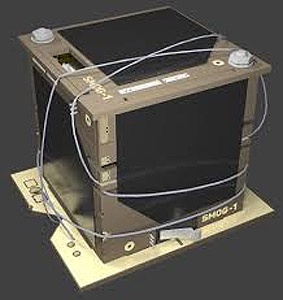
See also SMOG-P (MO-105) and ATL-1 (MO-106) – CubeSat and LEO Satellites – AMSAT Deutschland e.V. Forum.
** RamSat built by Oak Ridge Tennessee middle school students to go to the ISS in the autumn: For members: RMS satellite scheduled to launch in September – Oak Ridge Today
The small cube satellite built by Robertsville Middle School students with help from teachers, mentors, and NASA is scheduled to launch on a resupply rocket to the International Space Station in September, and it could be deployed into orbit a few hundred miles above Earth in October.
Testing of the satellite and its components, including a battery test and vibration tests, was scheduled to start this week.
** AMSAT news on student and amateur CubeSat/smallsat projects:
ANS-152 AMSAT News Service Special Bulletin:
- Temporary Rule Waivers Announced for 2020 ARRL Field Day
- IARU-R2 Workshop Videos Available
- Digital Mode Experiments Conducted on Linear Satellites
- SpaceX Launches Successfully Toward ISS
- Moonbounce Contact via FT8 Could be a First
- Mid-Altitude Balloon Race Planned for June 1
- ARISS News
- Upcoming Satellite Operations
- Hamfests, Conventions, Maker Faires, and Other Events
- Satellite Shorts From All Over
ANS-159 AMSAT News Service Special Bulletin:
- Newly Revised 2020 Digital Edition of “Getting Started with Amateur Satellites” Now Available
- Amateur Radio on the International Space Station (ARISS) Team in the United States Creates a New Organization: ARISS-USA
- AMSAT President’s Statement on Creation of ARISS-USA
- Back Issues of The AMSAT Journal Available to AMSAT Members
- AO-73 Now in Full-Time Transponder Mode
- VUCC Awards-Endorsements for June 2020
- KG5FYJ Assigned to Upcoming ISS Mission
- A New Way to Obtain GP Data (aka TLEs)
- Hamfests, Conventions, Maker Faires, and Other Events
- Upcoming Satellite Operations
- Satellite Shorts from All Over
See also:
- ANS-153 AMSAT News Service Special Bulletin – Newly Revised 2020 Digital Edition of “Getting Started with Amateur Satellites” Now Available
- 2020 Edition of Getting Started with Amateur Satellites – Digital Download – AMSAT
General CubeSat/SmallSat info:
- News & Resources:
- Russian space firm to team up with Japanese company in satellite production and export -TASS
- Space BD successfully launched its payload, SATLANTIS’ iSIM to the International Space Station via HTV9 – Space BD
- Momentus signs contract with OrbAstro for SpaceX rideshare flight – SpaceNews.com
- Preparations resume for Vega’s upcoming mission with 53 small satellite passengers – Arianespace
- Arianespace return to Vega launch preparations following two month pause – NASASpaceFlight.com – “VV16 will launch 53 smallsats into a Sun-Synchronous Orbit for 21 customers. These spacecraft are to serve various applications, which include Earth observation, telecommunications, science, technology, and education.“
- Projects:
- Exoplanet Hunting with CubeSats – Centauri Dreams
- Nanosatellite with global mission tested for space – ESA
- Russian Nuclear Physicists Propose Using Lasers to Search for Life in Our Solar System – Sputnik International – “A specialized, very small measuring instrument has been prepared for launch aboard either a cubesat 1U (i.e. 10x10x10 cenimeters) or 2U (10x10x20 cm), Panasyuk says, with the apparatus expected to contain some biological objects, most likely algae, through which it will be possible to test out the technology.“
- NetSat – A Four Nano-Satellite Formation Flying Mission
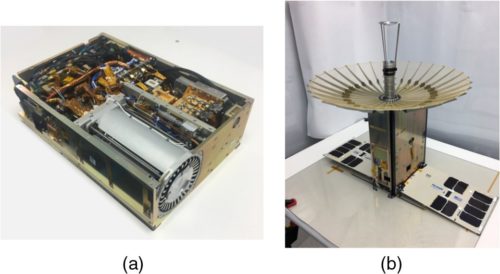
- RainCube: the first ever radar measurements from a CubeSat in space – SPIE
-
- Coast Guard Auxiliary Supports Research Efforts – MarineLink – “As part of the DHS Science & Technology Polar Scout CubeSat project, the RDC constructed a satellite ground station in Fairbanks, Alaska. This labor-intensive effort required the construction of an 18-foot radome structure. The successful completion on this ground station provided a valuable resource for the Coast Guard and DHS while testing CubeSat technology in support of Arctic search and rescue.“
** Smallsat built at UNSW Canberra at the Australian Defence Force Academy to fly on next Rocket Lab Electron launch:
The next mission from #UNSWCBR Space, M2 Pathfinder, is launching on @RocketLab‘s Mission 12 “Don’t Stop Me Now” on June 11.
M2PF is a significant next step in flight heritage for our program of developing intelligent space systems and the development of Australian capability. pic.twitter.com/dseWRUzhzP
— UNSW Canberra (@UNSWCanberra) May 29, 2020
** NASA STEM Stars: CubeSats
“NASA STEM Stars” is a web-chat series that connects students with subject matter experts to learn about STEM careers and ask questions about STEM topics. This week, “NASA STEM Stars” is joined by aerospace engineer Allison Evans, who specializes in CubeSats. Learn about her path to NASA and how she ended up building and testing spacecraft the size of a loaf of bread.
** Hiber smallsat constellation will provide IoT services for a diversity applications such as assisting beekeepers:
** 1st “Make Space Boring” virtual conference – Jason Kanigan – Lowering the 40%+ Smallsat Failure Rate – Cold Star Technologies – YouTube
Jason Kanigan of Cold Star Tech speaks at the first “Make Space Boring” virtual conference. His topic is lowering the awful 40%+ partial plus full mission failure rate of small satellites.
** Building small satellite/cubesat missions in Indian universities
What goes into building a cubesat program at a university? What are the difference between university teams trying to build satellites in India against US? How can we improve the overall ecosystems in academia to build more student missions in India? Here are some great insights from Sharan. NewSpace India Episode 25 June 5, 2020
=== Amazon Ad ===