AMSAT, the Amateur Radio in Space organization, has introduced the BuzzSat initiative, which aims
to encourage youth to pursue careers in aerospace and communications with an education science, technology, engineering art, and math (STEAM).
BuzzSat provides a set of free online courses, which currently includes:
An Introduction to Satellite Meteorology explores the many ways that NOAA satellites help meteorologists predict the immediate weather and long-term climate behavior to make our lives more enjoyable and safer. Start now by clicking on Introduction to Satellite Meteorology
Satellites and Climate Change begins with a review of the natural and man-made causes of climate change and how its impacts our lives over the short and long terms.
Satellites and Pollution Control examines the root causes of pollution, both natural and man-made. It looks at the effects of pollution on our environment and our health.
Several more courses will be added within the year.
Check out the BuzzSat coloring book, available as a free download.
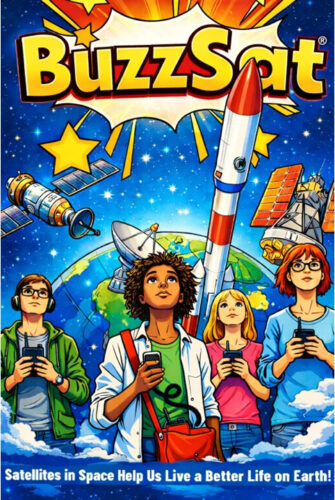
BuzzSat designed the coloring book
… for kids with an interest in satellites and how they play a role in our modern lives.
The book is comprised of twelve 2-page spreads that show how satellites are used and the benefits they provide. Topics include satellites and:
Agriculture
Broadcasting
Communications
Climate Change
Pollution Control
Fighting Wildfires
Preserving Wildlife
Space exploration
Navigation
Meteorology
Research on the ISS
Search and Rescue
The book also includes a discussion guide for each topic. It is written for parents, group leaders or teachers who want to use the coloring books in their educational activities. But, not to worry – please use these coloring books for just plain fun.
===
AMSAT has a deal for joining. The Feb. 22nd issue of the AMSAT News Service Weekly Bulletin says:
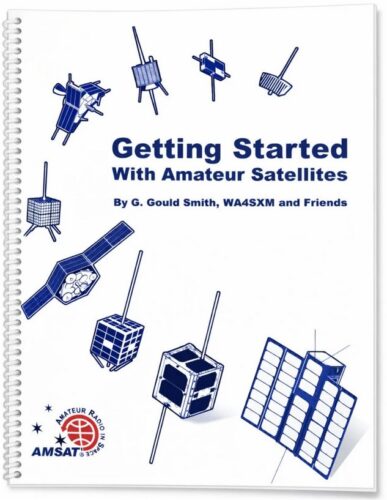
AMSAT is offering a limited-time promotion for new and renewing members that includes a free digital copy of Getting Started with Amateur Satellites. The promotion is being offered as AMSAT begins the 2026 membership year.
Anyone who joins or renews their AMSAT membership during the promotional period will receive a download link for the latest edition of Getting Started with Amateur Satellites in their membership confirmation email. The guide is designed to help radio amateurs understand the fundamentals of satellite operation and serves as a practical reference for both newcomers and operators returning to the hobby. Additional information about AMSAT membership is available at https://launch.amsat.org.
In addition to this limited-time promotion, AMSAT membership includes a subscription to The AMSAT Journal, access to archived issues, discounts on selected items in the AMSAT online store, and opportunities to participate in AMSAT elections, committees, awards programs, and other AMSAT activities and programs. Members may also access archived proceedings from past AMSAT Space Symposiums through the AMSAT member portal.
Beyond these tangible benefits, AMSAT membership supports the development, launch, and operation of amateur radio satellites, along with education and outreach efforts. Joining AMSAT is not just about individual benefits — it is about being part of the community that builds and operates amateur satellites for radio amateurs worldwide. As AMSAT looks ahead to 2026, the promotion helps launch another year of growth and opportunity for amateur radio in space.
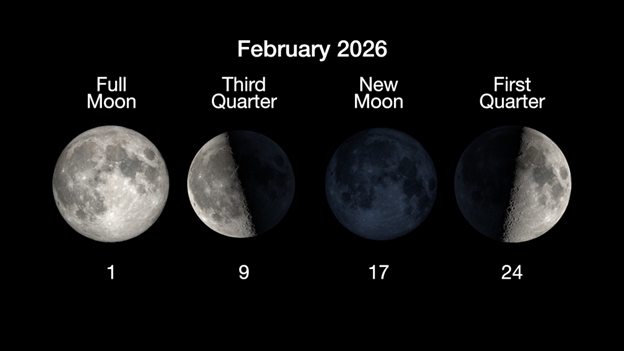 Phases of the Moon for Feb.2026. Credits: