Video: TMRO Orbit 10.45 – Webcasting launches and Social Space

The latest TMRO.tv episode is now available on line: Webcasting launches and Social Space – Orbit 10.45

This week we ask the question, “at what point does webcasting rocket launches no longer make sense? — How does a social launch experience help the industry?”

News and launches:

  • Juno Solves The “Flyby Anomaly”
  • Cygnus Departs Station and BEAM prepped to stay at Station
  • Light Pollution On The Rise Globally
  • Long March 2D Launches Weixing Satellite

TMRO is viewer supported:

TMRO:Space is a crowd funded show. If you like this episode consider contributing to help us to continue to improve. Head over to http://www.patreon.com/tmro for information plus our all new goals and reward levels

===

A video of TMRO’s After Dark webcast on Patreon funding:

Patreon is making some large changes to how they process funds. These changes directly impact all of the citizens of TMRO. This After Dark talks about our views on this, how it impacts everyone, workarounds and possible alternate options. Please leave your opinion on the matter in. the comments below.

Videos: “Space to Ground” ISS report – Dec.8.2017

The latest episode of “Space to Ground” from NASA on ISS activities this week :

A couple of other ISS relate videos:

** The Orbital ATK Cygnus cargo craft departs from the ISS on Wednesday:

https://youtu.be/mjMFAm4IKQs

** Exercising on the ISS:


====

Videos: A SpaceX tribute + Flying over Mojave Crater & Jupiter + “Orbit Ever After” short film

A selection of interesting space videos:

** Stash Capar:  “55 years after JFK’s famous Rice Moon speech, the stars continue to beckon.”

** Two from Seán Doran

** Jamie Magnus Stone: “Orbit Ever After”

https://youtu.be/DpFXMIxlgPo

====

Video: “A Planet for Goldilocks: Kepler & the Search for Living Worlds” – Dr. Natalie Batalha

Dr. Natalie Batalha of NASA’s Kepler Mission Project gives a public lecture about A Planet for Goldilocks: Kepler & the Search for Living Worlds

NASA’s Kepler Mission launched in 2009 with the objective of finding “Goldilocks planets” orbiting other stars like our Sun. The space telescope opened our eyes to the many terrestrial-sized planets that populate the galaxy (including several right in our neighborhood,) as well as to exotic worlds unlike anything that exists in the solar system. Dr. Batalha gives an overview of the science legacy of the Kepler Mission and other key planet discoveries (including some results only a few weeks old). She also gives a preview of planet-finding missions to come.

====

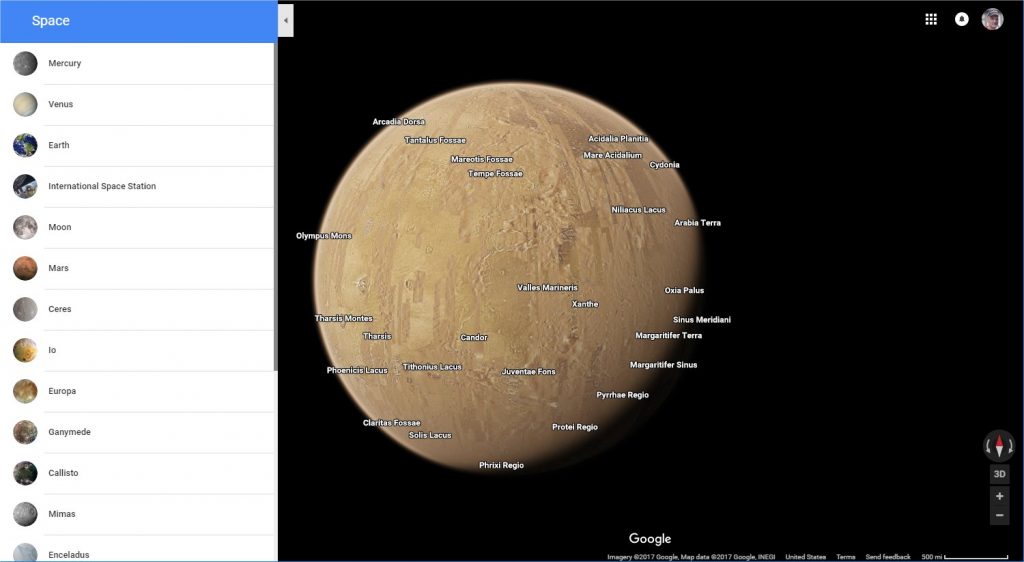
Google Maps offers 3D globes of solar system planets and moons

Check out the interactive 3D rotatable globes of solar system planets and moons at www.google.com/maps/space/

** Earth:

** Mars:

Mars global map

** Saturn’s moon Titan:

====