Mars One finalists refute accusations from one of their own + Making Mars settlement real

The Mars One project is getting hammered on the web by these two articles that include accusations against the project made by one of the entrants who made the cut to the Mars100 group:

However, other Mars1000 finalists respond with a rebuttal to each of the accusations: Current Mars100 Finalists refute Elmo Keep’s Mars One “conspiracy theory.” — Medium.

As I’ve indicated before, Mars One is essentially an aspirational project. It aspires to create a Mars settlement but it is dependent on others to make a settlement technically feasible at a price that a private effort could conceivably afford. There is nothing in the Mars One plan about developing its own rockets, spacecraft, settlement hardware, etc. Mars One is all about creating a business model that can raise sufficient funds to pay the company (or companies) that supply the rockets, spacecraft, etc. to take a group of private individuals to the Red Planet.

Currently, it is only SpaceX that looks like it could supply affordable transportation to the Red Planet in the next decade or two. Elon Musk has often said, as in the interview at MIT last fall shown in the video below, that Mars settlement is the primary goal of the company:

The long term ambition of SpaceX is to develop the technologies necessary to establish a self-sustaining city on Mars, or civilization on Mars,

Full reusability of rockets and spacecraft is what makes it not crazy to talk about reductions in space transportation costs by factors of 10 to 100:

Well, it is a chicken and egg situation, the reason why there’s low demand for spaceflight is because it’s ridiculously expensive, and so at some point someone has to say, okay, we’re going to make something that’s much more affordable and then see what applications develop. That’s what has to happen.

The situation in rocketry is like if an aircraft – imagine if aircraft were single use, then how many people would fly? The flight rate would be really low. If you buy a 757 it’s like $250M, or maybe $300M, and you need two of them for a round-trip. No-one is paying half-a-billion dollars to fly from Boston to London, and if that were the case there’d be like a very small number of flights for scientific and military purposes and people would say, wow, the market for aircraft is so tiny, people really love going by boat – it’s nonsense.

If we have rockets that are reusable, we could – fully-reusable and can get to a decent flight rate, the potential is there to get a two order of magnitude reduction in the cost of space transport, which is, I think, vital for establishment of a self-sustaining civilization on another planet or even on the Moon or some sort of L5 colony or whatever, but you really need to get the cost down – we need a two order of magnitude improvement, at least, in the cost of transport. In fact, relative to the estimates of what it costs to do a manned Mars mission, I think like some of the lower estimates are at the $100B to $200B level, for a four person mission, we need more like a 10,000 fold reduction. I mean, so people can afford to go.

(As long as NASA ignores reusability and focuses only on a big and stupendously expensive rocket, the agency will never afford to go to Mars even for a simple flag and footprints mission with three or four astronauts.)

Elon is aiming for a price of $500k for a person to move to Mars. He sees that as an amount that many people could raise by cashing out all their assets.

He apparently has had no direct contact with Mars One and has stated that the organization’s emphasis on one-way trips is misguided. It won’t be affordable to go to Mars unless the transports are two-way:

I think there’s plenty of people who will sign up for a one-way trip to Mars. It’d certainly be enough, but I think the question is, is it a one-way mission and then you die, or is it a one-way mission and you get resupplied, that’s a big difference. I think it ends up being a moot point because you want to bring the spaceship back. These spaceships are expensive, okay, they’re hard to build. You can’t just leave them there. So whether or not people want to come back or not, is kind of – like, they can just jump on if they want, but we need the spaceship back. I mean, it’d be kind of weird if there’s this huge collection of spaceships on Mars over time. It’d be like, maybe we should send them back – no, of course we should send them back. Particularly if we want to have a colony of some kind that’s of significant size.

The Mars One graphics typically show Dragon spacecraft converted into habitats on the ground. However, Elon thinks that going to Mars in Dragons makes little sense:

Well, the illustrations that I’ve seen basically has them using a bunch of SpaceX rockets and Dragon spacecraft. I’m like, okay, if they want to buy a bunch of Dragons and Falcon 9 rockets, that’s cool. We’ll certainly sell them. I mean, I don’t think they’ve got anywhere near the funding to buy even one, so I think therefore it’s unrealistic, and I think trying to go to Mars in Dragon is less than ideal. It’s at least – well, if you go real fast it’s maybe a three month journey and normally it would be more like a 6 to 8 month journey. That’s a long time to spend in something with the interior volume of an SUV. I’d recommend waiting for the next generation of technology.

Elon has said that later this year he will describe in more detail the “next generation of technology” that he believes will enable his plan for Mars settlement.  If SpaceX makes steady progress over the next few years in implementing that technology, especially reusable rockets, then proposals for Mars settlement will gain increasing credibility and many organizations will emerge to pursue that goal. Mars One may be a leader in that movement or it may have become a footnote; an early group that failed to get off the ground financially but proved that there are plenty of people eager and willing to move to Mars.

Update: Some comments from Gwynne Shotwell at SpaceX about Mars travel: SpaceX: No One Laughs Anymore When We Talk About Colonizing Mars – Motherboard

“We’re not shy about talking about Mars, which would be an extraordinary step for humans, to actually have a settlement there,” SpaceX President Gwynne Shotwell said Tuesday at the Satellite conference in Washington, DC. “The whole company is geared up on that, everybody’s eye is on the Red Planet.”

“We’re not interested in one way trips,” she said. “In order to take people there and come back, you can’t toss the rocket when you get there and then wait 30 years until you can build another one on Mars.”

There is a surprising number of people that want to leave Earth, we believe there is a commercial application for any Mars mission,” she added.

My emphasis.

More imagery from Rosetta + Hoping Philae lander awakens

More cool images of comet Comet 67P/Churyumov-Gerasimenko have been released by ESA:

CometWatch: Focus on Hapi’s boulders | Rosetta – ESA’s comet chaser

Comet_on_17_October_2014_-_NavCam_node_full_image_2[1]

This single frame Rosetta navigation camera image was taken from a distance of 10.0 km from the surface of Comet 67P/Churyumov-Gerasimenko, on 17 October 2014. The 1024 x 1024 pixel image frame has a resolution of 87 cm/pixel and measures 870 m across.

ESA_Rosetta_NAVCAM_20141017_Context_20140819[1]

Out of the shadow – CometWatch 9 March | Rosetta – ESA’s comet chaser

ESA_Rosetta_NAVCAM_20150309_LR[1]

Cropped and processed single frame NAVCAM image of Comet 67P/C-G taken 9 March from a distance of 71.9 km to the comet centre. Credits: ESA/Rosetta/NAVCAM – CC BY-SA IGO 3.0

All-round activity – CometWatch 25-26-27 February | Rosetta – ESA’s comet chaser

ESA_Rosetta_NAVCAM_20150225_LR[1]

NAVCAM image of Comet 67P/C-G taken on 25 February from a distance of 81.9 km to the comet centre. The image has a resolution of 7.0 m/pixel and measures 7.1 km across. The image has been processed to bring out the details of the comet’s activity. Credits: ESA/Rosetta/NAVCAM – CC BY-SA IGO 3.0

Waiting for a signal from Philae | Rosetta – ESA’s comet chaser – ESA hopes the sun wakes up the Philae lander

Lander_search_area_node_full_image_2[1]

Lander search area. The image is a 2 x 2 mosaic comprising OSIRIS narrow-angle camera images taken on 13 December 2014 from a distance of about 20 km to the centre of the comet.Credits: ESA/Rosetta/MPS for OSIRIS Team


Lunar flash and plume seen by amateur astronomers

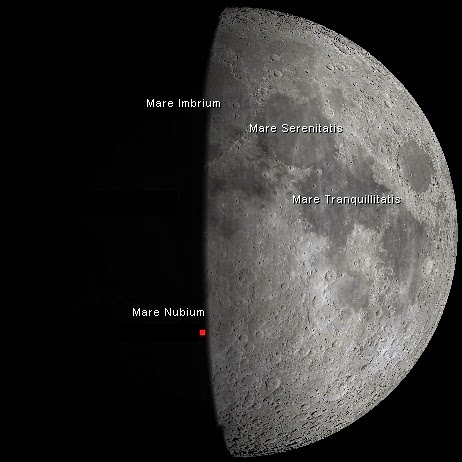
Selenology Today – 2015 (pdf) and Lunar Networks blog report on a flash seen on the Moon by three members – Marco Iten, Raffaello Lena, Stefano Sposetti – of the Geological Lunar Research Group, an Italian group of advanced amateur observers. The flash was apparently produced by a meteoroid impact: Mare Nubium impact with plume captured and analyzed – Lunar Networks –


2015_02_26_213522_Iten_blackSee the flash and plume in top right,

Abstract: We report the detection of an interesting luminous event most probably generated by a meteoroidal impact on the lunar surface occurred at 21h 35m 22.871s ± 0.010s UT, the 26 February 2015. The position of the flash was along the terminator at selenographic coordinates 7.9° ± 0.6° W; 26.1° ± 1.6° S. The brightness of the flash 0.16 s after the initial detection was +8.0 magV. After the main lightdrop a successive residual diffuse light lasted for several seconds.

Under the assumption of a meteoroidal impact we argue that this post luminous event and its ever growing dimensions was likely caused by the sunlight reflection on ejected materials released by the impact. Thus, future high resolution orbital data, e.g., from LRO spacecraft (NAC images) could allow the detection of this crater. Because this event was captured only by one observer, we checked for satellite glints and evaluated the likelihood of a meteor hitting head on our atmosphere.

2015_02_26_213522_Iten_4x

This map shows the location of the flash at Mare Nubium:

VMA-Lippershey_P-200

Mapping the sea surface from the Int. Space Station

The Int. Space Station is becoming a popular platform on which to experiment with and implement earth observation systems. For example, the company UrtheCast has cameras on the outside of the ISS providing continuous images of the earth. In February, a SpaceX Dragon delivered the Cloud-Aerosol Transport System (CATS) to the ISS. The CATS system will measure atmospheric aerosols and clouds. Last fall, another Dragon delivered NASA’s ISS-RapidScat instrument to the ISS where it will measures the speed of wind over the oceans.

The ISS has many advantages as a platform for testing earth observation techniques and systems.

  • Plenty of power available from its big solar panels
  • Data links, processing, and communications with earth are available.
  • The ISS’s high inclination orbit means it passes over much of the earth’s land and oceans.
  • People are available on board to install, repair, and replace the hardware.
  • New parts, replacements, etc. can be delivered and, in some cases, old parts and systems returned.

Here is a report of an ESA project to use the ISS as a platform to measure the wave heights on the oceans:

Mapping sea surface from the Space Station

16 March 2015: A new concept that involves mounting an instrument on the International Space Station and taking advantage of signals from navigation satellites could provide measurements of sea-surface height and information about features related to ocean currents, benefiting science and ocean forecasting.

ISS_for_Earth_science_node_full_image_2[1]GEROS-ISS will be installed on the upper balcony of ESA’s Columbus
space
laboratory, which provides mechanical interface plates as well
as power,
command and data links to the ISS systems.

We have all seen the beautiful photographs of our planet taken by astronauts, but orbiting Earth 16 times a day just 400 km above, the Space Station also offers a platform from which to measure certain variables related to climate change.

So, in 2011 ESA called for proposals to explore how the Space Station could be used to make scientifically valid observations of Earth. After reviewing and assessing numerous proposals, the result is to further develop the GEROS-ISS mission concept.

GEROS-ISS stands for GNSS reflectometry, radio occultation and scatterometry on board the ISS.

Global navigation satellite systems (GNSS) include GPS and Galileo satellites, which send a continual stream of microwave signals to Earth for navigation purposes, but these signals also bounce off the surface and back into space.

The idea is to install an instrument with an antenna on the Space Station that would capture signals directly from these satellites as well as signals that are reflected or scattered from Earth.

This process could be used to calculate the height of the sea surface, and to measure waves – or ‘roughness’ – that can then be used to work out the speed of surface winds.

Sea-surface_height_cm_node_full_image_2[1]Variations in sea-surface height (cm) obtained by merging multiple
altimeter measurements. GEROS-ISS would be able to observe
this variability so that maps covering latitudes 51° N to 51° S
can be produced every four days.

GEROS-ISS is primarily an experiment to demonstrate new ways of observing Earth.

However, if taken beyond the testing phase this new approach would complement measurements from satellites carrying altimeters such as CryoSat and Sentinel-3, and satellites carrying wind scatterometers such as MetOp.

Importantly, it is the first concept to assess the potential of spaceborne GNSS reflectometry to determine and map ocean height at scales of 10–100 km or longer in less than four days. Current satellite altimeters, in comparison, offer global maps at scales of around 80 km, which are produced from multiple datasets every 10 days.

A system based on GEROS-ISS would, therefore, complement existing satellite systems, helping to map ocean variability at finer spatial and temporal scales over a range of seas in tropical and temperate regions.

It would also refine our understanding of how well the concept would work for measuring the roughness of the ocean surface.

In this respect, the development of GEROS-ISS benefits from experience gained with the UK’s TechDemoSat-1, which also measures ocean-surface roughness using a similar technique. It is also hoped that NASA’s upcoming CYGNSS constellation of mini satellites will help pave the way for GEROS-ISS.

In addition, GEROS-ISS uses a technique called radio occultation whereby the antenna receives signals that are refracted as they pass through the atmosphere. This can be used to generate vertical profiles of atmospheric humidity, pressure and temperature, as does the GRAS instrument on the MetOp satellites, for example.

Jens Wickert who leads the science team that proposed GEROS-ISS said, “It is very flexible, combining different mission concepts and applications in one: GNSS-reflectometry to determine sea-surface height, scatterometry to measure sea-surface roughness and radio occultation for atmospheric studies.”

ESA engineer Manuel Martin-Neira noted, “The original concept actually goes back over 20 years and has matured considerably through numerous studies and campaigns, however, it has never been duly tested from space.”

“Being able to use the International Space Station in this way means that we can quickly validate innovative observing techniques without having to build an entire satellite, and we expect this to lead to new opportunities for science,” added Michael Kern, ESA’s GEROS-ISS mission scientist.

Jason Hatton, GEROS-ISS project coordinator, said, “The concept is still going through feasibility studies, but the aim is to launch the experiment towards the end of 2019.

Flying_over_Columbus_I_m_the_farthest_away_from_Earth_node_full_image_2[1]

This image of Europe’s Columbus space laboratory was taken by
ESA astronaut Luca Parmitano during his spacewalk on 9 July 2013.

“It would be carried to the Space Station on a cargo vehicle and installed on ESA’s Columbus space laboratory using a robotic arm, after which GEROS-ISS would run for at least a year.”

The GEROS-ISS feasibility studies are being carried out through ESA’s General Studies Programme.

The Space Show this week – Mar.16.15

Guests and topics of discussion on the The Space Show this week:

1. Monday, March 16, 2015: 2-3:30 PM PDT (5-6:30 PM EDT; 4-5:30 PM CDT): We welcome back Dr. John Logsdon to discuss his new book, After Apollo?: Richard Nixon and the American Space Program. Dr. John Logsdon is Professor Emeritus of Political Science and International Affairs at George Washington University’s Elliott School of International Affairs.

2. Tuesday, March 17,, 2015:,7-8:30 PM PDT (10-11:30 PM EST, 9-10:30 PM CDT): We welcome back Henry Vanderbilt to discuss the upcoming Space Access Society Conference this year.

3. Friday, March 20, 2015; 9:30 -11 AM PDT (12:30-2 PM EDT; 11:30-1 PM CDT): There will be no live guest today. Instead, I am playing a surprise Golden Oldie from the archives. When you see the show on the website and blog, it will be ready for play. I am sure you will find my surprise selection to your liking!

4. Sunday, March 22, 2015: 12-1:30 PM PDT (3-4:30 PM EDT, 2-3:30 PM CDT): We welcome DAVID WOODS from the UK. Mr. Woods is a noted author and Apollo era historian and will be discussing his latest book and much more, His latest book, the Gemini Manual, written with prolific space author David Harland, looks closely at this often forgotten spacecraft and describes its systems and how it laid the groundwork for Apollo over ten astonishing missions that were flown over the course of only 20 months.

See also:
/– The Space Show on Vimeo – webinar videos
/– The Space Show’s Blog – summaries of interviews.
/– The Space Show Classroom Blog – tutorial programs

The Space Show is a project of the One Giant Leap Foundation.

===========================