Category Archives: Rockets

Space transport roundup – June.24.2020

A sampling of recent articles, videos, and images dealing with space transport (find previous roundups here):

** SpaceX SN5 prototype Starship was moved to the launchpad from the assembly area this morning at Boca Chica Beach. Initial pressure testing is expected to start next Monday. This would be followed by at least one static firing of the engine(s). If those tests go well, then a low altitude hop would be the next step.

** SpaceX Starship test article SN7 was pressure tested to destruction on Tuesday. The tank had previously popped a leak on June 16th during its initial tests. Elon Musk indicated in Tweets then that the test reached a satisfactory 7.6 Bars of pressure before leaking rather than bursting. After repairs were made, the cryogenic pressure tests were resumed today with the intention of raising the pressure until the tank ruptured. No word yet from Elon on what pressure level was reached before the tank failed.  Here is a video of the event, which was much more dramatic than the earlier one:

Another view:

Find more about DM-2 and other SpaceX activities below

** China launched a Beidou navigation satellite on Long March 3B rocket this week. This completes the constellation for the  BeiDou Navigation Satellite System (BDS). The launch took place from the inland Xichang space center in southwestern China. Images later surfaced showing the smoking remains of the booster near a lake. For decades China has sent such boosters into populated areas despite the fact that the rockets use very toxic propellants.

** Arianespace Vega to  launch 53 smallsats. The launch on the initial target date of June 20 was canceled due to upper level winds. No new date has been announced as of June 23rd. This will be the first launch of a Vega rocket since a launch failed for the first time on July 11, 2019after fourteen successful flights. This is also the first of the Vega’s Small Spacecraft Mission Service (SSMS) missions. The smallsats come from 21 different customers. A list of the spacecraft can be found in the Launch Toolkit (pdf).

** United Launch Alliance (ULA) carried out a wet dress rehearsal for the Atlas V launch of the Perseverance Mars mission.  The launch is currently set for July 20th. A wet dress rehearsal means the rocket was loaded with propellants and the steps in a launch were followed up to the moment when it would lift off the pad. There was no firing of the engine as happens with a SpaceX Falcon 9 pre-launch static test.

Wet Dress Rehearsal: Atlas V Mars 2020

** Skyrora launches low altitude sounding rocket: Hattrick for rocket company after first ever launch from Shetland soil | Skyrora

Edinburgh-based Skyrora successfully launched its Skylark Nano rocket from remote land, the Fethaland Peninsula at North Roe on the Scottish island on Saturday, the 13th of June.

Skyrora plans to launch from one of the three proposed spaceports in Scotland and commercially launching from Shetland in the future is a potential option for them.

Reaching an altitude of six kilometers, this marked the third time the 2 meter (6.5ft) projectile took to the skies. The launch was completed for educational purposes, collecting meteorological data, measuring wind profiles, analysing the vehicles trajectory and providing critical training in support of Skyrora’s future plans.

Skyrora invited local journalists to attend the launch and to be apart of the education and learning process. All social distancing measures were met during the launch days.

Robin Hague, Head of Launch said: “The launch signifies a vital step towards Skyrora’s ambitions to become the UK’s “go-to” satellite launch provider. We’re ecstatic and truly proud. This is a great success for Skylark Nano, and the Skyrora team in general. Launching from Shetland is very important for us because it’s a potential option for our Skyrora XL orbital commercial launch vehicle. To understand the local launch conditions learning more about the wind profiles in Shetland is critical.

“Skylark Nano’s third successive launch is testament to the engineers who have worked tirelessly to bring to life a reusable rocket that can provide valuable intelligence for the future of the UK space programme.”

It comes after Skyrora successfully completed a full static fire test on their Skylark-L launch vehicle.

Volodymyr Levykin, CEO, said: “With this successful launch from Shetland we are further closing the gap to making the UK a rocket launching nation again.

** Update on Relativity Space and the company’s large scale metal 3D printing technology: Relativity Space may be printing the future of more than just rocketry – SpaceQ

Yes, Relativity’s inexpensive launch capabilities are attracting clients. While Noone was not at liberty to discuss all of their potential clients, he did mention that Canada’s own Telesat is betting on Relativity Space to launch a portion of their LEO broadband satellite constellation. Relativity had made that announcement public in April of 2019 with Telesat’s approval.

As Noone pointed out, though, it’s much bigger than that. Nobody has ever had the resources or opportunity to learn this much about additive manufacturing. “Manufacturing as software” means that creating a single part or product is as economical as a million-part run; even creating new parts only waits on Relativity’s engineers and Stargate AI’s to sort out the optimal way to produce them. Iteration becomes as fast for hardware as it is for software. While Noone didn’t get into details, this could change manufacturing in ways that go far beyond rockets.

It’s also incredibly scalable. While only one Stargate [a very large 3D printer used to build the company’s rockets] currently exists, any new Stargate will be as capable as the first. A Stargate in their Mississippi facility has the same capabilities as the one in Los Angeles; and any future Stargates in any future factories would as well. A Stargate (with accompanying small printers) in Jakarta would be as capable as the one in Los Angeles. Terran rockets, with Aeon engines, could be built and launched almost anywhere.

** And Relativity gets a contract for future launches of Iridium replacement satellites : Iridium Selects Relativity Space as On-Demand Single Satellite Launch Partner — Relativity Space

Relativity Space today announced that Iridium Communications Inc. (NASDAQ: IRDM) has signed a launch contract to deliver satellites to orbit. The contract includes flexible timing for up to six dedicated launches to deploy Iridium’s ground spare satellites to Low Earth Orbit (LEO). The launches will take place on an as-needed basis, determined by Iridium and utilizing Relativity’s Terran 1, the world’s first 3D printed launch vehicle. Launches are planned for no earlier than 2023.

See also:

** Rocket Lab to launch NASA probe to the Moon in 2021: How Rocket Lab plans to pull off its first mission to the Moon next year – The Verge

Rocket Lab is known for launching tiny satellites into Earth orbit, but the company has big plans to venture deeper into space, with its first mission to the Moon set for next year. Thanks to a contract with NASA, Rocket Lab will send a small spacecraft called CAPSTONE into orbit around the Moon to test out how to navigate in lunar orbit and help human missions to the Moon in the future.

It’ll be the most ambitious mission yet for Rocket Lab, which just launched its workhorse Electron rocket on its 12th flight this weekend. In total, the company has put up to 53 spacecraft into space, and so far, all of the those launches have sent satellites into low Earth orbit. But the company has been eyeing ways to push the envelope. “From day one that I came to Rocket Lab, it’s been an interest to stretch the legs of Electron and keep pushing to see what we can do,” Amanda Stiles, the Moon program manager for Rocket Lab who used to be the director for Google Lunar X Prize, tells The Verge. “And I know from the very highest levels of the company, there’s always been a big interest in going to the Moon.”

This mission will rely on a key piece of hardware that Rocket Lab has been using for the last few years: its Photon spacecraft. The cylindrical vehicle sits on the top of Rocket Lab’s Electron rocket, propelling customers’ hardware into low Earth orbit. It can also serve as a customizable satellite that can carry various payloads and instruments into space. “For most people’s purposes, they’re looking at low Earth orbit, but it’s also flexible where we can upgrade it and use it as a platform for these more advanced missions,” says Stiles. “So, this is the first advanced version of a Photon for that purpose.”

Meanwhile, Rocket Lab wins two NRO launches: Rocket Lab wins NRO contracts for back-to-back launches – SpaceNews.com.

Here is an interview with Peter Beck, CEO of Rocket Lab: Perspectives Video Interview with Peter Beck, Chief Executive, Rocket Lab – Satellite News

The next Electron launch is targeted for July 3rd: Rocket Lab to Demonstrate Fastest Launch Turnaround to Date | Rocket Lab

The mission, ‘Pics Or It Didn’t Happen,’ is scheduled to launch from Rocket Lab Launch Complex 1 Pad A on New Zealand’s Māhia Peninsula no earlier than 3 July, 2020 UTC— just days after the successful launch of Rocket Lab’s most recent mission, ‘Don’t Stop Me Now,’ on 13 June, 2020 UTC. The back-to-back missions will represent Rocket Lab’s fastest turnaround between missions to date.

‘Pics Or It Didn’t Happen’ will deploy seven small satellites to a 500km circular low Earth orbit for a range of customers, including Spaceflight Inc.’s customer Canon Electronics, as well as Planet and In-Space Missions.

** An interview with Simon Gwozdz, CEO and Founder of Equatorial Space Systems in Singapore. Space Café Podcast Episode 005 Featuring Simon Gwozdz Is Now Available – SpaceWatch.Global

** Briefs:

==================

Check out the
The Lurio Report
for news and analysis of key developments in NewSpace

The latest issue:
Riding a Dragon, Rockets Rising, Space Resource Policy
Vol. 15, No. 4, June 14, 2020

Space Frontier Foundation Award for NewSpace Journalism

==================

** SpaceX:

**** A SpaceX Falcon 9 launch of another batch of Starlink satellites along with two Blacksky earth imaging satellites is set to lift off on Thursday, June 25th at 4:39 pm EDT (2039 GMT).  A static test firing on the pad is planned for today.

**** SpaceX attracting strong customer response to rideshare opportunities on the Starlink launches:

**** Tom Mueller, former chief of SpaceX propulsion development, gave an on-line presentation and extended Q&A with the Launch Canada student/amateur rocketry group last Friday. His main emphasis was on his experiences with home built liquid-fueled rockets but he occasionally made a SpaceX related remark. See the Highlights entry in the comments there for an overview of topics discussed.

Tom gave this video conference yesterday to Canadian student rocketeers. The first hour focuses on his successes and failures in amateur rocketry and his early career, as well as future goals now that he took a back seat with SpaceX. In the second part, he answers various questions from the audience on rocketry, SpaceX, his personal life, and more.

** More rocket and spaceship projects discarded by SpaceX – Scott Manley

In its 18 year history SpaceX has developed a lot of concepts on paper which never made it to flight, or, were never made to work. Either way the company has a rich history of projects that seemed like a good idea at the time but fell out of favour due to difficulties with engineering, a dearth of time, or a lack of a customer wanting to pay the cost.

**** Starship

****** Boca Chica Beach kept rock’in for the past week. The Starship prototypes SN5 and SN6 were both fully stacked except for the nosecone sections. The SN7 test article under went repairs and then was pushed to its breaking point in a final pressure test (see video at the top of this blog item).

Multiple construction projects are also underway, including what may be a pad for SuperHeavy Booster tests.

A new launch stand was being readied for the SN5 prototype, which reached the launch site today (see item at top).

Fingers crossed that SN5 will not explode, implode, or destroyed by ground support equipment detonations and actually do a low altitude flight.

****** Elon Musk comments on offshore launch/landing platforms for Starship/Super Heavy operations:

See also Elon Musk names Hobart boat builder Incat as potential rocket pad supplier – ABC News

****** Videos of Boca Chica activities over the past week:

****** June 18: SpaceX Boca Chica – Starship SN5 & SN6 have a get together in the high bay – NASASpaceflight – YouTube

Starship SN5 and Starship SN6 were spotted together in the high bay. Meanwhile, SpaceX teams continue to prepare the launch site ahead of the resumption of full-scale Starship testing. Video and Pictures from Mary (@bocachicagal). Edited by Jack Beyer (@thejackbeyer).

****** June 19: SpaceX Boca Chica – Starship SN7 Repaired & Superheavy Launch Pad Construction – NASASpaceflight – YouTube

Starship SN7 is repaired and upgraded while the Superheavy Launch Pad undergoes further construction including pouring multiple new foundations. Cory’s Taco Dome makes a reappearance as well as some other unknown ring stacks. Video and Pictures from Mary (@bocachicagal). Edited by Jack Beyer (@thejackbeyer).

****** June 19:  SpaceX Boca Chica – Starships, Test Tanks, Big Cranes and Thrust Pucks – NASASpaceflight – YouTube

With Test Tank SN7 at the launch site, Starship SN5 and SN6 in the High Bay, a huge crane is being assembled and a new Thrust Puck was being transported during Friday. Video and Pictures from Mary (@bocachicagal). Edited by Jack Beyer (@thejackbeyer).

****** June 21:  SpaceX Boca Chica – Super Heavy Pad Construction & SN7 Test Prep – NASASpaceflight – YouTube

SpaceX teams continued to lay the foundations for the Super Heavy orbital launch pad in Boca Chica. Meanwhile, SN7 was getting ready for another round of testing and a large crane is on-site to assemble the new high bay. Video and Pictures from Mary (@bocachicagal). Edited by Jack Beyer (@thejackbeyer).

****** June 22: SpaceX Boca Chica – Super Heavy Pad Work and Flare Stack Returns – NASASpaceflight – YouTube

With SN7 preparing for testing on Tuesday, and the return of the Flare Stack – work at next door’s Super Heavy launch pad involved the installation of huge columns of rebar. Video and Pictures from Mary (@bocachicagal). Edited by Jack Beyer (@thejackbeyer).

** Webcast rocket reports:

*** SpaceX Starship News, Starship/Super Heavy offshore Spaceport and Starlink Beta Testing coming soonMarcus House

**** SpaceX Starship Updates – Chinas Next-Gen Crew Capsule & Long March 5B Rocket ExplainedWhat about it!?

=====

=== Space Art from C. Sergent Lindsey ===

Sweatshirt imprinted with “SpaceX Delivers the Goods” by C Sergent Lindsey.

Space transport roundup – June.16.2020

A sampling of recent articles, videos, and images dealing with space transport (find previous roundups here):

** SpaceX launches Starlink and Planet SkyNet satellites. Early Saturday morning, SpaceX launched a Falcon 9 from Cape Canaveral for the second time in June with a batch of satellites for the Starlink broadband Internet constellation. Rather than the usual 60 satellites, however, this flight carried 58 Starlinks, leaving out two to provide room for three SkyNet earth observation satellites from Planet Labs and their deployment mechanism. Not long after the upper stage reached orbit, the three SkySats could be seen drifting away during the live webcast. The subsequent deployment of the Starlinks took place during a communications gap. The Starlinks will use  their onboard propulsion systems to reach their final operating orbits.

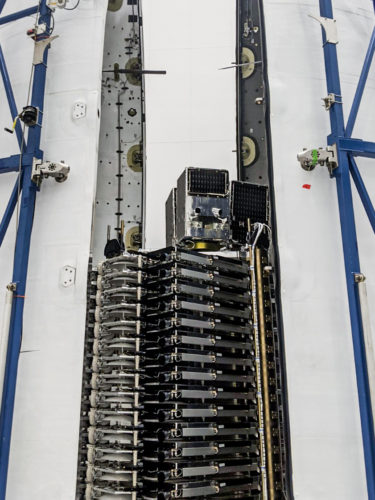
A view of the Starlink and SkySat satellites before being enclosed in the nosecone fairings:

Three Planet SkySats at the top of the stack of Starlink satellite for the Starlink mission. Credits: SpaceX

A view of the launch from outside of the Cape: SpaceX-Starlink 8 Launch-Landing Burn 06-13-2020USLaunchReport:

The booster returned to Port Canveral this morning:

The nosecone fairings on this launch had flown previously. They were recovered intact from the ocean and could conceivably fly on third launch: SpaceX’s next rocket fairing reuse milestone within reach after latest recovery – Telsarati.

[ Update: Elon Musk comments on the fairings:


]

Find more about  other SpaceX activities below.

** Rocket Lab sent five smallsats to orbit on the 12th Electron launch from New Zealand just past midnight on Saturday morning US Eastern time. The payload included three test smallsats for NRO, the auroral plasma science ANDESITE 6U CubeSat built by students at Boston University , and the M2 Pathfinder communications test satellite from University of New South Wales campus at Canberra in Australia.

** Rocket Lab sets July 3rd for next Electron launch, three weeks after the mission described aboveRocket Lab to Demonstrate Fastest Launch Turnaround to Date | Rocket Lab

The mission, ‘Pics Or It Didn’t Happen,’ is scheduled to launch from Rocket Lab Launch Complex 1 Pad A on New Zealand’s Māhia Peninsula no earlier than 3 July, 2020 UTC— just days after the successful launch of Rocket Lab’s most recent mission, ‘Don’t Stop Me Now,’ on 13 June, 2020 UTC. The back-to-back missions will represent Rocket Lab’s fastest turnaround between missions to date.

‘Pics Or It Didn’t Happen’ will deploy seven small satellites to a 500km circular low Earth orbit for a range of customers, including Spaceflight Inc.’s customer Canon Electronics, as well as Planet and In-Space Missions.

The primary payload aboard this mission, Canon Electronics Inc.’s CE-SAT-IB, was procured by satellite rideshare and mission management provider Spaceflight Inc. The mission objective for the CE-SAT-IB satellite is to demonstrate Canon Electronics Inc.’s Earth-imaging technology with high-resolution and wide-angle cameras, as well as test the microsatellite for mass production.

The next five spacecrafts manifested for this mission are the latest generation of SuperDove satellites manufactured by Planet, operator of the world’s largest constellation of Earth-observation satellites. Planet’s satellites are capable of imaging the Earth’s entire landmass on a near-daily basis. This unprecedented dataset helps researchers, students, businesses and governments discover patterns, detect early signals of change, and make timely, informed decisions. These five SuperDoves, Flock 4v, are equipped with new sensors to enable higher image quality with sharper, more vibrant colors and accurate surface reflectance values for advanced algorithms and time-series analysis.

The final spacecraft aboard Electron for this mission has been supplied by British small mission prime, In-Space Missions. The Faraday-1 6U CubeSat is a hosted payload mission providing a low-cost route to orbit for start-ups, institutions, and large corporate R&D groups.  In addition, it provides a first flight demonstration of In-Space’s own software-defined payload that will enable uploadable payload capabilities on future missions.  Faraday-1 is the first flight of the Faraday service with four future satellites already under contract.

See also Spaceflight Inc. Coordinates Rideshare Launch of Canon Electronics’ Second Earth Observation Satellite – Spaceflight.

** China sends an ocean observation satellite into orbit on a Long March 2C rocket:  China successfully launches new ocean observation satellite – Xinhua

China successfully sent an ocean observation satellite into orbit from the Taiyuan Satellite Launch Center in north China’s Shanxi Province on Thursday.

A Long March-2C rocket, carrying the satellite HY-1D, lifted off at 2:31 a.m. (Beijing Time), according to the China National Space Administration (CNSA).

The new satellite will form China’s first satellite constellation for marine civil service together with HY-1C, which was launched in September 2018, and double the current ocean observation data, according to CNSA and the Ministry of Natural Resources.

See also Long March 2C lofts Haiyang-1D – NASASpaceFlight.com.

** Interstellar Technologies of Japan tried to reach suborbital space (100km) last Saturday with a MOMO sounding rocket. The MOMO-5 rocket lifted off and for 30 seconds or so the flight appeared to go well but then there was then a flash and spark-like debris was seen in the plume. The nozzle came apart. Nevertheless, the vehicle  continued upward for another 40 seconds and then began to tumble. The engine was shut off remotely and the vehicle fell into the sea about 4 miles offshore from the launch pad.

The rocket reached an altitude of about 11.5 kilometers. Surprisingly low considering how long the engine fired before the fault occurred. Other than the nozzle failure, all the other systems performed well. According to posts on the company’s Twitter account, another vehicle is already under construction.

More info at:

As its name suggests, Momo-F5 is the fifth sounding rocket built by Interstellar Technologies, which aims to build affordable rockets to “make space more accessible,” according to a statement. It stands 32 feet (10 meters) tall and weighs about 1 metric ton. The company has launched one successful mission, the Momo-F3 rocket flight of May 2019, out of its five to date.

Interstellar Technologies used the Campfire crowdfunding site to raise $391,000 (42 million yen) for the Momo-F5 launch, well above the mission’s goal of nearly $84,000 (9 million yen). The mission was named for the book “Poupelle of Chimney Town” by Akihiro Nishino.

** Astra will try again this July to launch a rocket to orbit from the Alaskan launch facility on Kodiak Island. San Francisco startup Astra is going for its first orbital rocket launch in July – CNBC.

** Briefs:

==================

Check out the
The Lurio Report
for news and analysis of key developments in NewSpace

The latest issue:
Riding a Dragon, Rockets Rising, Space Resource Policy
Vol. 15, No. 4, June 14, 2020

Space Frontier Foundation Award for NewSpace Journalism

==================

** SpaceX:

**** The Director General of Roscosmos not thrilled with SpaceX success in launching crew to the ISS and taking commercial satellites to GEO:

Responses to Rogozin plus comments on the Raptor engine:

  • Elon Musk: “Quite a piece! I should credit Soviet/Russian engine work in the 80’s as being a factor in deciding to switch from H2 to CH4. They demonstrated excellent performance on test stands, with Isp up to 380 secs.
    • Elon Musk “Combined with SpaceX deep subcooling of propellants to near liquefaction temp of N2, use of common dome (CH4 & O2 liquid at similar temps) & higher T/W of engines enables de facto higher delta-V than an H2/O2 stage”.
    • Just a Tinker: “Folks don’t realize the mass penalty using hydrogen as rocket fuel. The Space Shuttle’s External Tank carried about four time the volume of liquid hydrogen than its liquid oxygen. Hydrogen is light but takes room that equates to larger tanks. Liquid methane takes much less room.
    • Elon Musk: “Also, insulation of a deep cryogen ( which I’d call anything that liquifies nitrogen aka 78% of air) is heavy & prone to heat leaks. H2 is hell.
  • Everyday Astronaut: “I know you’d never add unecessary complexity in the manufacturing line, but I’m still surprised you never made a closed cycle Merlin Vacuum to get closer to that 380 mark. Especially with SpaceX’s experience with ox rich preburners now with Raptor Rocket“.
  • Elon Musk: “We could never reach 380 Isp with RP/kerosene. CH4 has higher Isp potential on paper, but even better in practice. With CH4, you can reach >99% of max theoretical combustion efficiency, but RP is ~97% on a good day & requires desooting of turbines between flights.”
  • Elon Musk: “Important technical note: due to higher O/F of CH4 vs RP1 (oxygen is dense) & significant density increase of subcooled CH4 (plus no common dome insulation needed), plus cryo strength bump of CH4, tank mass of CH4/O2 stage is almost same as RP1/O2.
  • Everyday Astronaut: “So now that Raptor’s been pushed through its paces and more and more in actual production, how’s it looking? Manage any full duration tests yet? Re-firing / re-using looking better than Merlin yet?
  • Nick Wijngaards: “I’m curious to see new test footage or specs improvements of the raptor engine. SN1 vs SN20 Rocket
  • Elon Musk: “Hundreds of improvements in manufacturability primarily (this is by far the hardest problem), mass down, thrust up, Isp up. Current improvement list continues past SN50. As the saying goes, it’s 1% inspiration & 99% perspiration …
    • James Tyrrell: “We’re on SN5/6/7 and there are plans continuing past SN50!! well.. holy shit.
    • Elon Musk: “Actually, we’re on SN30 for Raptor.
  • Everyday Astronaut: “Some day can we get a video compilation, “How not to run a full flow staged combustion engine” like the booster landing montage. Face with tears of joy I’ll bet there’s some speculat failures when pushing Raptor, that would be an amazing video
  • Elon Musk: “Sure. That’s long montage.

**** Amazing Camera Views From Inside SpaceX Rocket FairingsScott Manley

On Tuesday a great video was posted from the fairing of a SpaceX rocket carrying a payload of Starlink Satellites. It was one of the best looks at the interior of the fairings which are practically independent spacecraft able to control their entry & descent to steer their way to a rendezvous with the recovery vessels.

**** Major upgrades planned for the McGregor test facility: SpaceX pursues local funding for $10 million upgrade to McGregor plant – wacotrib.com

The rocket company launched by billionaire Elon Musk will spend $10 million on infrastructure improvements at its rocket-testing facility in McGregor. The upgrades will include “noise suppressors,” which should prove welcome to those within earshot of SpaceX’s rumbling, window-rattling rehearsals.

Waco City Council and McLennan County Commissioners Court will vote Tuesday on sending SpaceX $2 million from the Waco-McLennan County Economic Development Corp. fund, with each entity allocating $1 million.

**A cool view of the separation of the booster from the upper stage and of the booster using its thrusters to reorient itself for its return for landing:

**** Starship

****** Labeled SN7 by observers, a shortened version of a Starship tank was moved to the launch area at Boca Chica Beach last week. (A similar shortened tank named SN2 was pressure tested back in March to check wielding techniques.) On Monday the tank was pressured tested until it failed. A rupture was much less dramatic than previous failures in which parts and metal were hurled about.

Elon said the test results were positive:

****** The full scale Starship prototype SN5 is expected to roll out to the pad area in a few days. It will mount on a new stand that’s nearly complete. The previous stand was destroyed by a fiery explosion when methane fuel ignited after leaking from a failed disconnect mechanism at the base of the SN4 vehicle. A ram mechanism has been installed in the stand for pushing on the bottom of the tank. This presumably simulates the stresses on the tanks during a launch to orbit. Arocket’s tank must deal not only with the internal pressure of the propellant but also the increase in the propellant’s effective “weight” as the rocket accelerates.

The original plan was for SN4 to do a low altitude hop powered by its single Raptor engine. SN5 would then do higher altitude flights using 3 Raptors. The presumption of observers is that SN5 will still get 3 Raptors despite SN4’s destruction before it had a chance to fly.

Assembly of prototype Starships SN6 is also nearly complete. See videos below for views of the construction of the Starship prototypes.

****** Elon Musk has indicated that launches of the huge Starship/Super Heavy booster combo will most likely require an offshore facility due to safety issues and loudness. It appears the preparations for development of such a facility are underway:

****** June 11: SpaceX Boca Chica – 304L Starship Sections Appear as Roll Lift Rides In – NASASpaceflight – YouTube

Lots of pre-rollout preps ongoing at SpaceX Boca Chica for SN5 and SN7 test tank as more Starship Sections – made from the new 304L Steel rings – appear at the production facility. Video and Pictures from the awesome Mary (@bocachicagal).

June 12: Starship SN7 Tank Rollout – SPadre – YouTube

June 14: SpaceX Boca Chica – Starship SN6 Stacking as SN5 heads outside. – NASASpaceflight – YouTube

With SN7 Test Tank at the launch site, Two “Grown Up” Starships – SN5 (now outside of the High Bay) and SN6 – (into final stacking) are preparing for the test campaigns. Video and Photos from Mary (@BocaChicaGal) – Edited by Jack Beyer (@thejackbeyer)

June 16: SpaceX Boca Chica – SN7 test tank reaches 7.6 bar during pressure test. – NASASpaceflight – YouTube

The SN7 test tank reached 7.6 bar during pressure testing to failure, per SpaceX CEO Elon Musk. With some improvements, Musk expects the next test tank to be able to achieve even higher pressures. Video and Pictures from Mary (@bocachicagal). Edited by (@thejackbeyer)

** Webcast rocket reports:

**** SpaceX Starship is now the top priority, Crew Dragon updates, Starlink launch with Planet rideshareMarcus House

** SpaceX Starship Updates – Super Heavy Preparations – What about it!?

Today we will take a first look at SpaceX’s preparations for the largest booster Rocket ever built. Super Heavy. We will recap everything, that’s happened since the last Episode, look at the latest Starship Prototype progress, look into what Elon Musk had to say and last but not least, take a look at possibly the first efforts of getting infrastructure in place to support Super Heavy.

=====

=== Space Art from C. Sergent Lindsey ===

Sweatshirt imprinted with “SpaceX Delivers the Goods” by C Sergent Lindsey.

Space transport roundup – June.10.2020

A sampling of recent articles, videos, and images dealing with space transport (find previous roundups here):

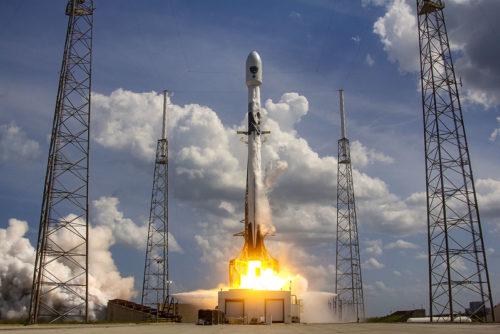
** SpaceX to launch another batch of Starlink satellites on a Falcon 9 rocket this week, the second such launch in June. Liftoff at Cape Canaveral is set for 5:42 am EDT (0942 GMT). Here is a video from SpaceX showing the fairings separating from the Falcon 9 on the recent Starlink launch:

Find more about other SpaceX activities below

** Rocket Lab Electron set to launch on Thursday June 11:. The liftoff is set for a window between 12:43-2:32 a.m. EDT ( 0443-0632 GMT)

See also:

** Update on development of ULA Vulcan launch system: Vulcan on track as ULA eyes early-2021 test flight to the Moon – NASASpaceFlight.com

United Launch Alliance has announced their Vulcan rocket is progressing towards its maiden launch as soon as early-2021. While an exact launch target isn’t known yet, the mission will use a newly-built Launch Umbilical Tower while sharing Atlas V’s Vertical Integration Facility and SLC-41 launch pad in Florida.

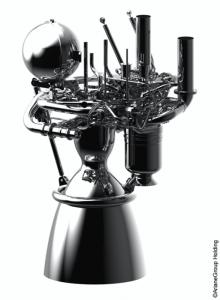
** Update on ESA’s reusable Prometheus engine: ESA moves ahead on low-cost reusable rocket engine – ESA

ESA’s Prometheus is the precursor of ultra-low-cost rocket propulsion that is flexible enough to fit a fleet of new launch vehicles for any mission and will be potentially reusable.

At the Space19+ Council meeting in Seville, Spain last November, ESA received full funding to bring the current Prometheus engine design to a technical maturity suitable for industry. Developed by ArianeGroup, Prometheus is now seen as key in the effort to prepare competitive future European access to space.

By applying a design-to-cost approach to manufacturing Prometheus, ESA aims to lower the cost of production by a factor of ten of the current main stage Ariane 5 Vulcain 2 engine.

Rendering of the reusable methane fueled Promethus engine.

** Sierra Nevada posts snapshots from Dream Chaser assembly:

** Briefs:

==================

Check out the
The Lurio Report
for news and analysis of key developments in NewSpace

The latest issue:
Masten Goes Lunar, Rocket Lab, New Space and a Virus
Vol. 15, No. 3, May 2, 2020

Space Frontier Foundation Award for NewSpace Journalism

==================

** SpaceX:

**** SpaceX aiming for four launches in June:

  • June 3:  Successful launch of Starlink 7
  • June 12 – Starlink 8 + Planet Labs SkySats 16-18
  • June 24 – Starlink 9 + Two Blacksky/LeoStella satellites
  • June 30 – USAF GPS-III-SV03

Acceleration of the Starlink deployments is very important for the company and two or more Starlink flights per month are likely to become the norm: Evaluating SpaceX’s Starlink Push – NASASpaceFlight.com.

**** A Falcon 9 booster landed after a 5th flight following the Spacelink 8 launch on June 3rd. A previous booster flew five times but its 5th landing failed due to a mistake during refurbishment. The boosters for the Falcon 9 Block 5 vehicles, considered the final major variant of the F9 system, were designed to fly 10 times before undergoing either major refurbishment or retirement. So this booster will no doubt be used for a 6th flight. Turn around times were predicted by Elon Musk to go as low as 24 hours but so far have not been less than a couple of months. With the pressure on to launch Spacelink satellites as quickly as possible, it will be interesting to see if the turnaround times decrease substantially.

**** Booster from June 3rd Starlink launch has already gone horizontal at Port Canaveral. Leg retractions now happen quite soon after the boosters are lifted from the landing platforms onto the dock.

A video of the booster returning to Port Canaveral on June 7th:

**** Starlink and Dragon spacecraft share some hardware and software technology: SpaceX engineers flash some facts about Starlink satellites – Geekwire

    • The technology used for the display screens on the Crew Dragon also provided the basis for the user interface on the first two prototype Starlink satellites, launched in 2018. “It’s grown a ton since then, but it was awesome to see Bob and Doug using something that somehow felt familiar to us too,” Monson wrote.
    • SpaceX relies on the Linux operating system in its satellites as well as its rockets. “Each launch of 60 satellites contains more than 4,000 Linux computers,” Monson said. “The constellation has more than 30,000 Linux nodes (and more than 6,000 microcontrollers) in space right now. And because we share a lot of our Linux platform infrastructure with Falcon and Dragon, they get the benefit of our more than 180 vehicle-years of on-orbit test time.”

**** NASA agrees to allow crew missions to fly with previously flown Dragon spacecraft and first stage boosters. This is similar to what happened with cargo missions. After initial flights with all new systems are performed successfully, NASA will allow to the utilization of previously flown Dragon 2 vehicles and F9 boosters. There will be certification procedures to insure the systems are as ready for flights as  new unused systems would be.

**** Astronauts launched on first crewed Dragon mission will stay at the ISS till August. : NASA anticipates August return for Hurley and Behnken – Spaceflight Now

SpaceX’s Crew Dragon spacecraft will likely return to Earth in August to wrap up a test flight to the International Space Station with NASA astronauts Doug Hurley and Bob Behnken, a senior space agency official said Tuesday.

The exact schedule for Hurley and Behnken’s return to Earth will hinge on several factors, such as the performance of their Crew Dragon spaceship, the progress of their work on the space station, and weather conditions in the capsule’s landing zones in the Atlantic Ocean and the Gulf of Mexico, according to Ken Bowersox, the acting associate administrator for NASA’s human exploration and operations mission directorate.

Bowersox said Tuesday that the Crew Dragon’s Demo-2 mission — the first SpaceX mission to carry astronauts — is proceeding as planned, and the crew capsule is performing well since its launch on a Falcon 9 rocket May 30 from the Kennedy Space Center and docking with the space station one day later.

The first operational crew mission with four astronauts aboard a Dragon is expected to lift off in late August or early September:

NASA astronauts Mike Hopkins, Victor Glover, Shannon Walker, and Japanese astronaut Soichi Noguchi are training for the Crew-1 mission. The Crew-1 flight will only launch after the return of the Demo-2 mission, and a subsequent review of data from the Crew Dragon test flight.

While the spacecraft for the Demo-2 mission came with a four-month certified mission lifetime, the Dragon for the Crew-1 flight will be certified for a full-duration 210-day mission, according to NASA.

Stich said there are several modifications to the capsule SpaceX is building for the Crew-1 mission, although major components such as the capsule’s life support system and guidance, navigation and control systems are largely unchanged.

“The Crew-1 vehicle can land in a little bit higher wind state,” Stich said. SpaceX has changed some of the outer composite panels to make that a little stronger.”

“It also has the capability not only dock to the forward port of the space station, but it can go to the zenith (space-facing) port as well, so it has that capability, and it has a couple other features,” Stich said.

**** 10 years since the launch of the first Falcon 9. Here’s an article about the history of the F9 highlighted by a couple of interesting stories about improvisations that got the early F9s into orbit on time: Forget Dragon, the Falcon 9 rocket is the secret sauce of SpaceX’s success | Ars Technica

Musk hated to substantially delay the mission. With this first launch of the Cargo Dragon spacecraft, he knew full well SpaceX stood to make history. No private company had ever launched a spacecraft into orbit before and then safely retrieved it. So he took out his phone and rang up Marty Anderson, one of the company’s ace technicians.

“Hey Marty, do you think you can just go and climb in the interstage and cut the bottom six inches off the skirt?” Musk asked.

No joke—Musk wanted Anderson to go into the rocket with a pair of metal shears and trim the bottom of the skirt. This was the solution to a tear in an engine nozzle.

Anderson was game. Hours later, he flew on Musk’s private jet from the company’s factory in California to Florida, got into a lift, and rode a crane up to the interstage. This happened with the rocket standing upright, out on the launch pad. Soon, Anderson had snipped away the skirt at the bottom of the engine.

**** Starship

****** The cleanup following the SN4 explosion proceeded rapidly and another launch platform will be ready soon. According to road closure schedules and FAA notices, the SN5 prototype is expected to roll out to the launch site this week and engine tests restarted soon thereafter.

More at SpaceX set for a swift return to testing following Starship SN4 anomaly – NASASpaceFlight.com.

** Elon makes Starship the primary focus for SpaceX. With the successful launch of the Crew Dragon spacecraft to the ISS with two astronauts on board, the development of the Falcon vehicle Crew systems is essentially complete. The company will need to insure that Crew and Cargo operations are carried out efficiently and safely, but the hardware development segments of the company can now move on to other projects. These will now be centered on development of the Starship and its Super Heavy Booster systems: Elon Musk email to SpaceX employees: Starship is the top priority – CNBC

SpaceX launched astronauts for the first time barely a week ago but CEO Elon Musk does not want the company resting on its laurels.

Instead, Musk urged SpaceX employees to accelerate progress on its next-generation Starship rocket “dramatically and immediately,” writing Saturday in a company-wide email seen by CNBC.

“Please consider the top SpaceX priority (apart from anything that could reduce Dragon return risk) to be Starship,” Musk wrote in the email.

See also

****** SpaceX drops plans to restart Starship activities at a facility at Port of L.A. While some design and component manufacture will be carried out at the Hawthorne, California headquarters, it appears that Texas will be the primary site for most all Starship  development, assembly, and testing activities.

****** View of the Boca Chica facilities:

The next major structure for Boca Chica is a building to assemble the huge Super Heavy booster: SpaceX’s Starship Super Heavy booster needs a custom assembly tower – Teslarati

**** Selections of videos showing activity at Boca Chica during the past week:

****** June 5: SpaceX Boca Chica – Starship SN7 taking shape as launch site is prepared for SN5 – NASASpaceflight – YouTube

With Starship SN5 days from rolling to the launch site Starship SN7 sections (inc. “mystery dome”) are being prepared for stacking next to Starship SN6 in the High Bay! Video and Photos from Mary (@bocachicagal). Edited by Jack Beyer (@thejackbeyer)

****** June 6:  SpaceX Boca Chica – New Starship Nosecone Peeking – NASASpaceflight – YouTube

While preparations continue at the launch site for the arrival of Starship SN5, future Starships are lining up for their turn. Another new nosecone was spotted peeking out of one of the big tents. Video and Photos from Mary (@bocachicagal). Edited by Jack Beyer (@thejackbeyer)

****** June 8:  SpaceX Boca Chica – Launch Pad prepares to receive Starship SN5 – NASASpaceflight – YouTube

Lots of work on the newly installed launch mount at the Boca Chica launch site was ongoing on Sunday as Starship SN5 prepares for this coming week’s rollout for testing. Video and Photos from Mary (@bocachicagal). Edited by Jack Beyer (@thejackbeyer)

****** June 8:  SpaceX Boca Chica – SN6 prepares as launch site work continues – NASASpaceflight – YouTube

While work continues at the SpaceX Boca Chica launch site ahead of Starship SN5’s arrival later this week, Starship SN6 is almost ready to become a complete stack via work on the thrust section. Video and Pictures from Mary (@bocachicagal)

****** June 9: SpaceX Boca Chica – SN7 dome goes for a flip – NASASpaceflight – YouTube

Three Starships in work at SpaceX Boca Chica, highlighted by a flip of a SN7 dome, that is either a common or top dome, but is certainly looks different to previous domes. Video and Photos from Mary (@bocachicagal). Edited by Jack Beyer (@thejackbeyer).

** Webcast rocket reports:

**** SpaceX Starship News with SN5, SN6 and SN7, Crew Dragon to be reused for Crew flights, StarlinkMarcus House

**** Scott Manley reviews rocket designs that SpaceX proposed but later dropped:

==

=====

=== Space Art from C. Sergent Lindsey ===

Sweatshirt imprinted with Space Art from C. Sergent Lindsey.

Space transport roundup – June.2.2020

A sampling of recent articles, videos, and images dealing with space transport (find previous roundups here):

** A SpaceX Falcon 9 successfully placed a Dragon into orbit on Saturday with astronauts Doug Hurley and Robert Behnken on board.  About 19 hours later, the spacecraft successfully docked to the Int. Space Station. This was the first time that a commercial, privately developed launch system put humans into orbit.

As on the first launch attempt last Wednesday,  weather had been poor on Saturday but cleared up in the last hour before the scheduled liftoff time and the launch went very smoothly. The first stage booster landed safely as well on a platform at sea. During a live broadcast from the Dragon (see video below), the astronauts announced that the Dragon had been christened Endeavor.

On Sunday morning the Dragon reached the Station and docked with it about 20 minutes earlier than expected. An hour or so later, the crew opened the hatch and entered the station to hugs from the three station occupants – NASA astronaut Chris Cassidy and Russian cosmonauts Anatoly Ivanishin and Ivan Vagner.

See also:

More about DM-2 and other SpaceX activities below.

** Virgin Orbit‘s first launch attempt of the LauncherOne rocket failed when the engine cut off shortly after firing. Virgin Orbit Ignites LauncherOne Rocket During First Launch Demo, Mission Safely Terminated – Virgin Orbit

Virgin Orbit, the California-based satellite launch company, conducted a launch demonstration of its innovative air-launched rocket today in the skies over the Pacific Ocean just off the California coast. The company successfully completed all of its pre-launch procedures, the captive carry flight out to the drop site, clean telemetry lock from multiple dishes, a smooth pass through the racetrack, terminal count, and a clean release. After being released from the carrier aircraft, the LauncherOne rocket successfully lighted its booster engine on cue — the first time the company had attempted an in-air ignition. An anomaly then occurred early in first stage flight, and the mission safely terminated. The carrier aircraft Cosmic Girl and all of its crew landed safely at Mojave Air and Space Port, concluding the mission.

“Our team performed their prelaunch and flight operations with incredible skill today. Test flights are instrumented to yield data and we now have a treasure trove of that. We accomplished many of the goals we set for ourselves, though not as many as we would have liked,” said Virgin Orbit CEO Dan Hart. “Nevertheless, we took a big step forward today.  Our engineers are already poring through the data. Our next rocket is waiting. We will learn, adjust, and begin preparing for our next test, which is coming up soon.”

The company’s next rocket is in final stages of integration at its Long Beach manufacturing facility, with a half-dozen other rockets for subsequent missions not far behind. Virgin Orbit’s decision to begin production of multiple rockets well in advance of this test flight will enable the team to progress to the next attempt at a significantly faster pace, shortly after making any necessary modifications to the launch system.

More about the launch attempt: Mission Recap: Our First Launch Demo | Virgin Orbit

About 9 seconds after drop, something malfunctioned, causing the booster stage engine to extinguish, which in turn ended the mission. We cannot yet say conclusively what the malfunction was or what caused it, but we feel confident we have sufficient data to determine that as we continue through the rigorous investigation we’ve already begun. With the engine extinguished, the vehicle was no longer able to maintain controlled flight — but the rocket did not explode. It stayed within the predicted downrange corridors of our projections and our Federal Aviation Administration (FAA) launch license as the vehicle fell to the ocean, posing no risk to public safety, no danger our aircrew or aircraft, and no significant environmental impact.

See also:

** The Japanese HTV-9 cargo vessel berthed to the ISS on May 25th following its launch on a H-IIB rocket on May 20th.: Japan’s Resupply Ship Installed on Station’s Harmony Module – Space Station/NASA

** China launched Long March 2D rocket with two satellites on Sunday, May 31st from the Jiuquan Satellite Launch Center in China’s northwest Gansu Province: China sends two satellites into planned orbit – Xinhua

As an optical remote sensing satellite, Gaofen-9 is capable of providing photographs with a resolution of about one meter.

It will be used in land surveys, urban planning, road network design and crop yield estimates, as well as disaster relief. It can also serve projects along the Belt and Road.

The other satellite, HEAD-4, was developed by Beijing-based HEAD Aerospace Technology Co. Ltd. It can carry out on-orbit information collection, including that on ships and aircraft, and the Internet of Things.

See also Long March 2D lofts Gaofen-9 – NASASpaceFlight.com.

** China launched two technology demo satellites on a Long March-11 launch vehicle on Friday, May 29th from the Xichang Satellite Launch Center, Sichuan Province in southwest China.

An enhanced LM-11 is in development: Designers working on new, more powerful Long March 11 rocket – Chinadaily.com.cn.

** Rocket Lab returning to launchpad following stand-down due to the corona virus. The Don’t Stop Me Now mission (pdf) aims to send an Electron into orbit during a window that between June 11 – 24. The Electron

will launch several small satellites, including the ANDESITE (Ad-Hoc Network Demonstration for Extended Satellite-Based Inquiry and Other Team Endeavors) satellite created by electrical and mechanical engineering students and professors at Boston University. The satellite will launch as part of NASA’s CubeSat Launch Initiative (CSLI) and will conduct groundbreaking scientific study into Earth’s magnetic field. Once in space, the ANDESITE satellite will initiate measurements of the magnetosphere with onboard sensors, later releasing eight pico satellites carrying small magnetometer sensors to track electric currents flowing in and out of the atmosphere, a phenomenon also known as space weather. These variations in the electrical activity racing through space can have a big impact on our lives here on Earth, causing interruptions to things like radio communications and electrical systems. The ANDESITE satellite follows on from Rocket Lab’s first ELaNa (Educational Launch of Nanosatellites) launch for NASA, the ELaNa-19 mission, which launched a host of educational satellites to orbit on Electron in December 2018.

The mission also carries three payloads designed, built and operated by the NRO. The mission was procured under the agency’s Rapid Acquisition of a Small Rocket (RASR) contract vehicle. RASR allows the NRO to explore new launch opportunities that provide a streamlined, commercial approach for getting small satellites into space, as well as provide those working in the small satellite community with timely and cost-effective access to space. This mission follows Rocket Lab’s first dedicated mission for the NRO, Birds of a Feather, which was launched on 31 January 2020 NZT from Rocket Lab Launch Complex 1.

The ANDESITE and NRO payloads will be joined on the mission by the M2 Pathfinder satellite, a collaboration between the University of New South Wales (UNSW) Canberra Space and the Australian Government. The M2 Pathfinder will test communications architecture and other technologies that will assist in informing the future space capabilities of Australia. The satellite will demonstrate the ability of an onboard software-based radio to operate and reconfigure while in orbit.

** EXOS Aerospace engine test a success but ends with test stand tank failure: Dramatic Engine Test Dubbed Success Amidst Explosion | EXOS Aerospace

Set upon the Caddo Mills (Texas) Airport Testpad, Exos Aerospace’s new SARGE R2 rocket engine was ready for testing. The efficient eight-man Operations Team of Exos prepared to conduct a 55- second engine run test.

In the briefest moment, as the valves opened and the liquid oxygen mixed with the Ethanol fuel the ambient noise was sucked into a vapor of silence, then blasted by the roar of a clean-burning engine. For 15 seconds, the perfect fiery exhaust gave a glimpse into the thrust that will fly the Exos’ SARGE R2 rocket.

But the impressive display of power was cut short by the failure of the LOX tank on the test stand, resulting in the near-instantaneous release of the liquid oxygen and ignition of the residual Ethanol in the supply lines between the tanks and the engine. This created all the pomp & circumstance expected of such an energetic event. After the level-two Safety event was under control, the Exos team was in good spirits, as they seemed more focused on the new data and slight performance boost of the SARGE engine than with the theatrics that accompanied the test.

A liquid oxygen tank on the mobile test stand failed during an engine test on Mar.27, 2020. Credits: EXOS Aerospace

** Interview with Masten Space CEO: Evadot Podcast #116 – Sean Mahoney CEO of Masten Space Systems – Evadot

We talk about a huge range of subjects, from how he got there, to entrepreneurial strategies and how the current Space industry is preparing us for a future worth looking forward to.

Sean has over 15 years of corporate and technology industry experience, having founded and led a number of technology start-up ventures, and raised multiple rounds of private funding. Sean received his MBA from Emory University’s Goizueta Business School and serves in a leadership capacity for a number of entrepreneurship and environmental non-profit organizations, including serving as Chairman of the Board of the Space Frontier Foundation.

** Briefs:

==================

Check out the
The Lurio Report
for news and analysis of key developments in NewSpace

The latest issue:
Masten Goes Lunar, Rocket Lab, New Space and a Virus
Vol. 15, No. 3, May 2, 2020

Space Frontier Foundation Award for NewSpace Journalism

==================

** SpaceX:

**** SpaceX achieves human orbital spaceflight after a hectic 18 year trek. In an interview with Irene Klotz  recorded before the launch, Elon Musk describes some of the trials and tribulations that he and SpaceX endured during the long struggle to reach the point where a SpaceX rocket will send people to orbit for the first time: Podcast: Interview with SpaceX’s Elon Musk – Aviation Week Network (subscription not required). He also briefly recounted the SpaceX story during the post-launch briefing on Saturday:

**** Misc. DM-2 resources:

**** SpaceX Falcon 9 launch of 60 Starlink satellites set for Wednesday, June 3rd. They aim to

They aim to capture the nosecone fairings as well:

See also SpaceX to ring in Crew Dragon’s success with a Starlink launch and landing – Teslararti

**** Starship

The Starship program, currently centered at Boca Chica Beach in South Texas, continues to exhibit an amazing mixture of assembly-line vehicle construction running at a furious pace with prototype tests that fluctuate between incremental successes and hugely energetic failures.

On May 19th, the third test firing of the SN4 prototype seemed to go well but as the plume dissipated,  small fires could be seen around the base of the vehicle and the launch mount.  Remote controlled water sprays eventually got the flames under control but it was more than a day before anyone approached the vehicle.

Another test fire happened on Thursday May 28th without any subsequent extraneous fires breaking out:

Before that test, there was an announcement from the FAA that SpaceX had been awarded a license to carry out suborbital test launches for the Starship:

While it appeared from this successful test that the SN4 was poised to do a brief hop, Elon Musk had said in the Aviation Week interview (see above) that they would wait to do a flight after the Crew Dragon launch.  This was presumably to prevent any distraction from the most important SpaceX mission since the founding of the company and to avoid any negative vibes that could result from a mishap.  The road closure schedule and FAA NOTAMs hinted, however, that a test flight might be attempted during the week after the Dragon launch.  SpaceX’s first Starship hop on hold for historic Crew Dragon astronaut launch – Teslarati

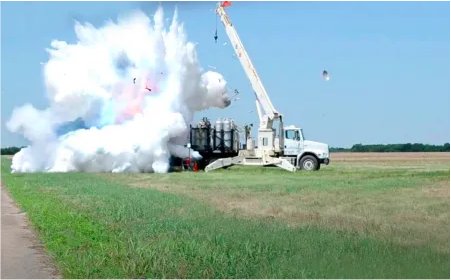
Pushing its luck, SpaceX tried another engine tests on Friday, May 29th. The Raptor firing  appeared to go well but a minute or so after the engine shut off, methane began pouring out at a point on the interface between the support stand and the vehicle. A few seconds later, a huge fiery explosion enveloped the vehicle when the methane ignited. After the flames and smoke died down, it appeared that the vehicle had vanished but in fact its mangled remains lay on the ground be the test stand. SpaceX Starship SN4 prototype explodes in dramatic fireball – Teslarati.

Elon said in comments following the post-DM2 briefing that the methane leak was due to a problem with a test of the quick disconnect mechanism that allows the fuel line to separate from the vehicle as it lifts off the pad:

Elon Musk, leaving the KSC press site just now, said of yesterday’s Starship test in Boca Chica Texas: “Unfortunately what we thought was going to be a minor test of a quick disconnect ended up being a big problem,” referring to the explosion.

With two out of three engine tests marred by serious problems at the interface between the vehicle and the ground support equipment, it might seem that SpaceX needs to take a pause to do some redesign and component testing. Note that using liquid methane in a large rocket and feeding propellants from the base rather than from umbilical towers are both new technological challenges. It will take SpaceX some time to get them right.

Scott Manley  discusses “What Can We Learn From The Explosion Of The Latest SpaceX Prototype?”:

After several weeks of testing Starship prototype SN4 something went wrong minutes after a successful engine test. A massive fuel leak caused an explosion which wrecked the vehicle and cause significant damage to the test stand. As far as we know nobody was injured and there are prototypes already waiting in the wings to continue tests. …

… I believe that unlike the first few failures due to welding quality this is not related to the manufacture of the rocket, but in the way it’s connected to the ground service equipment that resulted in the propellent loading lines coming loose and spraying liquid methane everywhere.

****** Elon Musk said at the post-launch briefing for DM-2 that he hopes Starship to be operational within 2-4 years, though he admits scheduling is not his strong point. Gwynne Shotwell is on the same page:

****** SpaceX has raised additional funding for development of Starships as well as for the Starlink broadband Internet constellation : SpaceX raises more than half a billion dollars for Starship, Starlink programs – Teslarati

****** Aerial views of the Boca Chica construction and pad sites – Starship SN4 Ultimate Fly Over! – May 25 – LabPadre – YouTube

Feast your eyes on this exquisite aerial footage of SpaceX’s Starship SN4. These images will knock your socks off! SpaceX Boca Chica, Texas is more like a new city now. All images are explicitly owned by LabPadre Media and may not be used without written permission.

****** May.26: SpaceX Ultimate Rocket Shipyard Fly Over! LabPadre – YouTube

Feast your eyes on this exquisite aerial footage of SpaceX’s Starship Shipyard facility. These images will knock your socks off! SpaceX Boca Chica, Texas is more like a new city now. All images are explicitly owned by LabPadre Media and may not be used without written permission.

**** Construction of Prototypes SN5, SN6, and SN7 continues. The videos below show that SN5  is stacked except for a nosecone. SN6 is nearly fully stacked as well. Parts for SN7 have been seen. Here is a diagram showing the state of SN6 assembly:

****** May 23:  SpaceX Boca Chica – Starship SN6 Section in the High Bay – NASASpaceflight – YouTube

While SN4 undergoes work at the launch site, SN5 is waiting in the VAB/High Bay, with a SN6 section paying a visit. Video also includes new – and very cool – SpaceX Food Truck! Video and Photos from Mary (@bocachicagal).

****** May 30:  SpaceX Boca Chica – Starship SN4 Aftermath – Successors Line Up – NASASpaceflight – YouTube

****** May 31: SpaceX Boca Chica – New Starships Prepare during Launch Site clearing – NASASpaceflight – YouTube

Several Starships are waiting for their turn at testing on the Boca Chica launch mount(s) as the clearing of SN4’s remains continues – notably under a Sunday Rainbow. Video and Photos from Mary (@bocachicagal). Edited by Jack Beyer (@thejackbeyer).

****** June 1: SpaceX Boca Chica – Starships SN5 and SN6 in the High Bay – SN7 Sleeved – NASASpaceflight – YouTube

****** June 2: SpaceX Boca Chica – SPadre – YouTube

** Webcast rocket reports:

**** Starship SN4 Explodes, Crew Dragon Demo 2, Rocket Lab’s 3 years and Virgin Orbit LauncherOne testMarcus House

**** SpaceX Starship Updates – Crew Dragon Demo 2 Launch Attempt SummaryWhat about it!?

=== Amazon Ad ===

2008-2018: A NewSpace Primer

Videos: Launch of the first SpaceX Dragon with crew to the ISS

6:20 pm EDT: The launch was scrubbed at about 15 minutes before liftoff time due to violations of weather constraints. The clouds were starting to clear but not in time for the instantaneous  launch window.

The next launch opportunity is on Saturday at 3:22 p.m. EDT (19:22 UTC). Followed by Sunday, May 31 at 3:00 p.m. EDT (19:00 UTC).

2:01 pm EDT: The launch of a SpaceX Falcon 9 with astronauts Bob Behnken and Doug Hurley in a Dragon spacecraft to the International Space Station is set for 4:33 pm (EDT) today at Kennedy Space Center . The weather forecast currently gives a 50% chance of acceptable conditions for liftoff from Pad 39A during the instantaneous  launch window.  (There are also storms along the US East Coast where the capsule would need to land in an abort.)  If they don’t get off the ground today, the  next opportunities will be on Saturday and Sunday.

SpaceX and NASA are providing joint continuous coverage of the preparations for the liftoff:

Some other videos of interest:

** SpaceX Demo-2: Watch NASA astronauts launch to space for the first time on Crew Dragon –  NASASpaceflight.com

** LIVE only 3 miles away from SpaceX and NASA launching humans to space for the first time!Everyday Astronaut (Tim Dodd)

** Talking to Elon Musk and Jim Bridenstine about SpaceX’s first crewed launch!Everyday Astronaut (Tim Dodd)

I had the opportunity to meet up with SpaceX CEO, Founder and Chief Engineer, Elon Musk as well as NASA Administrator, Jim Bridenstine to get their thoughts on this new era of human spaceflight! We spoke in the historic Firing Room 4 at Kennedy Space Center where SpaceX will command the rocket to launch for Demonstration Mission 2 with Bob Behnken and Doug Hurley!

** SpaceX Demonstration Mission-1 Highlights – NASA – An uncrewed Dragon was launched to the ISS on March 2, 2019

Demonstration Mission-1 (Demo-1) was an uncrewed flight test designed to demonstrate a new commercial capability developed under NASA’s Commercial Crew Program. The mission began March 2, when the Crew Dragon launched from NASA’s Kennedy Space Center in Florida, and racked up a number of “firsts” in less than a week. First commercially-built and operated American crew spacecraft and rocket to launch from American soil on a mission to the space station. First commercially-built and operated American crew spacecraft to dock with the space station. First autonomous docking of a U.S. spacecraft to the International Space Station. First use of a new, global design standard for the adapters that connect the space station and Crew Dragon, and also will be used for the Orion spacecraft for NASA’s future mission to the Moon. NASA and SpaceX teams gathered in the early morning hours at the company’s headquarters in Hawthorne, California, to follow the spacecraft’s return journey and ocean splashdown.

=== Amazon Ad ===

Outpost in Orbit:
A Pictorial & Verbal History of the Space Station