Category Archives: Rockets

Space transport roundup – Feb.19.2019

A sampling of recent items related to traveling to and through space:

** Second suborbital space flight of Virgin Galactic‘s SpaceShipTwo is expected within the next few days. Here is a new video from VG about preparations for the flight:

[ Update: Here is the official confirmation of plans for a another powered SS2 flight: SpaceShipTwo, VSS Unity, Prepares for Fifth Supersonic Powered Test Flight – Virgin Galactic

With the usual caveats that apply to all test flights, and with the added uncertainties of weather at this time of year in Mojave, the window for our fifth supersonic powered test flight opens on February 20, 2019, and our test flight is planned for the morning of Wednesday, February 20.

Although we passed a major milestone in December, we still have a way to go in testing the many factors that can affect a flight. So, for this flight, we will be expanding the envelope to gather new and vital data essential to future tests and operations, including vehicle center of gravity.

We are proud to be flying NASA Flight Opportunity program research payloads again. The spaceship will be a little heavier than last time, and very close to a full commercial weight.

We are now at the stage where we can confirm some of the aspects of the customer cabin and this will be a continuing theme as we enter this final stage of flight test. It is of paramount importance to our future business success that we not only give our future astronauts a safe ride, but an experience which exceeds expectations. We know, as part of a Group that has led the way in commercial aviation customer experience, cabin design is fundamental to that objective and so this element is an integral part of our flight test program.

]

VG is looking for additional capital following the collapse of a partnership with Saudis who were planning to provided a billion or more dollars for Virgin Galactic and Virgin Orbit projects: Branson hunts Galactic cash after grounding $1bn Saudi deal – Sky News.

** An Arianespace Soyuz rocket is set for launch on February 26th of the first 6 satellites of the OneWeb broadband constellation, which will eventually comprise 900 satellites (the system becomes operational globally with 600).

** SEOPS deployed 2 CubeSats from Northrop-Grumman’s Cygnus cargo vehicle after it departed from the ISS on February 8th. These were the first satellite deployments from the Cygnus for SEOPS™, LLC., a new company based in Houston. SEOPS joins NanoRacks as a provider of satellite deployments from the Cygnus and ISS. NanoRacks also deployed three smallsats from the Cygnus using deployers attached to the side of the Cygnus (see earlier posting).

SEOPS uses a deployer called SlingShot, which is attached to the hatch of the Cygnus by ISS crew members (see two gold colored boxes in image below).

Click for time lapse GIF. “SS Crew members David Saint-Jacques and Anne Mcclain installed two Slingshot deployables, SEOPS-Quantum Radar -1 and -2s, onto the outer hatch of the Cygnus Spacecraft. Also installed in a deployable slot is the UbiquityLink-1 orbit to ground communications hardware. The two passive optical reflector satellites will be released after Cygnus moves away from the ISS.” Credits: NASA

The deployers can also be seen in this image of the Cygnus during its unberthing from the station:

Click for GIF animation. “The Cygnus Spacecraft leaves the ISS with SlingShot payloads in preparation for deployment activities.” Credits: NASA

More about the SEOPS and the cubesat deployments:

Find updates from SEOPS at SEOPS (@SEOPSLLC) | Twitter

** HyperSciences fires projectiles at hypersonic speeds up for suborbital launch or down for deep drilling into the earth: HyperSciences wants to ‘gamechange’ spaceflight with hypersonic drilling tech | TechCrunch


HyperSciences – Aerospace NASA Launch – SeedInvest
from HyperSciences on Vimeo.

** SpaceX:

**** A Falcon 9 launch is set for Thursday at Cape Canaveral following a successful static firing test on Monday. Liftoff time is 8:45 pm. EST (0145 GMT on 22nd). The payloads include the PSN 6 communications satellite for Indonesia, a USAF technology demo smallsat, and the Beresheet lunar lander built by the non-profit group SpaceIL of Israel.

A blurry view of the test via a camera placed outside the perimeter of the Cape by the team at www.USLaunchReport.com:

Here’s an earlier video from USLaunch Report.com showing testing of the erector at pad 40:

**** Super Heavy boosters and Starships will be constructed in Texas, though many components will be built at the company’s Hawthorne, California facility: SpaceX job posts confirm Starship’s Super Heavy booster will be built in Texas – Teslarati.

The new stainless steel structure design promises to lower investment requirements and speed up construction but there still remain big technical challenges for the vehicles to achieve routine, low cost access to space: Elon Musk says SpaceX is developing a ‘bleeding’ heavy-metal rocket ship. Making it work may be 100 times as hard as NASA’s most difficult Mars mission, one expert says., Business Insider – Business Insider Singapore.

SpaceX’s south Texas facility at Boca Chica Beach near Brownsville appears to be safe for the time being from being split by a barrier at the border to Mexico: A $1.37 billion border-security deal might save SpaceX’s launch site in Texas, where Elon Musk hopes to fire off moon and Mars rockets, Business Insider – Business Insider Singapore

Here are a couple of videos from Spadre.com South Padre Island Information showing the StarHopper under construction at Boca Chica:

More StarHopper photos at

**** SpaceX Falcon Heavy rocket one year later business case – CNBC – SpaceX hopes Falcon Heavy missions this year will pay back some of the substantial investment that went into the complex but powerful launch system.

** Other space transport news items:

====

The Space Barons: Elon Musk, Jeff Bezos, and the Quest to Colonize the Cosmos

Space transport roundup – Feb.15.2019

A sampling of recent items related to traveling to and through space:

** LEO Aerospace is a young launch company started by Purdue engineering students. They recently did a test of their balloon launch architecture: Successful launch of rocket from high-altitude balloon makes space more accessible to microsatellites – Purdue University News

A startup that plans to use high-altitude balloons to deploy rockets has successfully fired a test launch, moving closer to its goal of helping end the backlog of microsatellites that wait months or longer to “hitch” a ride on larger rockets.

Leo Aerospace Inc.,Purdue University-affiliated startup based in Los Angeles, launched its first “rockoon,” a high-power rocket from a reusable balloon platform, from the Mojave Desert in southern California in December. …

“It was thrilling to see that first launch after all those months of hard work and planning,” said Michael Hepfer, head of product development for Leo Aerospace and a senior in Purdue’s School of Industrial Engineering. “It confirmed our early testing that using high-altitude balloons and rockets to send microsatellites into space will work.”

Leo Aerospace aims to revolutionize access to space for those looking to launch small satellites about the size of toasters, weighing up to 25 kilograms, or about 55 pounds. It plans to be a “dedicated” launch for microsatellites, serving one customer at a time.

** Firefly Aerospace, a Texas-based company developing smallsat launch systems, has an unusual history: After a remarkable resurrection, Firefly may reach space in 2019 | Ars Technica

Polyakov had the resources to bring Firefly back and fund the company through its first two launches. Although neither he nor Markusic would specify the amount of the investment, it is likely on the order of $75 to $100 million. This infusion of cash removed the fundraising burden from Markusic’s shoulders, as well as the mental stress of uncertainty, allowing him to focus on technical problems.

As well as money, Polyakov also brought a businessman’s mentality to the company and a broader sense of the rapidly changing aerospace industry. In the United States, China, and elsewhere around the world, dozens of firms are developing new, lower-cost rockets to launch small- and medium-sized satellites.

The end result is a 29-meter-tall rocket with four first-stage Reaver engines and one upper-stage Lightning engine, both fueled with kerosene (RP-1) and liquid oxygen. The new Alpha can lift as much as 1 ton to orbit, which is relatively unusual in the commercial market at its price point of $15 million—a price per kilogram of $15,000.

Future competitors in this range will include Relativity Space’s Terran 1 rocket and ABL Space Systems’ RS1 vehicle. So the game now is to build a safe rocket and bring it to market quickly. In the end, Markusic accepted Polyakov’s changes, both because it was the only way to save Firefly and because he’d gone through enough failure to see the big picture.

** Relativity Space aims to build most all of a rocket with big 3D print systems. The company recently hired some space industry heavyweights:

No press releases from the company but they did post these tweets:

And here is an article about the company’s 3D printing systems: 3D-Printed Rocket Maker Gets Its Own Launch Site > ENGINEERING.com

Relativity is building its rockets this way for two reasons. First, it keeps costs relatively low. Since the printer can make complex parts in just one piece, Relativity will be able to create rockets with 100 times fewer parts. For example, the Terran 1’s engine injector and chamber are made of just three 3D-printed parts rather than the nearly 3,000 parts needed by conventional rocket assembly processes. And the team can quickly adjust the design as needed through software. In addition, by simplifying the manufacturing process, Relativity can build a rocket much faster—the company aims to do so in as little as 60 days.

Second—and this is a long-term objective—3D printing rockets could allow Relativity to take its manufacturing process to Mars, where it could set up a rocket factory on site. Once it perfects its printing process on Earth, the company hopes to reduce the size of its printers and ship them to Mars to see if they can print rockets with the raw materials on the red planet. If it works, it provides a way to get materials, and astronauts, back home to Earth.

** PLD Space of Spain is developing smallsat launch system that will have a reusable first stage. Here is a new video showing preparations for an engine test campaign:

Preparing MIURA 1 engine for its first flight. This video shows the preparations before starting the largest liquid rocket engine test campaign that PLD Space has prepared. Our goal is to qualify MIURA 1 engine, called TEPREL-B for its first flight into space.

** Blue Origin continues with testing of the big BE-4 methane fueled engine, which will power Blue’s New Glenn rocket as well as United Launch Alliance’s Vulcan

** Stratolaunch recently terminated plans to develop its own rockets but work continues on development of the world’s largest aircraft, which was designed as a high altitude launch platform for rocket powered vehicles to go to orbit: FAA certificate offers new details on Stratolaunch’s plans for test flights of world’s largest aircraft – GeekWire

The Federal Aviation Administration has cleared the world’s largest airplane for takeoff — but it’s not yet clear exactly when Stratolaunch, the aerospace venture founded by the late Microsoft co-founder Paul Allen, will put the plane in the air.

Stratolaunch’s unique aircraft, code-named Roc, measures 385 feet from wingtip to wingtip, longer than three Boeing 737s lined up end to end. The company hopes to win full FAA certification for the Roc and use it for airborne rocket launches as soon as next year.

So far, the only remaining task for the aircraft is to launch Northrop-Grumman’s Pegasus rockets.

** Spaceflight arranges launch transportation for spacecraft, often as secondary payloads on a big rocket with a big satellite as the primary payload. The company hopes this month to see customer payloads go beyond low earth orbit for the first time. The spacecraft will travel as secondaries on a SpaceX Falcon 9 launch of a communications satellite going to geostationary orbit:

From the Spaceflight PR:

Spaceflight, the leading satellite rideshare and mission management provider, today announced it will launch two payloads on its first rideshare mission to Geosynchronous Transfer Orbit (GTO). The mission is scheduled for no earlier than mid-February 2019 aboard a SpaceX Falcon 9 launching from Launch Complex 40 at Cape Canaveral Air Force Station, Florida.

The primary payload on the mission is a telecommunications satellite for the South East Asia region. It was built by SSL, a Maxar Technologies company, which also procured the launch vehicle. Spaceflight will manage the launch of the two secondary payloads, Israeli non-profit SpaceIL’s lunar lander, and the U.S. Air Force Research Lab’s (AFRL) experimental small satellite, S5.

** SpaceX:

*** Launch schedule: The Falcon 9 launch mentioned above with the two rideshare payloads from Spaceflight is currently set for Feb.21st from Cape Canaveral at 8:45 p.m. EST (or 0145 GMT on 22nd).

And the launch of a Falcon 9 rocket Crew Dragon spacecraft on an uncrewed test flight is set for March 2nd at 2:48 a.m. EST (0748 GMT) from Pad 37A at Cape Kennedy Space Center.

The second Falcon Heavy launch is also planned for March but no specific day has been announced yet.

*** More photos posted of activities at the Boca Chica launch facility:

*** Ship for catching nosecone fairings has arrived at Cape Canaveral Port after its long voyage from the West Coast:

*** The Boca Chica site will not be split by a border wall: Texas butterfly sanctuary protected from border barrier, says shutdown deal | The Texas Tribune.

*** Another video analysis of why SpaceX switch the Super Heavy Booster/StarShip structure design from composites to stainless steel:

*** SpaceX protests NASA’s decision to use a ULA Atlas V rocket for a science payload rather than the Falcon 9:

** More space transport items:

====


Check out the Best Selling Electronics at Amazon

Space access roundup – Feb.10.2019

A sampling of items related to traveling to and through space:

** Virgin Galactic pilots Mark ‘Forger’ Stucky and CJ Sturckow received Commercial Astronaut Wings from the FAA for flying to space on SpaceShipTwo:

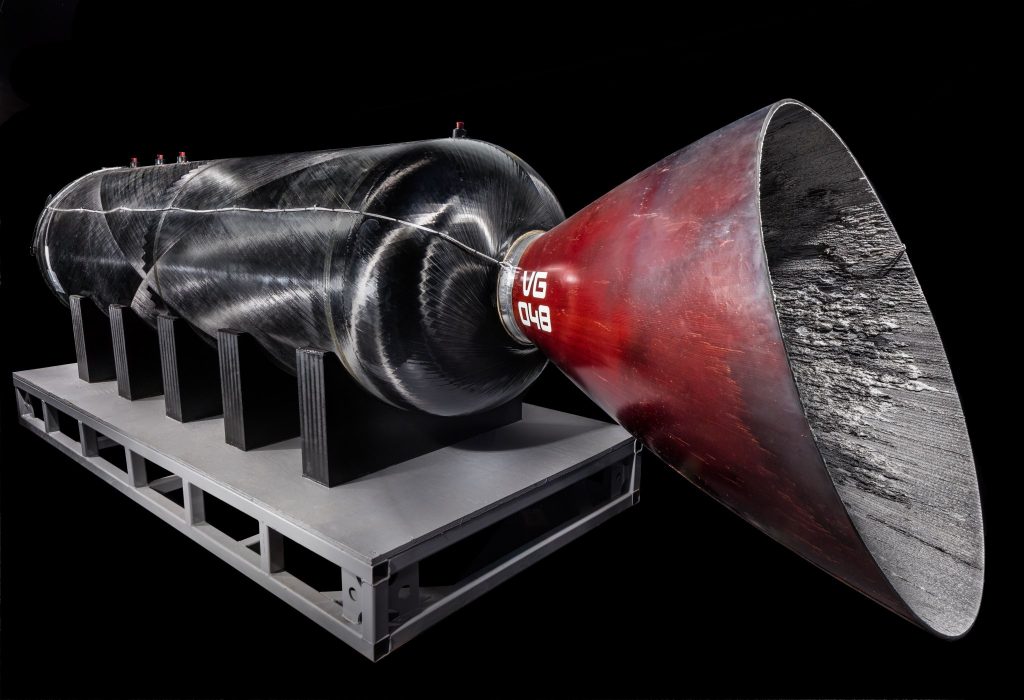
The SpaceShipTwo motor from the flight was also given some special recognition:

Richard Branson never ceases to be optimistic on flight schedules: Richard Branson says he’ll fly to space by July – AFP/phys.org.

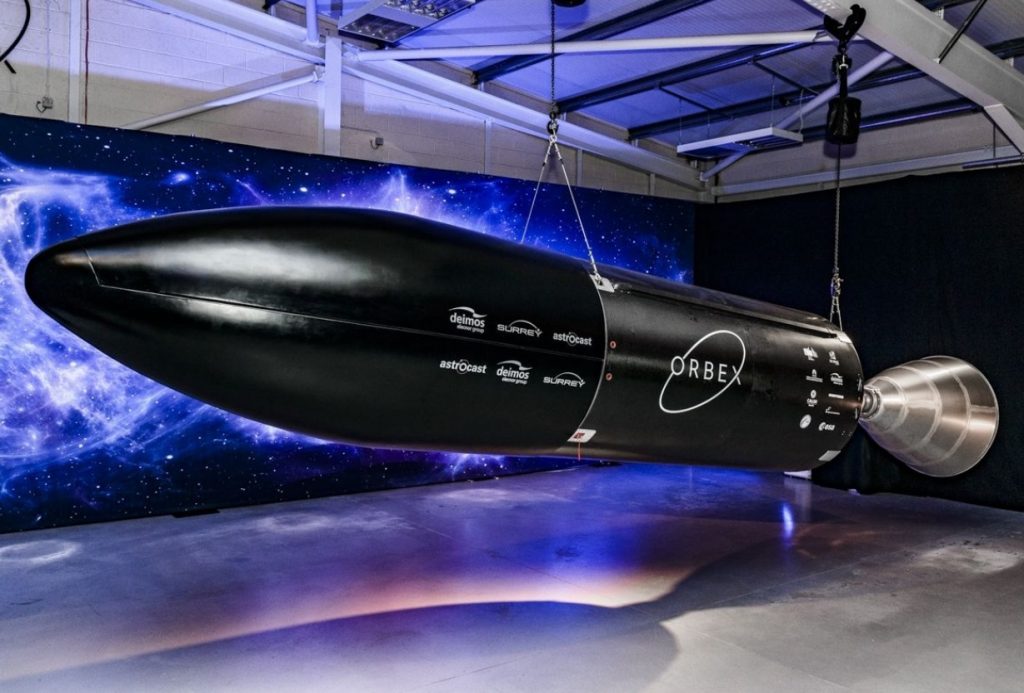
** Orbex Space in the UK shows a

completed engineering prototype of the Stage 2 rocket (the stage that will transit into orbital flight after launch) [that] is made from a specially-formulated lightweight carbon fibre and aluminium composite and includes the world’s largest 3-D printed rocket engine.

Orbex upperstage engineering prototype “#Prime, the completed stage 2 rocket and the world’s most efficient #smallsat launcher. It includes the world’s largest 3D printed rocket engine and designed to run on bio-propane, a #clean, #renewable energy source”.

More about the roll out:

The first stage booster will be reusable. Orbex has not shown a prototype of the booster or given details about its design.

Orbex is aiming for the first orbital launch in 2021.

Orbex has also obtained launch contracts with two companies:

** PLD Space of Spain also makes progress in development of a smallsat launcher with a reusable first stage booster:

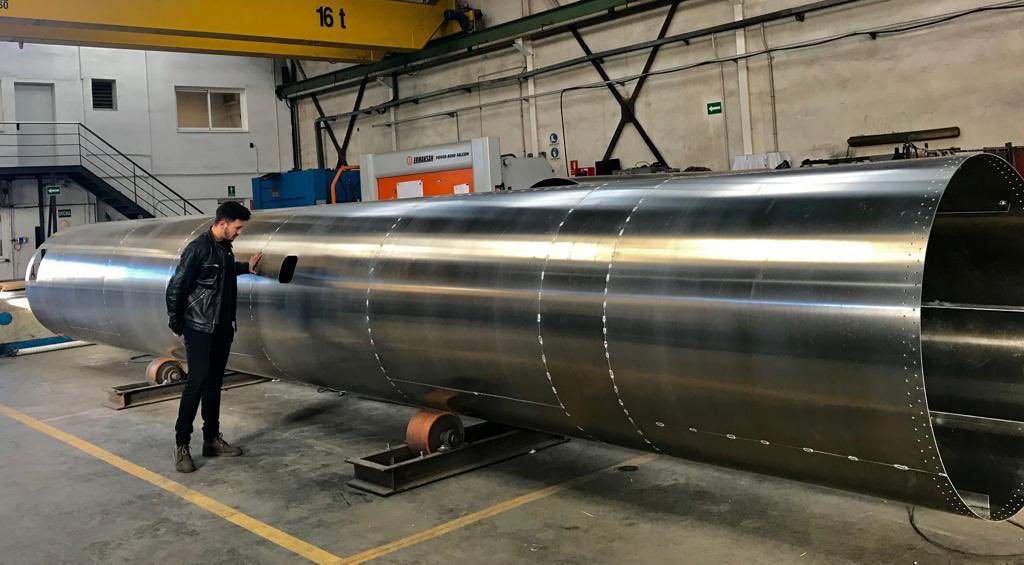
PLD Space reusable first stage prototype.

Plus:

** Intro to NASA’s Launch Services Program, which hires commercial rockets to launch the agency’s unmanned payloads:

** Space elevator proponents continue to pursue this replacement for rockets:

From the magazine article:

While most engineered structures operate at a fraction of their material’s tensile strength—how far they can be pulled without breaking—most biological structures, such as tendons, operate near their max.  That’s because biological structures are constantly breaking themselves down and rebuilding, which allows for continual repair.

Space elevators won’t require such a strong cable if the cable also continually renews itself, Sun and Popescu reason. This feat could be achieved, they suggest, by developing a cable that’s constantly serviced by autonomous robots. Rather than waiting for breaks in the cable, these robots can dynamically break down and rebuild the cable to make sure it’s always in good working order. This cable would be segmented so that if a break occurred, it wouldn’t extend beyond a small site, note the researchers, who recently reported their solution on the pre-print website arXiv.

** SpaceX:

*** Latest pictures of StarHopper work underway in Texas:

*** More about Raptor engine tests:

*** More on Crew Dragon demo mission scedule -test flight with no one onboard is now set for no earlier than March 2: First unpiloted test flight of SpaceX Crew Dragon capsule reset for March 2 – Spaceflight Now

*** Other SpaceX related items:

** Rocket news included in the latest TMRO.tv space news report: SpaceX Engine Tests, ISRO Spaceflight, Lunar Craters and SpaceIL

====

Telescopes and Binoculars at Amazon

Space access roundup – Feb.6.2019

A sampling of space transportation related news and resource items:

** Ariane 5 launches two comm-sats on first mission of 2019:

Looks like a launch a month for Arianespace in 2019: Arianespace preps for first of up to 13 launches in French Guiana this year – Spaceflight Now

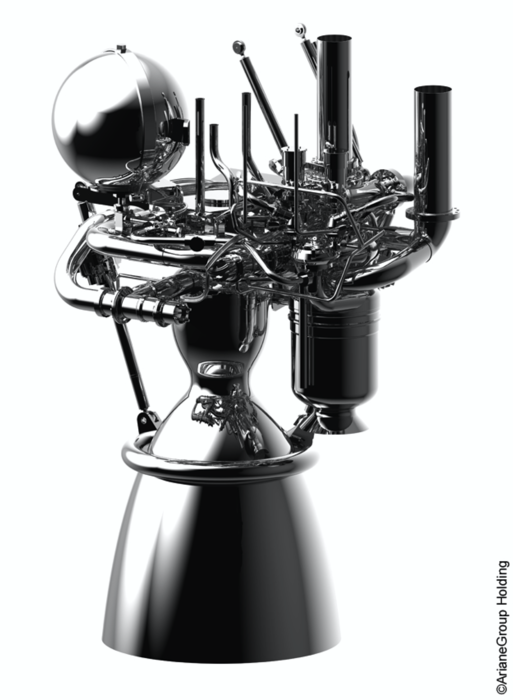
** Prometheus reusable engine – While Arianespace remains committed to single-use throwaway rockets, technology research into reusable hardware is happening. For example, here is the latest on the reusable Prometheus methane-fueled engine: Prometheus: Demonstrator of Future Engine passed its Definition Review – Ariane Group

The goal of the Prometheus demonstrator is to be able to build future liquid propellant engines in the 100 tons thrust class, for a cost ten times less than that involved in building an existing engine such as the Vulcain®2.

Rendering of a design for the reusable methane fueled Promethus engine.

The success of a technological challenge of this nature depends on a completely new design: over and above the change in the traditional Ariane propellant (switching from the liquid oxygen and hydrogen combination to liquid oxygen and methane), the demonstrator will entail major changes, including digitization of engine control and diagnostics. It also depends on the use of innovative design and production methods and tools, including construction using 3D printing in a connected factory environment.

** Speaking of reusable Ariane rockets: French auditor says Ariane 6 rocket too conventional to compete with SpaceX | Ars Technica

“This new launcher does not constitute a sustainable response in order to be competitive in a commercial market in stagnation,” the auditor’s report states. The Ariane 6 rocket design is too “cautious,” according to the report, relying on mostly traditional technologies.

** New Blue Origin video highlights the activities and future plans of the company:

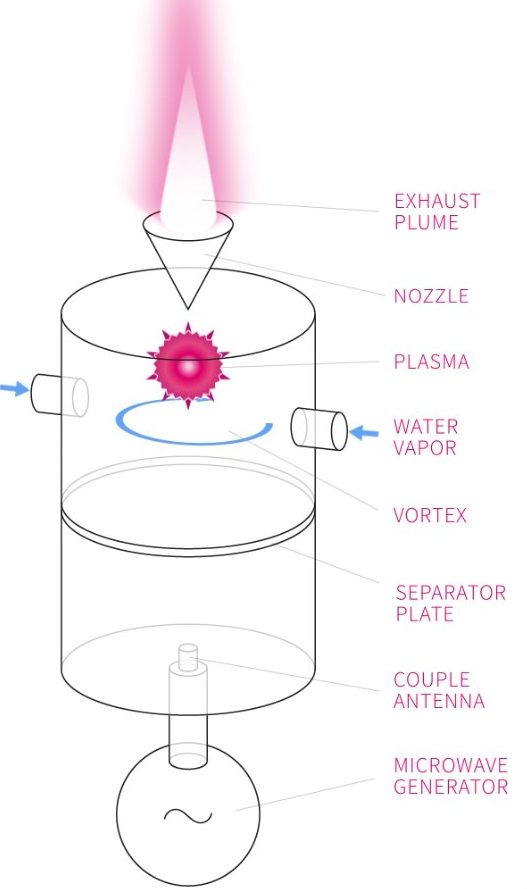
** Momentus Water-Plasma propulsion for smallsat – While small satellites are growing into major sector of the space industry, cost-effective and technically practical in-space propulsion for small spacecraft remains a challenge, especially for those sized in the CubeSat scale of a few kilograms. The startup company Momentus offers propulsion modules that will attach to smallsats and and send them to the exact orbits after they are released from a rocket that takes them into space.

Momentus propulsion system uses water heated into a plasma state by microwaves. Water is obviously a safe fuel and this means that a spacecraft using it for propulsion will encounter fewer hurdles to integrating the craft into a launch system compared to using more energetic fuels.

Momentus Water-Plasma engine diagram.

Momentus just got its first contract with a $6M order from the German company Exolaunch to provide in-space propulsion for satellites that will be launched in 2020 and 2021:

There are longer term advantages to water propulsion as well. Water has been found to be abundant throughout the solar system. Water-based propulsion clearly offers significant advantages for in-space transportation with the Moon and asteroids providing filling-station services for spacecraft of all sizes.

** Commercial crew flight tests schedule: NASA, Partners Update Commercial Crew Launch Dates – Commercial Crew Program

The agency now is targeting March 2 for launch of SpaceX’s Crew Dragon on its uncrewed Demo-1 test flight. Boeing’s uncrewed Orbital Flight Test is targeted for launch no earlier than April.

These adjustments allow for completion of necessary hardware testing, data verification, remaining NASA and provider reviews, as well as training of flight controllers and mission managers.

** SpaceX

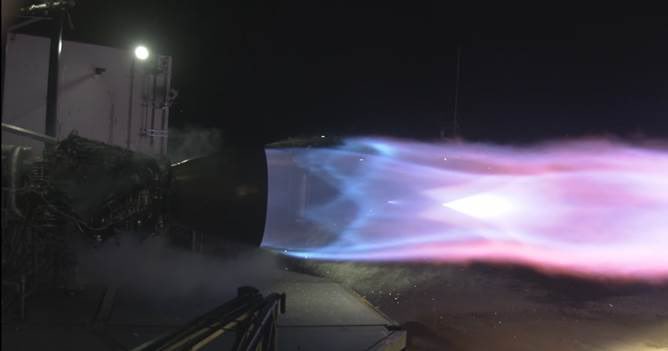
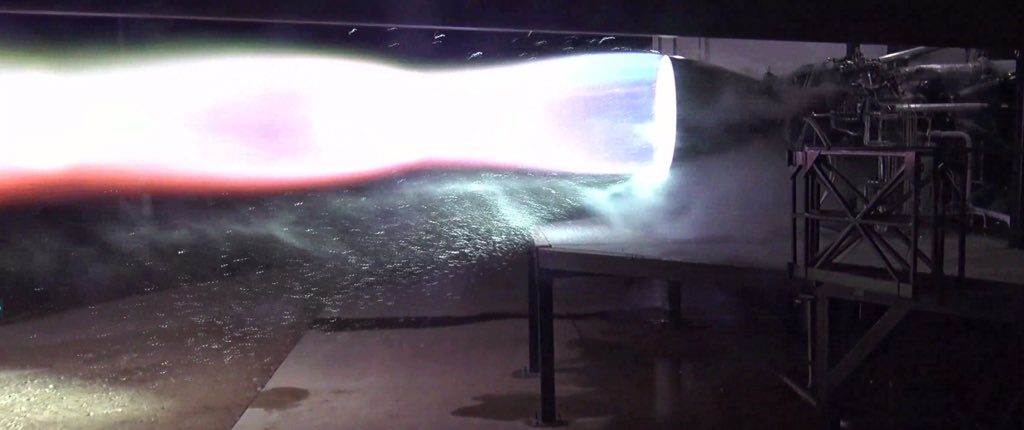
*** The first operational full-scale Raptor LOX/Methane engine was tested at the company’s McGregor, Texas facility last weekend:

From SpaceX Instagram and Elon Musk tweet:

Completed a two-second test fire of the Starship Raptor engine that hit 170 bar and ~116 metric tons of force – the highest thrust ever from a SpaceX engine and Raptor was at ~60% power.

Check out the rocket cycles diagrams illustrating the flow of propellants through rocket engines, including the stage combustion cycles used on the Raptor.

*** Latest on the design of the SpaceX next-gen space transport systems: In new Starship details, Musk reveals a more practical approach | Ars Technica

*** Work continues on the StarHopper and construction of the Boca Chica Beach launch facility near Brownsville, Texas: SpaceX’s Starship prototype is looking increasingly rocket-like as hop test pad expands – Teslarati.com

Some views of the activities there:

*** Spadre.com South Padre Island Information – Feb.5.2019 (opens with Raptor engine test video):

*** Spadre.com South Padre Island Information – Jan.30.2019

*** South Padre Island Info also offers a free webcam that includes views of the SpaceX site:

SPadre.com Starship Cam views the Spacex Starship, the Launch Pad, Isla Blanca Beach Park which is the closest possible launch viewing area, and the beach at South Padre Island Texas. Enjoy free continuous live streams and recordings of all upcoming launches, and Starship launch schedules and the latest SpaceX Boca Chica news. Launches will begin soon, watch all launches live on SPadre.com Starship Cam. For launch schedule and South Padre Island information visit: https://www.spadre.com Starship Cam hosted by South Padre Surf Company: https://www.southpadresurfcompany.com

Update: Latest on the SpaceX launch schedule: As Falcon Heavy celebrates anniversary, SpaceX manifest aligns – NASASpaceFlight.com.

====

Telescopes and Binoculars at Amazon

Space Access 2019 Conference

My favorite conference series is back in action after a pause of a couple of years:

Space Access 2019 Conference
The Technology, Business, and Politics of
Radically Cheaper Space Transportation
at the Fremont Marriott Silicon Valley, April 18-21

Space Access 2019 will be the next round of Space Access Society‘s conference on the technology, business, and politics of radically cheaper space transportation, brought to you this year in cooperation with the Bay Area’s own Experimental Rocket Propulsion Society.

SA2019 will feature a cross-section of the growing cheap access community, talking about what’s going on now and what happens next, in an intensive informal atmosphere, single-track throughout so you don’t have to miss anything. Space Access has been described as “Hackers” for rocket people, with better content than other space conferences costing many times more. It’s three days of total immersion in making the future happen.

The primary web page for SA2019 conference registration and hotel room reservations is https://sa2019.erps.org/ . And check http://space-access.org/updates/sa2019info.html for the latest updated conference info and program as it grows and evolves.

Preliminary SA2019 Conference Agenda updated 2/2/19

(We’re rolling – this list represents over two-thirds of the final SA2019 three-day program. Stay tuned for additional details and a few more excellent program additions in the coming weeks.)

Confirmed speakers/presentations so far:

  • Additive Rocket Corporation on High Impulse, Ultra-Low Cost Additively Manufactured Rocket Engines
  • James Benford on Ultrahigh Acceleration Neutral Particle Beam-Driven Sails
  • Breakthrough Starshot/Peter Klupar on Plans for a Near-Term Interstellar Probe
  • Cislunar Space Development Company/Dallas Bienhoff on Elements Of A Cislunar Transport Net: Space Tugs, Moon Shuttles and Propellant Depots
  • CubeCab
  • EXOS Aerospace/John Quinn with An Update On the SARGE Vehicle
  • Firefly Aerospace on The Alpha Launch Vehicle, plus Highlights of OTV and CLPS
  • Flometrics/Steve Harrington on Progress Report: Pistonless Pumps For High-Performance Rocket Propulsion Systems
  • Gerald D Nordley on Mass Beam Propulsion, An Overview including Jordin Kare’s Sailbeam Concept
  • Jeff Greason of Electric Sky will discuss Some Advanced Power Transmission & Space Propulsion Concepts
  • Masten Space Systems/Dave Masten
  • Momentus Space/Joel Sercel, CTO on Water-Plasma Propelled In-Space Transportation Services
  • Jim Muncy/Polispace will discuss Prospective FAA Launch/Reentry Rules Changes and The Washington Space Scene
  • Orbit Beyond – Lunar Spacecraft & Landers
  • Rocket Lab/Amanda Stiles, Senior Mission Manager on The Electron Launcher & Multi-Burn Kick Stage
  • John Schilling will discuss Earth Orbit, Cislunar & Mars Practical Payload Capabilities Of Current & Near-Term Launchers
  • Rand Simberg will discuss A Co-Orbital Transportation Infrastructure Concept
  • Space Studies Institute Hosted Session covering SSI’s focus area of How To Get Things Done Once There, technology and business aspects of habitats, power generation, resource extraction, manufacturing etc.
  • SpaceIL
  • Henry Spencer will discuss Transitioning From Standalone Spaceships To Space Transport Networks
  • Henry Spencer & Henry Vanderbilt will discuss Some Likely Characteristics Of Usefully Faster Near-Term Inner Solar-System Space Transports. Thermal rockets aren’t practically capable of high enough velocities to minimize cosmic-ray and other slow-transit problems.  A look at some near-term approaches that may be usefully faster – and why they may not look at all like you might expect.
  • Jess Sponable will discuss Project History & Management Lessons From DC-XX-40, and XS-1
  • Tethers Unlimited
  • Unreasonable Rocket/Paul Breed on Development Of A Low-Cost Modular Launcher
  • Pete Worden, Breakthrough Prize Foundation Chairman, on What We Might Do With A StarShot Capability

Panel Discussions

  • Extremely High-Velocity Propulsion Concepts: A Survey.  Jim Benford, Gerry Nordley, Henry Spencer
  • How To Save Civilization and Make a Little Money, or, This Is All Jerry Pournelle’s Fault.  Recalling Jerry’s significant part in the forty-year evolution from “Commercial rockets? Security, get this loon out of my office” to “Commercial rockets?  How much do you want?”  Aspects of the story as seen by some who were there.  Larry Niven, Gary Hudson, Jim Muncy, Jess Sponable, Henry Vanderbilt
  • Space Startup Party Fouls – Common Startup Errors & How To Avoid Them, as seen by Rocket People. There are a thousand books that will tell you what Venture Capital people look for. Rocket people, not so much. Paul Breed, Ben Brockert, Henry Spencer, Henry Vanderbilt
  • NewSpace Meets Milspace – Both are evolving fast, with overlaps (both business and operational) likely growing with time. Some discussion of what the shared spaces may look like.  Bill Bruner, Mitchell Burnside Clapp, Jess Sponable

We also plan Subject Concentrations this year on

  • SmallSat Launch Startups
  • Commercial Lunar Cargo Companies

Participants for both currently being recruited – if you haven’t yet heard from us, contact us at hvanderbilt@mindspring.com

We’re also interested in Student Space Project Presentations – we’re reserving a number of short (5-10 minute) timeslots in the main program track for student/amateur presentations on interesting (not necessarily directly access-related) space projects. Contact hvanderbilt@mindspring.com

Conference Registration

Basic SA2019 registration will be $180 through March 27th, more afterwards. Student full-conference rate $60. See https://sa2019.erps.org/ for more details on Exhibitor and Patron rates, or go directly to SA2019 online registration.

Exhibition Space

We will have an Exhibitor Room across the hall from the main Presentations ballroom. Exhibitor memberships will get you one Regular membership, an 8′ table in a 10′ x 10′ area, and two chairs. Space is limited and will be assigned on a first come first served basis. When space is filled we will create a waitlist. Register at the $300 Exhibitor Rate at SA2019 online registration

Conference Hotel is the Fremont Marriott Silicon Valley.

Hotel Rooms We have negotiated a special deal for the convention, with a room rate of only $130 per night (in Silicon Valley!), so book your room early to keep you in the heart of the conference. Space is limited (it’s a very busy hotel). Mention “Space Access 2019” to get this rate and be in our room block. Conference-Rate Reservation cutoff is 27 March 2019.

Fremont Marriott Silicon Valley
46100 Landing Parkway
Fremont, CA 94538

Reservations: (510) 413-3700 – Mention “Space Access 2019”

Conference Schedule

Program Sessions will run Thursday & Friday, morning afternoon and post-dinner, and Saturday morning and afternoon, with socializing opportunities Saturday evening plus an extended Sunday networking brunch.

Conference Style

Space Access conferences are designed to let people who are serious about low-cost space transportation get together, trade information, make deals, and learn useful things. Dress averages business casual, and we don’t do rubber-chicken banquets – just an intensive single-track presentations schedule with relaxed on-your-own meal breaks, in a setting with comfortable places in the hotel and nearby to go off for food, drink, and talk – not least of these ERPS’s interpretation of our world-famous volunteer-run Space Access Hospitality Suite.

Space Access has been a useful productive conference over the years – companies started, talent recruited, deals made, ideas spread. Be here with us for the next round.