Category Archives: Amateur/Student Satellite

Student and amateur CubeSat news roundup – Oct.20.2019

A sampling of recent articles, press releases, etc. related to student and amateur CubeSat / SmallSat projects and programs (find previous smallsat roundups here):

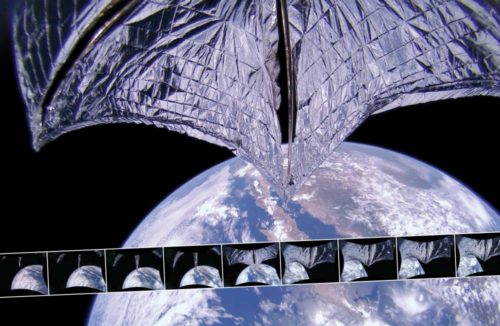
** University students are key to operating the LightSail-2 in orbit: “I Talk to It Every Day”: Students are Vital Members of LightSail 2 Team | The Planetary Society. The article profiles several of the students who help operate the Planetary Society’s LightSail-2 solar sail. The LightSail-2 CubeSat was launched last June inside the Georgia Tech Prox-1 spacecraft, a secondary payload on a SpaceX Falcon Heavy. It was then ejected from Prox-1 a week later. The sail was unfurled on July 23, 2019.

Students like [Cal Poly San Luis Obispo physics undergrad Michael] Fernandez have benefited from the proliferation of CubeSats—small, standardized, low-cost satellites that often hitch rides to space with larger payloads. CubeSats have the same basic needs as any other space mission—things like communications, power, and attitude control—which makes them an ideal way for students to get real-world space mission experience.

“The LightSail 2 mission has done more than just demonstrate a new technology—it has provided valuable training opportunities,” said Planetary Society Chief Operating Officer Jennifer Vaughn. “We’re excited that our spacecraft is helping to prepare a new generation of scientists and engineers for future missions.”

“The student members of the LightSail 2 flight team play a critical role in mission operations,” said David Spencer, LightSail 2 project manager. “They do a lot of the heavy lifting of day-to-day operations, and perform key analyses that we rely upon to understand the mission performance.”

LightSail-2 Deployment
Deployment of the LightSail-2 32-square-meter sail. Credits: Planetary Society

** Students in CubeSat program at Cal Poly San Luis Obispo to assist the USAF in monitoring orbital objects:  Cal Poly is the first university to assist the Air Force in monitoring objects orbiting earth – Mustang News

Cal Poly students will now be helping the United States Strategic Command track more than 23,000 small objects orbiting Earth in the first university partnership of its kind.

“This first-of-its-kind partnership will allow current and future Cal Poly students to gain hands-on experience working with our four CubeSats currently in orbit and how they affect, and are affected by, other satellites in orbit,” President Jeffrey Armstrong said in the news release.

Cal Poly has a long history of working with Vandenberg Air Force Base. In the late 1990s, emeritus aerospace engineering professor Jordi Puig-Suari teamed with Stanford professor Bob Twiggs to develop the CubeSat standard — a small satellite that could ride aboard government and commercial space launches, according to the news release.

In the past two decades, hundreds of CubeSats have been launched. The Cal Poly CubeSat Laboratory is currently preparing its 12th CubeSat to launch in the next few months, Bellardo said.

** Lebanese CubeSat program to involve university teams: Lebanon Aims to Launch Nano-satellite Into Space by 2022 | Al Bawaba

“The EU is helping us with training and capacity building, by sending experts to train our local teams. There are 12 Lebanese universities participating; all have faculties of engineering or science. We have 42 of their brightest students taking part in eight teams, each led by their professor,” Abdallah said.

He said it was still early days and the teams were still developing their skills, but added that as a result of the initiative, the EU had renewed the TAF program for Lebanon and sent experts to train the local teams.

“The latest team to arrive was from the U.S. – two senior trainers, retired members of the Air Force labs and NASA, who delivered 12 days of training, eight hours a day, on how to manage a space program,” Abdallah said. “We haven’t been sitting around idle; we have already implemented a ground station in Mansourieh that can communicate with any nanosatellites in orbit,” he added. Expert training teams are also expected from Turkey, Spain and Italy.

** AMSAT news on student and amateur CubeSat/smallsat projects: ANS-293 AMSAT News Service Special Bulletin

  • 2019 AMSAT Symposium Underway! Livestream Available
  • AMSAT Board of Directors Announces 2019 Officers
  • AMSAT-UK Colloquium Videos Available
  • Cubesat Simulators Launched
  • Changes to AMSAT-NA TLE Distribution
  • Upcoming ARISS Contact Schedule
  • Upcoming Satellite Operations
  • Satellite Shorts From All Over

General CubeSat/SmallSat info:

== Amazon Ad ==

Introduction to CubeSat Technology and Subsystem:
Orbit Design, Debris Impact, and Orbital Decay Prediction

Student and amateur CubeSat news roundup – Oct.13.2019

A sampling of recent articles, press releases, etc. related to student and amateur CubeSat / SmallSat projects and programs (find previous smallsat roundups here):

** High school students learn spacecraft engineering in the Irvine Cubesat program in Irvine, California: IPSF CubeSat Program | Beckman Foundation

The Irvine CubeSat Program is composed of six public high schools from the Tustin and Irvine School Districts. All schools are given specific roles and functions for each CubeSat Mission, to include Avionics, Communication, Propulsion, Power, BioTech, and Prime Contractor.

Mimicking a real-world engineering firm approach to large, complex projects, each team is responsible for communicating their plans and achievements to the rest of the group to ensure that the overall mission is successful.

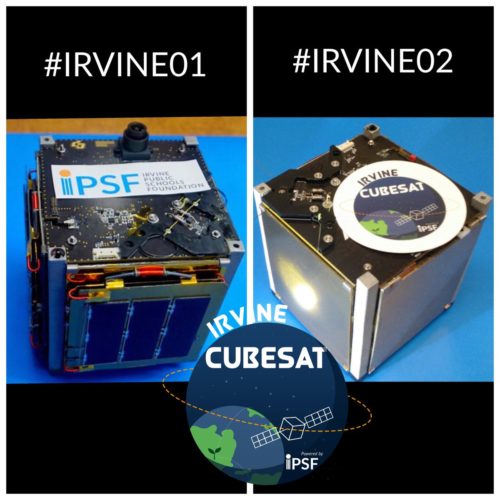
Irvine01 and Irvine02 Cubesats
Cubesats Irvine01 (left), launched by Rocket Labin November 2018. and Irvine02 (right), launched by SpaceX in December of 2018, were both built by high school students. Credits: Irvine CubeSat

** Polish universities to build CubeSat for Mars mission launched by Virgin Orbit:  SatRevolution, Virgin Orbit and Polish Universities Establish Mars Consortium | Virgin Orbit

Scientists and engineers from nearly a dozen Polish universities have teamed up with Poland-based satellite company SatRevolution and Sir Richard Branson’s small satellite launch company Virgin Orbit to establish a new consortium to design and carry out the world’s first dedicated commercial small satellite mission to Mars. The parties established the consortium at a formal signing ceremony during the Impact Mobility’19 rEVolution conference in Katowice, Poland.

The consortium will jointly develop the first in a series of up to three Mars missions, with the initial launch expected as early as three years from now.

At the core of the consortium are many of the top technical universities in Poland. AGH University of Science and Technology, Wrocław University of Science and Technology, Poznań University of Technology, Gdańsk University of Technology Lódz University of Technology, John Paul II Catholic University of Lublin, and Wrocław University of Environmental and Life Sciences have each signed on to take part in the collaborative program. Leadership from these universities see the consortium and the missions it will conduct as an unprecedented opportunity for growth and development across many technical disciplines, in addition to creating opportunities for commercialization.

** Rocket Lab Electron rocket to launch seven PocketQubes, including a university project, in 2019 in a cluster deployment system built by Alba Orbital.

** AMSAT news on student and amateur CubeSat/smallsat projects: ANS-286 AMSAT News Service Special Bulletin

  • 2019 37th AMSAT Space Symposium and Annual General Meeting
  • 2019 37th AMSAT Space Symposium and Annual General Meeting Schedule
  • September/October 2019 Apogee View
  • W3ZM – 50 States in Our 50th Year
  • ITU Magazine Reports on IARU Agenda Items for WRC-19
  • Upcoming Satellite Operations
  • Satellite Shorts From All Over

General CubeSat/SmallSat info:

====

Introduction to CubeSat Technology and Subsystem:
Orbit Design, Debris Impact, and Orbital Decay Prediction

Student and amateur CubeSat news roundup – Oct.7.2019

A sampling of recent articles, press releases, etc. related to student and amateur CubeSat / SmallSat projects and programs (find previous smallsat roundups here):

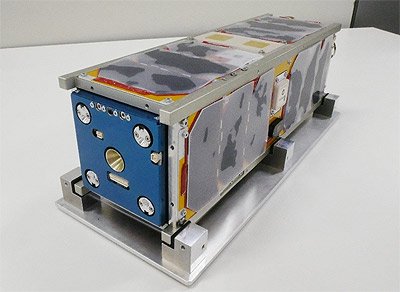
**  University of Tokyo’s AQT-D: AQUA Thruster-Demonstrator was delivered to the ISS in the HTV-8 cargo module launched by a H-IIB rocket on Sept.24th. The student built CubeSat will be deployed from the station later this year. The goal is to demonstrate the AQUARIUS (AQUA ResIstojet propUlsion System)  water micro-propulsion system, which is suitable for smallsats.

AQT-D AQUA Thruster DemonstratorFind more about AQUA and other water based propulsion systems in Water propulsion technologies picking up steam – SpaceNews.com.

** AMSAT news on student and amateur CubeSat/smallsat projects: ANS-279 AMSAT News Service Special Bulletin

  • AO-7 to Enter Full Illumination Period October 9, 2019
  • 2019 AMSAT Symposium On-line Registration Open Until October 11
  • New ARISS Proposal Window is October 1, 2019 to November 30, 2019
  • VUCC Awards-Endorsements for September 2019
  • Amateur Radio Gets Temporary Use of 2400 MHz in Spain
  • AMSAT-SA to Fly Cubesat Transponders on Balloon Flight
  • SSTV Event Planned for ARISS on October 9, 2019
  • Upcoming Satellite Operations
  • ARISS Activities & Upcoming ARISS Contact Schedule
  • Satellite Shorts from All Over

General CubeSat/SmallSat info:

====

Introduction to CubeSat Technology and Subsystem:
Orbit Design, Debris Impact, and Orbital Decay Prediction

Student and amateur CubeSat news roundup – Sept.29.2019

A sampling of recent articles, press releases, etc. related to student and amateur CubeSat / SmallSat projects and programs (find previous smallsat roundups here):

** ESA hosts CubeSats Hands-On Training Week for university students: Students experience of miniature satellites with CubeSats Hands-On training – ESA

CubeSats are highly versatile satellites built up by 1 or more units measuring just 10cm along each side. Learning how to best use these tools is a valuable skill, so ESA Academy has hosted the CubeSats Hands-On Training Week 2019. Running from 16 – 20 September 2019 at ESA Academy’s Training and Learning Centre, ESEC-Galaxia, Belgium, the event was attended by 26 university students from 15 different ESA Member States and Canada.

The Training Week had a clear objective: transfer hands-on knowledge to university students who are keen to start their own educational CubeSat initiatives, or who are already at the conceptual or preliminary design stage of a CubeSat project at university. To achieve this aim, ESA Academy assembled a team of experienced tutors to lead the course. These included ESA experts, the Fly Your Satellite! (ESA’s educational CubeSat initiative) team, and two engineers from Theia Space (Universidad Politecnica de Madrid) delivering laboratory sessions with high-grade model CubeSats, called Educational Satellite models (ESATs).

ESA CubeSat training

** MeznSat CubeSat in development by two UAE university student teams with UAE Space Agency support: Inspiring students to reach for the stars  – Gulf News

One of the main objectives of the UAE Space Agency is to build capabilities in the space sector, in space engineering and sciences, especially within the university community. MeznSat, initiated in 2017, began as an education programme to design, build and operate a satellite, but at an educational level.

There is a global trend in space education programmes, encouraging the use of CubeSats or nanosatellites to engage students in satellite and space research. However, what started as an educational trend is now slowly turning commercial with private agencies and companies using satellites built by student bodies for commercial purposes.

The UAE Space Agency followed up on this trend with the founding of the MeznSat programme, a 3U CubeSat that will be used to study the environment and also look at greenhouse gas emissions over the UAE, especially methane and carbon dioxide. The programme is founded and run by the UAE Space Agency with participation by two local universities, Khalifa University and the American University of Ras Al Khaimah (AURAK).


More about MeznSat:

** Maine elementary school starts CubeSat project in NASA supported program: Vassalboro Community School students in line for joint project with NASA | The Town Line Newspaper

The timetable is indefinite, starting this fall. The project is supposed to take two years. Desmond expects to start with sixth-graders; the curriculum team hasn’t decided whether the second year will continue with the same students in seventh grade or hand over to the new sixth-graders.

The question the students will try to answer is whether the frequency or location of lightning strikes is changed by global warming. Sub-questions include whether the northeastern United States can expect more frequent or severe lightning strikes; if that answer is yes, what negative (like more forest fires) and positive (like more nitrogen fixing to improve soils) consequences might occur; whether energy could be captured from the lightning; and whether, if lightning is more frequent, housing codes should be adapted.

** AMSAT news on student and amateur CubeSat/smallsat projects: ANS-272 AMSAT News Service Special Bulletin

  • Experimenter Wednesday Announced for AO-92
  • The AMSAT Hamfests & Conventions Web Page Updates
  • 2019 37th AMSAT Space Symposium and Annual General Meeting
  • 2019 AMSAT Symposium On-line Registration Open Until October 11
  • Virgin Orbit’s LauncherOne Moves Another Step Closer to Flight
  • ARISS Activities & Upcoming ARISS Contact Schedule
  • Upcoming Satellite Operations
  • NASA’s International Space Apps Challenge Coming October 18-20
  • FO-29 Returns!
  • AMSAT-DL Memorandum Regarding QO-100 Operation
  • Satellite Shorts From All Over

General CubeSat/SmallSat info:

====

Introduction to CubeSat Technology and Subsystem:
Orbit Design, Debris Impact, and Orbital Decay Prediction

Student and amateur CubeSat news roundup – Sept.22.2019

A sampling of recent articles, press releases, etc. related to student and amateur CubeSat / SmallSat projects and programs (find previous smallsat roundups here):

** Cargo on Cygnus vehicle on next Antares  launch will include CubeSats from university groups sponsored by NASA’s Educational Launch of Nanosatellites (ELaNa) initiative: Amateur Radio CubeSats among 15 Set to Launch on October 21 from Wallops Island – ARRL.org

15 CubeSats into orbit on October 21 as part of NASA Educational Launch of Nanosatellites (ELaNa) Mission 25. Some will carry Amateur Radio payloads.

    • TJ REVERB, developed by students at Thomas Jefferson High School in Alexandria, Virginia, will carry a 145.825 MHz APRS digipeater.
    • HuskySat, a University of Washington – Seattle project, will be boosted into a 500-kilometer (approximately 310-mile) orbit via the Cygnus external deployment device. HuskySat will carry a V/U linear transponder provided in cooperation with AMSAT.

** China launch included CubeSat Taurus-1  (Jinniuzuo-1) with amateur radio transponder for involving students in satellite communications: Taurus-1 CubeSat with FM-to-Codec-2 Transponder Launched – ARRL.org

The Taurus-1 (Jinniuzuo-1) CubeSat carrying an Amateur Radio FM-to-Codec-2 transponder was launched on September 12 from China’s Taiyuan Satellite Launch Center. The CubeSat was developed by Aerospace System Engineering Research Institute of Shanghai for youth education and Amateur Radio.

** Students participate in CubeSat projects at the Australian Centre for Space Engineering Research (ACSER) at University of New South Wales (UNSW) in Australia: Satellites to reveal sea state and much more than the eye can see | UNSW Newsroom

Professor Andrew Dempster of UNSW’s School of Electrical Engineering and Telecommunications has been developing and trialling a new type of receiver that looks for satellite navigation signals bounced from the Earth’s surface in a process called reflectometry.

As he explains, reflectometry looks at the GPS signals that come directly from satellites as well as where, and at what angle, the signals bounce off the earth’s surface. He and his colleagues have built four generations of receivers that are designed to look for these bounced GPS signals from satellites overhead.

“This most recent generation of our GPS receivers we have put into space aboard CubeSats,” Professor Dempster says, who is also director of the Australian Centre of Space Engineering Research.

The centre’s first project was the UNSW-EC0 QB50-AU02 CubeSat

… Over the past 5 years the team has seen over 100 members work on the project, including students, staff and volunteers. The project has produced at least 18 student theses, dozens of conference papers, launched new research areas for UNSW winning two new ARC grants, and the UNSW team alone has attracted many hours of media interest both locally and internationally. 

** AMSAT news on student and amateur CubeSat/smallsat projects: ANS-265 AMSAT News Service Special Bulletin

  • 2019 AMSAT Board of Directors Election Results
  • 2019 AMSAT Symposium Registration Savings Through October 11
  • IEEE GRSS Student Grand Challenge
  • IARU Coordination for Two Satellites
  • QO-100 Satellite, GNU Radio and SDR Talks Released
  • Upcoming Satellite Operations
  • ARISS News
  • Satellite Shorts from All Over

General CubeSat/SmallSat info:

Mars Cube One (MarCO) lead engineer, Andy Klesh, joins us to chat how two tiny CubeSats gave us real-time data from the latest landing on Mars. We talk about what led to naming the spacecraft after the Disney characters Wall-e and Eve, and how both Wall-e and Eve lost contact with Earth just few hours before it was their time to shine.

====

Introduction to CubeSat Technology and Subsystem:
Orbit Design, Debris Impact, and Orbital Decay Prediction