Category Archives: Education

New Astronomy textbook available for free download from OpenStax

Checkout the free new Astronomy textbook at OpenStax:

A Free, Professionally-edited, Non-profit Introductory Astronomy Textbook

A new introductory textbook called Astronomy has just been published by OpenStax, a national, non-profit project to develop high-quality, introductory textbooks that are free to students.  The publisher is located at Rice University and supported by several major foundations (including the Gates and Hewlett Foundations.)  They have already done over 20 free textbooks in other fields, used by hundreds of thousands of students around the country.

astronomy_ch1page1
Figure 1.1. Distant Galaxies. These two interacting islands of stars (galaxies) are so far away that their light takes hundreds of millions of years to reach us on Earth (photographed with the Hubble Space Telescope). (credit: modification of work by NASA, ESA, the Hubble Heritage (STScl/ AURA)-ESA/Hubble Collaboration, and K. Noll (STScl))

Senior authors for the new non-technical astronomy text are Andrew Fraknoi (Foothill College), David Morrison (NASA Ames Research Ctr.), and Sidney Wolff (National Optical Astronomy Observatory), who have had many years of experience writing texts and educational materials.  The project had the help of over 75 astronomers and astronomy educators, to make sure that the text is up-to-date, authoritative, and educationally sound.  None of the authors receive one penny of royalties.

The book is free to students in the electronic version, and can be custom printed on demand – at cost. Even more interesting, the book is open source, which means professors can use it as is, or develop their own electronic version of it, selecting only the sections they teach and adding course-specific curriculum materials.

The textbook is now available for review and adoption at: https://openstax.org/details/astronomy

Featuring such current topics as the results from the New Horizons exploration of Pluto, the classification of exoplanets from Kepler and other projects, and the discovery of gravitational waves, the book is current and easily updated electronically.  At the same time, it is written in everyday language specifically for non-science majors, with many analogies drawn from students’ lives, clear diagrams, the latest color images, and occasional touches of humor.

Math boxes throughout the chapters put topics on a quantitative footing for those who want to use math in their courses.  Each chapter has math problems at the end.  However, if a course doesn’t use math, these boxes and problems can easily be skipped.  Chapters also include suggested collaborative group activities (especially useful for discussion sections), links to web resources, biographies of astronomers, interdisciplinary connections, and much more.

Ancillary materials are also being developed and the book will be compatible with several class management software systems.

At a time when both students and professors have so often thrown up their hands in despair over the growing cost of astronomy textbooks, OpenStax Astronomy makes a professionally-edited, high-quality text available world-wide without charge.

_____________________________________________

Andrew Fraknoi
Chair, Astronomy Department
Web site: www.foothill.edu/ast
AstroProf Facebook Pages: www.facebook.com/Fraknoi
Cubes in Space: Sending middle/high school student experiments to space

The Cubes in Space is a program to provide opportunities for students age 11 to 18 to design and build experiments that will be launched into space and near-space:

Cubes in Space™ is the only program in the world to provide students (ages 11-18) with a free opportunity to design experiments to be launched into space on a NASA rocket or balloon!

This is a Science, Technology, Engineering, Arts and Mathematics (STEAM) based global education program, enabling kids to learn about space exploration utilizing innovative problem-solving inquiry-based learning methods. By participating in this program, students and educators are provided with engaging content and activities in preparation for the design and development of an experiment to be integrated into a small cube.

This year, successful experiments/cubes will be launched into space via sounding rocket from NASA Wallops Flight Facility on Wallops Island, Virginia in late June 2017 or on a high altitude balloon launched from the NASA Columbia Scientific Balloon Facility at Fort Sumner, New Mexico in August 2017.

Since we first began the Cubes in Space program in 2014, we have had over 5000 participants from 37 countries, and counting! Come and join us!

The program is sponsored by education organization idoodlelearning in partnership with NASA.

idoodlelearning is proud to partner with the Colorado Space Grant Consortium with support from NASA’s Science Mission Directorate and Sounding Rocket Program Offices to bring Cubes in Space™ to this new generation of future inventors, scientists, engineers, artists and innovators.

idoodlelearning is excited to be working with NASA’s Balloon Program Office, to bring high altitude balloon opportunities to students around the world.

Here is the schedule for the next round of student experiments: Cubes In Space Overview.

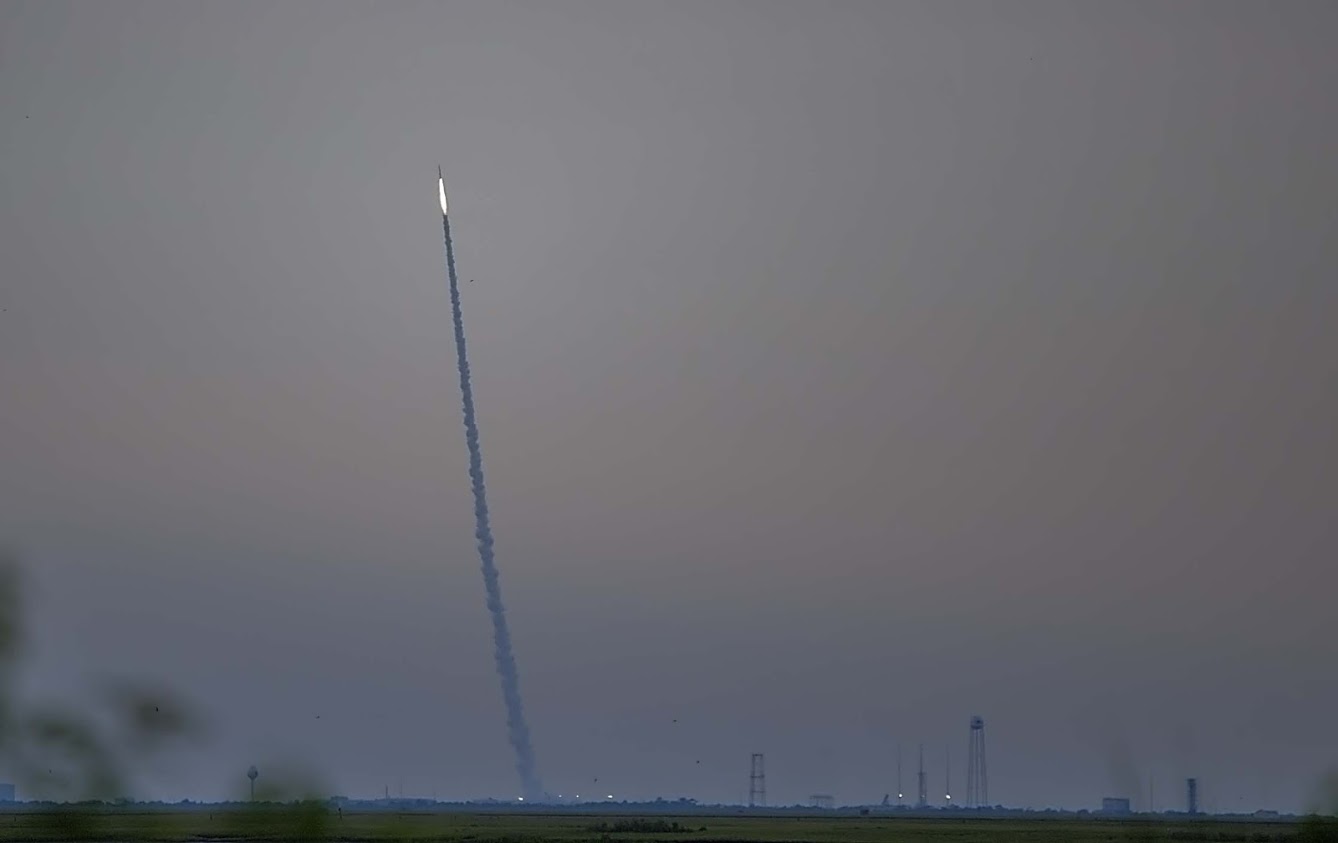
2016-cis-launch
2016 Cubes in Space launch of sounding rocket from Wallops Island, Virginia.

Sally Ride EarthKAM lets middle-school kids take photos of the world from the ISS

The Sally Ride EarthKAM program

is a NASA educational outreach program that enables students, teachers, and the public to learn about Earth from the unique perspective of space.

[It allows] middle school students around the world request images of specific locations on Earth.

Check out the gallery of EarthKAM images taken from the International Space Station.

The 55th round of EarthKAM imaging starts today:

earthcam_mission 54

Yesterday the crew on the ISS set up the EarthKAM for taking images: ISS Daily Summary Report – 11/07/2016 | ISS On-Orbit Status Report:

Sally Ride Earth Knowledge Acquired by Middle Schools (EarthKAM):
The crew configured the camera, laptop and associated Sally Ride EarthKAM software at the Node 2 Nadir hatch window. Once configured, the EarthKAM team, in association with middle school students around the world, selected image targets which will be downlinked and used in the study of physics, computers, geography, math, earth science, biology, art, history, and cultural studies.

The objective of Sally Ride EarthKAM is to integrate Earth images with inquiry-based learning to enhance curricula in support of national and state education standards; to provide students and educators the opportunity to participate in a space mission and to develop teamwork, communication, and problem solving skills; to engage teams of students, educators, and researchers in collaborative investigations using remotely-sensed data; and to incorporate the active use of Web-based tools and resources in support of the learning process.

In this video, Tom Marshburn shows how the EarthKAM is set up on the ISS:

Leesa Hubbard is a school teacher in Tennesseee and here she talks about using the EarthKAM and other space resources in her science lessons:

The Orbiter 2016 Space Flight Simulator

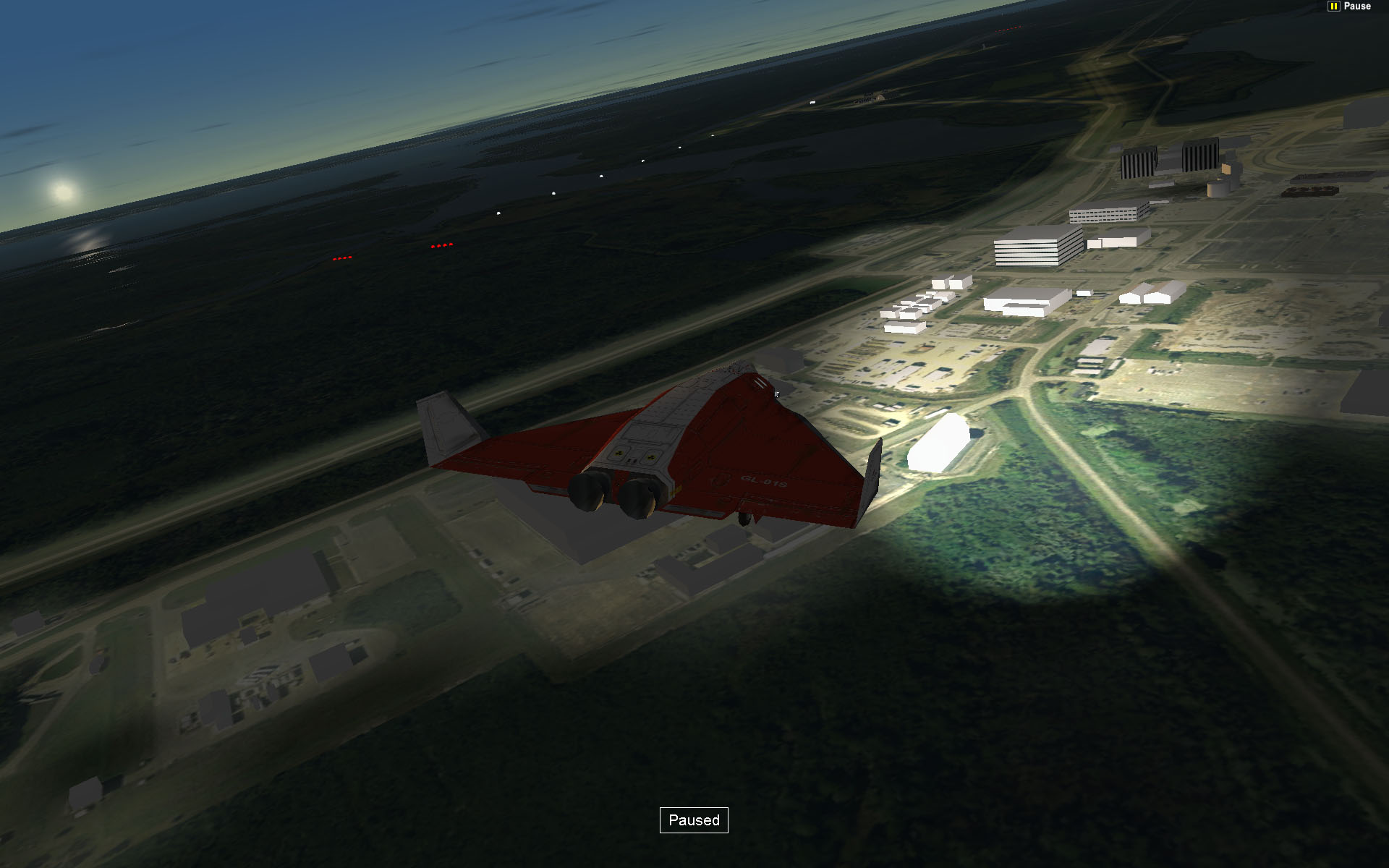
An updated version of the free spaceflight sim Orbiter is now available: Orbiter 2016 Space Flight Simulator

Explore the solar system on your PC! Fed up with space games that insult your intelligence and violate every law of physics? Orbiter is a simulator that gives you an idea what space flight really feels like – today and in the not so distant future. And best of all: you can download it for free!

florida9_new1

Here is a positive review of the update: Orbiter 2016 and other space flight simulators – Bruce Irving/The Space Review

Although it is fun and challenging in many ways, Orbiter 2016 truly is a space flight simulation, or what some might now call a “sandbox game.” In its level of detail and learning curve, it is something like Microsoft Flight Simulator or X-Plane, where the “game” is mainly the challenge of learning to fly, or of mastering advanced skills such as instrument approaches. Orbiter too supports atmospheric flight, but with the major addition of space flight with accurate orbital mechanics.

There is plenty to learn and do, but there are no requirements, characters, weapons, or scores, only the unforgiving rules of Newtonian physics, a wide range of tools and techniques to master, and the full solar system to explore. Learning to launch a spacecraft to orbit, dock with the ISS, land on the Moon, or navigate to Mars: all of this, and more, is possible in Orbiter.

You can choose from a variety of built-in spacecraft and scenarios, download and fly add-on spacecraft and scenarios, or even design and fly your own spacecraft, although doing so requires some external tools.

Irving also has good things to say about these two spaceflight sims:


=====

Brooke Owens Fellowship Program offers internships for women in aviation and space

The Brooke Owens Fellowship Program aims to encourage more women to seek aerospace careers:

The Brooke Owens Fellowship Program offers paid internships at leading aviation and space companies and organizations for passionate, exceptional women seeking their undergraduate degree.

Created to honor the legacy of a beloved space industry pioneer and accomplished pilot, Dawn Brooke Owens (1980 – 2016), the Brooke Owens Fellowship Program is designed to serve both as an inspiration and as a career boost to capable young women who, like Brooke, aspire to explore our sky and stars, to shake up the aerospace industry, and to help their fellow men and women here on planet Earth.

For application info, go to How to Apply.

Now Accepting Applications! All Applications Due December 5, 2016

brookef-181
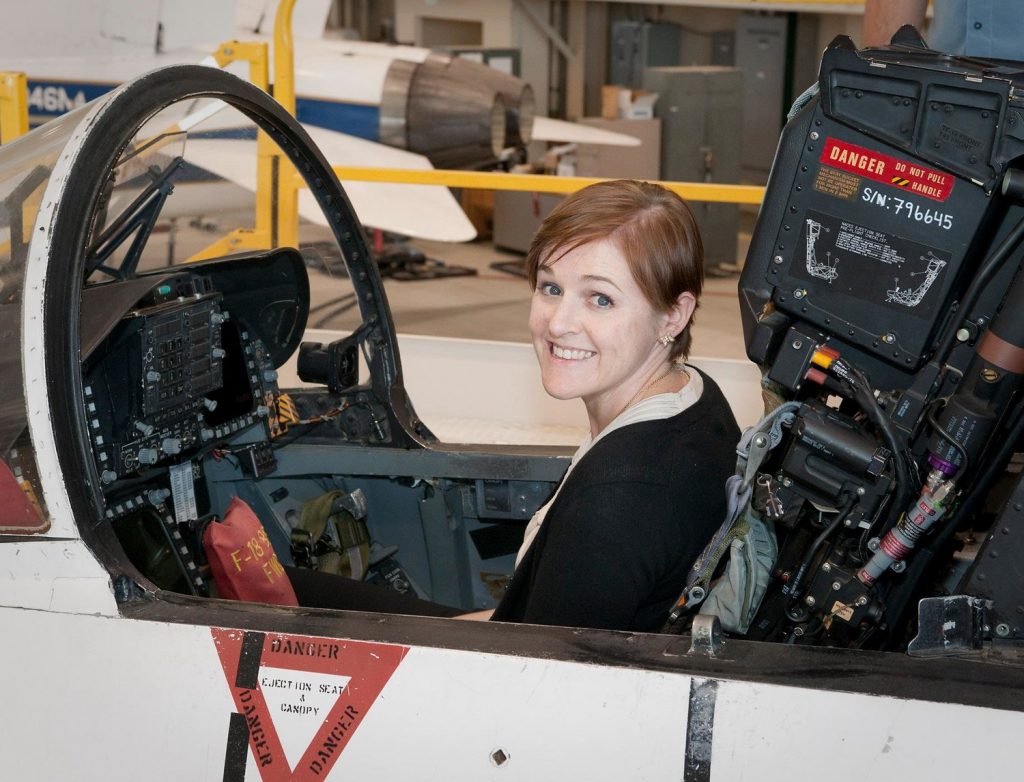
Brooke Owens (Image credits the The Brooke Owens Fellowship Program)

Find more about the program at Fellowships will boost women in aerospace – Alan Boyle/Geekwire