NASA’s Commercial Crew Program is partnering with private companies to develop new spacecraft to fly astronauts on NASA missions to the International Space Station, and we want kids to have a fun way to learn more about this program while being creative!
The Commercial Crew Program is holding an artwork contest from Oct. 2 to Nov. 2 for children ages four to 12 years old. The winning artwork will be used to create a 2018 calendar, which has a different space-related theme for each month. The themes educate students about the International Space Station, astronauts, growing food in space and more! Unique and original artwork will be selected for each month. Once the calendar is complete, it will be transmitted to astronauts aboard the space station. The calendar also will include supplemental education materials for kids here on Earth to learn more about the space-related themes.
Go to https://go.nasa.gov/2xBWNj4 for more information about the competition’s themes, rules and deadlines plus the entry form. Get your parent’s permission, of course!
An announcement from the CosmoQuest public participation in space exploration initiative:
Public Invited to Test New Tool to Study Earth using Photos
Taken by International Space Station Astronauts
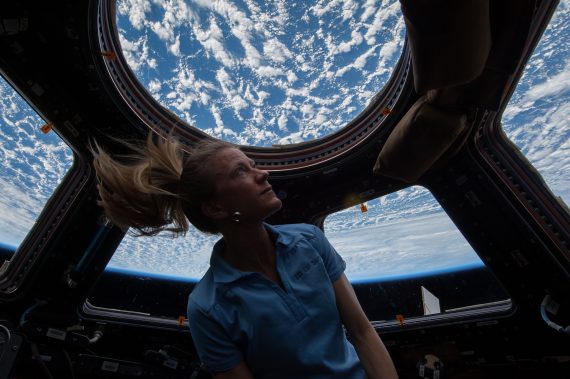
A phenomenal view – the world as seen by NASA astronaut Karen Nyberg from the Cupola of the International Space Station.
CosmoQuest’s Image Detective, a NASA-funded citizen science project, invites the public to identify Earth features in photographs taken by astronauts from the International Space Station (ISS). Citizen scientists are asked to help identify geographic features (natural or human-made) in astronaut photographs and then determine the location on Earth where the photo is centered. CosmoQuest is led by principal investigator Dr. Pamela L. Gay from the Astronomical Society of the Pacific (ASP).
“The astronauts’ photos of Earth are visually stunning, but more than that, they can be used to study our changing Earth,” says Dr. Gay, the Director of Technology and Citizen Science at the ASP. “From erupting volcanoes, to seasonal flooding, these images document the gradual changes that happen to our landscape. The trick is, we need to make these images searchable, and that means taking the time to sort through, analyze, and label (add metadata) the unidentified images within the database of 1.5 million plus photos.”
Originally developed by NASA Johnson Space Center (JSC) science experts within the JSC Astromaterials Research and Exploration Science (ARES) Division, Image Detective’s upgrade provides new and improved options for citizen scientists to help enhance NASA’s growing online database of astronaut imagery, also referred to as Crew Earth Observations (CEO) imagery.
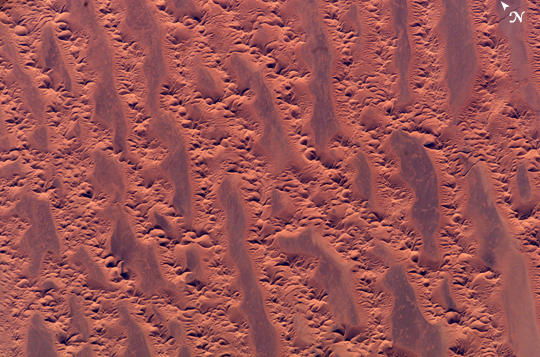
Algerian desert from the ISS
Image Detective lets anyone with an Internet connection advance the usefulness of NASA’s vast catalogue of astronaut imagery. Since construction began in 2000, more than 200 people from 18 nations have visited the International Space Station (ISS). Orbiting just 250 miles above the Earth, this platform provides astronaut photographers an amazing platform for imaging our planet. As part of their day-to-day work on the ISS, astronauts are asked by the ESRS team at Johnson Space Center to take numerous photos of our planet Earth’s land surface, oceans, and atmosphere, including impressive auroral displays. Crews also take images of other solar system bodies, such as the Moon, planets, and stars. These images now need carefully labeled.
Image Detective spreads the significant work necessary to label all of the images out to citizen scientists across the world. “This is a unique, powerful, and beautiful image data set that has already yielded excellent research science. But the data set needs the many eyes and minds of citizen scientists to reach its full potential as a publicly available, searchable catalog,” said Dr. Jennifer Grier, a Senior Scientist and Senior Education and Communication Specialist at Planetary Science Institute (PSI) and CosmoQuest’s lead support scientist. “With the additions that citizen scientists as detectives can make, professional research scientists will be able to conduct more research into our changing world, and do so much more effectively.”
Your efforts can enhance NASA’s database of images taken by International Space Station Astronauts!
These efforts are supported by NASA under cooperative agreement award number NNX17AD20A. Any opinions, findings, and conclusions or recommendations expressed are those of this project and do not necessarily reflect the views of the National Aeronautics and Space Administration (NASA). Image Detective was produced through a collaboration of the Astronomical Society of the Pacific, the Astromaterials Research and Exploration Science (ARES) Division at the NASA Johnson Space Center, the Planetary Science Institute, Youngstown State University, and Southern Illinois University Edwardsville. NASA’s Gateway to Astronaut Photography of Earth (GAPE), the official online database of more than 1.5 million astronaut images, is curated by the Earth Science and Remote Sensing (ESRS) Unit, within the ARES Division at JSC. Photos used in Image Detective are courtesy of The Earth Science and Remote Sensing Unit and NASA Johnson Space Center. NASA’s official online database of astronaut imagery is available at: https://eol.jsc.nasa.gov.
The Astronomical Society of the Pacific, established in 1889, is a 501(c)3 nonprofit organization whose mission is to use astronomy to increase the understanding and appreciation of science and to advance science and science literacy. The ASP connects scientists, educators, amateur astronomers and the public together to learn about astronomical research, improve astronomy education, and share resources that engage learners of all kinds in the excitement and adventure of scientific discovery. In addition to CosmoQuest, current ASP programs and initiatives support college faculty, K-12 science teachers, amateur astronomy clubs, science museums, libraries, park rangers, and girl scouts to name a few.
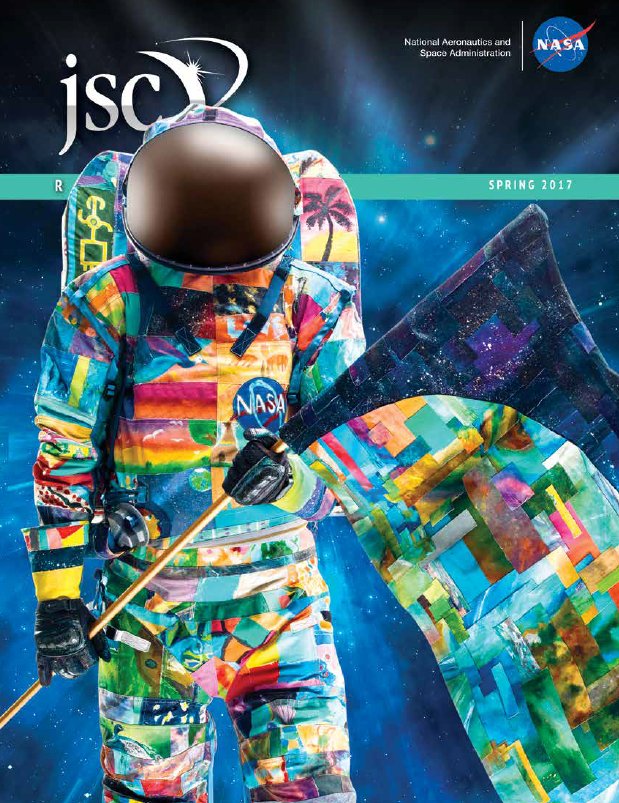
Using simple paintbrushes and paint, pediatric cancer patients employed whorls of color to form creations that would make anyone smile. These mini masterpieces, painted on fabric canvas, were later stitched together into intricate, flamboyant spacesuits that any superhero (or astronaut) would be proud to don. But what became evident throughout the process to create these stunning works is that the real superheroes embodying Hope, Courage and Unity—the names of the spacesuits—were the children all along.
The program was “initiated by the MD Anderson Cancer Center Arts in Medicine Program in collaboration with NASA Johnson Space Center, spacesuit manufacturer ILC Dover, retired astronaut Nicole Stott and later with the agency’s international partners”.
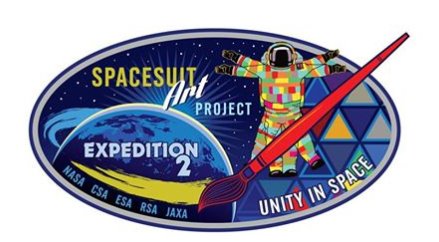
Expedition 52 flight engineer Jack Fischer donned “Unity,” a patchwork costume spacesuit decorated by children with cancer in the U.S., Russia, Germany, Japan, and Canada — the same countries that operate the space station. The multicolor garment, a product of the Spacesuit Art Project, was pieced together by ILC Dover, the same company that furnishes the softgoods for NASA’s real spacesuits. … “It is tricky to get into, but it is worth it, kind of like the real suit,” said Fischer during a live downlink with the project’s organizers and some of the children who contributed to the design. “The real suit, you have the reward of getting to go outside and seeing an amazing view. [With] this suit, you have the reward of the opportunity – or rather the honor, to represent the bravest kids in the world who actually put it together.”
A Russian student satellite was recently launched (along with 72 other satellites) into low earth orbit (LEO). Mayak is Russia’s first crowdfunded satellite project. The primary goal is to demonstrate that a small satellite can be de-orbited passively by deploying a large form that greatly increases the drag of the spacecraft as it passes through the extremely thin upper atmosphere in LEO.
Each surface is four square meters on a side and should be readily visible from the ground on a twilight pass. In fact, the team claims, Mayak will be the “brightest shooting star” once unfurled, almost as bright as the full Moon at magnitude –10. Mayak could be visible in bright twilight and perhaps even during daytime passes as well.
The satellite tracking website Heavens-Above has created a Mayak tracking tool that will tell you when Mayak will pass over your location.
The plan is to fly Mayak in a stabilized mode for the first four weeks, then set it tumbling on all three axes, setting off a brilliant twinkling pattern. The team’s site mentions using brightness estimations from Mayak to gather information about air density at high altitude and to calibrate brightness estimations for future satellites.
The reflector will also speed up reentry once deployed, utilizing both solar wind pressure and atmospheric drag. Such devices may become a standard feature on future satellites, enabling them to de-orbit shortly after their mission ends rather than adding to the growing tally of space junk in low-Earth orbit. Nanosail-D2 tested a similar technology in 2011, and another mission recently dispatched from the International Space Station, InflateSail, is currently testing the same method.
An announcement from the STEAMSPACE™ Education Outreach program:
Future Space Pioneers Coming to Texas
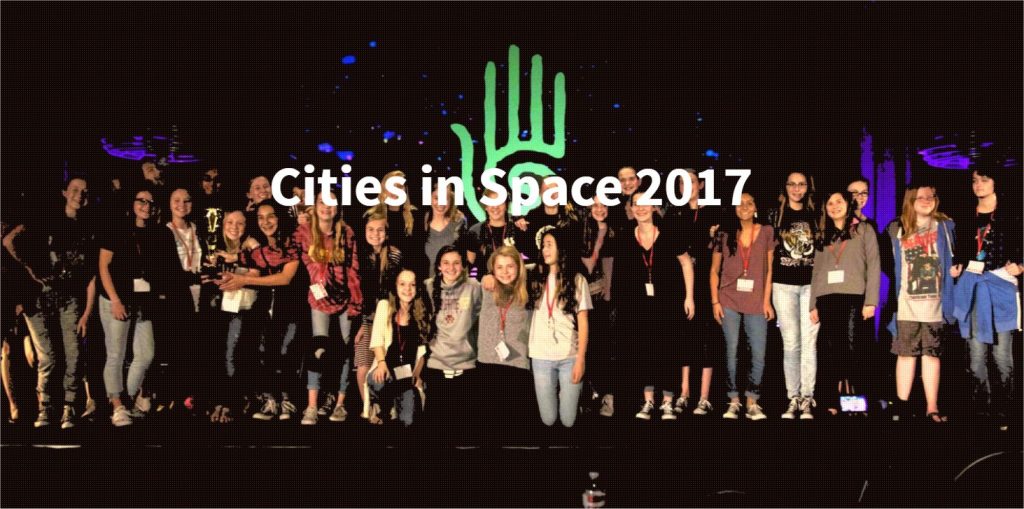
Austin, Texas – July 5, 2017–More than seven hundred students and their teachers and mentors from around the world will come to Austin November 10th to present their innovative designs for off-world habitats and colonies.
It is the third annual “Cities in Space” competition and seminar that brings together tomorrow’s space colonists with NASA scientists, engineers and astronauts as well as NewSpace innovators and business leaders.
The “Cities in Space 2017” seminar and competition marks the first day of an annual conference that includes a Space Settlement Symposium by “NewWorlds.org” where government and private sector leaders come together to discuss the human settlement of space.
“We are one important part of a larger effort to see humans settle off-world by 2030,” said Holly Melear, founder and Executive Director of STEAMSPACE™ Education Outreach. “Our role is to introduce tomorrow’s off-world leaders to the brightest lights in space exploration today.”
Students competing will present detailed engineering and concept papers for off-world human habitation. Winners will be recognized, meet with NASA leaders and private sector space entrepreneurs, and see their designs carried to the lunar surface in a future flight aboard a lunar-lander now under development by Astrobotic, Inc.
“These extraordinary students will compete with each other, learn from each other and gain entry into one of the most exclusive clubs on Earth—those determined to see humans prosper in space and on other worlds.” Said Amos Behana, Director of Operations for STEAMSPACE™
The New Worlds Conference and Space Settlement Seminar, which hosts the Cities in Space 2017 competition and conference, is a two day event held at the Renaissance Hotel and Conference Center in Austin, Texas on November 10 and 11th.
Media representative are welcome to attend and encouraged to get in touch in advance of the event.