Category Archives: Education

Applications for Space Camp student scholarships from Mars Generation due by Jan.15, 2018

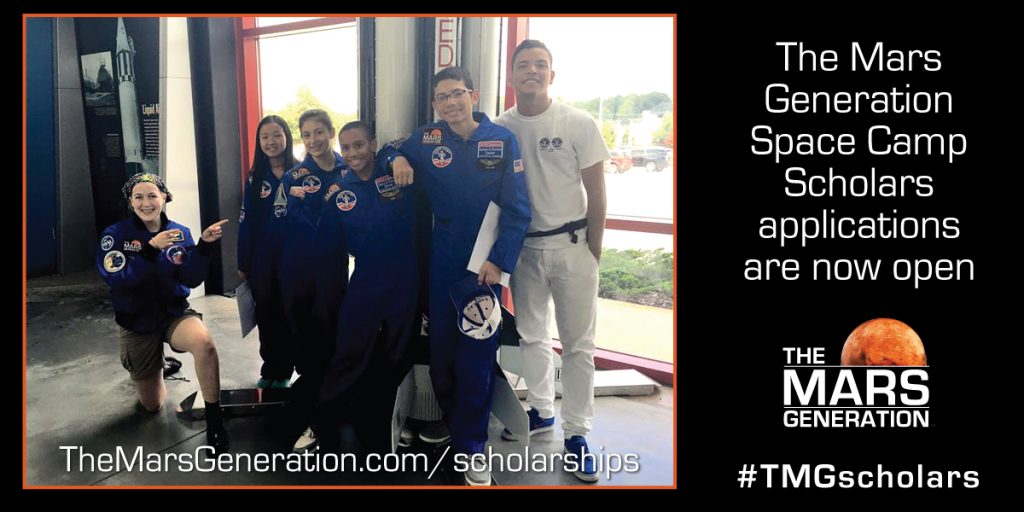
The Mars Generation is offering students a chance to win a free 1 week scholarship for Space Camp located in Huntsville, Alabama for summer of 2018: Space Camp Scholarship Application | The Mars Generation

TMG Space Camp Scholarship Applications are now open through January 15, 2018.

This scholarship is for 100% of the tuition to 1 week of space camp (July 7-14, 2018) and includes a flight suit, transportation and a small spending stipend. The total value is approximately $3,000.

Welcome students! We are happy you are here. Please review the application requirements below to make sure you qualify before applying. If you choose to apply, please make sure you complete all 3 parts of the application by January 15, 2018 to be considered for selection.

Applications are due no later than 11:59 pm CST on January 15, 2018

Application requirements include:

  • Must join the TMG Student Space Ambassador Leadership Program (see themarsgeneration.org for information and to signup)
  • Family must qualify for the USDA free and reduced lunch program. We do require verification of your family qualification of the USDA free and reduced lunch program if you are awarded a scholarship.
  • Must live in the continental U.S. (Lower 48 states)
  • Must be able to attend Space Camp the week of July 7-14, 2018
  • Have never attended Space Camp USA in Huntsville, Alabama
  • Must be between the age of 15-17 as of July 1, 2018.
  • Application must be submitted by 11:59pm January 15, 2018

Application for the scholarship consists of 3 parts:

  1. Fill out the application form which includes an outreach project proposal. Students who are awarded a TMG Space Camp Scholarship will be required to complete an outreach presentation where they share their Space Camp experience with their community.
  2. Student will need to create and submit a short video (under 3 minutes) introducing themselves and explaining why STEM education and/or space exploration are important to the future of humankind. Students should also talk about why they think they would benefit from attending Space Camp. Videos will need to be emailed to scholarships@themarsgeneration.org with the student’s full name and words “Space Camp Scholarship Application 2018” in Subject line of the email as well as in the title of the video file.
  3. Students will need to have a mentor or teacher fill out out a recommendation form.

*** If student is chosen to receive a scholarship their family will need to pay a $150 deposit at the time of accepting the scholarship. The deposit will be returned after the student attends Space Camp and upon submitting a video of the presentation.
Kickstarter for STEM program with experiments for students to compare with results on ISS

A Kickstarter has opened to back a program to let students run crystal and microbe growing experiments on the ground to compare with similar experiments on the International Space Station:

Kickstarter for STEM Education Program in Space Announced
Xtronaut, NanoRacks, and DreamUp are launching two experiments to
the International Space Station and producing affordable STEM experiment
kits that let students compare their findings to results from space.

WASHINGTON, D.C., November 9, 2017 – XtronautDreamUp, and NanoRacks announce a Kickstarter campaign to offer out-of-this-world STEM educational opportunities for learners. Xtronaut Space Station connects Earth-based experiments to science done by astronauts on the International Space Station (ISS), empowering students in classrooms, homes and afterschool programs to research in the stars.

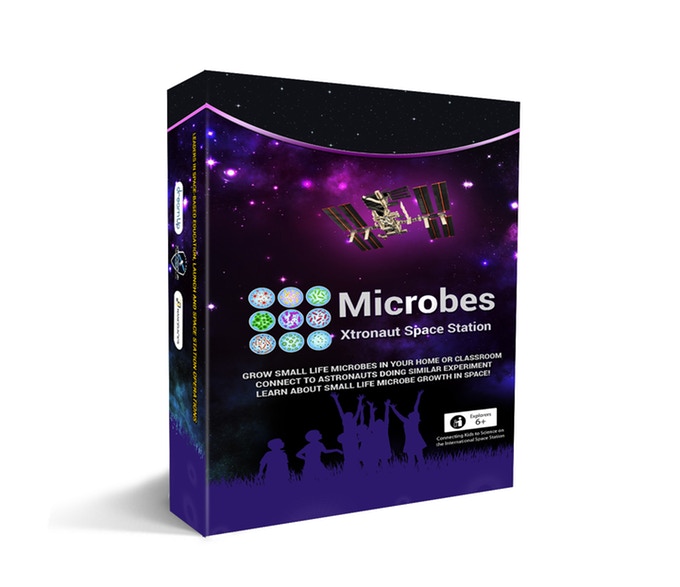
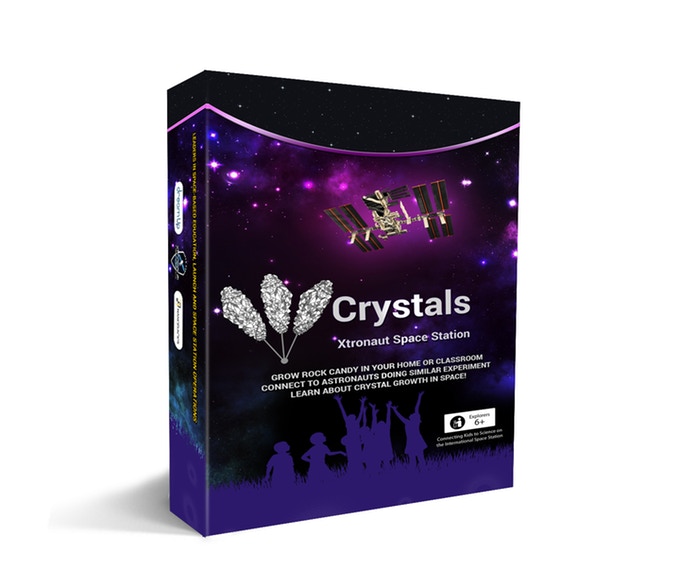
The “Crystals in Space” and “Microbes in Space” ground kits are available to Kickstarter backers for $25 each. The Kickstarter campaign will run until December 9, and the kits will ship to backers in Q2 2018. More experiment kits and lessons are in production for future programs.

Each ground kit includes:

  • Experiment materials
  • Workbook with detailed instructions, lessons on space, in-depth descriptions of the science behind the experiments, fun activities, and more
  • Access to an online portal to compare the ground experiments with the experiments conducted on the ISS

“Crystals in Space” will include materials to grow sugar crystals on Earth and compare them to crystals grown in microgravity on the ISS. For “Microbes in Space,” astronauts on board the ISS will collect several samples from around the station to culture in Petri dishes. The ground experiment kits will allow learners to mimic this procedure by collecting culture samples in their homes or classrooms.

The “Microbes in Space” flight experiment is scheduled to launch November 11 on the Orbital ATK CRS-8 mission. “Crystals in Space” will launch to the ISS on SpaceX CRS-13, currently scheduled for December 4.

The Crystal Growth in Space kit is designed to teach you about the similarities and differences of crystal growth in microgravity on the ISS and in Earth’s gravity at your home or school.

The successful launch of this collaboration demonstrates yet again the robustness of the commercial pathway to space, both in industry and education. The partnership not only utilizes NanoRacks’ commercial research platforms inside the U.S. National Lab on the ISS but also DreamUp’s proven expertise in inspiring the next generation of explorers and innovators with space-based educational opportunities. Xtronaut has a track-record of delivering quality products through the Kickstarter platform, including the STEM board games, Xtronaut: The Game of Solar System Exploration, and Constellations: The Game of Stargazing and the Night Sky.

Jeffrey Manber, CEO of NanoRacks, commented,

“I’m delighted that a personal goal of mine is being met, that NanoRacks cutting-edge scientific platforms are making the ISS STEM community more accessible to everyone, including homeschooling families and other learners.“

Professor Dante Lauretta, Chief Science Advisors for Xtronaut and Principal Investigator for NASA’s OSIRIS-REx space mission, commented,

“This joint effort will create a very special learning opportunity for learners across the country, and we are pleased to work with NanoRacks, DreamUp, and their unique capabilities.”

Carie Lemack, CEO and Cofounder of DreamUp commented,

“We’re thrilled to provide a cost-effective way for students to become space scientists and engage in STEM learning, setting them on a path of exploration and scientific curiosity that can guide them both inside and beyond the classroom.”

Mike Lyon, CEO of Xtronaut, commented,

“Xtronaut, DreamUp, and NanoRacks are making space research available to all students on a low-cost basis. Students will have a special opportunity to discover the difference between conducting certain experiments on Earth and in space — and learn firsthand about special characteristics of space-based science.”

Visit the Kickstarter to learn more and reserve your Xtronaut Space Station Kit today!

The Microbes in Space kit lets student explorers learn about the different types of life growing around the ISS and compare it to small life in their environments. While astronauts are living in space, there are also other kinds of life on the ISS! However, most of this life is too small for the astronauts to see unless they help it grow. In this activity, you will perform an experiment to grow small life on Earth and compare it with the experiment conducted by astronauts on the ISS.

====

Project Karman: UCB undergrad team aims to launch rocket past 100 kilometers

Project Karman is an undergraduate student led initiative at UC Berkeley to design, build, and launch a rocket that exceeds 100 kilomters in altitude. They currently have a crowdfunding campaign underway, which has raised $13,725 so far towards a goal of $25,000 with 16 days left:  UC Berkeley | PROJECT KARMAN: 1 Launch, 10 Months, 100 Kilometers to Space!

The group is also challenging students at other schools to compete with them to reach the Karman Line: PROJECT KARMAN goes global

Tonight, we officially challenged colleges across the globe to join us in the Intercollegiate Space Race of the 21st Century, competing to see who can truly be the first college team to reach space with its own rocket. Through the UN-backed World Space Week Association, we were able to broadcast this challenge internationally! See their Facebook post here: https://www.facebook.com/pg/WorldSpaceWeek/posts/?ref=page_internal. To see more details regarding the formal rules of the competition, visit berkeleyse.org/spacerace.

A video about Project Karman:

And here is a profile of one of the students – Autumn Kleinman – working on the project: Rocket Ambitions: San Clemente Native Works on Suborbital Craft with UC Berkeley club | San Clemente Times.

The group estimates the final cost of the Eureka-1 rocket project to be about $250k. They hope to reach this figure with additional crowd-funding, grants, and sponsorships.

The goal is for Eureka-1 to be reusable and to fly many times:

While the technical know-how to send payloads to space has existed for over 60 years, the requisite technology has remained incredibly expensive, failure-prone, and dangerous to use.

Recent advances in materials science coupled with proprietary cost-saving technologies have allowed Space Enterprise at Berkeley to entirely eliminate the turbo pump, the single most expensive and delicate element of modern rocket engines.

This innovation has allowed us to reduce the typical $2.8 million price tag of a suborbital launch to less than $150,000. In addition, in-development recovery systems will allow for a fly-land-fly turnaround for Eureka-1. With full implementation of this system, Eureka could fly multiple times per week, with only a short refurbishment and refueling period between launches. This would reduce total launch cost to less than $10,000.

A couple of other videos from Project Karman:


60 years since Sputnik 1 reach orbit

Sixty years ago today, the Soviet Union launched Sputnik 1, the first artificial satellite. The news electrified the U.S. and set off a sequence of events that eventually led to the Apollo 11 landing of two astronauts on the Moon 12 years later.

Here are some details of the story of how the Soviet satellite came to be:

Here is a CBS TV news report from October 1957:

To get an idea of the impact that Sputnik had on American society, I recommend Homer Hickam’s autobiographical book Rocket Boys. He recounts how as a youngster in a remote coal mining town he was so inspired by Sputnik and the US efforts to get to space that he and his friends began building rockets of their own. They were soon demanding that their high school teach advanced physics and calculus. Hickam later became a rocket engineer at NASA. Homer is featured in this video about the “Sputnik Moment” and the huge influence it had on US education:

From 1957 till the mid-1960s, there was a wave of intense interest and support in technology and science across American society. College entrance exam scores reached record highs. Many young people growing up during that period went into scientific and engineering fields outside of space but they credit space with first inspiring them to study science and math.

There were, however, some drawbacks to the crash program mentality that was set off by Sputnik. Here is a commentary on how Sputnik and the Space Race that followed between the US and the Soviet Union created a false view of how space can and should be developed: Sputnik at 60: How Elon Musk and Jeff Bezos Started a New Space Age | Rand Simberg/The Weekly Standard.

“Reach for the Stars” rocket competition winners to celebrate at Space Camp/US Space & Rocket Center

A report from the Reach for the Stars National Rocket Competition on the 2017 results:

Reach for the Stars

~ National Rocket Competition Winners to Celebrate at
Space Camp / US Space & Rocket Center


Contestants in the 11th annual Reach for the Stars ~ National Rocket Competition had to build and launch their own solid-fuel powered rocket at an event held in their area. The Competition promotes STEM (Science, Technology, Engineering & Math) education and is run in memory of Christa McAuliffe / first Teacher-in-Space. Local Competitions were held by schools, scout troops, youth centers, museums, and rocket clubs across the country in this year long event.

In response to the nation’s call for more interest in STEM (Science, Technology, Engineering & Math) activities – over 1500 kids across the nation participated in the eleventh annual Reach for the Stars ~ National Rocket Competition. At the end of the competition those who had the “Right Stuff”* were victorious. The annual Competition, for ages ten to eighteen, runs continuously.

Their rockets soar 200 feet into the air to return by parachute. The closest average landing to an on-field target wins the local event. The local winner’s results were forwarded to RFTS Competition headquarters to be compared to all entries received. The closest were declared the national winners.

Jessica Flowers, Lilianna Henry, Kyle Hughes, Sophia Jasso, Victoria Miterko and Jordyn Presley took the top honors this year. Joining the group will be Minnesota Civil Air Patrol cadet, Nathan Jones – one of last year’s winners.

The national winners will be invited to celebrate their success at Space Camp / US Space & Rocket Center in Huntsville, Alabama. As part of the celebration they get to launch their rockets from Homer Hickam Field** under an October Sky. The winners will be presented a Space Shuttle Challenger commemorative medal with certificate signed by Astronaut Jon McBride. Captain McBride piloted the Challenger on her early missions.

With their families, the winners will continue their celebration; seeing the Pathfinder Space Shuttle, standing in the world famous Rocket Park, climbing the Mars Wall, riding the Astronaut Simulators and visiting the Challenger Astronaut Memorial – honouring the memories of those lost in the conquest of space.

Competition co-director, Kathy Colpas says,

We promise the national winners – memories to last a lifetime and bragging rights for generations to come. Launching their rockets from a memorable location and being honored under the historical Saturn V rocket allows us to fulfill our promise.

Jessica Flowers won her local competition at Prairie Trace Elementary in Carmel, Indiana under the direction of teacher Sandi Johnson.

Lilianna Henry and Victoria Miterko won their local events while competing at Citrus Springs Elementary in Citrus Springs Florida. Tina Hackey was the Competition host.

Kyle Hughes launched at Hockomock YMCA in N. Attleboro, Massachusetts with Associate Director of Children’s Services, Kim Jennings.

Sophia Jasso competed in Santa Ana, California at Mendez Fundamental Intermediate School under the direction of teacher, Andrea Earl.

Jordyn Presley took top honors while launching with Bagdad Elementary in Milton, Florida. This event was run by teacher Tammy Dillard. The Competition at this school was funded by a NASA grant through the Florida Space Grant Consortium.

Nathan Jones, a Civil Air Patrol cadet from the 130th Composite Squadron, Lakeville, Minnesota was one of last year’s national winners. He will attend this year’s celebration.

Several companies have joined together to provide unforgettable memories for the national winners of the annual Reach for the Stars ~ National Rocket Competition.

Without the generosity of these businesses, this winners’ celebration would not be possible.

Sponsors receive national recognition and the satisfaction of – Helping Kids Reach for the Stars. More information is available at www.RocketCompetition.com .

Jack and Kathy Colpas, co-directors of the Reach for the Stars ~ National Rocket Competition are retired public school educators with over 50 years of classroom experience. “Our goal is to give kids the educational experience of building and launching a solid-fuel powered rocket. Our purpose is to foster an interest in model rocketry, STEM subjects and aeronautics. Our mission is to keep alive the memory of the first Teacher-in-Space, Christa McAuliffe.”

* Thomas Wolfe, The Right Stuff – (Farrar, Straus and Giroux) 1979

**Homer Hickam is the author of the inspirational memoir, Rocket Boys which became the movie October Sky.