Category Archives: Education

Student and amateur CubeSat news roundup – Aug.2.2020

A sampling of recent articles, press releases, etc. related to student and amateur CubeSat / SmallSat projects and programs (find previous smallsat roundups here):

** The annual Smallsat Conference hosted at Utah State University is on line this year due to the Covid-19 virus situation. Registration is free. Though the event is nominally August 1-6, there are dozens of videos of workshop and technical session presentations already on line.

Dr. Pat Patterson of Utah State University talked about the Conference for 2020 on The Space Show on July 21, 2020 :

** Villanova University has a new student  CubeSat Club. The group is starting out by running a locally developed CubeSat simulator, receiving signals from CubeSats in orbit, designing a test project for a high-altitude balloon flight, and more.

The club’s long-term goal involves a bigger leap: to design, build and launch an actual CubeSat—a 10-by-10-by-10-centimeter, lightweight nanosatellite that can be launched from a rocket, or put into orbit by astronauts on the ISS. But with design, equipment, programming, testing, and launch, CubeSat development can take several years and cost up to $100,000.

For now, club members are taking smaller steps towards their ultimate mission as they gain hands-on experience with satellite technology through a CubeSat simulator developed by faculty adviser Alan Johnston, PhD, associate teaching professor of Electrical and Computer Engineering. The low-cost simulator functions like a real CubeSat, with working solar panels and the capability to send telemetry to an antenna, making it an ideal learning tool.

Monitoring its Lindenblad antenna will keep Villanova’s CubeSat Club busy. First, they will design a payload to be launched into the stratosphere via a high-altitude balloon. If all goes well, the balloon’s telemetry will be detectable from the roof of Tolentine as it sails above Villanova. Also on tap is working with a project called AmbaSat-1: to program, launch and track a credit card-sized “sprite” satellite into low earth orbit.

The CubeSat simulator involves both software and a hardware CubeSat bench emulator. Here is a description of the simulator: A Year with the AMSAT CubeSat Simulator: 12 Months in the Classroom and Lab – A. Johnston, P. Kilroy (pdf). More information on CubeSat Simulator Project Page.
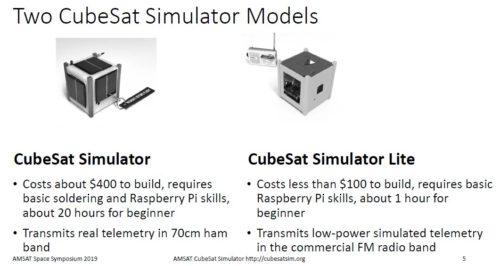
CubeSat model simulators.

** Student CubeSat project at the MIT Beaver Works Summer Institute. There are several CubeSat project videos available online. Here is a brief overview of the project that involved designing an system for imaging and tracking ocean plastic debris:

And here is an overview of the design that the students developed:

** AMSAT news on student and amateur CubeSat/smallsat projects:

ANS-208 AMSAT News Service Special Bulletin

  • AMSAT Partners with UMaine’s WiSe-Net Lab to Develop Maine’s First Small Satellite
  • AMSAT-UK Announces OSCAR Satellite QSO Party
  • JARL Announces FO-29 Operation Schedule for August
  • Christopher Brault, KD8YVJ, Named 2020 Newsline Young Ham of the Year
  • Hamfests, Conventions, Maker Faires, and Other Events
  • Upcoming Satellite Operations
  • Upcoming ARISS Contacts
  • Satellite Shorts from All Over

ANS-215 AMSAT News Service Weekly Bulletins

  • ISS MAI-75 SSTV Activity Planned For Aug 4-5
  • AMSAT Awards Update
  • How Many Satellite Awards Have Been Issued?
  • VUCC Awards-Endorsements for August 2020
  • First Demonstration Of Orbit Control On A 1U CubeSat
  • Burns Fisher, WB1JF, Featured Speaker at AMSAT SA Symposium
  • NASA to Provide Coverage of Astronauts’ Return from ISS on SpaceX
  • ARISS News
  • Upcoming Satellite Operations
  • Hamfests, Conventions, Maker Faires, and Other Events
  • Satellite Shorts From All Over

General CubeSat/SmallSat info:

** Cubesat MissionsMakua Lani Christian Academy – Designing a CubeSat for a particular mission goal.

** PLIX CubeSats Online: Week 2 Wrap-up Stream

Welcome to Week 2 of PLIX CubeSats Online! 🛰️ For the second session, we’ll be covering the Satellite Testing & Payload Integration workshop, which covers both satellite testing strategies and the incorporation of a data-collecting tool. Read more about the CubeSats activity on our PLIX Activity Repository: http://bit.ly/PLIX-CubeSats

=== Amazon Ad ===

Introduction to CubeSat Technology and Subsystem:
Orbit Design, Debris Impact, and Orbital Decay Prediction

Student and amateur CubeSat news roundup – July.23.2020

A sampling of recent articles, press releases, etc. related to student and amateur CubeSat / SmallSat projects and programs (find previous smallsat roundups here):

** University Wurzburg UWE-4 CubeSat fires NanoFEEP electric thrusters to avoid a possible collision with a derelict Iridium satellite: Morpheus thruster propels single cubesat to lower orbit – SpaceNews

Germany’s University of Wurzburg Experimental-4 (UWE-4) cubesat avoided a potential collision in early July while lowering its altitude with Morpheus Space’s NanoFEEP electric propulsion system.

It was the first time a one-unit cubesat performed a collision-avoidance maneuver, Istvan Lorincz, Morpheus president and co-founder, told SpaceNews.

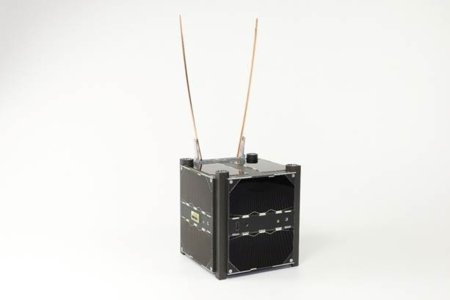
“UWE ‑ 4 with Thrusters, Neutralizer and a new kind of sun sensors on each panel.” Credits: Univ. of Wurzburg

The UWE-4 mission is intended as a technology demonstration. In addition to propulsion, it is testing a new sun sensor design. The CubeSat was launched as a secondary payload on a Soyuz rocket in December 2018.

See also Successful first demonstration of orbit control on a 1U CubeSat – Lehrstuhl für Informatik VII

The 1U CubeSat, developed and built at the Chair for Robotics and Telematics, is equipped with the electric propulsion system NanoFEEP which has been developed by TU Dresden. 

Several manoeuvres have been performed within 11 days between June 23rd – July 3rd 2020 such that the altitude of the CubeSat was reduced by more than 100 m, compared to an average of 21 m with natural decay. This marks the first time in CubeSat history that a 1U CubeSat changed its orbit using an on-board propulsion system. 

As chance would have it, the team of UWE-4 received a conjunction data message (CDM) in the morning of July 2nd 2020 from the United Air Force’s 18th Space Control Squadron. A conjunction of UWE-4 with a non-operational Iridium satellite (ID: 34147) in the morning of July 5th 2020 with a minimum range of about 800 m was a threat to the safety of UWE-4. An analysis has shown that the altitude of UWE-4 would already be below the Iridium satellite at the time of conjunction. Thus the on-going altitude lowering manoeuvre could only improve the situation and can be considered as a collision avoidance manoeuvre. No further CDMs have been issued regarding this possible conjunction. An analysis of the orbit of the two spacecraft after July 5th 2020 results in a closest approach of more than 6000 m.

** AMSAT news on student and amateur CubeSat/smallsat projects:

ANS-201 AMSAT News Service Special Bulletin:

  • AMSAT Board of Directors Election Packages Mailed July 14
  • HO-107 is Back!
  • First Call for Papers – Virtual 2020 AMSAT Annual Meeting and Space Symposium
  • New D-STAR Reflector for AMSAT Use
  • SpaceX to Launch AMSAT-EA EASAT-2 and Hades Satellites
  • DARC Finds Unauthorized Transmissions in 144 MHz Satellite Band
  • 1240-1300 MHz Discussed at CEPT SE-40 Meeting
  • IARU Coordinates Two New Satellites
  • Upcoming Satellite Operations
  • Hamfests, Conventions, Maker Faires, and Other Events
  • ARISS News
  • Satellite Shorts from All Over

ANS-204 AMSAT News Service Special Bulletin:

General CubeSat/SmallSat info:

** CubeSats Get Close: Proximity Operation with Interesting Implications –  The Aerospace Corporation

One of Aerospace’s CubeSats photographed its twin satellite from 22 meters away in a demonstration of the type of technology that could enable inspection and servicing missions. Read more: CubeSats Get Close: Proximity Operation with Interesting Implications | The Aerospace Corporation

** Florian Gautier – Landing CubeSats On Asteroids – Cold Star Project S02E50

University of Kansas Doctoral candidate (Physics and Astronomy) Florian Gautier is on the Cold Star Project to discuss several of the research projects he’s been involved in. With host Jason Kanigan, Florian describes his aerospace engineering and astrophysics education journey from Europe to North America and opportunities to work on:

– Student CubeSat project at ISAE-SUPAERO to develop 12U cubesats for missions like ATISE
– Land3U project, simulation of CubeSat landing on asteroids, sponsored by ESA Drop Your Thesis! 2018 programme (the drop tower used is fascinating)
– AGILE, development of a new compact particle detectors suitable to be flown on a CubeSat.

I also ask Florian, who has two Masters degrees (Astronautics & Space Engineering and Astrophysics, Space Science & Planetary Science), about his future goals and where he thinks space work will take him.

** The Space Show – Weds. July.23.2020 – Dr. Pat Patterson, long time chief of the annual SmallSat Conference held at Utah State, talked about this year’s event (Aug. 1-6, 2020), which is all virtual.

** Democratizing access to outer space with CubesatsAdeel Khan

** PLIX CubeSats Online: Week 1 Kick-off StreamPLIX CubeSats

Welcome to Week 1 of PLIX CubeSats Online! 🛰️ In this session, we’ll be covering the PLIX CubeSats activities, a series of creative learning workshops designed to support public library patrons in learning about outer space environments and how they can be characterized with small spacecrafts. Read more about the CubeSats activity on our PLIX Activity Repository: – PLIX CubeSats

** Generating Quantum Random Numbers On a CubeSat (SpooQy-1)

CQT Online Talks – Series: Conference presentations This talk was given at CLEO. Speaker: Ayesha Reezwana, Alexander Ling Group, CQT,

NUS Abstract: We demonstrate a quantum random number generator based on entangled photon-pair statistics on-board a CubeSat orbiting in Low Earth Orbit.

=== Amazon Ad ===

Introduction to CubeSat Technology and Subsystem:
Orbit Design, Debris Impact, and Orbital Decay Prediction

Student and amateur CubeSat news roundup – July.17.2020

A sampling of recent articles, press releases, etc. related to student and amateur CubeSat / SmallSat projects and programs (find previous smallsat roundups here):

** Two CubeSats deployed this week from the ISS: Spacewalk Preps, Satellite Deployment During Bone and Heart Research – Space Station/NASA

A pair of microsatellites were deployed into Earth orbit today outside Japan’s Kibo laboratory module. The Deformable Mirror CubeSat will demonstrate the performance of a tiny but powerful exo-planet telescope. The TechEdSat-10 CubeSat will test returning small payloads safely into Earth’s atmosphere.

The CubeSats were launched to the ISS on a Northrop-Grumman Antares rocket in a Cygnus cargo vehicle on February 15th of this year.

TechEdSat-10 is the latest CubeSat sponsored by the NASA Ames Technology Education Satellite (TechEdSat) program. This spacecraft was developed in collaboration with student teams at San Jose State University and the University of Idaho. The primary goal of the mission is to test technologies for low cost return of small payloads from orbit. The CubeSat will deploy a Exo-Brake, which is

a tension-based, flexible braking device resembling a cross-parachute that deploys from the rear of a satellite to increase the drag. It is a de-orbit device that replaces the more complicated rocket-based systems that would normally be employed during the de-orbit phase of re-entry.

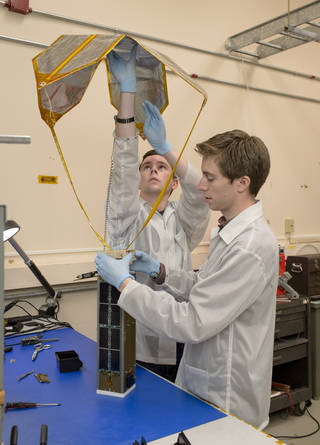
An Exo-Brake is a parachute-like apparatus deployed from a spacecraft to increase drag in the very thin atmosphere of low earth orbit. The increased drag will hasten the satellite’s reentry. This photo shows an Exo-Brake being packed into TechEdSat-5. Credits: ASA Ames/Dominic Hart

The TecEdSat-10 mission will

… further develop the tension-based drag device (an ‘Exo-Brake’) and demonstrate frequent uplink/downlink control capability. In addition, the Exo-Brake is modulated in order to change the drag profile and then permit, for the first time, a targeting experiment. TechEdSat-10 is sized at a scale of 3 m, which permits re-entry within 4 weeks at a ßof ~5 kg/m2. Understanding the thermophysics of such a device permits it to be scaled for larger payloads and re-entry within 1.5 days.

Targeting would allow the brake to return a payload to a specific area for ease of recovery.

The Deformable Mirror CubeSat (DeMi) project is an MIT project sponsored by DARPA. Deformable mirrors are used in ground-based telescopes to cancel out distortions in stellar images caused by variations in atmospheric density, temperature, etc. For observatories in orbit, there is no atmosphere to deal with but there are various structural and optical flaws,  small strains from temperature changes, etc. The goal for this mission is to demonstrate that such imperfections can be compensated for with a deformable mirror in a space telescope.

In order to image an Earth-like planet, an exoplanet direct imaging system needs to achieve a contrast ratio of 1 × 10E−10. Even with adaptive optics on a large ground-based telescope, it is currently not possible to overcome the effects from atmospheric turbulence to achieve the high contrast needed to obtain high-resolution spectra of an Earth-like exoplanet. While a space telescope does not have to overcome the effects of atmospheric turbulence, achieving a clear image usually comes at the expense of smaller aperture size (e.g., due to launch cost and launch vehicle limitations). The performance of a space telescope will still suffer from optical imperfections, thermal distortions, and diffraction that will corrupt the wavefront, create speckles, and ruin the contrast. High actuator-count deformable mirrors have the authority to correct high spatial frequency aberrations that would otherwise degrade the contrast in these conditions.

Deformable Mirror CubeSat (DeMi) serves as an on-orbit testbed for a MEMS deformable mirror. The baseline deformable mirror payload architecture incorporates a Shack-Hartmann wavefront sensor for mirror characterization as well as a focal plane sensor for correcting an image of an external object. DeMi characterizes the on-orbit performance of a 140 actuator MEMS deformable mirror with 5.5 μm maximum stroke. The goal is to measure individual actuator wavefront displacement contributions to a precision of 12 nm. …

The ultimate goal is to enable space telescopes to image exoplanets directly:

Current space telescopes have limited ability to detect and distinguish small, dim objects such as exoplanets that are next to large, bright objects such as stars. MEMS deformable mirror technology can improve the imaging capabilities of future space telescopes.

Aurora Flight Sciences is managing the project and Blue Canyon Technologies built the spacecraft.

** AMSAT news on student and amateur CubeSat/smallsat projects: ANS-194 AMSAT News Service Special Bulletin

  • AMSAT Leadership Explains 2018-2020 Legal Expenses
  • Update on HO-107 (HuskySat-1)
  • AMSAT-DL Proposes LunART – Luna Amateur Radio Transponder
  • Buffalo Soldiers Special Event on the Satellites
  • Hamfests, Conventions, Maker Faires, and Other Events
  • Upcoming Satellite Operations
  • Upcoming ARISS Contacts
  • Satellite Shorts from All Over

** AMSAT arose from the HAM radio community and many educational and science related smallsats use amateur radio bands for communications. This article doesn’t include anything on AMSAT or amateur radio via satellites but it does give a good overview of the state of amateur radio globally: The Uncertain Future of Ham Radio – IEEE Spectrum.

General CubeSat/SmallSat info:

**  Building a CubeSat for less than $1000 — Part 3 — Avionics Schematic – Third episode in a series from RG SAT on how to build a low cost CubeSat.

Today I cover the schematic I created for the Avionics board of the Cubesat. The Avionics board essentially serves as the main computer for the Cubesat, including control of the Attitude Control System, and radio communications.

** CanSat, A CubeSat learning kit Made in IndiaWorld CanSat & Rocketry Championship – YouTube

A World CanSat/Rocketry Championship (hereinafter: WCRC) is generally an international competition open to elite competitors from around the world, representing their nations (as university student Teams or as independent student Teams), and winning this event will be considered the highest or near highest achievement in this field. The WCRC was formulated and negotiated among the Organizations from 6 countries: Serbia, India, Italy, Tunisia, Canada, and Peru (hereinafter: Founders) from October.

** Tracking CubeSats with a TelescopeBruce Van Deventer – YouTube

CubeSats are miniature satellites typically deployed into low earth orbit. A standard 1U CubeSat is a cube ten centimeters on a side. Here, I tracked three different CubeSats on the night of 6/17 at our dark site observatory. Tracking is performed blind, meaning there is no optical assist to help the telescope point to the target. These videos are shot using a Celestron RASA 11 telescope and the ZWO ASI 6200 mono camera, operated in 8 bit video mode, quarter frame size, 100ms exposure. That video is further cropped here to make it easier to find the satellite.

** Dove Satellite – Observing Earth With A Cubesat

I paid a visit to Planet, they’re one of my ‘neighbours’ in San Francisco’s SOMA district. Their business is planetary imaging and they’ve launched over 100 Dove Cubesats which are built around the largest possible camera you can fit in a cubesat.

** Aerospace CubeSats Blaze a Faster Trail to Space | The Aerospace Corporation

The challenge: Build and launch a pair of cube satellites on a tight budget and even tighter timeline. Here is how Aerospace engineers designed the Aerospace Rogue Alpha/Beta CubeSats as pathfinders for studying rapid reconstitution.

=== Amazon Ad ===

Introduction to CubeSat Technology and Subsystem:
Orbit Design, Debris Impact, and Orbital Decay Prediction

IGLUNA 2020: Student teams present “space habitat with remote ops” design studies

The Swiss Space Center is sponsoring the IGLUNA program in which student teams compete to create technologies for extreme environments:

IGLUNA is aimed at supporting and accelerating the ESA_Lab@ initiative. The Swiss Space Center coordinates IGLUNA project and leads the main systems engineering activities, coaches the students teams, organises the events, and communicates to the general public.

IGLUNA is emulating European students and foster exchange through an international, interdisciplinary, and collaborative platform for demonstration of space technologies.

During the project, university students apply their knowledge to solve a technical challenge, to sustain life in an extreme environment, increasing in parallel the maturity of technologies relevant to the space domain.

During July 10-19, 15 international student teams are presenting their projects that dealt with the goal of developing “A space habitat with remote operations”. The presentations are in a online format called the Virtual Field Campaign:

The objectives of the campaign are to bring together the student projects, test them in an extreme environment, and present them to the other student teams, external experts and the general public.

Due to the Covid-19 crisis, the initially planned Field Campaign with an exhibition and control room at Verkehrshaus – Swiss Museum of Transport and a test bed on the top of Mount Pilatus in Lucerne will not be able to take place physically this summer. In spite of the current restrictions and as real space missions that have limited resources, we aim to do the best we can to ensure a proper project closure together with all involved partners.

Keeping the same dates 10-19 July, the Field Campaign will take place virtually, where all the student teams will connect from their countries to present their projects and hard work to the rest of the world. The project shows and additional space experts presentations will be live-streamed and publicly available.

The presentations can be viewed at Swiss Space Center – YouTube.

The team projects are  described in this brochure: 15 international student teams will present their projects on the topic “A space habitat with remote operations” (pdf)

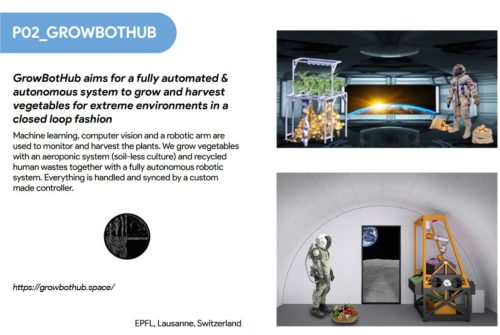
For example, the team P02 GrowBotHub

aims to do a fully automated system of growth and harvest of vegetables. To do so, a machine learning algorithm determines when the vegetables are ready to be collected, then a carousel brings the vegetables in front of a robot that picks-up the vegetables and replace them with a new seed so they can start growing again. All these actions and messages are controlled by a top-level controller. The vegetables are grown using an aeroponic system which allows to reduce water and energy consumption compared to other techniques.

IGLUNA team PO2-GrowBotHub designed a fully automated system of growth and harvest of vegetables

The GrowBotHub presentation is the second in this group of three given on July 10th:

P01 MELiSSA 11:56 Complete recycling system for space missions through the biological conversion of human urine for food and bio-based oxygen production thanks to a hydroponic growing unit and a photobioreactor. Melissa Foundation, Belgium

P02 GrowBotHub 1:27:03 Automated and autonomous structure to grow and harvest vegetables in a closed loop fashion in space. EPFL, Switzerland

P06 HYDRATION II 2:41:57 Heated drill system able to extract water from different surfaces such as ice, clay, sand and concrete in order to be used on Lunar ground. Massachussets Institute of Technology (MIT), USA

The presentations during the coming week can be viewed live at Swiss Space Center – YouTube.

=====

=== The Art of C. Sergent Lindsey ===

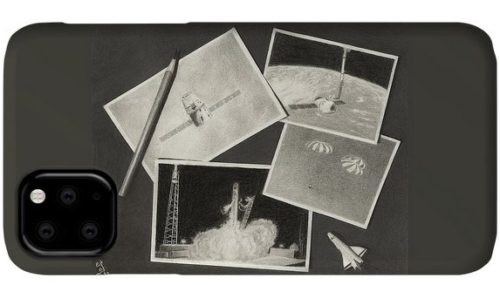
SpaceX Delivers the Goods” by C. Sergent Lindsey printed on phone cover. Available at Fine Art America.

Virginia student wins first Design/Build/Launch competition sponsored by AIAA/Blue Origin

Here’s an announcement from AIAA and Blue Origin :

Virginia High School Student Wins First Design/Build/Launch Competition
Sponsored by Blue Origin and AIAA

July 8, 2020 – Reston, Va. – The American Institute of Aeronautics and Astronautics (AIAA) and Blue Origin are pleased to announce the winner of their Design/Build/Launch (DBL) competition.

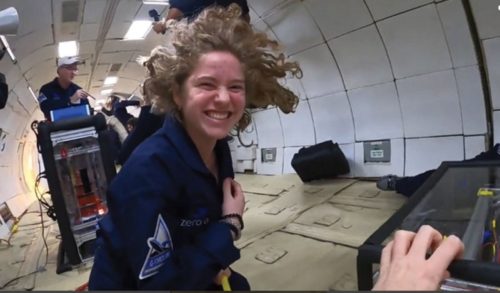
Eleanor Sigrest.

Eleanor Sigrest, a rising senior enrolled in a dual program at Forest Park High School in Woodbridge, Virginia, and the Governor’s School at Innovation Park in Manassas, Virginia, won the competition with her experiment, Improving Fluid Management Through A Novel Microgravity Slosh Mitigation Technique, which will be the first AIAA-sponsored payload to go into flight.

“Ever since I can remember,” she said, “I’ve looked at the stars and known I want to go to space. I want to be the first person on Mars. Through research, I feel I better my personal knowledge and contribute to a community, all sharing the same goal of exploring beyond our Earth and developing the technologies necessary to get to Mars – technologies that will also benefit all humankind.”

In her quest to be the first person on Mars, Eleanor has been conducting independent research on rockets since middle school. She has won a host of science competitions, beginning with the grand prize, regional level, in her first science fair when she was in fourth grade, and including the Broadcom MASTERS Samueli Foundation prize at the national level with her experiment, “Rockets and Nozzles and Thrust, OH MY!

“Design/Build/Launch is the perfect next step to complement my research of a novel microgravity slosh technique that could simplify spacecraft systems, increase payload capacity and save the space industry billions of dollars,” she said. “This opportunity provides me the chance to further this research and prepare for my own launch to Mars.”

AIAA Executive Director Dan Dumbacher said,

“If aerospace is to continue pushing boundaries to create a better world for us all, we need students like Eleanor Sigrest to be inspired to take up the challenge. Congratulations, Eleanor, on being the first winner of Design/Build/Launch! You inspire us!”

[ Dr. Erika Wagner, Payload Sales Director at Blue Origin, said,]

“Pushing the boundaries of technology are essential to charting our future course in space,” … “Eleanor’s passion to explore the unexplored and determination to bring clarity to science we don’t yet understand are unmatched, and we can’t wait to see how her experiment performs in space. We’re humbled to inspire students to pursue careers in STEM through payloads on our reusable New Shepard vehicle and our non-profit, Club for the Future.”

Eleanor has made presentations at the 2016 Broadcom MASTERS Science and Engineering Project Showcase in Washington, DC, and the 2017 World Science Festival in New York, NY. She leads workshops for middle-school girls, advocating for greater representation by women in STEM fields. She has been featured on NBC’s TODAY program in a “Girls Changing the World” segment and is a lifetime fellow of the American Junior Academy of Science. In May, Eleanor received the first-place AIAA “Look Up!” Award presented at the 2020 Regeneron International Science and Engineering Fair (Intel ISEF).

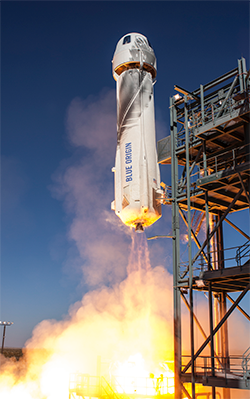
A fully reusable New Shepard rocket lifts off for a suborbital trip to space. Credits: Blue Origin

Design/Build/Launch (DBL) Competition
The DBL competition is open to high school students and designed to promote student engagement in microgravity and/or space technology research. Each proposal is composed of two parts: each entrant designed an experimental payload to be launched on Blue Origin’s New Shepard rocket and described outreach plans to engage the public with the promise and excitement of space.

Eleanor’s DBL proposal was selected from among entries received from students from across the United States.

Eleanor will receive a $1,000 grant to prepare her work to fly on a future New Shepard flight. She will report on the results of her experiment at 2021 ASCEND, AIAA’s event dedicated to the space ecosystem.

About Blue Origin: For information on Blue Origin, visit www.blueorigin.com and follow @BlueOrigin on Twitter and Instagram. To learn more about Club for the Future and our space mail program, visit clubforfuture.org and follow @ClubForFuture on Twitter and Instagram.

About AIAA: The American Institute of Aeronautics and Astronautics (AIAA) is the world’s largest aerospace technical society. With nearly 30,000 individual members from 91 countries, and 100 corporate members, AIAA brings together industry, academia, and government to advance engineering and science in aviation, space, and defense. For more information, visit www.aiaa.org, or follow AIAA on Twitter, Facebook, or LinkedIn.

About ASCEND: ASCEND stands for Accelerating Space Commerce, Exploration and New Discovery and is designed to bring together technical and business leaders to solve problems that affect the entire planet and beyond. Powered by AIAA, the ASCEND event will happen online 16–18 November 2020. For more information, please visit www.ascend.events, or follow ASCEND on Twitter, Facebook or LinkedIn.

== Amazon Ad ==

Galaxy Girls: 50 Amazing Stories of Women in Space.