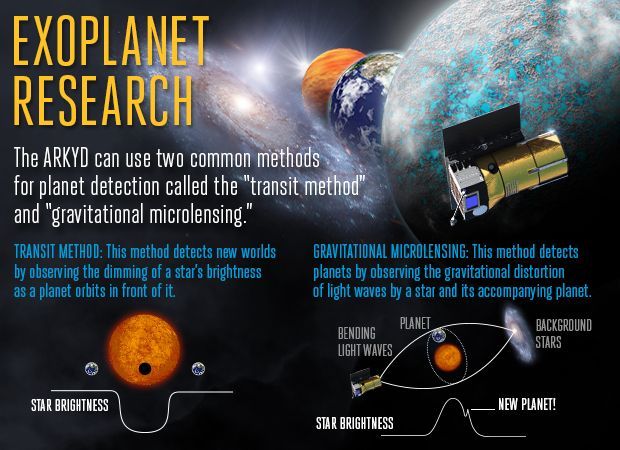
Planetary Resources and Zooniverse plan a collaboration – Asteroid Zoo – if the Kickstarter campaign for the ARKYD space telescope for the public reaches $1.7M:
Planetary Resources Calls on Citizens of Earth to Aid in Planetary Defense
Company Announces New Crowdfunding Goal to Create “Asteroid Zoo”
for Public to Search for Dangerous Near-Earth Asteroids
Bellevue, Washington – June 27, 2013 – Planetary Resources, the asteroid mining company, has announced a collaboration with Zooniverse that will empower citizen scientists to aid in the search for dangerous near Earth asteroids (NEAs) and support planetary defense.
Planetary Resources is in the final stretch of its Kickstarter campaign, ARKYD – the world’s first crowdfunded space telescope for the public, which has generated nearly 15,000 supporters and US$1.2M in pledges. If pledges reach US$1.7 million in the three remaining days of the campaign, Planetary Resources and Zooniverse will create Asteroid Zoo, a program to allow students, citizen scientists and space enthusiasts to find potentially hazardous asteroids (PHAs) at home and help train computers to better find them in the future.
Visit Planetary Resources’ Kickstarter Page to Help Reach this Goal: http://bit.ly/ARKYD-100
“Planetary Resources values the power of the connected mind; when working together, we can accomplish much more than any of us can do alone,” said Chris Lewicki, President and Chief Engineer, Planetary Resources, Inc. “We’re creating this program to harness the public’s interest in space and asteroid detection, while providing a very real benefit to our planet.”
Chris Lintott, astronomer at the University of Oxford and Zooniverse Principal Investigator said, “Zooniverse volunteers have already inspected more than a million galaxies, discovered planets and kept an eye on solar storms. We’re looking forward to working with Planetary Resources to make sure citizen scientists everywhere can make a real contribution to spotting asteroids, too.”
It’s been 66 million years since scientists believe a 10-kilometer asteroid slammed into the Earth, leading to the extinction of the dinosaurs. Today, there are approximately 620,000 objects that are actively tracked in our Solar System, which represents merely one percent of the 60 million asteroids estimated to orbit the Sun. The NEA population of 1 km+ asteroids is approximately 860, over 90 percent of which are known and 155 of which might be described as extinction-level/dinosaur-killing PHAs. It is currently estimated that less than one percent of smaller asteroids (less than 100m) have been found. None of these currently pose a threat to Earth, and while many of these asteroids are small, they are capable of regional disaster, such as massive damage to a metro city.
Modeled after Zooniverse’s popular Galaxy Zoo and other astronomy projects, Asteroid Zoo will allow the public to search through terabytes of data collected by Catalina Sky Survey (CSS) for undiscovered asteroids in a fun, game-like process from their personal computers. The public’s findings will be used by scientists to develop advanced asteroid-searching technology for telescopes on Earth and in space, including the ARKYD. Of all the asteroids ever discovered, 93 percent were found in the last 15 years and nearly half of the near-Earth asteroids were discovered by CSS.
Eric Christensen, Principal Investigator for the University of Arizona’s Catalina Sky Survey stated, “We’re excited to open our archive of more than three-million images to citizen scientists around the world, and look forward to seeing what surprises are hiding in the data set. The results of this effort will provide invaluable feedback that we can use to make CSS a better survey.”
Defending our planet from PHAs is also a top priority for NASA, which recently announced a new grand challenge of “finding all asteroid threats to human populations and knowing what to do about them.”
About Planetary Resources
Planetary Resources, Inc. was founded in 2009 by Eric Anderson and Dr. Peter H. Diamandis. Our vision is to establish a new paradigm for resource utilization that will bring the Solar System within humanity’s economic sphere of influence. The company will conduct low-cost robotic space exploration beginning with the Arkyd Series of space missions that will identify the most commercially viable near-Earth asteroids. These initial missions will assist the company in enabling the retrieval of raw materials from these select asteroids, including water, precious metals and more.
Planetary Resources is financed by industry-launching visionaries, three of whom include Google’s CEO Larry Page & Executive Chairman Eric Schmidt; and Ross Perot, Jr., Chairman of Hillwood and The Perot Group; who are committed to expanding the world’s resource base so humanity can continue to grow and prosper for centuries to come. Some of the company’s partners and advisors include the Bechtel Corporation; film maker and explorer James Cameron; former Chief of Staff, United States Air Force General T. Michael Moseley (Ret.); and Sara Seager, Ph.D., Professor of Planetary Science and Physics at MIT. Members of the company’s technical staff have worked on every recent U.S. Mars lander including Spirit, Opportunity and Curiosity, and include other key non-aerospace and safety-critical disciplines. For more information, please visit www.planetaryresources.com.
Follow us on Twitter, Facebook, Google+ and YouTube for all the latest updates!