Here is the latest NASA report on activities related to the Int. Space Station:
And here is a video update on the research being done on the ISS:
Here is the latest NASA report on activities related to the Int. Space Station:
And here is a video update on the research being done on the ISS:
The Cosmic Lifestyle Corp, founded by long-time space advocate Samuel Coniglio and others, has opened a crowd-funding campaign for the Zero Gravity Cocktail Project on Kickstarter, which aims to design and manufacture a stylish container to hold a drink in weightlessness:
Award Winning Robotics Engineer Launches Cocktail Glass for Space
What happens when you combine an an award-winning mixologist, Hollywood prop fabricator and movie magic maker, and a space tourism designer with an award winning robotics engineer? Creative genius at it’s best.
Nick Donaldson, Chief Creative Officer and cofounder of Cosmic Lifestyle Corporation, is the secret sauce behind the Zero Gravity Cocktail Glass Project currently on Kickstarter. Launched March 3, the eclectic and impressive team is designing for the future of space travel and tourism.
“Designing and engineering the elements needed for items going to space is more interestingly challenging than one might think. Many conversations and experiments over the course of several years have happened to achieve the glass design we have. As we continue experimenting with the physics and design attributes, we are excited to see what will happen next,” Nick says.
“This is only the beginning of a new era where astronauts will have more comfortable surroundings available with solutions like ours. Cosmic Lifestyle Corporation seeks to be a leader in these opportunities.”
In an attempt to bridge the gap between the space tourism vision and mainstream reality, the team at Cosmic Lifestyle Corporation created a fun, usable object to show that space tourism is not an abstract concept, but a stepping stone for improving the way people live, work, and play beyond planet Earth. This project is supported by the Space Tourism Society and Space Frontier Foundation. Space Frontier Foundation is offering a free membership to those who donate $25 or more to the Kickstarter campaign.
Support the Kickstarter!
Cosmic Lifestyle Corporation has launched their Zero Gravity Cocktail Glass Project Kickstarter campaign March 3. Funds will go towards drop testing, patent filing and a parabolic flight to test different liquids. Help them reach their fundraising goal, by donating at www.kickstarter.com/projects/spacemansam/zero-gravity-cocktail-project
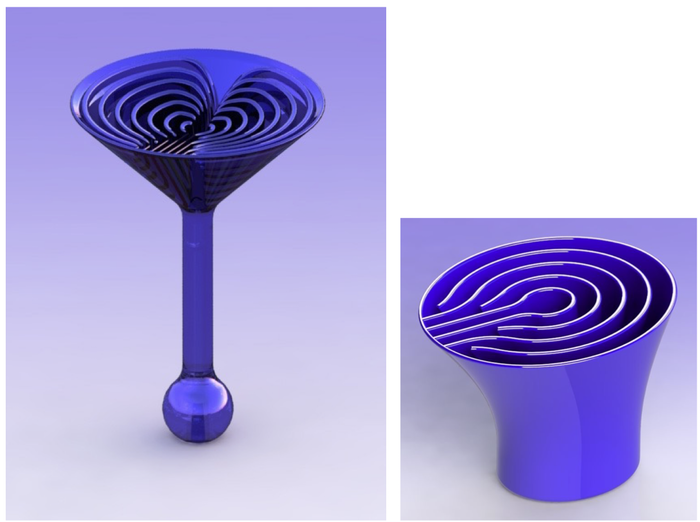
The creative team behind the invention consists of celebrity bartender and mixologist, Russell Davis, who was rated #1 Bartender in the U.S. in 2012, was “Nightclub & Bar Magazine’s” Bartender of the Year in 2012, and starred in SpikeTV’s “Bar Rescue” TV series; Samuel Coniglio, the cofounder of Cosmic Lifestyle Corporation, is a futurist, an artist & experience designer and space tourism expert. Brent Heyning, also a cofounder, is a former “Mr. Wizard” Hollywood prop & set designer and fabricator, who now serves as the Principal and Chief Designer of Toyshoppe Systems; Nick Donaldson, a toy designer and robot engineer, has been designing and building robots for 15 years, from advanced research robots to successful toys and medal winning competition robots.
The Cosmic Lifestyle Corporation is a boutique concept, design, and branding company that develops stylish products for offworld use while connecting Earth brands to space.
For more information about the Zero Gravity Cocktail Project, visit: www.cosmiclifestyle.com.
Buzz Aldrin says at WhoSay, “My game – Buzz Aldrin’s Space Program Manager is finally available on iPad!”
From game software house and publisher Slitherine Ltd:
“Exploration is wired into our brains. If we can see the horizon, we want to know what’s beyond.” (Buzz Aldrin – US astronaut, member of Apollo 11 mission)
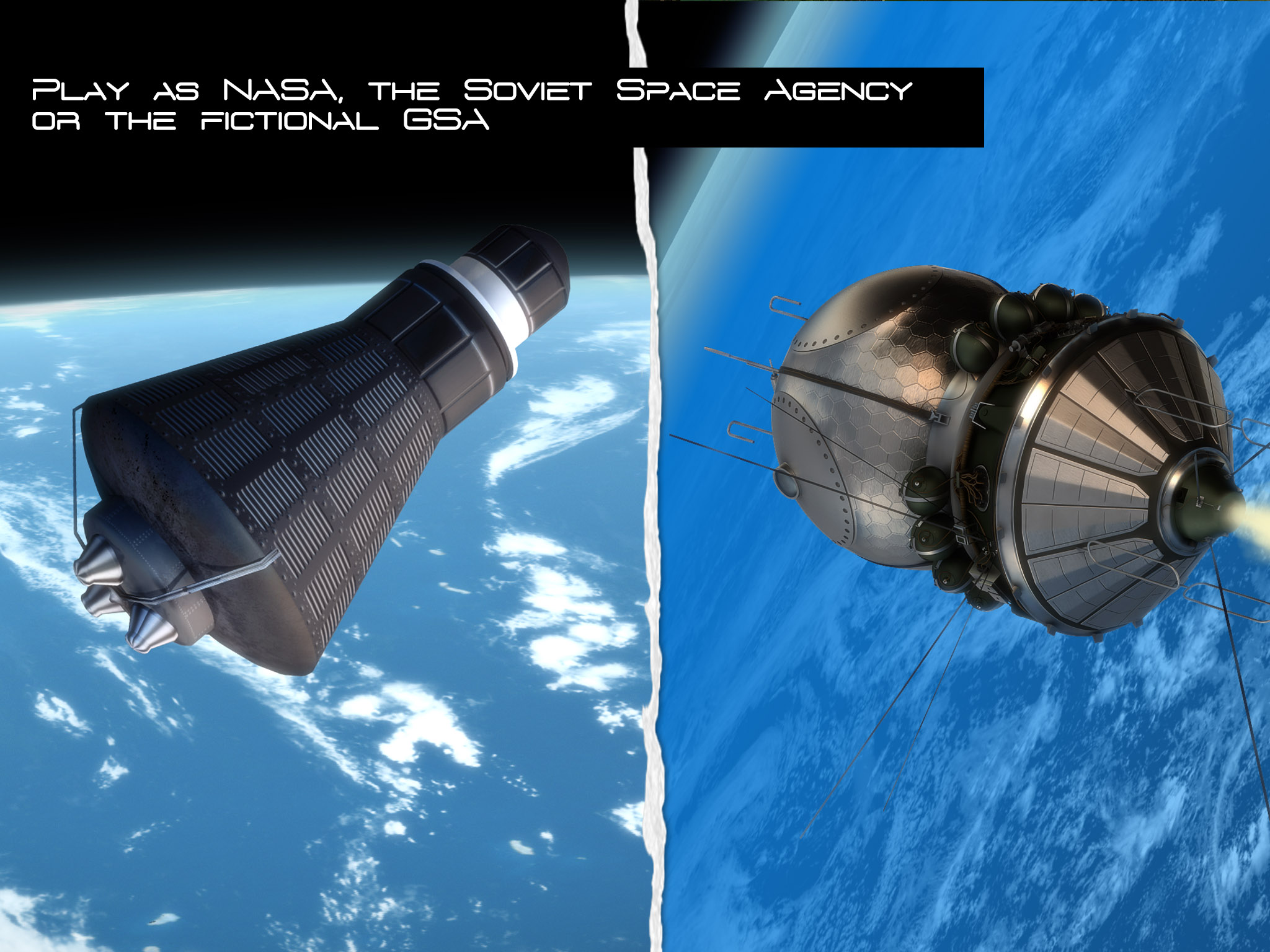
Since the PC release last October, engineers from developer Polar Motion have not been sitting on their hands. A MAC version, community contest, and several updates have transformed the fragile spaceship into a powerful rocket able to reach the stars. But exploration is the driving force of the team and they’ve just set up a booster that will let them land on a brand new platform: the iPad. Utilizing all of the knowledge developed during these months, this adaptation includes the very latest 1.4.0 update – released last week – for a safe and comfortable first space walk on tablet.
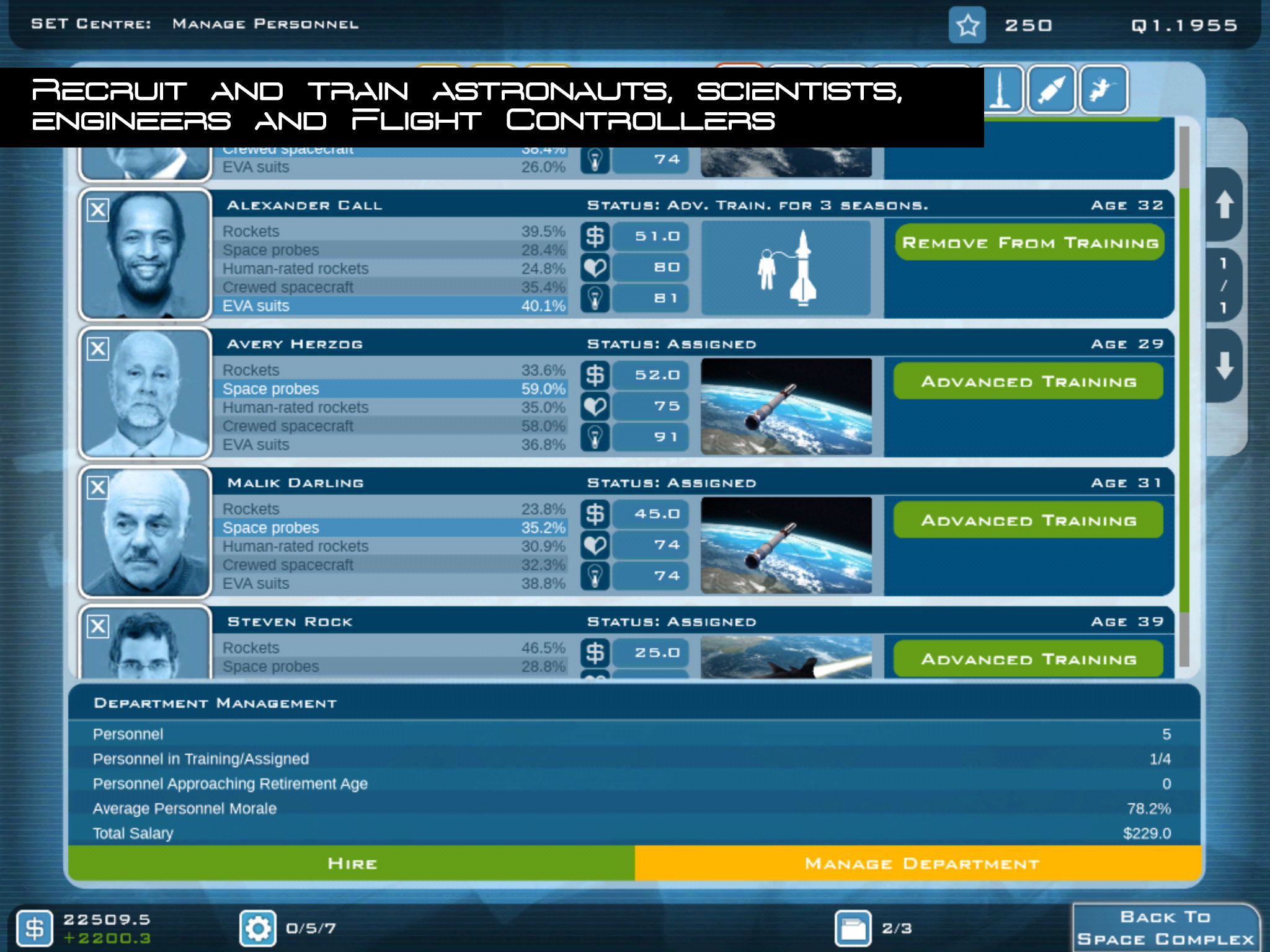
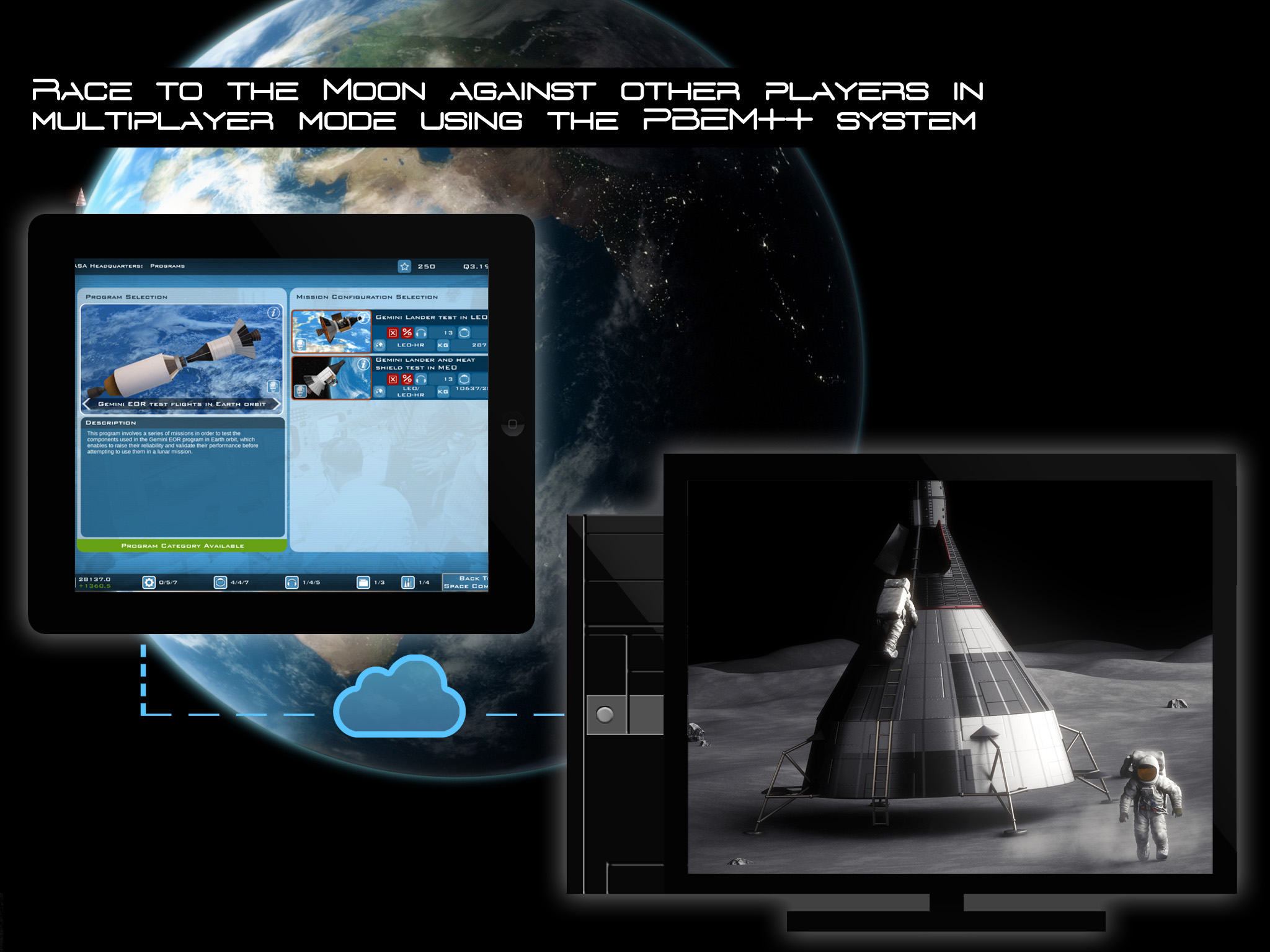
All of the elements that seduced PC players have been implemented in this adaptation. 3 types of campaigns including the Race to the Moon between the US and the USSR, a sandbox mode, historical and what-if space programs, and realistic management tools come together for a nerve-racking and inspiring experience as the head of a space agency. Allocating funds to programs could look simple on paper, but players will have to make sure that there is not a single dollar wasted in their global space supremacy plan.
Risk-takers will set foot on the Moon first. Fool-hardy players though, will see their spaceship exploding before reaching our satellite…
Today iPad owners can also participate in this thrilling yet dangerous adventure. Polar Motion have worked on the controls and the optimization to ensure this platform is perfectly adapted to this space odyssey.
Get more information on Buzz Aldrin’s Space Program Manager from its iTunes page.
The moons in the solar system continue to get more and more interesting. For example, Hubble telescope observations of Jupiter’s largest moon Ganymede indicate that it could have a huge saltwater ocean beneath a deep layer of ice:
NASA’s Hubble Observations Suggest Underground Ocean on
Jupiter’s Largest Moon
NASA’s Hubble Space Telescope has the best evidence yet for an underground saltwater ocean on Ganymede, Jupiter’s largest moon. The subterranean ocean is thought to have more water than all the water on Earth’s surface.
Identifying liquid water is crucial in the search for habitable worlds beyond Earth and for the search of life as we know it.
![15-033i1[1]](http://hobbyspace.com/Blog/wp-content/uploads/2015/03/15-033i11.jpg)
In this artist’s concept, the moon Ganymede orbits the giant planet Jupiter. NASA’s Hubble Space Telescope observed aurorae on the moon generated by Ganymede’s magnetic fields. A saline ocean under the moon’s icy crust best explains shifting in the auroral belts measured by Hubble. Image Credit: NASA/ESA
“This discovery marks a significant milestone, highlighting what only Hubble can accomplish,” said John Grunsfeld, associate administrator of NASA’s Science Mission Directorate at NASA Headquarters, Washington. “In its 25 years in orbit, Hubble has made many scientific discoveries in our own solar system. A deep ocean under the icy crust of Ganymede opens up further exciting possibilities for life beyond Earth.”
Ganymede is the largest moon in our solar system and the only moon with its own magnetic field. The magnetic field causes aurorae, which are ribbons of glowing, hot electrified gas, in regions circling the north and south poles of the moon. Because Ganymede is close to Jupiter, it is also embedded in Jupiter’s magnetic field. When Jupiter’s magnetic field changes, the aurorae on Ganymede also change, “rocking” back and forth.
By watching the rocking motion of the two aurorae, scientists were able to determine that a large amount of saltwater exists beneath Ganymede’s crust affecting its magnetic field.
A team of scientists led by Joachim Saur of the University of Cologne in Germany came up with the idea of using Hubble to learn more about the inside of the moon.
“I was always brainstorming how we could use a telescope in other ways,” said Saur. “Is there a way you could use a telescope to look inside a planetary body? Then I thought, the aurorae! Because aurorae are controlled by the magnetic field, if you observe the aurorae in an appropriate way, you learn something about the magnetic field. If you know the magnetic field, then you know something about the moon’s interior.”
If a saltwater ocean were present, Jupiter’s magnetic field would create a secondary magnetic field in the ocean that would counter Jupiter’s field. This “magnetic friction” would suppress the rocking of the aurorae. This ocean fights Jupiter’s magnetic field so strongly that it reduces the rocking of the aurorae to 2 degrees, instead of the 6 degrees, if the ocean was not present.
Scientists estimate the ocean is 60 miles (100 kilometers) thick – 10 times deeper than Earth’s oceans – and is buried under a 95-mile (150-kilometer) crust of mostly ice.
![15-33i2[1]](http://hobbyspace.com/Blog/wp-content/uploads/2015/03/15-33i21.png)
Scientists first suspected an ocean in Ganymede in the 1970s, based on models of the large moon. NASA’s Galileo mission measured Ganymede’s magnetic field in 2002, providing the first evidence supporting those suspicions. The Galileo spacecraft took brief “snapshot” measurements of the magnetic field in 20-minute intervals, but its observations were too brief to distinctly catch the cyclical rocking of the ocean’s secondary magnetic field.
The new observations were done in ultraviolet light and could only be accomplished with a space telescope high above the Earth’s atmosphere, which blocks most ultraviolet light.
NASA’s Hubble Space Telescope is celebrating 25 years of groundbreaking science on April 24. It has transformed our understanding of our solar system and beyond, and helped us find our place among the stars. To join the conversation about 25 years of Hubble discoveries, use the hashtag #Hubble25.
Hubble is a project of international cooperation between NASA and ESA (European Space Agency). NASA’s Goddard Space Flight Center in Greenbelt, Maryland, manages the telescope. The Space Telescope Science Institute (STScI) in Baltimore, Maryland, conducts Hubble science operations. STScI is operated for NASA by the Association of Universities for Research in Astronomy, Inc., in Washington.
For images and more information about Hubble, visit: www.nasa.gov/hubble and hubblesite.org/news/2015/09
Three Int. Space Station crew members returned to earth in a Soyuz capsule on Wednesday. The vehicle was out of communications earlier than the standard procedure, raising the tension level more than usual. Otherwise, the return and landing went well and produced a couple of extraordinary photos: Space Station Crew Returns to Earth, Lands Safely in Kazakhstan – NASA
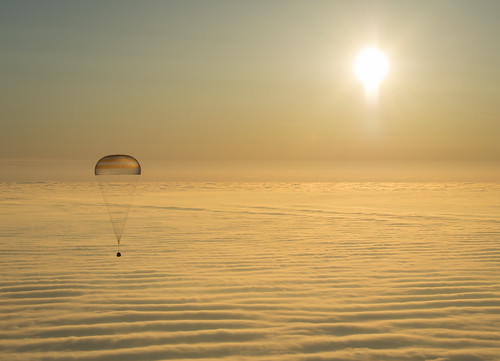

Here’s a video of the return and landing: