Sci-Tech: AT Black Knight Transformer achieves first stable hover

The Black Knight TRANSFORMER is a “transformer” style vehicle from Advanced Tactics, Inc. that combines a roadable truck with a multi-copter suite of rotors to achieve vertical takeoff and landing (VTOL) and horizontal flight. This week it left the ground and achieved a stable hover: The Advanced Tactics Black Knight Transformer Successfully Completes First Flights – Advanced Tactics, Inc.
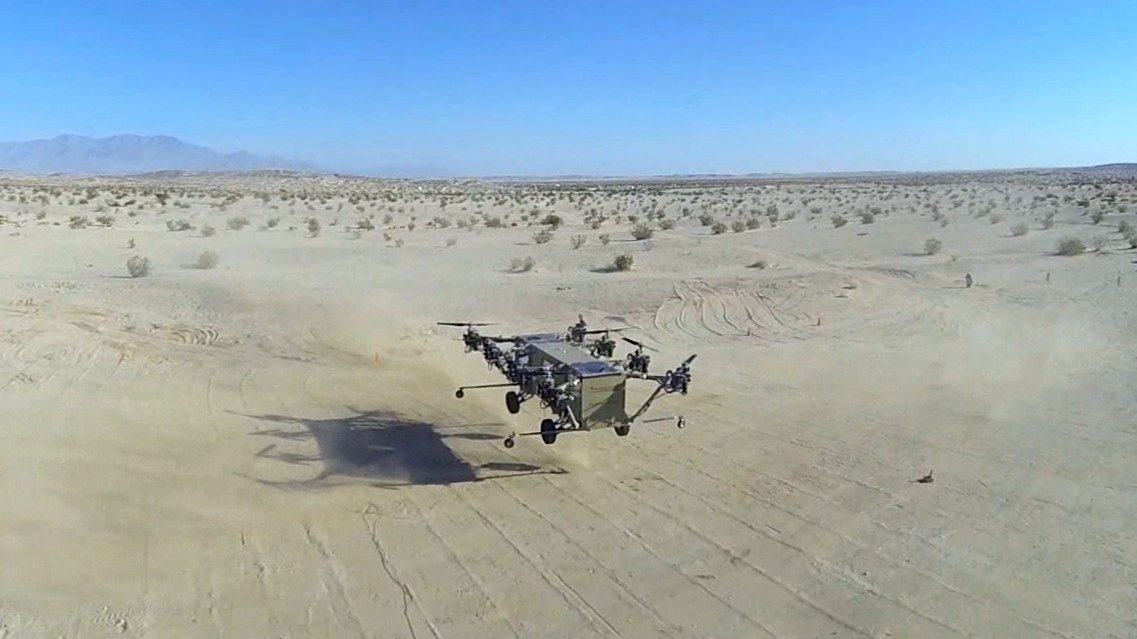
fig3-smSnapshot from aerial footage of the aircraft in hover filmed by a quadcopter
drone. The quadcopter weighed approximately one thousandth of the weight 
of the Black Knight Transformer.

The vehicle is concept

was spurred by several things: the growing popularity and acceptance of “multicopter” aircraft, the military’s need for a low-cost platform for casualty evacuation and cargo resupply missions, and our passion for developing game-changing military and civilian vehicle technology. The aircraft is designed specifically for autonomous casualty evacuation and unmanned cargo resupply missions. Its unmanned capabilities keep pilots out of harm’s way during dangerous missions while a pilot-optional capability allows it to be flown like a conventional helicopter. Advanced Tactics began work on the AT Black Knight Transformer in 2010 with funding from the United States Congress. In 2012, Advanced Tactics began work on the AT Panther Transformer, a similar vehicle designed specifically for Special Operations missions. It is a low-cost vehicle that carries two passengers and their gear, is transportable in a CV-22 Osprey cargo hold, and is operable with minimal training. Advanced Tactics is also currently developing a modular, cargo carrying aircraft capable of delivering up to 3,500 lb payloads in a detachable cargo pod. The AT Transformer technology is scalable and reconfigurable.

More pictures:
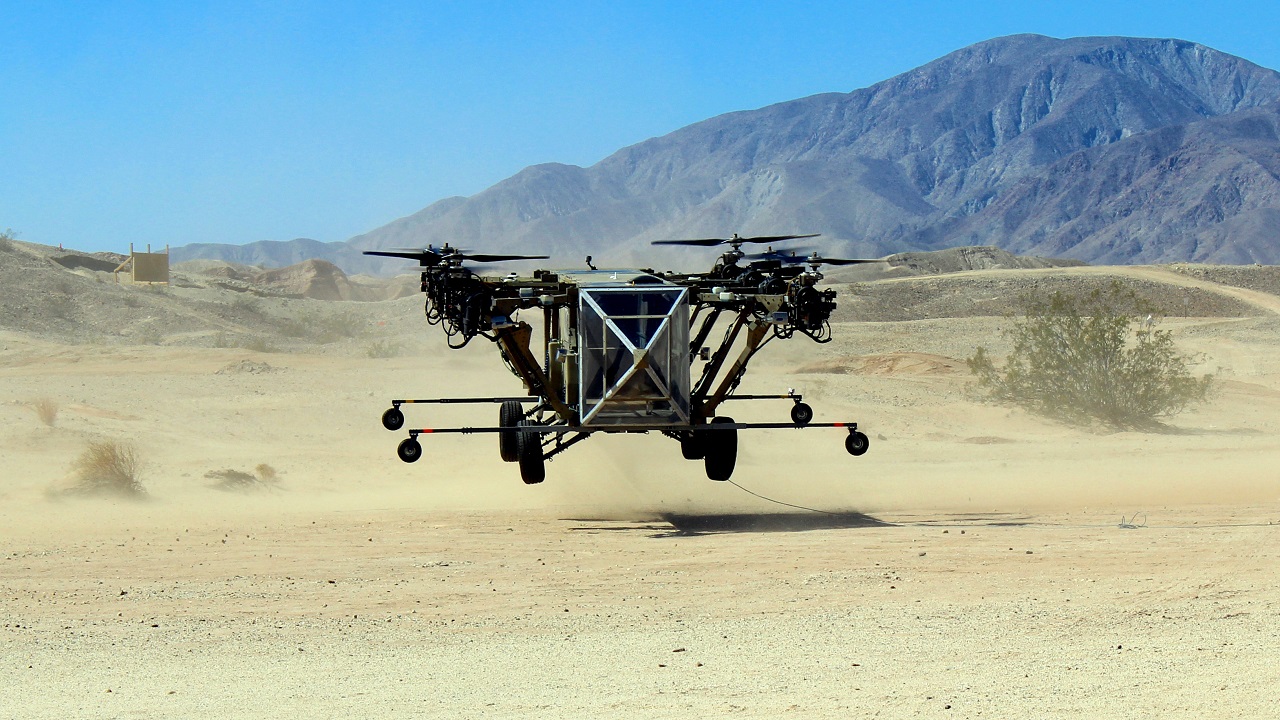
fig4-smThe Black Knight Transformer during its first flight. Notice the attached
electrical cable under the aircraft, which provided an emergency
shutdown capability in case of a malfunction.
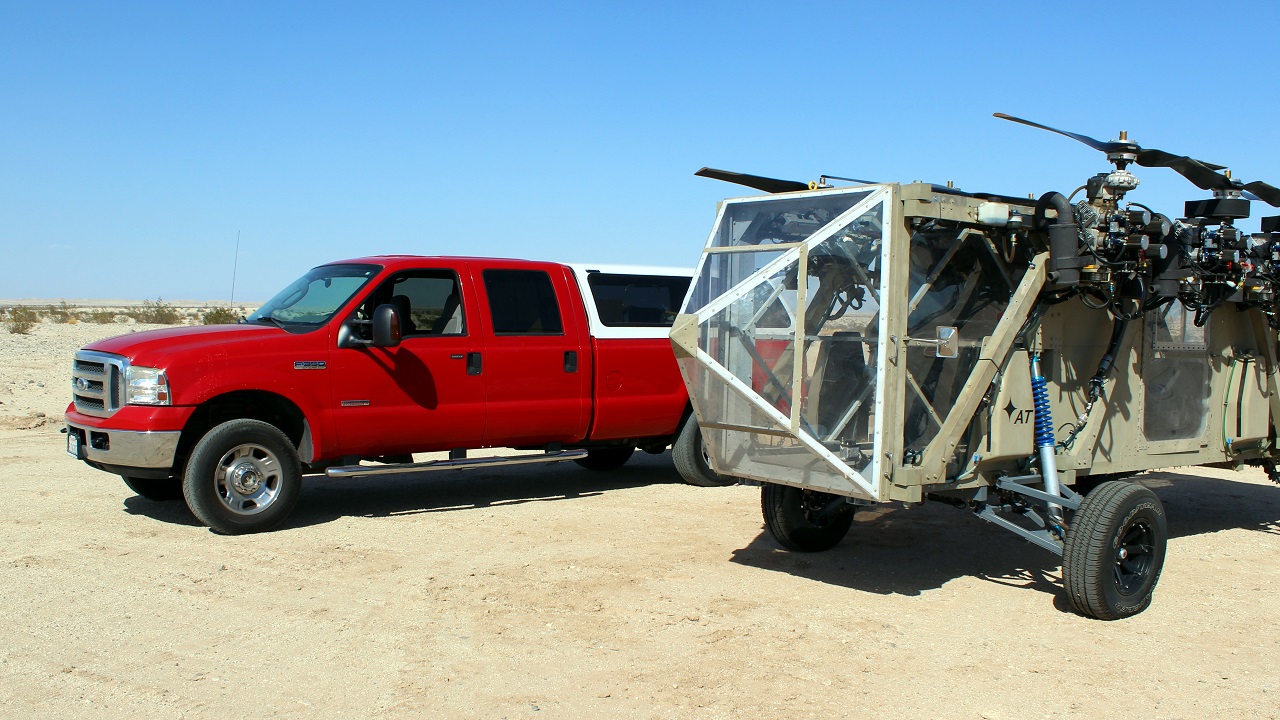
fig6-smThe Black Knight Transformer is larger than a Ford F350 crew cab truck,
shown for scale. The engines are stowed against the side of the vehicle
in driving configuration.[High Resolution]

It can be transformed into multiple configurations:

The AT Transformer design is highly modular for rapid repair and reconfiguration. For instance, each of the propulsion subsystems can be replaced in the field by two people and the mission package can be rapidly reconfigured from casualty evacuation to cargo resupply. Additionally, the modular automobile portion of the vehicle can be removed for additional payload capacity or replaced with a boat hull or an amphibious hull for water operations.

Update May.12.14: Here’s a video of their initial test:

JP Aerospace and PongSats in MAKE

The latest issue of MAKE magazine has an article about JP Aerospace and their PongSats program: Flight of the Space-Grazing Ping Pong Balls – MAKE

Don’t forget the JPA crowdfunding campaign to fund the flight of 2000 PongSats for school kids this fall: 2000 Student Projects to the Edge of Space by John Powell — Kickstarter.

OSIRIS-REx to return sample of asteroid Bennu

The OSIRIS-REx Asteroid Sample Return Mission has gotten the green flag to begin building the hardware in preparation for launch in the fall of 2016. It will reach the asteroid Bennu in 2016 and return a sample from its surface in 2023.

You can send your name to the asteroid by participating in the Messages to Bennu! project at The Planetary Society.

Here is a press release from NASA about OSIRS-REx project:

Construction to Begin on NASA Spacecraft
Set to Visit Asteroid in 2018

This is an artist's concept of NASA's OSIRIS-REx spacecraft preparing to take a sample from asteroid Bennu.
This is an artist’s concept of NASA’s OSIRIS-REx spacecraft
preparing to take a sample from asteroid Bennu.
Image Credit: NASA/Goddard

NASA’s team that will conduct the first U.S. mission to collect samples from an asteroid has been given the go-ahead to begin building the spacecraft, flight instruments and ground system, and launch support facilities.

This determination was made Wednesday after a successful Mission Critical Design Review (CDR) for NASA’s Origins Spectral Interpretation Resource Identification Security Regolith Explorer (OSIRIS-REx). The CDR was held at Lockheed Martin Space Systems Company in Littleton, Colo., April 1-9. An independent review board, comprised of experts from NASA and several external organizations, met to review the system design.

“This is the final step for a NASA mission to go from paper to product,” said Gordon Johnston, OSIRIS-REx program executive at NASA Headquarters, Washington, DC. “This confirms that the final design is ready to start the build-up towards launch.”

OSIRIS-REx is scheduled to launch in the fall of 2016, rendezvous with the asteroid Bennu in 2018 and return a sample of it to Earth in 2023. The spacecraft carries five instruments that will remotely evaluate the surface of Bennu. After more than a year of asteroid reconnaissance, the spacecraft will collect samples of at least 2 ounces (60 grams) and return them to Earth for scientists to study.

“Successfully passing mission CDR is a major accomplishment, but the hard part is still in front of us — building, integrating and testing the flight system in support of a tight planetary launch window,” said Mike Donnelly, OSIRIS-REx project manager at NASA’s Goddard Space Flight Center in Greenbelt, Md.

Key mission objectives focus on finding answers to basic questions about the composition of the very early solar system and the source of organic materials and water that made life possible on Earth. The mission will also aid NASA’s asteroid initiative and support the agency’s efforts to understand the population of potentially hazardous near-Earth objects and characterize those suitable for future asteroid exploration missions. The initiative brings together the best of NASA’s science, technology and human exploration efforts to achieve President Obama’s goal of sending humans to an asteroid by 2025.

“The OSIRIS-REx team has consistently demonstrated its ability to present a comprehensive mission design that meets all requirements within the resources provided by NASA,” said Dante Lauretta, principal investigator from the University of Arizona, Tucson. “Mission CDR was no exception. This is a great team. I know we will build a flight and ground system that is up to the challenges of this ambitious mission.”

In January, NASA invited people around the world to submit their names to be etched on a microchip aboard the spacecraft. After submitting their name, participants are able to download and print a certificate documenting their participation in the OSIRIS-REx mission. The campaign is open until September 30, 2014.

Goddard Space Flight Center will provide overall mission management, systems engineering, and safety and mission assurance for OSIRIS-REx. Lockheed Martin Space Systems in Denver will build the spacecraft. OSIRIS-REx is the third mission in the agency’s New Frontiers Program. NASA’s Marshall Space Flight Center in Huntsville, Ala., manages New Frontiers for the agency’s Science Mission Directorate in Washington. The University of Arizona leads OSIRIS-REx and provides the camera system and science processing and operations center.

For more information about the OSIRIS-REx mission, visit: http://www.nasa.gov/osiris-rex and http://asteroidmission.org

To participate in “Messages to Bennu,” go to: http://planetary.org/bennu

Here’s a NASA video giving a lighthearted overview of the OSIRIS-REx sample mission:

FISO: International collaboration for human exploratin beyond LEO

The latest presentation to the Future In-Space Operations (FISO) study group is now posted in the FISO Working Group Presentations Archive. Both slides (pptx) and audio (mp3) are available for the talk, Evaluating International Collaboration for Human Exploration Beyond LEO by Emanuele Capparelli, Skolkovo Inst. & Natasha Bosanac , Purdue Univ. – April 9, 2014

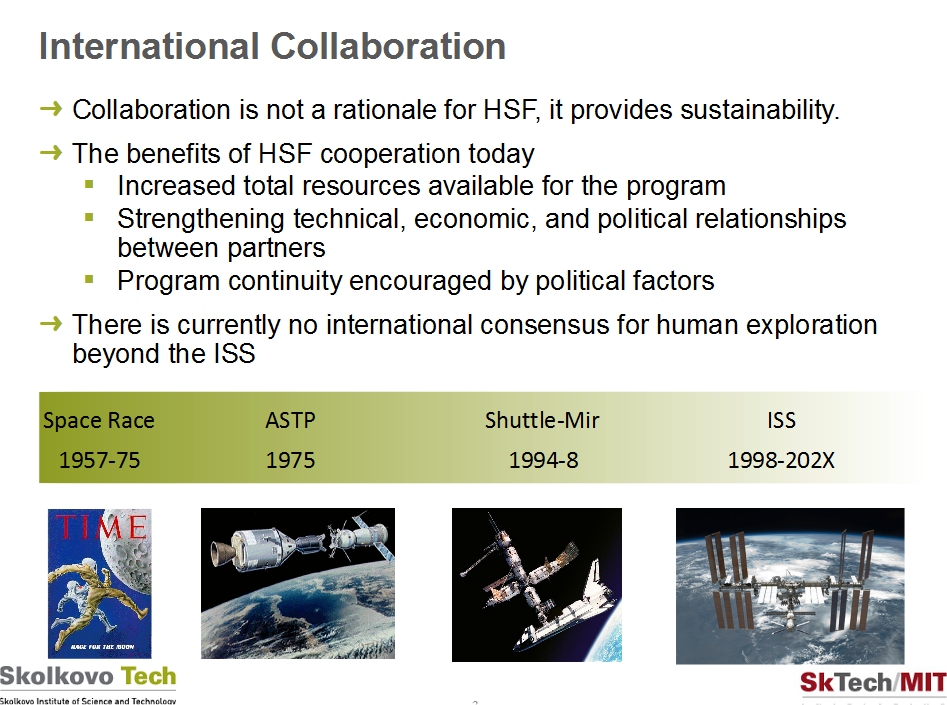
IntCollaboration

Findings


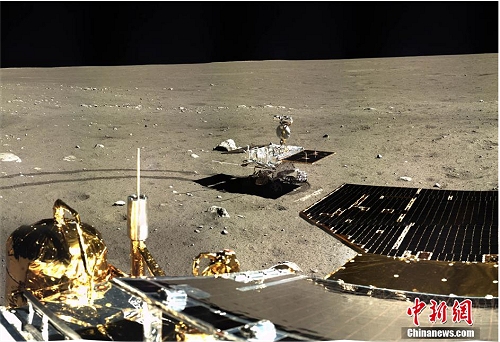
Update on Chang’e 3 mission and Yutu rover

Here’s a summary at The Planetary Society of the Chinese Chang’e 3 lander and Yutu rover mission accomplishments and status: Yutu Update – The Planetary Society.

But the rover did not arrive at the crater, or even reach the lander. It stopped as it was getting close to the lander, apparently because the electronics associated with moving its wheels and solar panels, so probably an important central control unit, failed at that point. I don’t know when it stopped, but the map shown at LPSC is instructive. It shows the daily stops between drives (the rover was only operated when in direct contact with China, for at most half a day at a time), and counting them suggests the fault occurred in the middle part of the day, possibly due to excessive heating which might have been exacerbated by dust buildup on the rover body. But this is conjecture, as I don’t know that each stop occupied only one day.

At any rate, it soon became apparent that the rover could neither move nor fold itself up to protect against the cold of the night. Enormous efforts were made to overcome this, to no avail. As night approached the problem was made public, most memorably by the rover’s Twitter alter-ego itself. Meanwhile the lander continued operating, and I’ll come back to that later. Sunset, and possibly the end of Yutu’s short life, came on 25 January. After a seemingly interminable wait the sun rose again, and a few days later on 12 February both lander and rover woke up. Yutu was more robust than expected. All its instruments, even the fragile cameras, were fine, but it couldn’t move. I don’t know if the lack of movement extends to the robotic arm with the APXS. The instruments may work, but future science would be very limited if the NIR spectrometer and the ground-penetrating radar are limited to always making the same observation.

Panorama-Jan2014_Segment_500x342