For example, it can make structures that can’t be made with conventional machining techniques:
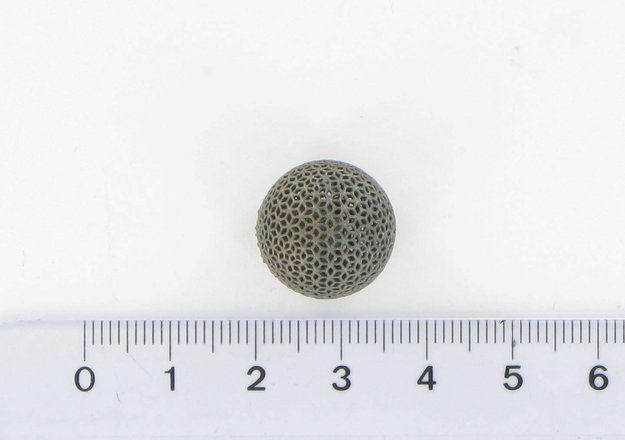
A lightweight titanium lattice ball manufactured using the Additive Manufacturing or 3D printing process. This design is a good example of AM capabilities: these hollow balls possessing a complex external geometry could not have been manufactured in a single part using a conventional manufacturing process. But they are incredibly light while also stiff, opening up possibilities for future space applications.
Here’s a close-up.
At the other end of the scale, entire large structures on the Moon and elsewhere could be built with the 3D printing technique:
Multi-dome lunar base being constructed, based on the 3D printing concept. Once assembled, the inflated domes are covered with a layer of 3D-printed lunar regolith by robots to help protect the occupants against space radiation and micrometeoroids
Update: The ESA article mentions making models with 3D printing. Here is a video showing an animation using 50 models made with 3D printing:
The Canadian General Fusion project, whose investors include Jeff Bezos of Amazon.com fame, is aiming to start building a working prototype of their innovative fusion power system this year:
In the next phase of development, General Fusion will be constructing a full scale prototype system. The prototype will be designed for single pulse testing, demonstrating full net energy gain on each pulse, a world first.
Here’s a video showing a schematic of their design:
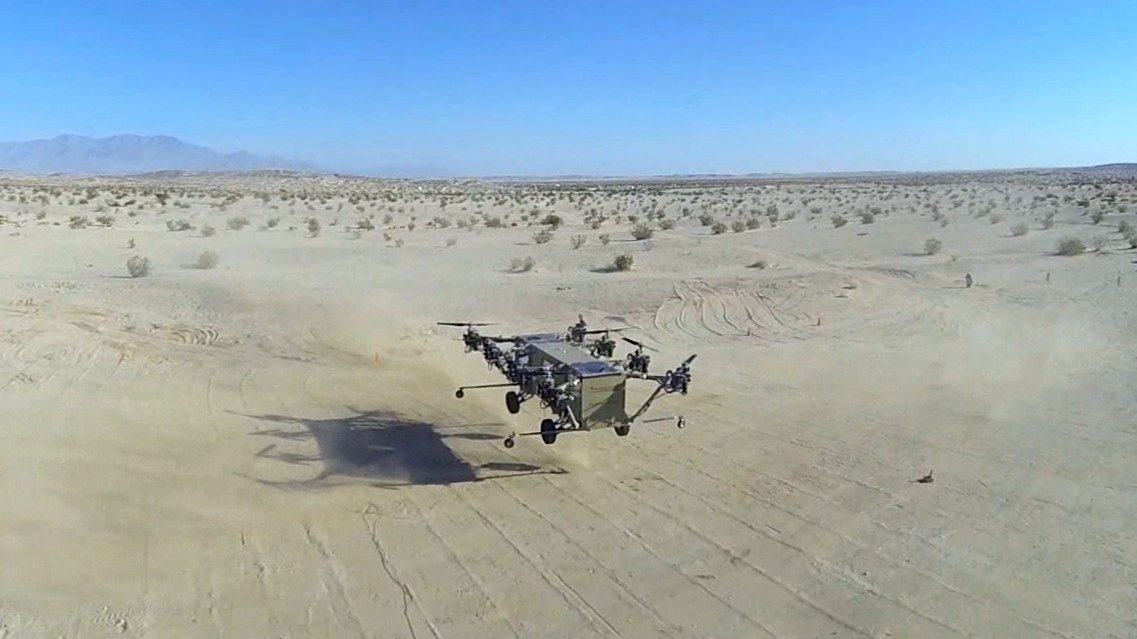
Snapshot from aerial footage of the aircraft in hover filmed by a quadcopter drone. The quadcopter weighed approximately one thousandth of the weight of the Black Knight Transformer.
The vehicle is concept
was spurred by several things: the growing popularity and acceptance of “multicopter” aircraft, the military’s need for a low-cost platform for casualty evacuation and cargo resupply missions, and our passion for developing game-changing military and civilian vehicle technology. The aircraft is designed specifically for autonomous casualty evacuation and unmanned cargo resupply missions. Its unmanned capabilities keep pilots out of harm’s way during dangerous missions while a pilot-optional capability allows it to be flown like a conventional helicopter. Advanced Tactics began work on the AT Black Knight Transformer in 2010 with funding from the United States Congress. In 2012, Advanced Tactics began work on the AT Panther Transformer, a similar vehicle designed specifically for Special Operations missions. It is a low-cost vehicle that carries two passengers and their gear, is transportable in a CV-22 Osprey cargo hold, and is operable with minimal training. Advanced Tactics is also currently developing a modular, cargo carrying aircraft capable of delivering up to 3,500 lb payloads in a detachable cargo pod. The AT Transformer technology is scalable and reconfigurable.
More pictures:
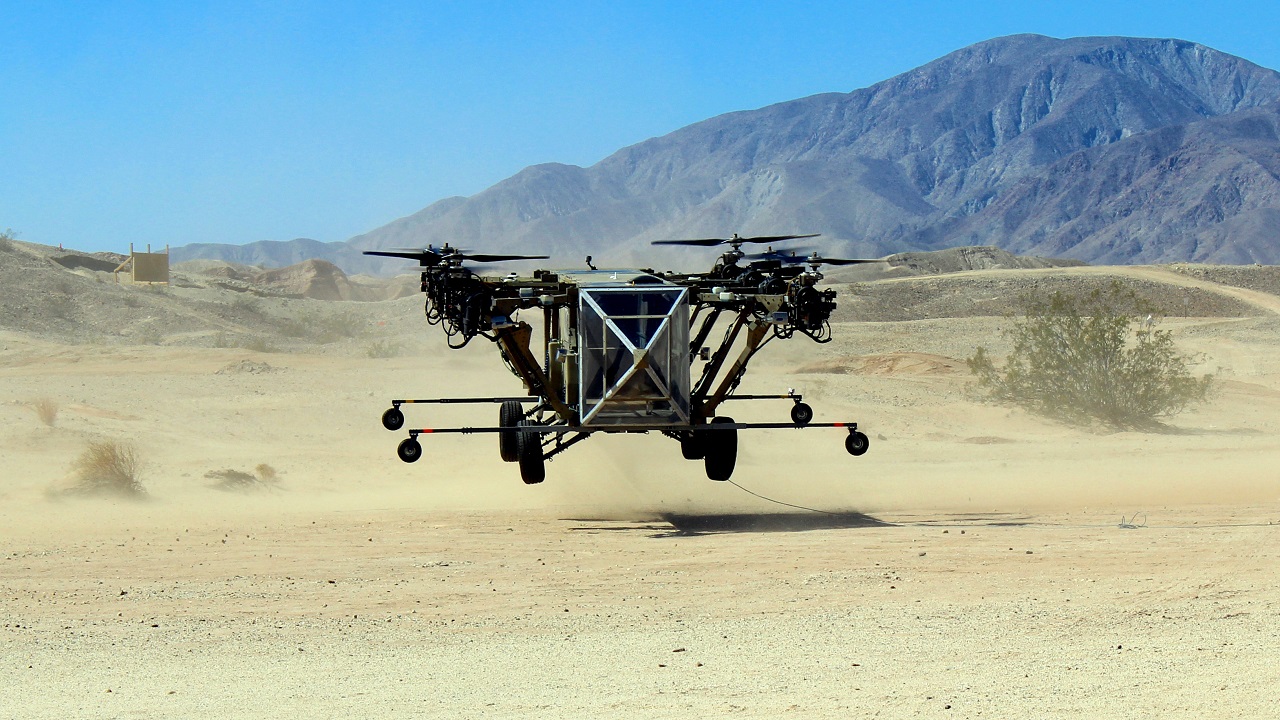
The Black Knight Transformer during its first flight. Notice the attached electrical cable under the aircraft, which provided an emergency shutdown capability in case of a malfunction.
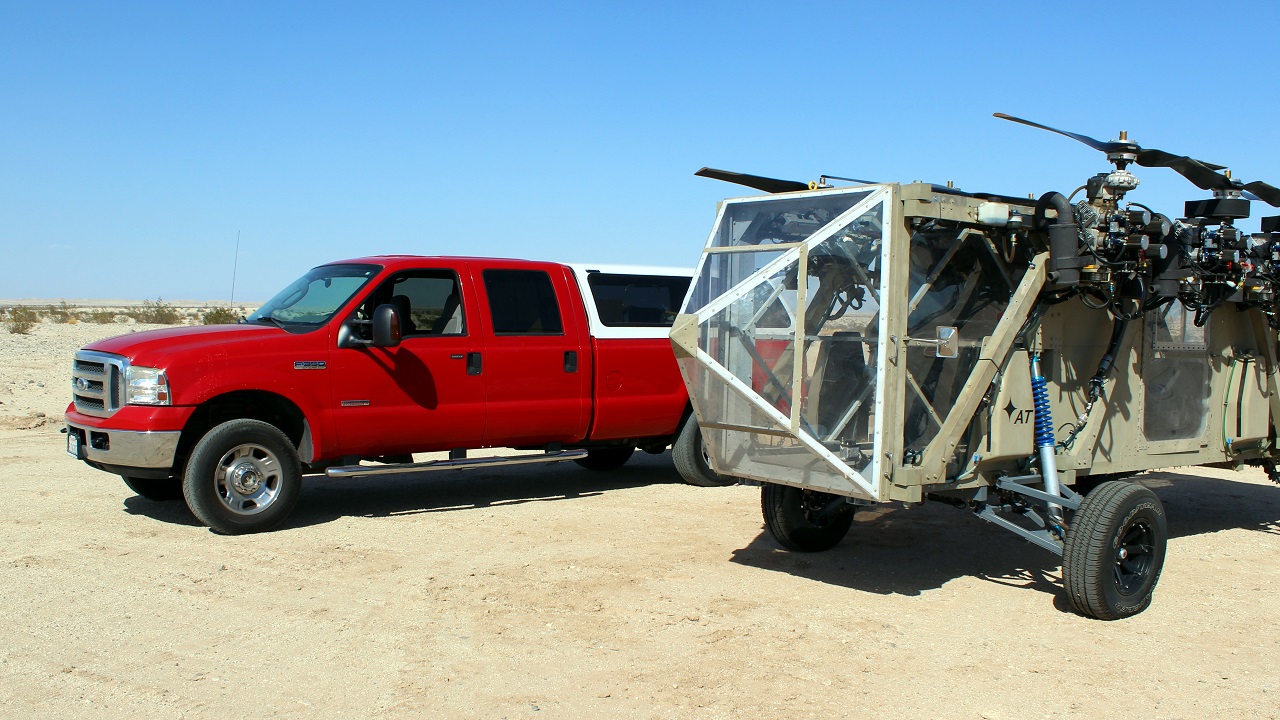
The Black Knight Transformer is larger than a Ford F350 crew cab truck, shown for scale. The engines are stowed against the side of the vehicle in driving configuration.[High Resolution]
It can be transformed into multiple configurations:
The AT Transformer design is highly modular for rapid repair and reconfiguration. For instance, each of the propulsion subsystems can be replaced in the field by two people and the mission package can be rapidly reconfigured from casualty evacuation to cargo resupply. Additionally, the modular automobile portion of the vehicle can be removed for additional payload capacity or replaced with a boat hull or an amphibious hull for water operations.
Update May.12.14: Here’s a video of their initial test:
As part of NASA’s Low-Density Supersonic Decelerator program, an unusual test of a Mars parachute design was carried out that involved creating a “wind tunnel” with, among other things, a helicopter, a winch, and a rocket sled.
The USA Science & Engineering Festival is a national grassroots effort to advance STEM education and inspire the next generation of scientists and engineers. Our exhibitors, performers, speakers, partners, sponsors and advisors are a who-is-who of science and engineering in the United States: from major academic centers and leading research institutes and government agencies to cutting-edge high tech companies, museums and community organizations.
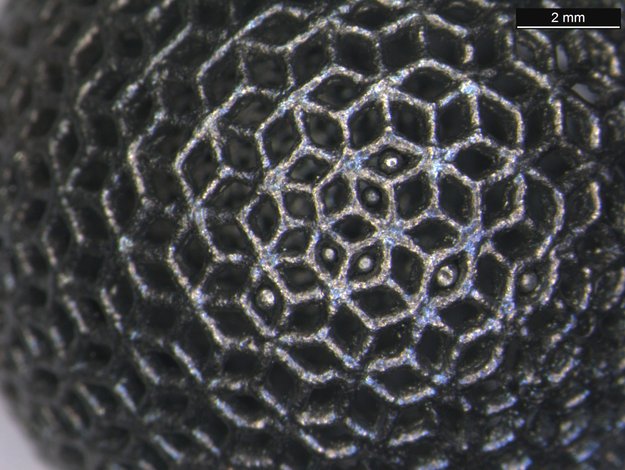 Here’s a close-up.
 Multi-dome lunar base being constructed, based on the 3D printing concept.
![[High Resolution]](https://www.advancedtacticsinc.com/images/transformerpr2/fig6-lg.jpg)