Project Morpheus did another tethered flight test on Tuesday. The new lander vehicle is the most steady that I’ve seen it in any flight video so far:
Project Morpheus did another tethered flight test on Tuesday. The new lander vehicle is the most steady that I’ve seen it in any flight video so far:
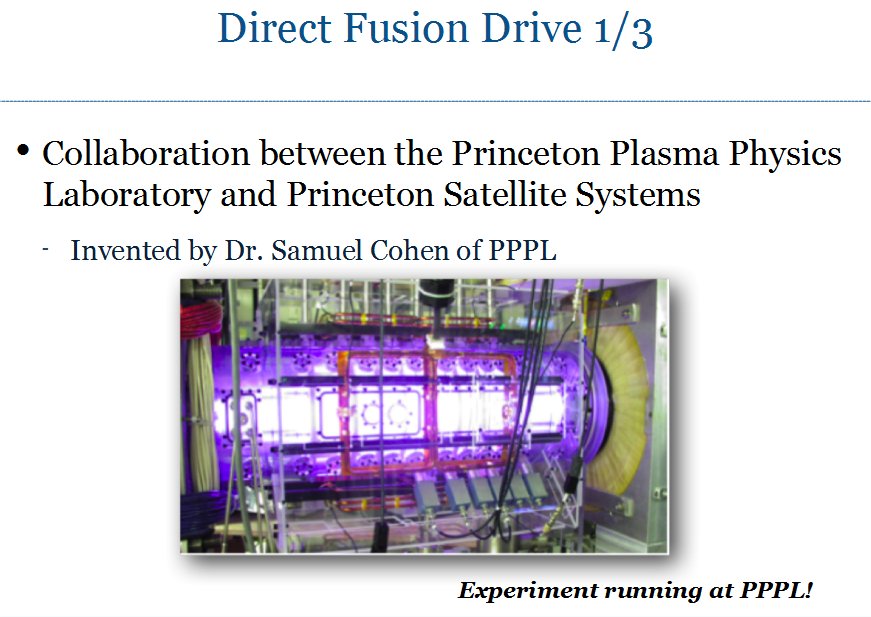
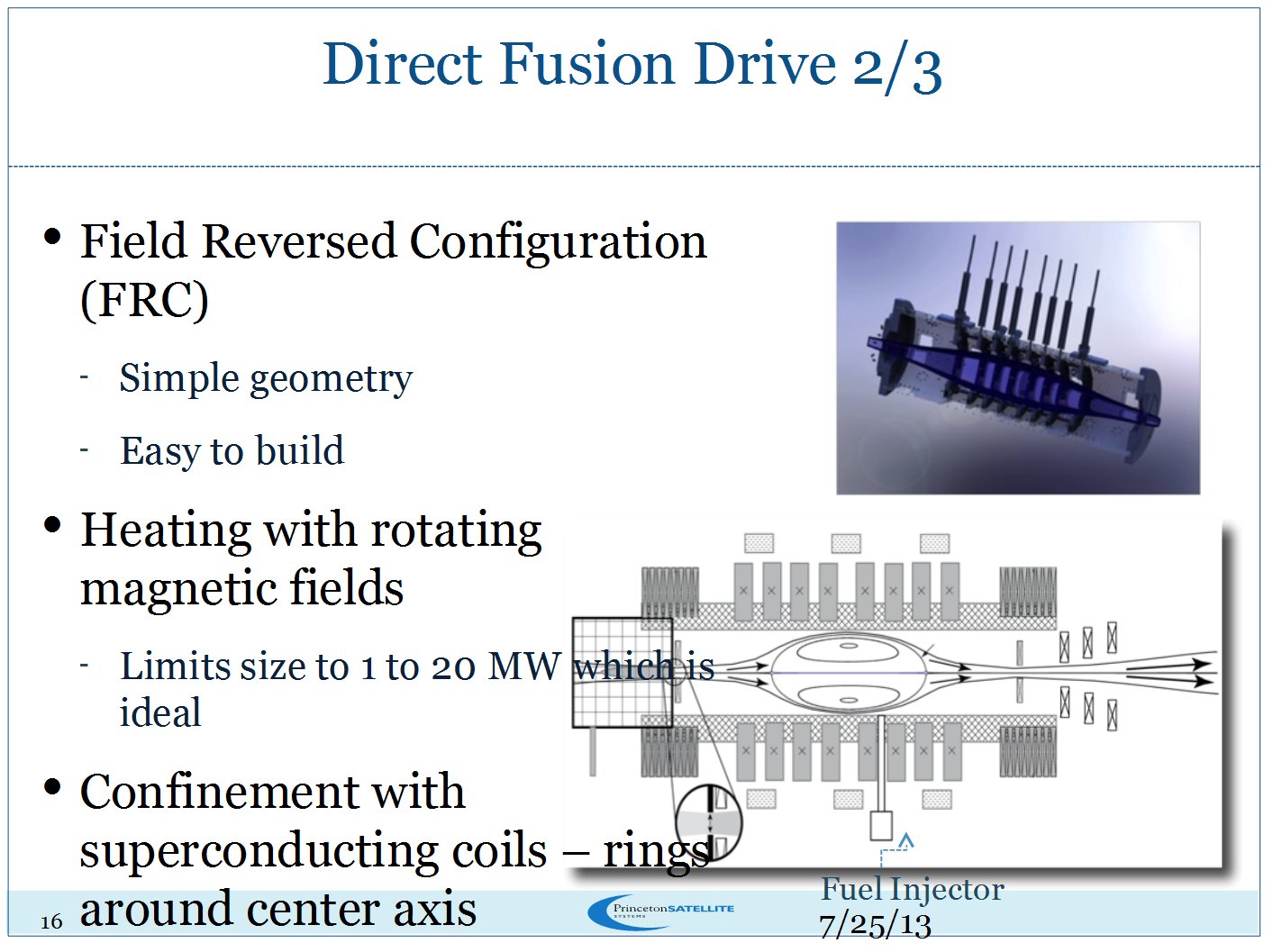
The latest presentation to the Future In-Space Operations (FISO) study group is now posted in the FISO Working Group Presentations Archive. Both slides (pptx) and audio (mp3) are available for the talk, Direct Fusion Drive for Fast Mars Missions with the Orion Spacecraft, Joseph Mueller , Princeton Satellite Systems, July 24, 2013.
The Direct Fusion Drive mentioned here seems related to that of John Slough at the Univ. of Washington (see Update on Univ. Washington fusion propulsion project).
I really like this book cover artwork: Book Cover, R is For Rocket by Ray Bradbury – The Original Rocket Dungeon

Bezos Expeditions, which is funded by Jeff Bezos of Amazon.com, has confirmed that the F-1 rocket engines they recovered from the Atlantic ocean floor are in fact from the Apollo 11 Saturn vehicle: F-1 Engine Recovery – Bezos Expeditions
SERIAL NUMBER 2044
When we stepped off the Seabed Worker four months ago in Port Canaveral, we had enough major components to fashion displays of two flown F-1 engines. We brought back thrust chambers, gas generators, injectors, heat exchangers, turbines, fuel manifolds and dozens of other artifacts – all simply gorgeous and a striking testament to the Apollo program. There was one secret that the ocean didn’t give up easily: mission identification. The components’ fiery end and heavy corrosion from 43 years underwater removed or covered up most of the original serial numbers. We left Florida knowing the conservation team had their work cut out for them, and we’ve kept our fingers crossed ever since.
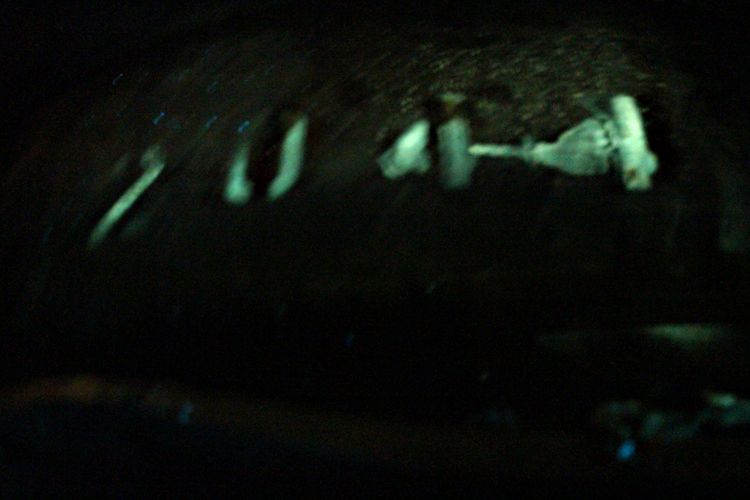
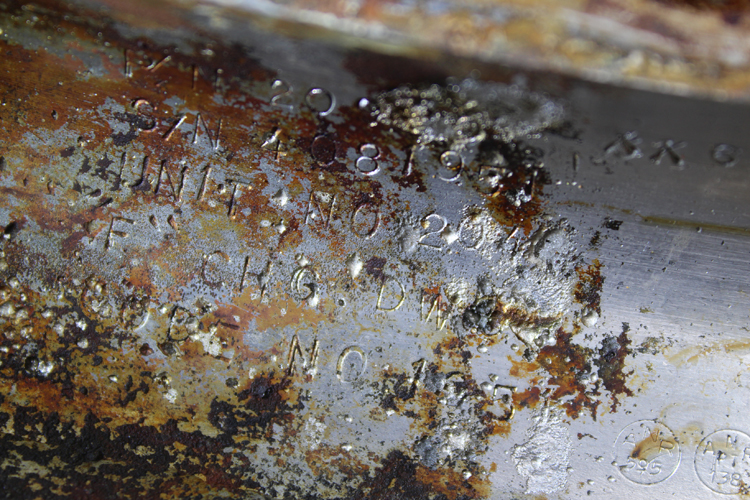
Today, I’m thrilled to share some exciting news. One of the conservators who was scanning the objects with a black light and a special lens filter has made a breakthrough discovery – “2044” – stenciled in black paint on the side of one of the massive thrust chambers. 2044 is the Rocketdyne serial number that correlates to NASA number 6044, which is the serial number for F-1 Engine #5 from Apollo 11. The intrepid conservator kept digging for more evidence, and after removing more corrosion at the base of the same thrust chamber, he found it – “Unit No 2044” – stamped into the metal surface.
44 years ago tomorrow Neil Armstrong stepped onto the moon, and now we have recovered a critical technological marvel that made it all possible. Huge kudos to the conservation team at the Kansas Cosmosphere and Space Center in Hutchinson, Kansas. Conservation is painstaking work that requires remarkable levels of patience and attention to detail, and these guys have both.
This is a big milestone for the project and the whole team couldn’t be more excited to share it with you all.
Sincerely,
Jeff
===
See also
A happy XCOR Lynx LEGO model owner – Twitter / KristenFitzpat1:
My
@XCOR Lynx model is exactly as awesome as I was hoping. Thanks again!#socoolpic.twitter.com/jWLMCpIgcq

See also this squadron of XCOR Lynx models at the recent NSRC 2013 meeting in Colorado.