Category Archives: Rockets

Space transport roundup – Jan.7.2020

A sampling of recent articles, videos, and images dealing with space transport (find previous roundups here):

** SpaceX successfully launches 60 more Starlink satellites: The Falcon 9 with the second batch of operational Starlink satellites lifted off from Cape Canaveral on Monday night and an hour later the upper stage released them into orbit. The first stage successfully landed but a fairing half-shell was not caught in a net as hoped. Fairings lifted out of the water, however, have been reused a couple of times so far.

More John Kraus photos of the Falcon 9: Starlink Mission.

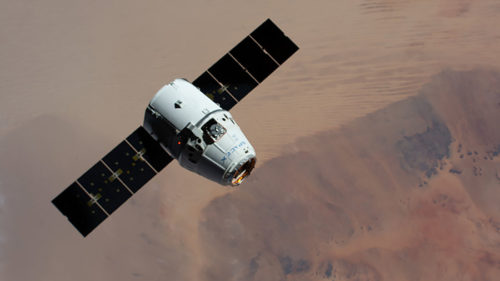
** CRS-19 Cargo Dragon left the ISS this morning and later successfully splashed down in the Pacific:

This video shows the release and departure of the spacecraft from the station.

More SpaceX items below.

** Blue Origin opens new HQ facility: Blue Origin Opens New Headquarters in Kent, Washington- Blue Origin

We named this building the O’Neill Building after Gerard O’Neill, a physicist who envisioned millions of people living and working in space for the benefit of Earth. Gerard O’Neill was one of the visionaries who thought about how we go out into space in a quick and sustainable way so that we can preserve our planet.

For those of you that are Washington State residents, what is exciting is we’re going to be doing all this work from a headquarters based here in Kent. It’s a remarkable statement to say that we’re going to fly humans to space, we’re going to build and design large engines and a large orbital rocket, and we’re going to go back to the Moon – all through work centered here.

We’re excited to continue to see this growth in this new facility. We broke ground on this facility in January of 2019 and it came up in just 11 months. It houses approximately 1500 people. The building sits on a 30-acre plot of land, and we’re using 13 of those acres for a wildlife habitat and flood storage, as well as protecting against invasive species. This is a very sustainable building with better insulation and better energy consumption than a traditional building. And it all came together very quickly.

This couldn’t have been done without our great partners. Thanks to Sprung Instant Structures, our architect Nelson, our general contractor Sierra Construction, civil engineering group Barghausen Consulting Engineers and our environmental consultants Soundview Consultants.

Blue Origin CEO Bob Smith told GeekWire that the new HQ was required because “we’re growing like crazy.”

“We’ve grown a third in just the past year,” Smith said during an interview on the mezzanine of the U-shaped building. “So we’re now north of 2,500 people here.”

The new structure, built on a 30.7-acre site that the company purchased a little more than two years ago for $14 million, is built to accommodate 1,500 of those employees. Hundreds more are based elsewhere in the Kent area, south of Seattle, as well as at Blue Origin’s suborbital launch site in West Texas, the Florida rocket factory where Blue Origin’s New Glenn orbital-class rocket will be assembled, and at the site of its future BE-4 rocket engine factory in Alabama.

** Sea Dragon plays a part in Apple TV’s For All Mankind series:

The gigantic Sea Dragon was designed by the late Robert Truax in the early 1960s. See also Sea Dragon Launch – The Unwanted Blog.

While Truax’s concept was at the extreme, there is in fact a big advantage in big rockets: the margins can be big.

Conventional rockets are notoriously sensitive to small shortcomings in the performance of the engines and other systems and structures. However, to get payloads of useful size into orbit, rocket designers must necessarily push those components to their limits, aiming for maximum performance at minimum mass. This results in reliability and safety issues. With a giant rocket,  some percentage of the giant payload can be sacrificed to obtain highly reliable systems and robust structures while still getting lots of payload to orbit.

We see signs of this approach in the huge SpaceX Starships. Multiple Raptor engines will provide enough performance to allow for wide margins in component systems and structures. They can be built like ocean liners out in the open in shipyard-like environments rather than like fine watches built in tightly confined workshops.

** At the other extreme, several new small rockets will start flying this year: Small Satellite Launchers Poised for Big 2020 – NASASpaceFlight.com

In 2019, American companies reached crucial milestones on the path towards launching small satellites. Firefly Aerospace and Virgin Orbit both secured partnerships and accomplished test objectives ahead of their respective rockets’ first flights this year. Concurrently, Rocket Lab improved its launch cadence and began evolving their Electron rocket as they look towards expanding their capabilities in 2020.

Firefly is now aiming the first Alpha launch for April: Firefly Aerospace Preps for Debut Flight of Its Alpha Rocket in April – Space.com.

** China launches TJSW-1 military satellite on Long March 3B rocket: Long March 3B launch opens China’s busy 2020 schedule – NASASpaceFlight.com

After the successful return to flight of the powerful Long March 5 closing the orbital launch activities for China in 2019, the country launched another secretive Tongxin Jishu Shiyan Weixing (TJSW) satellite on January 7, opening what could be a record-breaking year. The launch took place at around 15:20 UTC using the Long March 3B/G2 (Y64) ‘Chang Zheng-3B/G2’ launch vehicle from the LC2 launch complex of the Xichang Satellite Launch Center.

As with the previous launch of Communications Engineering Test Satellites, there is very little information regarding the new satellite.

** SpaceX:

**** In-flight abort flight test slips to no-earlier-than Jan. 18th: SpaceX In-Flight Abort Test Launch Date Update – Commercial Crew Program/NASA

NASA and SpaceX are targeting no earlier than Saturday, Jan. 18, for an In-Flight Abort Test of the Crew Dragon spacecraft from Launch Complex 39A at the Kennedy Space Center, Florida, pending U.S. Air Force Eastern Range approval. The new date allows additional time for spacecraft processing.

The demonstration of Crew Dragon’s in-flight launch escape system is part of NASA’s Commercial Crew Program and is one of the final major tests for the company before NASA astronauts will fly aboard the spacecraft.
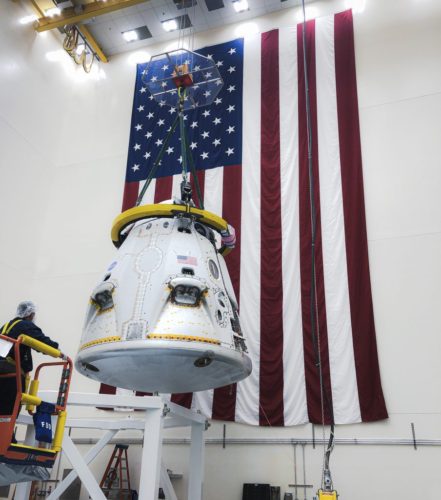
The Crew Dragon spacecraft for the In-Flight Abort (IFA) test. Credits: NASA

[ Update: More about the IFA preparations: SpaceX Crew Dragon spacecraft shown off in photo ahead of next launch – Teslarati.]

**** Starship

****** Asking Elon to name a Starship after Vernon Estes: Sign the petition here.

Vern Estes founded his namesake model rocket company, and helped start the National Association of Rocketry. Many areospace professionals started with launching Estes rockets as a first step along the road to their helping launch Falcon, Delta, Titan, and Space Shuttle etc.

As Vern’s 90th birthday was January 4, 2020, it would be fitting to have one of the first experimental Starships named after him, especially since he is still able to enjoy the honor.

See also Model rocket pioneer, Vern Estes, celebrates his 90th birthday – Boing Boing.

****** SpaceX Boca Chica – Starship Bulkhead/Dome Flipped/Installed on Stand [Jan.7.2020]NASASpaceflight

Starship development: The first dome/bulkhead was lifted, flipped and installed on to the stand/rig as the team prepares to build what we believe will be a Starship tank for a tanking test. Footage and photos from Mary (@bocachicagal) for NSF (Many thanks to her for spending all night filming this). Several hours timelapsed.

****** SpaceX Boca Chica – Preparing for Tank Testing – Jan 6, 2020 – NASASpaceflight

Work continues on Starship SN1’s domes as the RollLift arrives, likely to transport the soon-to-be-assembled domes/rings for a tanking test (per road closures). Footage and photos from Mary (@bocachicagal) for NSF.

****** SpaceX Boca Chica 1/6/20SPadre

Panoramic 4K video of SpaceX Boca Chica launch pad, Starhopper, and Starship assembly area.

****** Florida Starship assembly facility currently focused on supporting Boca Chica activity:  SpaceX’s Texas Starship factory set to receive more parts from Florida – Teslarati

After successfully delivering Starship hardware and manufacturing tools to SpaceX’s Boca Chica, Texas rocket factory and launch facilities, the company has begun preparing a second load of parts to be shipped from Florida to Texas in the near future.

This is the latest chapter in a saga that began when SpaceX revealed that it would effectively pause its Florida Starship manufacturing operations and reassign most of its affected employees. Since SpaceX’s early-December confirmation, the company’s Cocoa, Florida Starship production hub has been more or less at a standstill, only interrupted once and awhile by efforts to either scrap hardware that is no longer needed or send it to Texas, where SpaceX has redoubled efforts to build the next series of Starship prototypes.

=== Amazon Ad ===

Alcohol in Space: Past, Present and Future

Space transport roundup – Jan.3.2020

A sampling of recent articles, videos, and images dealing with space transport (find previous roundups here):

[ Update Jan.4.2019 #2: SpaceX confirms the static test went well and they are on track for Monday’s launch:

Update Jan.4.2019: The Falcon 9 with the Starlink 2 satellites was rolled to the SLC-40 pad this morning and they soon complected the static firing test: Live coverage: Falcon 9 test-fired at Cape Canaveral – Spaceflight Now. More about the mission in the SpaceX section below.

Here’s also another SpaceX item about a mobile gantry addition to the Pad 37A facility to enable vertical installation of military satellites: SpaceX drawing up plans for mobile gantry at launch pad 39A – Spaceflight Now.

]

** Counting the number of launches in 2019 and estimating the number in 2020:

** Everyday Astronaut Tim Dodd selects his “Best Spaceflight & Space Science Events of the Year“:

Welcome to the 2019 Astro Awards!!! A time where we reflect on all the exciting things that happened throughout the year in spaceflight and space discoveries. Now of course, these are nothing official… for now… , just a time to look back on the awesome science, discoveries, engineering and achievements made in the past year. We took polls here on YouTube, Twitter and Reddit for your favorite missions and now we get to soak them all in! We do put these in an order and I put the most weight on how you voted in the polls, BUT at the end of the day, I get final say on what goes where because I said so 😉

** Firefly Aerospace shows off the business end of the Alpha rocket first stage:

** More about the upcoming first flight of Virgin Orbit‘s LauncherOne rocket: Virgin Orbit plans orbital launch in early 2020 – SpaceNews.com

After falling short of plans to begin launches in 2019, Virgin Orbit now expects to perform its first orbital launch attempt in early 2020, a key year for the burgeoning small launch vehicle industry.

In a Dec. 19 statement, Virgin Orbit says it is now in position to perform an “imminent orbital demo flight” some time in early 2020 as it completes rehearsals of launch preparations at the Mojave Air and Space Port in California.

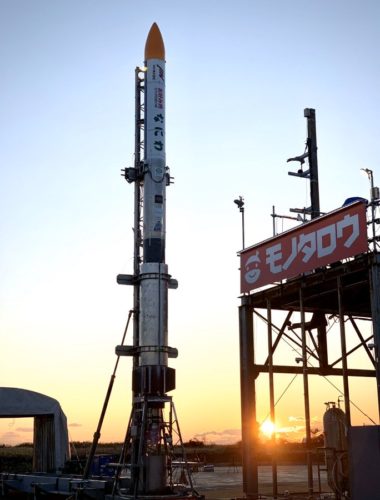
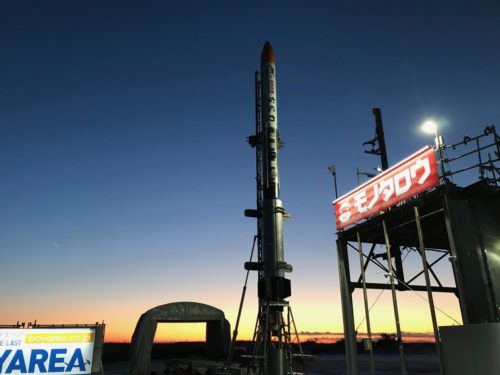
** The fifth launch of an Interstellar Technologies suborbital MOMO rocket in Japan has been postponed to deal with an avionics issue. Doesn’t appear that a new target liftoff date has been announced yet.

MOMO-5 suborbital rocket on the pad. Credits: Interstellar Technologies

** SpaceX:

**** A Falcon 9 launch is scheduled for Monday, Jan. 6th with the Starlink-2 batch of 60 operational broadband Internet satellites. Liftoff is set for 9:19 pm EST  (0219 GMT Tuesday) from Cape Canaveral. Likely that the on-pad test firing will be with the satellites on the rocket and the rocket will stay on the pad rather than roll back to the hanger. This will be another step in speeding up launch rates.

**** Should be a busy year for SpaceX rockets:

**** The in-flight abort (IFA) test of the Crew Dragon is currently set for no earlier than January 11th. Here’s an explanation of the test:

Find updates on the test at

** Time-lapse satellite imagery showing construction underway at SpaceX’s facilities in Florida and Texas and Blue Origin’s facilities in Florida:

An excellent collection of timelapse satellite views of the new Blue Origin and SpaceX facilities for their next-generation rockets, New Glenn, Starship and Super Heavy Collated by Harry Stranger (@HarryStrangerPG) for NSF. Contains modified Copernicus Sentinel data processed by Sentinel Hub. The satellite provider is Copernicus via ESA and the satellites are Sentinel-2A & Sentinel-2B.

*** Starship

**** Views of Boca Chica

[ Update: This video was uploaded soon after this item was posted:

]

****** SpaceX Boca Chica – Starship SN1 Dome Lift – MK1 remains farewellNASASpaceflight.com

At SpaceX’s Boca Chica site, the impressive new dome (bulkhead) for Starship SN1 was lifted towards the windbreak, while work continues around the site and the Mk1 remains departed the area. Footage and photos from Mary (@bocachicagal) for NSF. Edited by Jack Beyer (@thejackbeyer)

****** SpaceX Boca Chica – Preparing the Starship SN1 Launch SiteNASASpaceflight.com

While work continues on multiple Starship bulkheads (domes), preparations around the launch site have picked up again ahead of SN1’s arrival. Footage and photos from Mary (@bocachicagal) for NSF. Video is muted when wind noise becomes too annoying.

****** Remembering StarPopper – Timelapse of SpaceX Starship Mk1NASASpaceflight.com

Remembering Starship Mk1 at Boca Chica. Was to fly 20km, but popped her bulkhead during a pressurization test. Some believe the design of Mk1 (and Mk2) was already deemed as below requirements so the pressurization test was pushed to extremes to gain some data before scrapping the vehicle. The refined design of Starship SN1 (Mk3) is now being constructed. Timelapse of footage from Mary (@bocahicagal) for NSF with a few clips from SpaceX’s presentation event, edited by Jay DeShetler.

== Amazon Ad ==

The Case for Space:
How the Revolution in Spaceflight Opens Up
a Future of Limitless Possibility

Space transport roundup – Dec.31.2019

A sampling of recent articles, videos, and images dealing with space transport (find previous roundups here):

** China’s Long March 5 heavy lift rocket placed a satellite into geostationary transfer orbit last Friday in a successful return to flight following a failure on the second launch of the system in 2017.

China can now proceed with a series of important launches including a Mars rover in July, a new crew spacecraft in September, and the Chang’e 5 lunar sample return mission in late 2020. The LM-5 is also needed for the  launch of modules for a new space station that begins assembly in 2021.

** Interstellar Technologies to carry out the fifth launch of an suborbital MOMO rocket in Japan. The liftoff planned forlast  Saturday was scrubbed:

MOMO-F5 sounding rocket countdown has been halted due to range safety and technical issue. Launch is scrubbed for this window.

Next launch attempt is currently set for January 1st. Get updates on the next launch attempt at Interstellar Technologies, Inc. (@natsuroke) | Twitter

MOMO-F5 on pad

The event will be live-streamed.

** Boeing Starliner Calypso returned unscathed by launch and reentry:

Boeing emphasized the good condition of the spacecraft, which showed “little scorching” from reentry and used only a fraction of its onboard propellant reserved for reentry, which the company said confirmed aerodynamic models of the spacecraft. The interior of the Starliner cabin appeared the same after landing as it did before its Dec. 20 launch from Cape Canaveral, the company noted, evidence that “the Starliner’s fully operational life support system functioned as intended and the layout of the interior is well-suited to support crew members in the future.”

The statement, though, provided no updates on the timer problem that turned what was originally an eight-day mission into a two-day one without a planned docking at the International Space Station. The spacecraft’s mission elapsed timer, which is set by communicating with its Atlas 5 rocket prior to liftoff, was off by 11 hours. That caused the spacecraft to think it was on the wrong phase of its mission after separation from the rocket’s upper stage, triggering thruster firings that used excessive amounts of fuel until ground controllers could take over and turn off the thrusters.

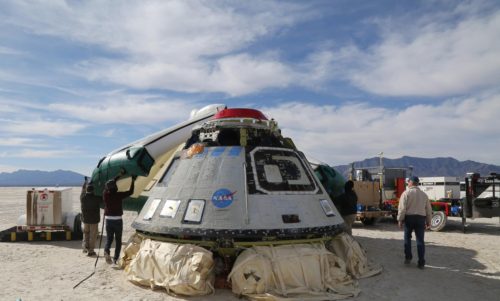
Starliner “Calypso” after landing at White Sands Missile Range in New Mexico.

** Virgin Orbit nears first flight of the LauncherOne rocket: In One Year and Out the Other | Virgin Orbit

Now, we’re getting ready to shift all of our operations to the customized 747 that serves as our fully mobile launch site. Parked at “the hammerhead,” a part of the taxiway adjoining the primary runway at the Mojave Air and Spaceport, we’ll do the final mate of the rocket to Cosmic Girl and run through our rehearsals again. 

In January, we plan to have Chief Test Pilot Kelly Latimer and the rest of our flight crew guide us through one more taxi test with the mated rocket and an additional captive carry test with our orbital flight hardware. Then, we’ll be ready to light this candle and conduct our launch demonstration. 

For years, everything’s been building: our team, our market, our technical expertise, and our enthusiasm. As 2019 draws to a close, we’re stronger and smarter than we’ve ever been before, and feeling ready to rock. To stay in the loop, follow us on Twitter, Facebook, Instagram or LinkedIn.

** Firefly Aerospace also nearing debut of the Alpha smallsat launcher:

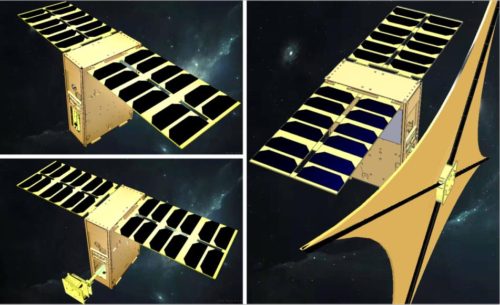
** The Chinese SIASAIL-I sail passes deployment tests following launch last September. The sail, developed by the Shenyang Institute of Automation (SIA), was packed within a CubeSat and successfully deployed in orbit. Although structurally the same as a solar sail, this sail test  is apparently aimed not at demonstrating net solar propulsion but at acceleration of spacecraft de-orbiting by increasing the drag through the minute amount of atmosphere  in low earth orbit.

From China Daily:

[Liu Jinguo, deputy director of the SIA Space Automation Technology Research Office, ]l  said that they managed to fold the flexible membrane and put it into the deployment machine, which is smaller than a billiard ball.

After the satellite platform is put into orbit, scientists carry out technical verification through two-stage deployment. At the first stage, the solar sail body is pushed out of the satellite platform and turned 90 degrees. The second stage is to erect masts and gradually spread the sail. The unfolded solar sail is about 0.6 square meters, which is equivalent to the size of eight Macbook airs laptop computers.

Illustration of SIASAIL-1 before and after sail deployment. Credits: SIA & China Daily.

** LightSail 2: Fulfilling a DreamPlanetary Society – This solar sail did demonstrate net solar propulsion.

Carl Sagan dreamed of solar sailing before founding The Planetary Society in 1980. Now our members have helped us fulfill that dream.

** Bob Zimmerman reviews the rocket industry in the past year: The state of the global rocket industry in 2019 | Behind The Black

First and foremost 2019 showed a decline in total launches from 2018, with global launches dropping from 111 to 97. The 2019 totals were also about 30% below the number of launches predicted by the various countries and launch companies that are now active.

Does this drop in launches mean that the rocket industry is in decline? Not at all. The 97 launches last year were also the most launches in a single year since 1990, when the Soviet Union existed and routinely puffed up the totals each year with many unnecessary launches prompted by their bloated communist bureaucracy. (See last year’s graph for the yearly numbers going back to 1980.)

More important, the numbers this year are based on a much more robust launch industry, made up of many more sound competing constituents, both public and private.

And he concludes:

Thus, it appears that 2020 could herald the beginning of a very aggressive worldwide space industry, achieving more launches each year than ever accomplished in any year since Sputnik launched in 1957.

** A video roundup of launches in 2019 from Cape Canaveral

** Global rocket launch scores for 2019:

** Solar electric propulsion for the Gateway station: The Maxar Power and Propulsion Element: Third Generation Commercial Solar Electric Propulsion, Scott Tilly & Ty Lee , MAXAR Technologies – Future In-Space Operations (FISO), Slides (pdf)

** A compact history of the Ariane family of rockets from Scott Manley:

** SpaceX:

**** Falcon 9 launch of Starlink 2 with the second set of 60 satellites is set for this Friday, Jan. 3rd at 10:24 pm EST (0324 GMT on 4th from Cape Canaveral. It appears that the static firing test on the pad may happen on the day before rather than the usual several days prior. This is consistent with their efforts to speed up the launch pace. The company hopes to do Starlink launches about twice a month in 2020.

**** SpaceX is trying the make the Starlink satellites less bright so as to ameliorate their impact on astronomy: SpaceX set to launch less reflective Starlink satellite – Orlando Sentinel.

A launch planned for Friday from the Space Coast will test a possible solution. SpaceX will experiment with a non-reflective coating on the bottom of one satellite in its next batch of 60, scheduled to lift off from launch complex 40 at Cape Canaveral Air Force Station at 11:20 p.m.

The Astronomical Society has had numerous conversations with SpaceX since the first Starlink launch, on May 23, to discuss how to make the satellites less intrusive. Even now, at their operating altitude of about 550 kilometers, they are still right on the edge of visibility to the unaided eye.

But for research-grade telescopes? They’re “ferociously bright,” Hall said. That means they’re getting in the way of data collection, with the streaks of light ruining the scientific quality of images.

**** CRS-19 Cargo Dragon set to depart from the ISS next Sunday, Jan. 5th. NASA.gov/live will broadcast the departure starting at 9:15 p.m. EST.

The CRS-19 Cargo SpaceX Dragon approaches the International Space Station on Dec. 8, 2019. Credits: NASA

**** Elon linked on Twitter to a SpaceX-made Falcon 9 Crew Dragon simulation from 2011 that I posted on Youtube:

Unfortunately, I believe the licensees of the Muse soundtrack will benefit from the big bump in views rather than I.

**** Elon pointed to a new animation of a Crew Dragon mission to the ISS released this week:

**** Crew Dragon with astronauts on board could launch as soon as February but NASA reviews will take months (and that’s assuming the in-flight abort test goes well):

See also SpaceX’s Crew Dragon astronaut launch debut schedule revealed by Elon Musk – Teslarati.

**** Starship

****** Elon posted a lot of info on development of the Starship on Tweeter in the past few days. Here’s a sampling:

Orbital vehicle in Texas:

The next vehicle, which will be referred to as SN1 rather than Mk.3, could be flying by March:

See also SpaceX’s Elon Musk works through holidays on Starship’s “most difficult part” – Teslarati.

Forming and attaching stainless steel structures:

Pressurizing the tanks to push propellants into the turbo-pumps:

Autogenous refers to using a gaseous form of a propellant itself for pressurizing the tank rather than using a separate inert gas like helium. The high pressure composite pressure vessels (COPVs) to hold helium were involved in both Falcon 9 explosions. Helium is also quite expensive now.

Controlling the side flaps on the Starship as it returns through the atmosphere.

**** Boca Chica viewing

****** New structures in construction: SpaceX borrows Tesla’s tent factory strategy for new Starship production HQ – Teslarati

Confirmed yesterday morning by CEO Elon Musk, SpaceX has copied Tesla’s approach to factory expansion and is building a giant tent to upgrade its South Texas Starship production facilities.

A big step towards more traditional aerospace-style manufacturing facilities, SpaceX has contracted the same company used by Tesla to create a fourth general assembly line (GA4) in a giant tent outside its Fremont, CA factory in 2018. Instead of Model 3s, however, Sprung Instant Structures (Sprung for short) is rapidly raising a large tent that will eventually allow SpaceX to fabricate and weld more Starship parts and sections in an enclosed environment, an improvement from the current practice of building prototypes out in the harsh environment of coastal Texas.

In typical fashion, Musk believes that the new enclosed production facilities – just a collection of shipping crates as of December 18th – could be ready to begin manufacturing Starship parts as early as next month, and the progress Sprung has made makes it unusually hard to fault his optimism.

****** SpaceX Boca Chica – Starship Domes – Hopper attention – December 30, 2019 – – NASASpaceflight.com

More views of the Starship Domes (Bulkheads) while the facilities continue to grow and even Hopper gains some attention at the launch site. Footage and photos from Mary (@bocachicagal) for NSF.

****** SpaceX Boca Chica – Big Tops and Bulkheads – December 29, 2019 – NASASpaceflight.com

More work is taking place on the Starship SN1 Bulkheads as assembly of additional “Big Top” production facilities continues. Footage and photos from Mary (@bocachicagal) for NSF. Opens with some photos taken from Sam Sun (@birdsnspace) plane flyover.

****** Flyover on Dec. 27LabPadre

12.27.2019 The long awaited SpaceX Boca Chica Flyover. Excellent over head close ups of Rocket Shipyard and Landing/Launch site.

****** SpaceX Boca Chica, Texas 2019 review – LabPadre

This video is brought to you by Isla Grand Beach Resort, Sapphire Condominiums, and Orbital Media Networks. All images are filmed at the Pointer property and are explicitly owned by LabPadre Media.

== Amazon Ad ==

Moon Rush: The New Space Race

Space transport roundup – Dec.26.2019

A sampling of recent articles, videos, and images dealing with space transport (find previous roundups here):

** China’s Long March 5 heavy lifter set to launch on Friday. The vehicle design has undergone major upgrades following the failed second launch in 2017.

A video report from CGTN about the Wenchang spaceport where the LM-5 will lift off:

Located in south China’s Hainan Province, Wenchang Space Launch Center is the fourth launch site in China, being specially selected for its low latitude. CGTN takes you on a tour the space site and China’s aerospace history.

The space center will witness the launch of China’s Long March 5 carrier rocket. In the next few days, the final checks and preparations for the launch will be carried out by the engineers. This year’s launch is the third after two unsuccessful launches in 2016 and 2017.

** A couple of Chinese commercial space items:

Hyperbola-2 orbital rocket with reusable first stage.

**  Taiwan’s TiSPACE plans to launch orbital Hapith-V rocket in 2020 powered by hybrid motors:

One of the company’s videos describes the company and its launch technology:

This article provides some background on the company: Firm sets sights on heavens as space industry develops – Taipai Times (pdf)

Based in Miaoli County, TiSPACE was established in 2016 by Chen Yen-sen (陳彥升), who served at the NSPO [National Space Organization] for 11 years after leaving his job as a researcher at NASA’s Marshall Space Flight Center, where he had worked for 21 years.

After returning to Taiwan in 2005, Chen was responsible for directing sounding rocket projects at the NSPO.

Chen said that he left the NSPO to start the company because he hopes to pursue the commercial applications of hybrid rockets and he has become familiar with official procedures to receive approval to launch rockets.

The firm has 104 employees, averaging 34.5 years old, including many engineers who previously worked at information and communications technology firms, the Chungshan Institute of Science and Technology, or Australian rocket firms, he said.  The firm earlier this year improved the efficiency of hybrid rockets to achieve Class-I rocket propulsion as defined by NASA, while keeping the cost much lower than similar products, he added.

Find updates on TiSpace at tiSpace-Taiwanese commercial launch company – NASASpaceflight Forum.

** Boeing Starliner landed successfully last Sunday at White Sands after abbreviated test flight

Boeing’s CST-100 Starliner spacecraft completed the first touchdown on land of a human-rated space capsule in U.S. history Sunday, Dec. 22, 2019, at White Sands Space Harbor in New Mexico, wrapping up the uncrewed Orbital Flight Test as part of NASA’s Commercial Crew Program. Starliner settled gently onto its air bags at 7:58 a.m. EST in a pre-dawn landing that helps set the stage for future crewed landings at the same site. The landing followed a deorbit burn at 7:23 a.m., separation of the spacecraft’s service module, and successful deployment of its three main parachutes and six airbags.

Post-landing briefing:

One hour after landing, NASA and Boeing held a news conference at NASA Johnson Space Center with NASA Administrator Jim Bridenstine, Jim Chilton, senior vice president of Boeing’s Space and Launch Division, and Steve Stich, deputy manager of NASA’s Commercial Crew Program.

The vehicle gets a name: Boeing’s first commercial crew capsule christened ‘Calypso’ – Spaceflight Now

Scott Manley’s discusses the return of the Starliner:

** Russian Proton rocket launched a new weathersat:

** Interview with Black Arrow Space Technologies executive director: Black Arrow is developing a seaborne small-sat launcher – Aerospace Engineering Blog

Paul Williams is the Executive Director of the British startup Black Arrow Space Technologies. Black Arrow is developing a sea-borne launch capability based on their current expertise in developing composite propellant tanks for satellites. The launching of rockets from ships has a previous history in America, and as an island nation, the concept is clearly suited for a UK launch provider. Paul and I talk about the heritage of the Black Arrow name, the advantages of a sea-borne launch approach, and the importance of audacious technical challenges in galvanising and inspiring the next generation of engineering talent.

(Item via the Rocketeers blog.)

A video animation of the Black Arrow plan:

Black Arrow Space Technologies is developing its own spaceship – a seaborne spaceport which will be used to launch satellites of up to, initially, 500 kg in to Low Earth Orbit. The “spaceship” will be based in a South Wales port, along with its support vessels, and will enable rockets to be launched North or South without overflying populated areas. We are creating a flexible British launch capability to support the thriving British satellite industry which will allow launches to take place from the best place to achieve the required orbit.

** SpaceX:

**** SpaceX completes successful series of parachute tests for Crew Dragon: SpaceX leaps closer to launching NASA astronauts after parachute testing milestone – Teslarati

Most recently, SpaceX announced on December 4th that it had completed the 7th consecutively successful multi-chute drop test, leaving three additional tests to go before reaching its goal of at least 10 consecutive successes.

Now, a bit less than three weeks after that 7th test, SpaceX says it has completed the 10th multi-chute drop test of Crew Dragon’s upgraded Mk3 parachutes, achieving the tentative goals set by CEO Elon Musk and NASA administrator Jim Bridenstine just two months ago. By the numbers, since Bridenstine first announced his expectation of “as many as 10 drop tests between now and the end of the year”, SpaceX alone has completed at least 20 successful tests in a row in the last eight weeks, averaging more than one test every three days.

If the in-flight abort test set for January 11th is successful, the Crew Dragon will be ready to carry astronauts to the ISS.

**** Latest  landed booster returned and sent to hangar in record time: SpaceX wraps up a decade of reusable rocketry with fastest booster recovery yet- Teslarati

SpaceX has completed its 13th and final launch and landing of the year and decade, marked by a Falcon 9 booster’s successful return to Port Canaveral and subsequent processing to prepare it for another orbital-class mission.

Over the course of that recovery, SpaceX broke the record for the fastest Falcon 9 processing by several hours, a small but significant step towards the company’s ultimate goal of launching and landing the same Falcon 9 booster in less than 24 hours. Additionally, SpaceX appears to have finished processing booster B1056 on December 21st, the 4th anniversary of Falcon 9’s first successful landing after an orbital-class launch.

Video of the processing of B1056:

Booster 56 has retracted and loaded with landing legs on, three times in a row. SpaceX redesigned the struts on each leg to collapse under equal pressure beginning with B1056. This puts SpaceX much closer to the 24hr turnaround. Amazing engineering! Thanks for Subscribing! We are a US disabled veteran run, non-profit video production company whose mission is to bring other disabled US Veterans to witness a launch, experience US Space History and become part of our report. Our nonprofit 501(c)(3) is 100% tax deductible, just go to our webpage www.USLaunchReport.com which is merged with www.VeteransSpaceReport.com and find our Donate button. You can help change the life of a US Veteran.

**** SpaceX – CRS 19 – Remote narrow & wide cameras w/ high fidelity audio – NASASpaceflight.com

Filmed by Chris Gebhardt using Jay DeShetler’s specialist remove camera and audio set up, Falcon powered the CRS-19 Dragon into the Florida sky. Launch article: https://www.nasaspaceflight.com/2019/…

**** Next Falcon 9 launch of Starlink satellites set for Jan. 3. Two more Starlink launches planned for January: SpaceX poised to accelerate launch cadence with series of Starlink missions – Spaceflight Now

SpaceX teams across the United States are readying for what the company’s chief operating officer predicts will be a record number of launches in 2020.

Before the end of January, SpaceX aims to perform four Falcon 9 launches from Florida’s Space Coast — three for the company’s Starlink broadband network, and a crucial in-flight abort test for the Crew Dragon spacecraft no earlier than Jan. 11.

SpaceX has performed its final launch of 2019, finishing the year with 13 missions — 11 using the “single-stick” Falcon 9 and two employing the Falcon Heavy with three booster core connected together. All 13 of the missions were successful.

The company accomplished 21 launches in 2018, and 18 in 2017.

**** Starship

****** Recent scenes at Boca Chica:

As numerous deliveries continue into SpaceX Boca Chica, the expansion of the new production facility is still taking place. This will give birth to Starship Mk3, before being assembled and welded into the tall windbreak building. Footage and photos from Mary (@bocachicagal) for NSF.

Starship’s bulkhead was flying again, but this time on the end of a crane at SpaceX’s Boca Chica facility as more Steel rings are being produced. Footage and photos from Mary (@bocachicagal) for NSF.

****** Structural components for the Mk.3 vehicle arrived via ship from Florida: SpaceX ships Starship hardware from Florida to Texas to speed up production – Teslarati

After appearing unexpectedly at SpaceX’s Port Canaveral docks last month, several large pieces of Starship flight and manufacturing hardware were successfully shipped from Florida to Texas, arriving at the company’s Boca Chica build and launch site two weeks ago.

Previously discussed on Teslarati, the hardware transfer signals a significant shift in the development strategy for SpaceX’s next-generation Starship-Super Heavy launch vehicle. Most notably, SpaceX has chosen to prioritize Texas in the near term while the company’s Florida facilities instead aim for longer-tail milestones like the first Super Heavy-capable launch site and a new production facility located much closer to that launch site.

While the hardware SpaceX has sent over is relatively minor in the scope of producing a brand new Starship prototype, it will at least somewhat expedite the process thanks to the inclusion of what appears to be a completed propellant tank dome. Additionally, it’s possible that this December 8th hardware delivery will not be the last – a large amount of hardware remains at SpaceX’s Cocoa, Florida Starship production facility, including several ring sections and a nearly finished nose section, among a number of other parts.

****** Activity at the Florida Starship assembly facility has scaled down substantially:

Not much happening. The MK2 remains virtually untouched. The grey header tank (removed from MK2 a while ago) has been moved outside into the elements. Site has almost been cleared of all extra parts, moving pipes and fixtures now.

== Amazon Ad ==

Delta-v

Space transport roundup – Dec.21.2019

A sampling of recent articles, videos, and images dealing with space transport (find previous roundups here):

** Boeing Starliner crew spacecraft sent into wrong orbit due to a timing clock glitch shortly after deployment from Atlas V upper stage: NASA Statement on Boeing Orbital Flight Test | NASA

The test flight with no astronauts on board was intended to prove the vehicle’s performance and safety before the first crewed flight. Though many of the rocket and spacecraft systems will be tested, including the return for a parachute landing onto hard ground, the key rendezvous and docking capabilities will not be proven.

It’s likely, however, that NASA will not require Boeing do another uncrewed flight test since a crew would not have been endangered during today’s flight and might have even corrected the problem in time to achieve the orbit needed to rendezvous with the ISS. Nevertheless, the Starliner crew flight will be delayed not just to fix this particular problem but to determine what shortcomings in vehicle development, flight preparation, and management allowed it to happen.

Here is the post-launch briefing:

Another briefing teleconference will be held today at 2pm: NASA, Boeing to Provide Update on Starliner Orbital Flight Test Status – Commercial Crew Program/NASA

[ Update: No major news regarding the anomaly. They are continuing to study what caused the mis-timing. Other items:

  • The Starliner spacecraft is performing well.
  • Speakers emphasize the many systems that will have been tested on the flight despite no ISS rendezvous and docking.
  • Great deal of data being obtained.
  • Starliner will de-orbit tomorrow morning (Dec.22) and land at White Sands, New Mexico
  • NASA coverage of the return  will start at 6:45 a.m. EST.
  • The deorbit burn is scheduled for 7:23 a.m. EST, landing for 7:57 a.m. EST.

A recording of the briefing (embedding for it is deactivated): LIVE: Update on Boeing Starliner from Jim Bridenstine (audio-only teleconference) – YouTube

Extensive notes:

]

More about the flight test:

Video of the launch:

Scott Manley gives his analysis of the

** The Brazilian-Chinese remote sensing satellite CBERS-04A and Ethiopia’s first satellite, ETRSS-1, were launched on Thursday aboard a Long March 4B rocket:

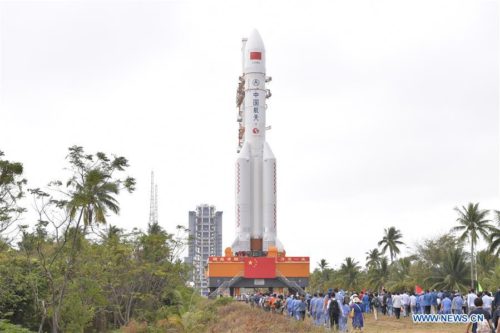
** A Long March 5 rolled to the launch pad on Saturday (China time)  in preparation for critical return to flight mission :

See also China prepares to launch Long March-5 rocket – Xinhua.

Long March 5 rolls to pad for launch at end of December. The rocket will lift off from Wenchang Space Launch Center in south China’s Hainan Province on Saturday. Credits: Zhang Gaoxiang/Xinhua

** A Soyuz rocket launched the CHEOPS exoplanet observatory and four other satellites from French Guiana on Wednesday: Soyuz orbits a multi-passenger payload on Arianespace’s ninth and final launch of 2019 – Arianespace

Departing at the exact planned liftoff moment of 5:54:20 a.m. local time, the Soyuz ST-A launcher version flew a four-hour-plus profile to release its multi-satellite payload into Sun-synchronous orbit – beginning with primary passenger COSMO-SkyMed Second Generation, then CHEOPS (Characterising Exoplanet Satellite) and three auxiliary payloads: EyeSat, OPS-SAT and ANGELS.

More about the mission:

** Rocket Lab will build a second launch pad in New Zealand. This will be the third pad overall counting the new one at Wallops Island, Virginia:

In an interview, Rocket Lab Chief Executive Peter Beck said the decision to build the second pad was driven by an anticipated increase in its launch rate. The company carried out six launches of its Electron rocket in 2019 but expects to launch once a month in 2020 and eventually increase to weekly launches.

“The additional pad really gives us the capacity to get down to one launch every week, which is what we’ve always been driving to,” he said. The company current spends about four weeks to recycle the pad between launches, which he said can be shortened to two.

At a recent ceremony marking the completion of the Wallops Island facility, Tim Dodd, the Everyday Astronaut, interviewed Peter Beck:

I got to have an awesome conversation with Rocket Lab’s Peter Beck talking all about their reusability plans for Electron and all the exciting things they’ll be doing next year! I already have a video that dives into their recovery plans and the history of air launches here – https://www.youtube.com/watch?v=ZIaDW… Last year I had the pleasure of interviewing Peter at Rocket Lab’s beautiful new factory in Auckland, New Zealand! – https://www.youtube.com/watch?v=Nj9Bn…

Rocket Lab posts highlights from 10 Electron launches:

** Highlights for Virgin Orbit in 2019

2019 has been one hell of a year for the Virgin Orbit team. We entered this year with a brilliant team and a lot of cool technology — but there were some really big milestones we still had yet to cross. We hadn’t yet fired our main stage. We had mountains of simulations for how to fly, but hadn’t run though a full mission sequence in software, much less done so with a fully integrated rocket on the test stand. And we hadn’t actually taken off with a fully loaded rocket strapped to its wing. As of today, we’ve done all of that and so, so much more.

** SpaceX:

**** In-flight abort test flight no earlier than January 14th: SpaceX In-Flight Abort Test Launch Date Update – Commercial Crew Program/NASA

NASA and SpaceX are targeting no earlier than Jan. 11, 2020, for a critical In-Flight Abort Test of the Crew Dragon spacecraft from Launch Complex 39A at the Kennedy Space Center, Florida, pending U.S. Air Force Eastern Range approval.

As part of the test, SpaceX will configure Crew Dragon to trigger a launch escape shortly after liftoff and demonstrate Crew Dragon’s capability to safely separate from the Falcon 9 rocket in the unlikely event of an in-flight emergency. The demonstration also will provide valuable data toward NASA certifying SpaceX’s crew transportation system for carrying astronauts to and from the International Space Station.

The demonstration of Crew Dragon’s launch escape system is part of NASA’s Commercial Crew Program and is one of the final major tests for the company before NASA astronauts will fly aboard the spacecraft.

**** Three Starlink missions could lift off in January: SpaceX set to deploy another large batch of internet satellites as Starlink constellation expands – Teslarati

The next Falcon 9 launch of 60 SpaceX Starlink broadband Internet satellites is set for January 3rd from Cape Canaveral.  The subsequent two flights are set for mid and late January. It appears that SpaceX is hoping to average two Starlink launches per month in 2020. This will be in addition to their usual manifest of customer payloads.

SpaceX allowed by FAA to change the distribution of Starlink satellites in orbit: SpaceX gets OK to re-space Starlink orbits – SpaceNews.com

**** Starship

**** The Mk.1 section that SpaceX scraps first Starship prototype to make way for new and improved rockets – Teslarati

****** Initial stacking of stainless steel rings for the Mk.3 StarshipNASASpaceflight.com

The first rings of Starship Mk3 have undergone a stacking test involving the ring with the “portals/portholes”. It looks like they had some fun with the names too.

Meanwhile, the new production facility is taking shape.

Footage and photos from Mary (@bocachicagal) for NSF.

****** SpaceX Boca Chica Ring Stack Progress Time LapseLabPadre

12.19.2019 Time lapse as SpaceX moves a ring into staking position for the first attempted ring stack of MK-3. Workers pin together both rings as they prepare for the welding process. 24/7 stream is powered by LabPadre, in cooperation with Sapphire Condominiums and @BocaChicaMaria1 (Twitter) @SpaceXBocaChica (Facebook). All video images explicitly owned by LabPadre Media.

****** SpaceX Boca Chica New Elevated View Of Starship Rocket ShipyardLabPadre

12.19.2019 Video shot by Maria Pointer with Esquire Magazine MK3 rings in fast production. Onion tent frame being erected. Fencing/walls being raised. Warning: Loud wind. Video Credit: @BocaChicaMaria1

== Amazon Ad ==

See You In Orbit?: Our Dream Of Spaceflight