SpaceWorks Enterprises releases a report on using torpor, or hibernation-like, techniques for transporting large numbers of people to Mars:
SpaceWorks Releases Findings for 100-Person Mars Transfer Vehicle
Using Torpor Inducing Habitats
Atlanta, October 16, 2015 – SpaceWorks Enterprises, Inc. (SEI) is pleased to release its recent findings evaluating the potential of its torpor-technology to enable sending an unprecedented number of passengers on a mission to Mars.
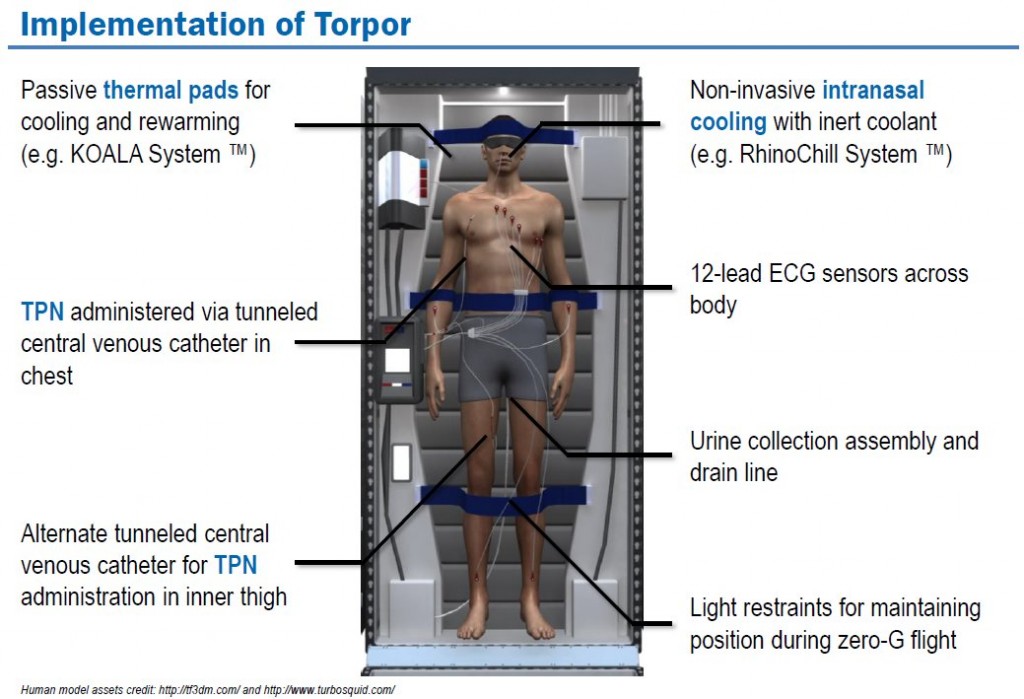
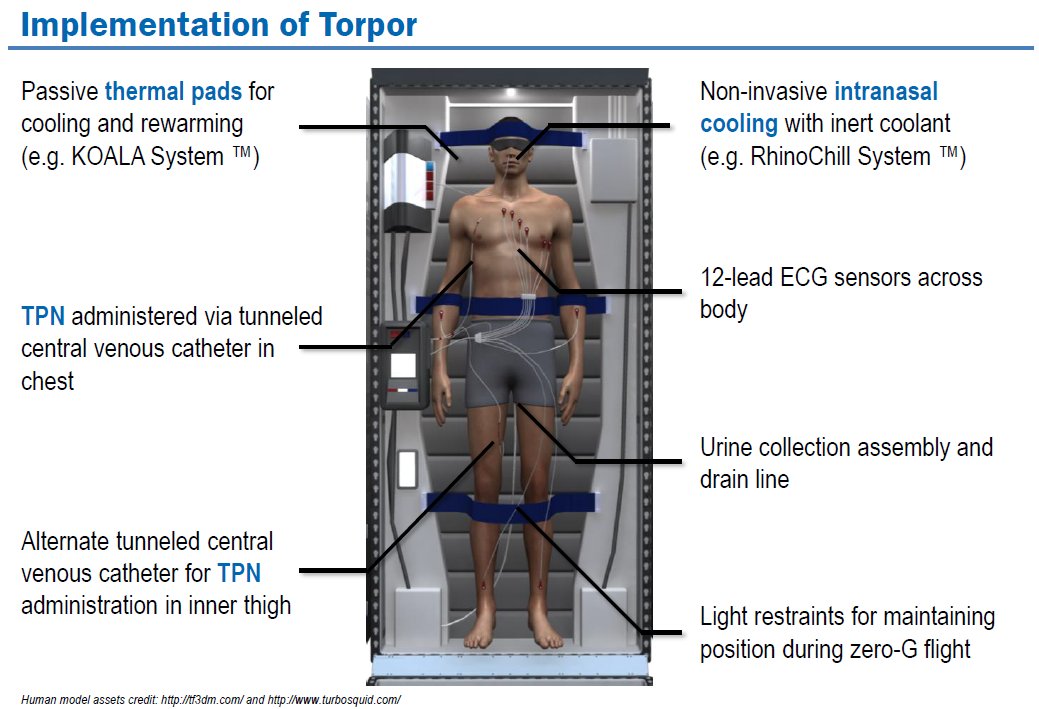
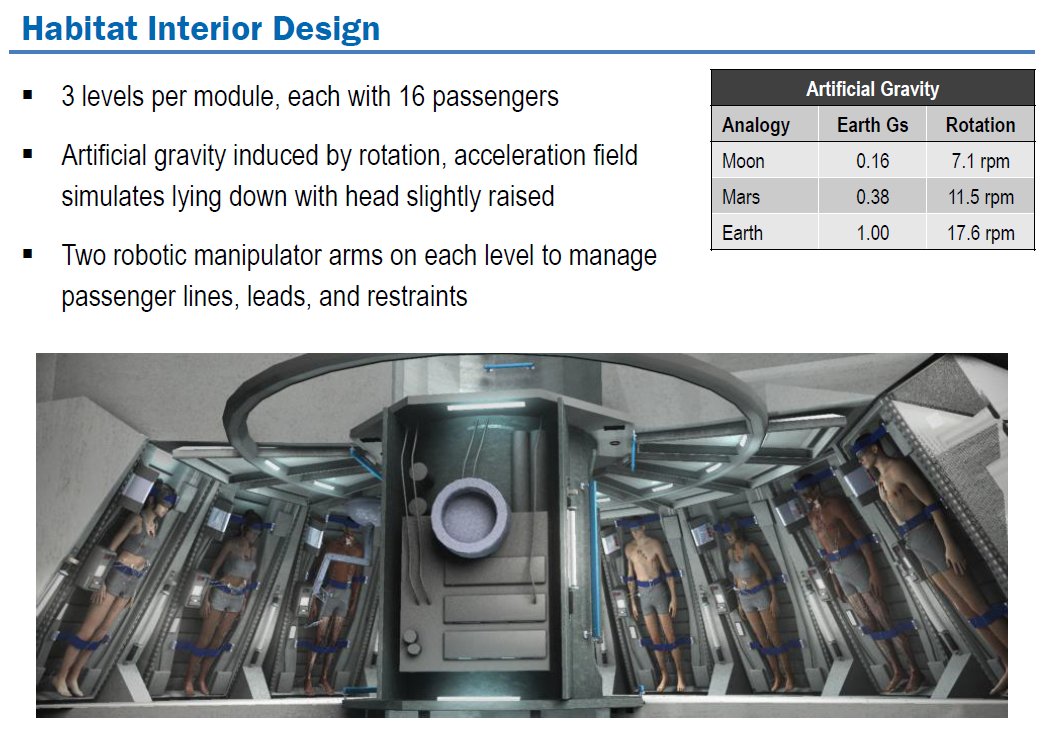
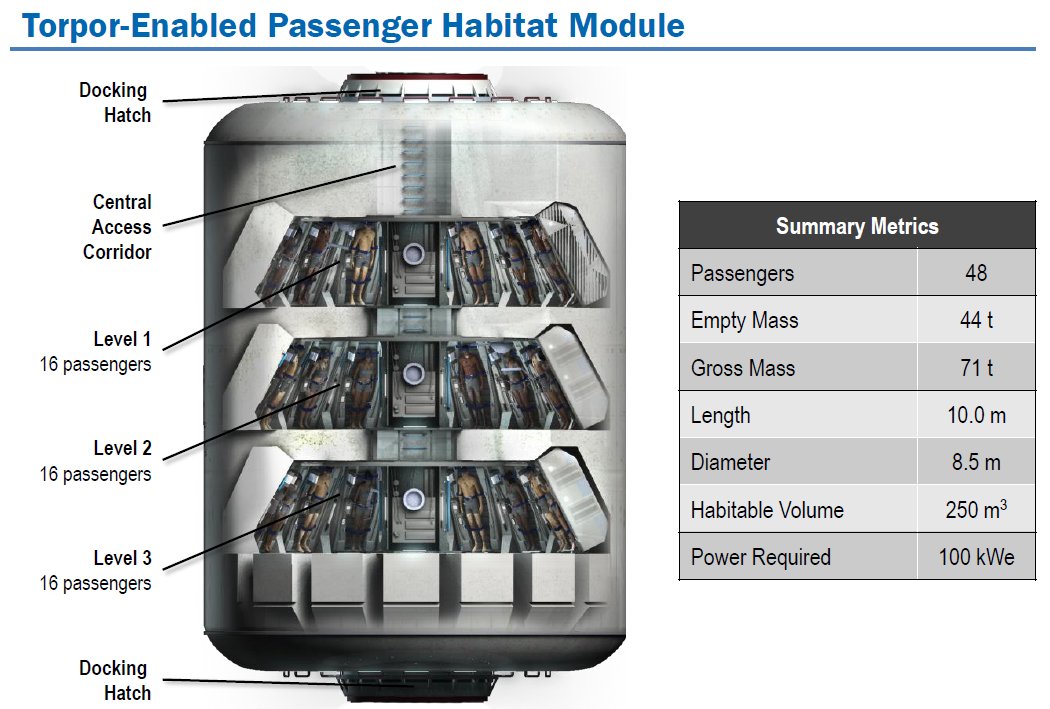
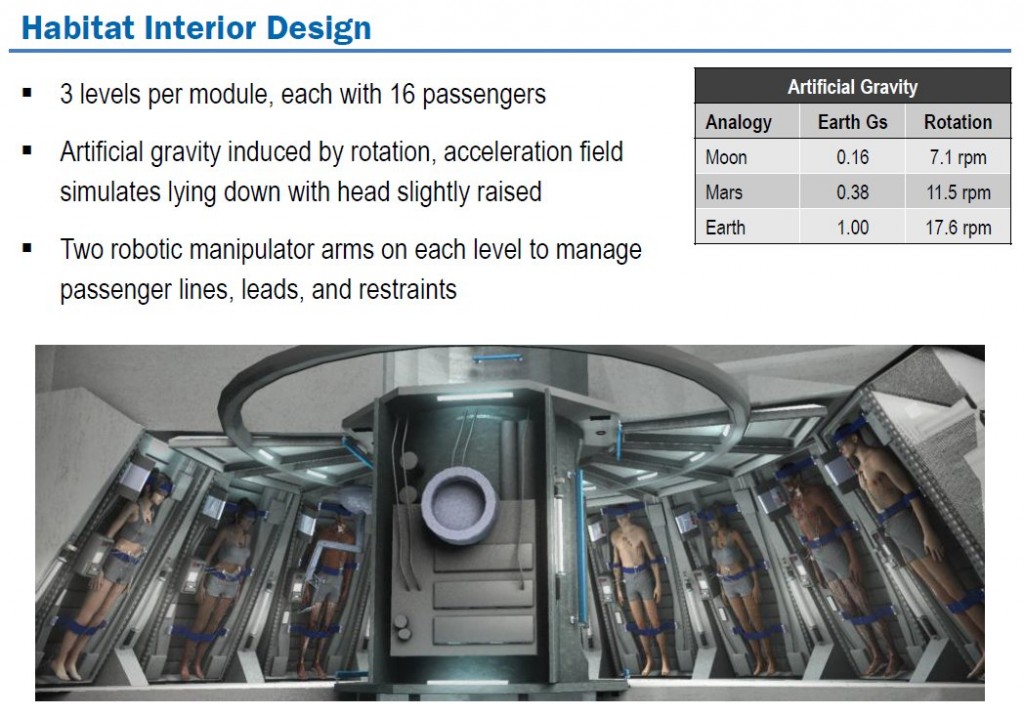
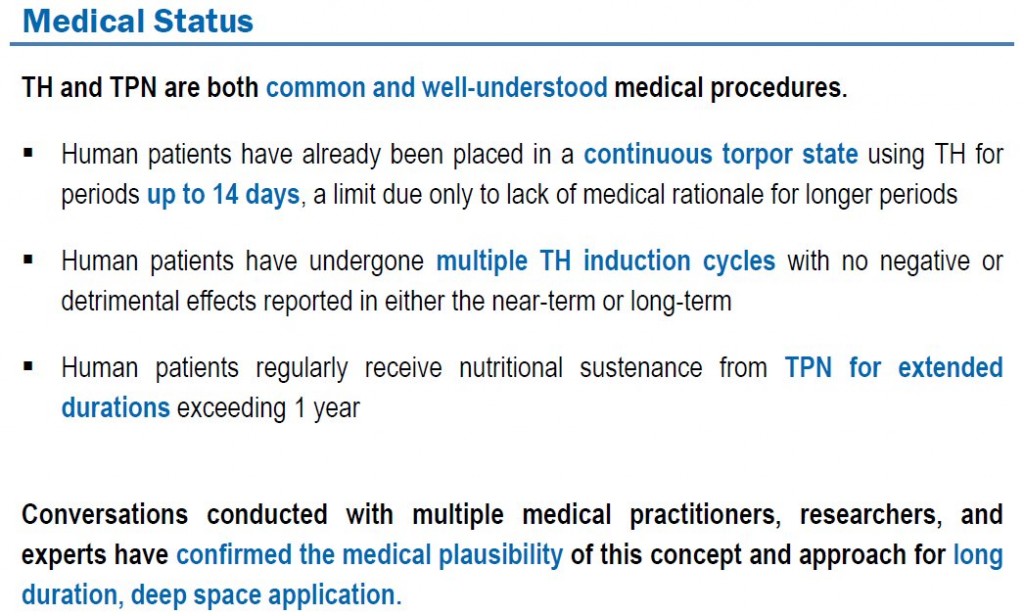
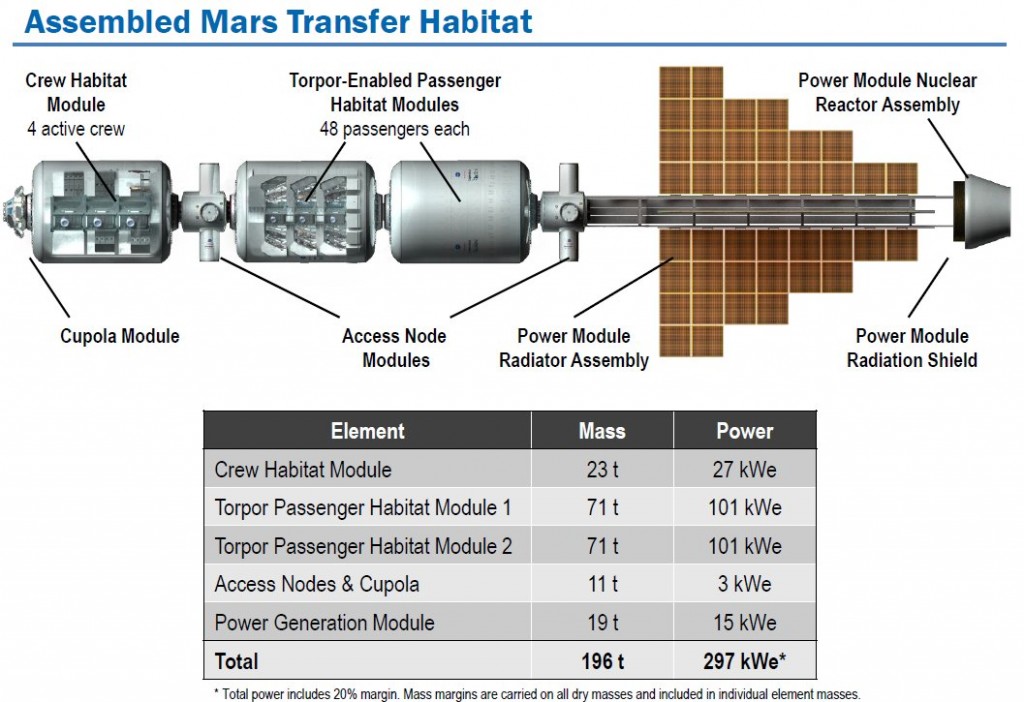
The objective of this work was to develop an engineering design for a 100-crew settlement-class in-space habitat that leverages our human stasis/torpor approach. This study serves as a continuation of efforts by SpaceWorks to investigate the use of these technologies for human spaceflight. The reduced metabolic rates that are achieved through torpor relax the mission requirements on consumable food and water, and positively impact the design of the habitat environmental control and life support systems. The torpor approach also helps to address a number of the medical challenges associated with deep space flight including bone demineralization, muscle atrophy, increased intracranial pressure, radiation exposure, and psycho-social problems.
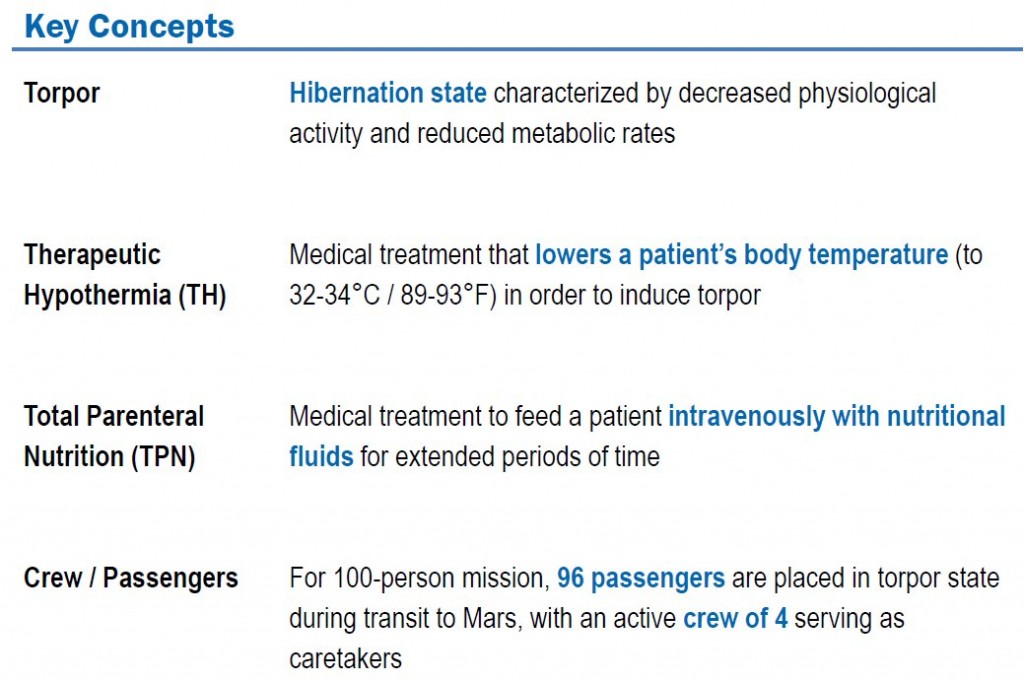
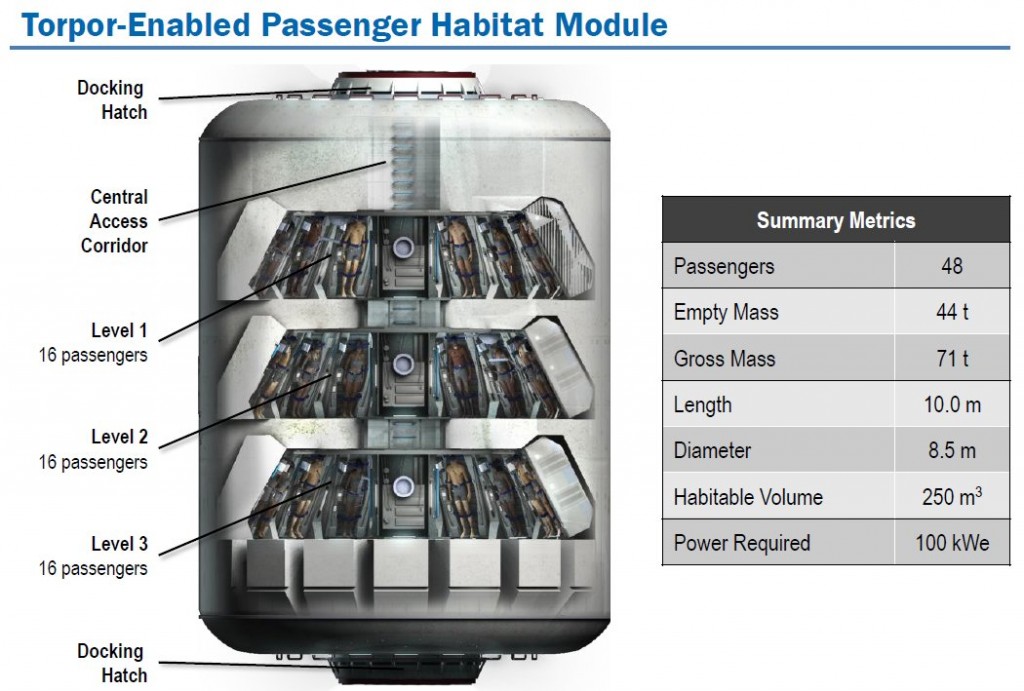
The final Mars Transfer Habitat design yielded a total mass of 200 t and power generation requirement of 300 kWe. This represents a significant reduction in the mass and power needs necessary for 100 inhabitants when compared to scaling current architectures for the human exploration of Mars. For reference, the in-space habitat mass for a settlement-class mission with – non-torpor approaches – was on the order of 700 t. The application of long-duration torpor for humans to space exploration missions appears to be both medically and technically feasible, showing great promise as a means to enable settlement of the solar system.
The findings and associated presentation, which were recently presented by Mark Schaffer at the 2015 International Astronautical Conference (IAC) in Jerusalem, Israel, are available at:
Presentation: 100-Person Mars Transfer Vehicle using Torpor-Inducing Habitat
Paper: 100-Person Mars Transfer Vehicle using Torpor-Inducing Habitats
“This is another example demonstrating the benefits achieved from placing crews in low-metabolic stasis for human spaceflight,” said Dr. John Bradford, President/COO of SpaceWorks. “We plan to continue our efforts pursuing this enabling technology on both the engineering and medical fronts. ”
For additional information, please send inquiries to john.bradford@sei.aero
![Torpor-image[1]](http://hobbyspace.com/Blog/wp-content/uploads/2015/10/Torpor-image1.jpg)
![trajectory_white[1]](http://hobbyspace.com/Blog/wp-content/uploads/2015/11/trajectory_white1-1024x498.jpg)
![orbital-spaceflight[1]](http://hobbyspace.com/Blog/wp-content/uploads/2015/11/orbital-spaceflight1.jpg) Artist’s rendition of Blue Origin’s two stage orbital rocket design.
Artist’s rendition of Blue Origin’s two stage orbital rocket design.