Category Archives: Education

Student and amateur CubeSat news roundup – Nov.28.2018

A sampling of recent articles, press releases, etc. about student and amateur CubeSat / SmallSat projects and programs:

** CubeSat to Attempt Solar Sail in Orbit – ENGINEERING.com

Purdue University professor, David Spencer is leading an effort to send a CubeSat up for an attempted controlled solar sailing in Earth’s orbit. Solar sailing uses reflective sails to harness the momentum of sunlight for propulsion….

This project is sponsored by the citizen-funded Planetary Society, whose CEO is Bill Nye the Science Guy.

The CubeSat, LightSail 2, is one payload as part of the Air Force’s Space Test Program-2 (STP-2) mission that will launch on the SpaceX Falcon Heavy rocket in early 2019. Spencer’s research team will be tracking LightSail 2, receiving the signal from the spacecraft as well as commanding the spacecraft during operations, from the Space Flight Projects Lab at the Purdue Technology Center.https://engineering.purdue.edu/SFPL

** NNU students watch InSight landing, prepare for own satellite launch – KIVITV.com Boise, ID

“So the Marco is about double the size of RFTSat, but it’s really cool to see how NASA and JPL are also using cube sats and how NNU is using them too,” said Cox.

The Marcos being cube satellite’s used in conjunction with NASA’s InSight that landed on Mars Monday.

And engineering students at NNU are in the building stages of a satellite with similar features called RFTSat, which is also a version of a cube satellite.

** Towards drop your thesis 2018: 4.7 seconds of microgravity conditions to enable future CubeSat landings on asteroids – S. Cuartielles et al, Cranfield University

An increasing number of interplanetary missions are aiming at visiting asteroids and other small bodies, since these may provide clues to understand the formation and evolution of our Solar System. CubeSats allow a low-cost solution to land on these objects, as opposed to risking a much more expensive mothership. The weak gravitational field on these small bodies may also enable the possibility of simply dropping a CubeSat from afar (i.e. ballistic landing).

However, ballistic landing of an unpowered spacecraft may be feasible solely within certain asteroid locations, and only if sufficient energy can be dissipated at touchdown. If such conditions are not met, the spacecraft will rebound off the surface. It is likely that the necessary energy dissipation may already occur naturally due to energy loss expected through the deformation of the regolith during touchdown. Indeed, previous low-velocity impact experiments in microgravity seem to indicate that this is exactly the case. However, data from past asteroid touchdowns, Hayabusa and Philae, indicate the contrary.

This paper describes the development of an experiment which aims to bridge the aforementioned disagreement between mission data and microgravity experiment; to understand the behaviour of CubeSat landing on asteroids. …

** Cal Poly’s Latest CubeSat Reveals First High-Resolution Image of the Earth – Cal Poly News – Cal Poly, San Luis Obispo

While Cal Poly’s ninth CubeSat tests a way to reduce vibrations aboard orbiting satellites, the softball-sized satellite also has been busy snapping photos of the Earth.

DAVE, or Damping and Vibrations Experiment, launched Sept. 15 from Vandenberg Air Force Base with three other small satellites, or CubeSats, as secondary payload on NASA’s ICESat-2 (Ice Cloud and Land Elevation Satellite-2) mission.

PolySat, the student-run research lab, released its first high-resolution image that was snapped just hours after the launch. The photo shows Svalbard, the Norwegian archipelago located between Norway and the North Pole.

“This is one of our better pictures,” said Grigory Heaton, a senior studying aerospace engineering and physics. “Our satellite is not controlled. It’s just spinning, so we have to get lucky with the pictures. This one, we were right overhead and got almost the entire archipelago.”
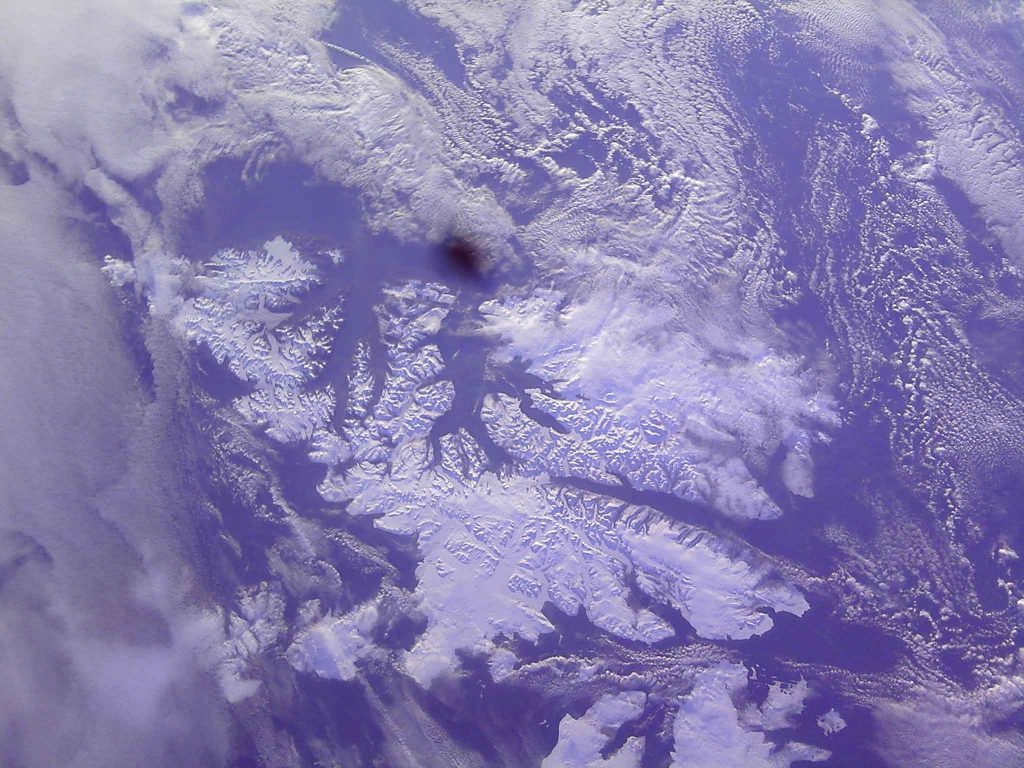
The Norwegian archipelago Svalbard as imaged by Cal Poly CubeSat DAVE.

See also Cal Poly satellite captures photos of Earth | KSBY.com.

** AMSAT news on student and amateur CubeSat/smallsat projects: ANS-329 AMSAT News Service Special Bulletin

  • Fox-1Cliff Launch Scheduled for 28-Nov-2018 at 18:32 UTC
  • Robert Bankston, KE4AL, Elected AMSAT Vice-President of User Services
  • Fox-1Cliff Launch – Your Help is Needed!
  • ESA Announces “First Telemetry” Contest for ESEO
  • Happy 5th Birthday FUNcube-1
  • FCC Dismisses AMSAT’s 2004 Petition for Reconsideration
  • Upcoming ARISS Contact Schedule
  • Satellite Shorts From All Over

Other CubeSat news & info:

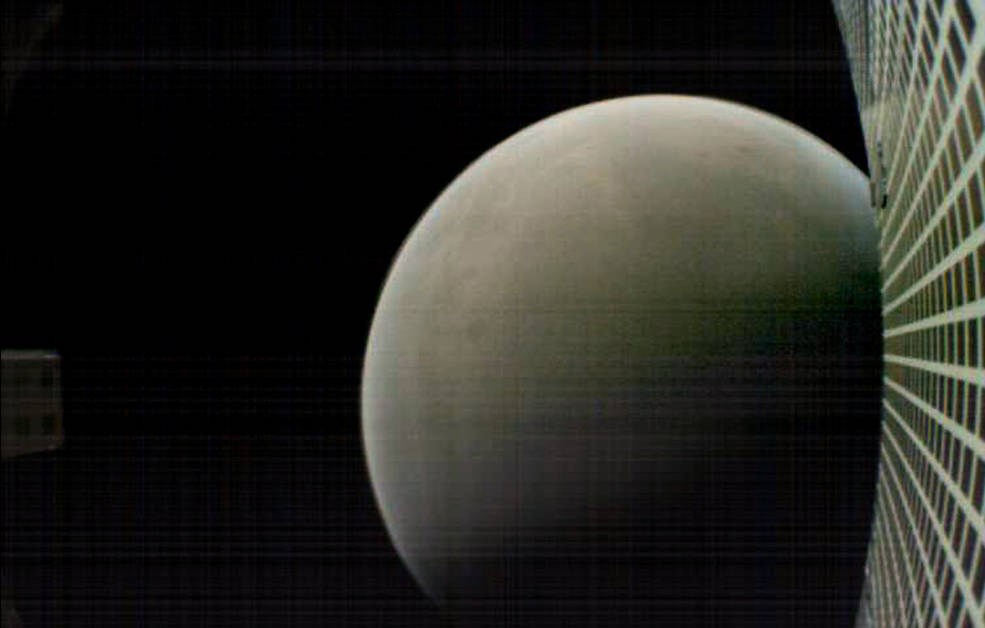
MarCO-B, one of the experimental Mars Cube One (MarCO) CubeSats, took this image of Mars from about 4,700 miles (7,600 kilometers) away during its flyby of the Red Planet on Nov. 26, 2018. MarCO-B was flying by Mars with its twin, MarCO-A, to attempt to serve as communications relays for NASA’s InSight spacecraft as it landed on Mars. Credits: NASA/JPL-Caltech. Full image and caption

====

Telescopes and Binoculars at Amazon

Student CubeSat projects roundup – Nov.12.2018

A sampling of recent stories about student CubeSat projects and programs:

** IRVINE01 CubeSat built by students in the Irvine CubeSat STEM Program (ICSP) in Irvine, California reached orbit on Rocket Lab Electron rocket launched over the weekend:

See also

** First Jordanian-made satellite to launch! | Roya News

Jordanian history will be made on November 19, 2018, as the first local made nano-satellite, dubbed “JY1-SAT”, will launch into space to take pictures of Jordan’s historical and touristic places.

The ‘Masar’ (Path) initiative, was launched by the Crown Prince’s Foundation, Prince Hussein Bin Abdullah II, in partnership with NASA who trained 22 Jordanian engineering students from around the Kingdom, in scientific and practical research at the Ames Research Center in Silicon Valley, the United States.

The team of students explored satellite engineering and related knowledge, and developed their skills in aviation and space science through an intensive program over a period of 10 weeks, under the supervision of NASA experts. This partnership training aims to give Jordanian youth an opportunity to demonstrate capabilities and innovativeness in the field of space, and came to establish the CubeSat.

** AMSAT’s Fox-1Cliff CubeSat Set to Launch on November 19 – ARRL.org

AMSAT is counting down to the launch of the next Fox-1 satellite, Fox-1Cliff. According to Spaceflight Now, the launch from Vandenberg Air Force Base of Spaceflight’s SSO-A SmallSat Express mission, on a SpaceX Falcon 9 vehicle, is currently scheduled for November 19 at 1832 UTC.

Fox-1Cliff carries the Fox-1 U/v FM repeater, AMSAT’s L-Band Downshifter, the flight spare of the AO-85 Vanderbilt University Low Energy Proton (LEP) radiation experiment, and the standard Fox-1 Penn State University-Erie MEMS gyroscope experiment. Virginia Tech provided a video graphics array camera that’s similar to the one on AO-92 but which will provide images at a higher 640 × 480 resolution.

See also

**  More about the Kyrgyzstan women’s CubeSat project mentioned in previous CubeSat roundup:

** AMSAT news on student and amateur CubeSat/smallsat projects: ANS-313 AMSAT News Service Special Bulletin

  • Fox-1Cliff Launch Date Announced
  • Fox-1Cliff Launch Membership Drive
  • “Fox-In-A-Box” SD Cards Now Available
  • Can You Capture a Double Hop APRS Packet?
  • European MetOp-C Weather Satellite Launch
  • Collision Avoidance for SSO-A Mission
  • Identifying Newly Launched Objects
  • Upcoming Satellite Operations
  • ARISS News & FundRazr
  • Correction: AMSAT Senior Leadership
  • Satellite Shorts From All Over

General CubeSat info:

Student CubeSat projects roundup – Nov.4.2018

A sampling of recent stories about student CubeSat projects and programs:

** Young women are crowdfunding Kyrgyzstan’s first satellite — Quartz

Of the world’s 195 countries, 72 have official space agencies, including NigeriaBangladeshPeru, and Bolivia. Kyrgyzstan does not. So a group of young women decided to start their own.

Kyrgyzstan is not an easy place to be female; it was described last year by Reuters as “a nation rife with domestic violence, child marriage and bride kidnappings.” The dozen or so members of the Kyrgyz Space Program, who range in age from 17 to 25, came together for a free robotics course started by journalist and TED fellow Bektour Iskender last March and meet twice a week at the offices of Kloop, the independent journalism school Iskender runs in Bishkek, Kyrgyzstan’s capital. They are crowdfunding their work towards building and launching a cube satellite, a miniature design known as a CubeSat that can cost as little as $150,000 to produce.

** ASGC [Alabama Space Grant Consortium] gears up to build first collaborative CubeSat to measure gamma-ray bursts – Univ. of Alabama at Huntsville

Based at The University of Alabama in Huntsville (UAH), ASGC member universities are Alabama A&M University, Auburn University, Tuskegee University, The University of Alabama, The University of Alabama at Birmingham, UAH and University of South Alabama. ASGC members have individually launched two previous CubeSats, and five CubeSat projects are underway independent of the collaborative effort.

The first collaborative ASGC CubeSat project will carry a gamma-ray burst (GRB) detector to be placed in the vicinity of the moon to detect short gamma-ray bursts.

** Cal Poly students helped integrate first CubeSat to photograph Mars, image released – Mustang News

Students from the on-campus organization Cal Poly CubeSat Laboratory, or PolySat, helped integrate two CubeSats for launch in May, which just became the first spacecrafts of their kind to photograph Mars. The two CubeSats — MarCO-A and MarCO-B, collectively called MarCO — are twin miniaturized satellites, each roughly the size of a briefcase, that will be testing communications capabilities in deep space.

PolySat members partnered with NASA’s Jet Propulsion Lab (JPL) to help integrate MarCO before take-off, which involved final spacecraft check ups and securing both CubeSats into their deployers. MarCO-B captured a photo of Mars on October 3 as part of a test in exposure settings and the image was released by NASA October 22.

Here is the CubeSat photo of Mars released by NASA JPL:

** Japan launches GOSAT-2, UAE’s KhalifaSat, the Philippines’ Diwata-2, and 3 cubesats | SpaceTech Asia

Along with these, today’s launch carried two other small satellites, all from Japanese universities. The largest is the 45kg the 22kg Ten-Koh, developed by Kyushu Institute of Technology. Interestingly, the satellite is Quasi-spherical and covered with solar cells, and will measure the degradation of advanced materials due to magnetic flux and radiation in the LEO environment.

Lastly, two 1U cubesats were orbited – AUTcube 2 by Aichi University of Technology with a mission to demonstrate Virtual Reality (VR) and satellite communication using LED bulbs, as well as STARS-AO by Shizuoka University, which carries a tiny telescope for astronomical observations.

** UAE students integrate MYSAT-1 – SatellitePro ME

MYSAT-1 is the first CubeSat (a miniature satellite used for space research) developed by students of the Khalifa University’s Space Systems and Technology Masters Programme.

The UAE’s Khalifa University students and faculty have participated in the successful integration of the “MYSAT-1” CubeSat to NanoRacks’ external Cygnus Cubesat deployer, an automated cargo resupply spacecraft destined for the International Space Station (ISS).

** With this UP scholarship, you’ll learn how to build a cube satellite – FlipScience

After the successful launches of Diwata-1 and Maya-1, interest in Pinoy space science is at an all-time high. As the PHL-Microsat team prepares to launch Diwata-2 by the end of October, the Department of Science and Technology – Science Education Institute (DOST-SEI) and the University of the Philippines (UP) Diliman offer a unique, unprecedented educational track in the Philippines: one where you can learn — and actually experience — how to build a cube satellite of your own.

** QU college launches CubeSat project – Gulf Times

Qatar University College of Engineering (QU-CENG) has announced the launching of its CubeSat project. The first QU built CubeSat satellite is to be called QUBSat-I.

The new initiative aims to conceive a multidisciplinary students’ based mega project focused on building, launching and operating a miniaturised pico-satellite system and a satellite ground station according to the CubeSat standardised project in addition to an experimental rocket launching facility. 

** Space lab launching at Grace Brethren | Simi Valley Acorn

One small snip of a ribbon will mark one giant leap for science students next month at Grace Brethren High School.

As part of the Simi Valley school’s open house on Nov. 3, officials will hold an 11:30 a.m. ribbon cutting for the Space Brethren Cubesat Laboratory, a high-tech lab where students will build and operate a Cube Satellite set to launch in 2020.

** Student-Built Spacecraft Ready for Launch | UVA Today

The students, working on a grant from the Virginia Space Grant Consortium, said the project has allowed them to be both independent thinkers and team players as they’ve worked their way through a seemingly endless series of problems and challenges, from design and construction of the craft to writing the computer code for its operation.

Puckette and LaCour said the CubeSat project has provided valuable on-the-job training, as they have worked as engineers on a real-world – or, out-of-this-world – NASA mission. They’ve made countless calls to engineers, technicians and other experts at the space agency, and to aerospace and computer companies as they built their expertise in areas that transcend what they’ve learned in Engineering School classes. They’ve also met with, and coordinated planning with, their student colleagues at the other Virginia universities.

** Find more news about student and amateur CubeSat/smallsat projects at AMSAT – The Radio Amateur Satellite Corporation.

Here is today’s report: ANS-308 AMSAT News Service Weekly Bulletins

====

Check out the Best Selling Electronics at Amazon

Misc: Rockets and Relativity + Orbitmuse’s space entrepreneurial network and technology platform + New Worlds 2018

Some items of interest found recently in my email box:

** Rockets and Relativity | Adventures in Physics and the Cosmos by Jeff Palmer

Over the past few years, with the aim of sharing my lifelong enthusiasm for Space Science with other people young and old, I have developed a series of Excel spreadsheets that explore many of the core ideas in Astronautics. Using Newton’s laws of motion and gravity and employing only basic mathematics they demonstrate that the flight of a Rocket attempting to achieve orbit around a chosen planet at a target height can be realistically modelled in a spreadsheet.

The Rocket’s ascent trajectory and any resulting circular or elliptical orbit are calculated based on the spreadsheet user’s input parameters for the space mission. The parameters determine the configuration of a two stage Rocket, specify the characteristics of a planet, and define the guidance instructions that the Rocket must follow.

I have also developed a spreadsheet that explores the concepts in Einstein’s Special Theory of Relativity in some depth. The main concepts in the theory are illustrated using a series of worked examples, where again only basic mathematics is involved.

If this is of any interest to you, please visit my website www.rocketsandrelativity.co.uk to see details about my two books which feature the spreadsheets and explain their design. The spreadsheets are available for free download from the site to enable readers to “fly” their own orbital missions, and to experiment with the ideas in Special Relativity.

I am in the process of developing a rather more ambitious spreadsheet that models the soft landing of a Spacecraft from orbit around an airless planet using only Rocket thrust. This is the subject of my third book which I plan to publish in 2019.

In addition, I have developed a range of supporting PowerPoint slides and animations for use in presentations and demonstrations.

“ROCKETS ORBITS AND NEWTON” – Astronautics topics covered in the book:

  • Newton’s laws of motion and gravity
  • Mass, weight, inertia and weightlessness
  • Factors in the design of a high performance Rocket
  • Circular motion and the conditions required for a circular orbit
  • Guiding Rockets by vectoring their thrust
  • Comparing the performance of a single and a two stage Rocket
  • Modelling a two stage Rocket’s flight to orbit
  • Modelling elliptical orbits

 “LIGHT NEEDS TIME” – Special Relativity topics covered in the book:

  • Spacetime diagrams
  • Moving clocks and rulers
  • Loss of simultaneity
  • Summing relative speeds
  • Momentum and Energy
  • High speed space missions

** Community Development PartnershipOrbitmuse Inc. and NewSpace Chicago

Orbitmuse Inc. and NewSpace Chicago are pleased to announce a ground breaking Community Development Partnership to bring the Space and Aerospace entrepreneurial communities in the Midwest to the forefront of the New Space Race. The partnership aims to promote Orbitmuse’s Habitat strategic partnership location within mHUB Chicago and inspire growth in start-up interest in the Chicagoland business community.

Orbitmuse Inc. is the global Space and Aerospace entrepreneurial network and technology platform providing the essential tools and education to fund, build, and launch your Space, Aerospace, UAV, or Defense venture. Orbitmuse’s product offerings include Habitat, co-working and innovation facilities with dynamic state-of-the-art prototyping labs and startup resources; Boost, a specialized crowdfunding platform designed to promote and fund your projects; and Masters, the one-of-a-kind learning platform to bring your business and technologies to life.

NewSpace Chicago (“NSC”) is the premier Midwest community of professionals and investors driving commercialization and development of Space. NSC is promoting Chicago as a Center of Excellence for new commercial Space, Space-related, and Space-scalable ventures. NSC sponsors monthly network events and other programs supporting Space entrepreneurship in Chicago. With deep roots in the startup and technology communities, NSC provides a strong local presence for Orbitmuse to accelerate its growth in the Midwest. Building on the organic momentum of NSC’s community of nearly 400 members, this partnership provides exciting new opportunities for mentorship, investment, and active participation in Orbitmuse’s ecosystem by the Chicago community.

Together, the partnership aligns our core missions and will help our communities succeed with greater insight and resources. Members at Orbitmuse’s Habitat location within mHUB will have access to Orbitmuse’s global space entrepreneurship network and mHUB’s unparalleled coworking and innovation facility, with state-of-the-art prototyping equipment and resources, including a fully equipped 3D Printer Lab, Cold Metals Lab, Electronics Lab, Hot Metals Lab, Laser Cutting Lab, and Plastics Lab.

** New Worlds 2018 – Nov. 9-10, Austin, Texas

Join an exclusive group of the world’s leading space science, business, engineering, and policy leaders as we plan the first colonies on the Moon, Mars, and in Free Space.

Interactive Discussions: Meet the leaders of space settlement and space commerce during interactive panel discussions on topics such as Commercial Lunar Missions, Farmers in the Sky, Who Owns the Moon?, Sex in Space, and more. For details on the New Worlds discussion topics, click here.

Sharks in Space: In this “Shark Tank” style competition, six space companies will present their investor pitch to a judging panel of top space investors who will decide who takes home the big check. The audience choice winner will take home a cash prize as well! For more information on the competition, or to submit an entry click here.

For more details on the complete New Worlds agenda, confirmed speakers, and other conference events and activities, please visit us online at NewWorlds2018.space.

====

Genesis: The Story of Apollo 8: The First Manned Mission to Another World


First Annual Space Symposium of Lompoc, California

Vandenberg Air Force Base on the coast of California is the primary spaceport for US rockets launching payloads into polar orbits. Lompoc lies next to Vandenberg and David Tekaat of the Lompoc Senior’s Club tells me about the First Annual Space Symposium in Lompoc, set for October 9-12:

Our First Annual Space Symposium will be at the Dick Dewees Senior Center. ( 50 “Space Company” Exhibits per day + speeches by exhibitors.)

“Everyone Welcome. 400 people Expected per day. Be One Of The 400 People”

“If you are a high school student, college student, someone interested in working in the space industry, or if you are just interested in space exploration, Please be sure to come.”

Tuesday – Friday, 9 – 12 October 2018, 9:30 – 4:30 PM, Address: 1120 West Ocean Ave, Lompoc, CA ( Corner of Ocean Ave & ” R ” street )
Suggested donation of at least $1.00, no membership required, no membership dues.

They are looking for exhibitors and of particular interest are those who would like to display their models of spacecraft and rockets.

We would like to invite your “Space Company” to be an exhibitor at our symposium. Perhaps your sales & human resource departments would be especially interested. Besides inviting other “Space Companies” (about 600) to the symposium, I will be inviting high school & college students, and anyone else who wants to work in the space industry. Also the general public whom are interested in space exploration.

Venue address: Dick Dewees Community & Senior Center
1120 West Ocean Ave
Lompoc, CA, 93436

Mail application to: Lompoc, CA, First Annual Space Symposium
C/O David Tekaat, Lompoc Senior’s Club
184 Village Circle Drive
Lompoc, CA, 93436

The event proceeds will go towards support for the Senior Center and towards development of an Interactive Space Center For Youth.