Category Archives: Education

Student and amateur CubeSat news roundup – July.8.2020

A sampling of recent articles, press releases, etc. related to student and amateur CubeSat / SmallSat projects and programs (find previous smallsat roundups here):

** Generation and detection of quantum entanglement in a CubeSat in orbit successfully demonstrated in a project led by National University of Singapore. The SpooQy Lab in Singapore built the SpooQy-1 CubeSat, which was deployed into orbit from the ISS on June 17, 2019.

The Optical Society article says, that the

… quantum mechanical phenomenon known as entanglement is essential to many quantum communications applications. However, creating a global network for entanglement distribution isn’t possible with optical fibers because of the optical losses that occur over long distances. Equipping small, standardized satellites in space with quantum instrumentation is one way to tackle this challenge in a cost-effective manner.

As a first step, the researchers needed to demonstrate that a miniaturized photon source for quantum entanglement could stay intact through the stresses of launch and operate successfully in the harsh environment of space within a satellite that can provide minimal energy. To accomplish this, they exhaustively examined every component of the photon-pair source used to generate quantum entanglement to see if it could be made smaller or more rugged.
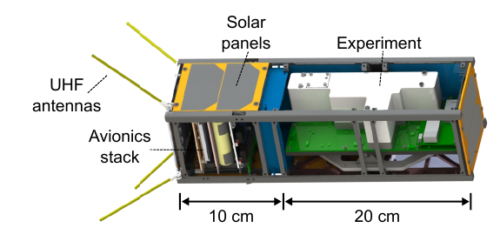
SpooQy-1 cut-away model shows the avionics and location of the  SPEQS-2 polarization-entangled photon-pair experiment. Credits: SpooQy Lab

“At each stage of development, we were actively conscious of the budgets for mass, size and power,” said [lead author Aitor] Villar [of Univ. of Singapore]. “By iterating the design through rapid prototyping and testing, we arrived at a robust, small-form factor package for all the off-shelf components needed for an entangled photon-pair source.”

The new miniaturized photon-pair source consists of a blue laser diode that shines on nonlinear crystals to create pairs of photons. Achieving high-quality entanglement required a complete redesign of the mounts that align the nonlinear crystals with high precision and stability.

** BHUTAN-1 university CubeSat completes second year of operation : BHUTAN-1 orbiting the Earth for two years – KuenselOnline

BHUTAN-1 has been developed by Bhutanese engineers at the Kyushu Institute of Technology as part of their Master’s Degree under the BIRDS-2 Project.

BHUTAN-1 is capable of transmitting two types of data- mission data and housekeeping data. The data is received at the ground station located at the Ministry of Information and Communication compound, Thimphu.

Mission data are camera images captured from space.  Cheki Dorji, engineer with the Division of Telecom and Space (DTS) said that downloading images from the satellite was not feasible since Bhutan-1 satellite could not uplink the data from ground station to space to harness the image. It was the limitation of CubeSat built under the BIRDS-2 project, he said.

However, housekeeping data is transmitted from the satellite every day and studied. The status of the satellite such as its battery, temperature and its parts are known as housekeeping data.

The Deputy Executive Engineer with DTS, Kiran Kumar Pradhan said that although the capability of the satellite was limited, the function of small CubeSat was similar to a bigger satellite which gave them insight on how a bigger satellite works.

An article from when the Cubesat was launched in 2018: BHUTAN-1, Bhutan’s first space borne satellite deployed from ISS on 10 August – The Bhutanese
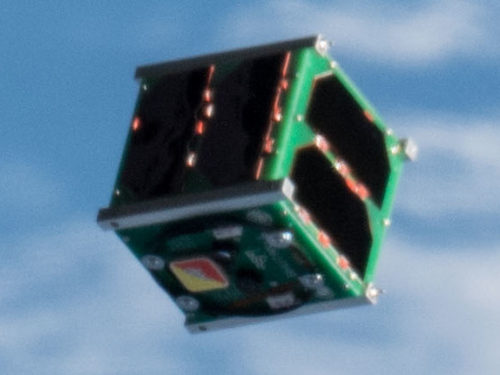
BHUTAN-1 CubeSat. Credits: BIRDS-2 project at Wikipedia.

** AMSAT news on student and amateur CubeSat/smallsat projects:

ANS-180 AMSAT News Service Special Bulletin

  • AMSAT Symposium Proceedings Now Available to AMSAT Members
  • Ham Talk Live Episode on Satellite Etiquette
  • ASEE Presentation on CubeSatSim
  • CAS-6 Becomes TO-108, Added to AMSAT TLE Distribution
  • AMSAT Announces Candidates for 2020 Board of Directors Election
  • ARISS Volunteer VK5ZAI Named Member of the Order of Australia
  • Upcoming Satellite Operations
  • ARISS News
  • Hamfests, Conventions, Maker Faires, and Other Events
  • Satellite Shorts From All Over

ANS-187 AMSAT News Service Weekly Bulletin

  • Successful Launch of BY70-2 With FM-to-Codec2 Transponder
  • AMSAT Responds to Allegations of Unauthorized Legal Expenses
  • New Satellite Distance Records Set
  • VUCC Awards-Endorsements for July 2020
  • Virginia Air and Space Center Discontinues KE4ZXW Demo Station
  • AMSAT 2020 Board of Directors Election Upcoming
  • CAS-6 Becomes TO-108, Added to AMSAT TLE Distribution
  • San Diego Microwave Group Discusses ARISS Possibilities
  • ARISS News
  • Upcoming Satellite Operations
  • Hamfests, Conventions, Maker Faires, and Other Events
  • Satellite Shorts From All Over

General CubeSat/SmallSat info:


=== Amazon Ad ===

Introduction to CubeSat Technology and Subsystem:
Orbit Design, Debris Impact, and Orbital Decay Prediction


“A Day in Space” – July 16, 2020 – National Space Society virtual event

An announcement from the National Space Society (NSS):

A Day in Space – NSS

Join us on July 16, 2020, for a remarkable event: A Day in Space, the first NSS live virtual speakers’ series!

This exciting, one-day virtual event will take you on a journey that begins with the Space Race, explores the solar system, examines the science and technology of human spaceflight, and looks at the future of space settlement. Exclusive bonus material will follow the premiere of A Day in Space. And best of all, it’s entirely FREE!

Guests include NSS leaders, Apollo astronauts and flight directors; engineers and scientists working on NASA’s planetary exploration programs; astrophysicists who search for habitable exoplanets; and educators, physicians, and investors focusing on the business and future of NewSpace and space settlement.

Besides the full-day premium event on July 16, those who sign up for A Day in Space will receive exclusive bonus content released in the following weeks—you can enter your email address at the A Day in Space website, https://adayinspace.nss.org/, to receive updates, bonus content, and a chance to win free books, meteorites and other cool space swag!

A Day in Space will be available across multiple platforms, including:

  • The NSS Facebook page
  • The NSS Youtube channel
  • The e360tv streaming TV network
  • e360tv’s Roku/AppleTV/Amazon Fire platforms
  • e360tv’s mobile streaming platforms
  • Space.com’s Youtube channel

More information can be found at the A Day in Space website, https://adayinspace.nss.org/. The presentation will be archived on the e360tv platform and the NSS Youtube page and website for future viewing.

We’ll see you at A Day in Space on July 16. For more information and to register for updates and prizes go to https://adayinspace.nss.org/

Featuring

=====

=== Space Art from C. Sergent Lindsey ===

Sweatshirt imprinted with “SpaceX Delivers the Goods” by C Sergent Lindsey.

Night sky highlights – July 2020

[ Update:  What’s Up: Skywatching Tips from NASA – NASA Solar System Exploration

What are some skywatching highlights you can see in July 2020? Enjoy the giant planets Jupiter and Saturn with their moons, stay up late to spot Mars rising. Plus: what would you see stargazing on the Red Planet? Additional information about topics covered in this episode of What’s Up, along with still images from the video, and the video transcript, are available at https://solarsystem.nasa.gov/whats-up….

]

** Tonight’s Sky: JulySpace Telescope Science Institute

In July, find the Scorpius constellation to identify the reddish supergiant Antares, which will lead you to discover a trio of globular star clusters. Keep watching for space-based views of these densely packed, spherical collections of ancient stars, as well as three nebulas: the Swan Nebula, the Lagoon Nebula, and the Trifid Nebula.

** What’s in the Night Sky July 2020 #WITNS | Lunar Eclipse | Milky Way | NLCs – Alyn Wallace

** What to see in the night sky: July 2020BBC Sky at Night Magazine

What can you see in the night sky this month? Astronomers Pete Lawrence and Paul Abel reveal their stargazing tips for July 2020.

** July 2020: Rare Astronomical Events (Best Month for Stargazers) –

July is the best month for Stargazers! Watch the video to know why. Music: Stratosphere by Adam Vitovsky

** Skywatch: What’s happening in the heavens in July – The Washington Post

=== Amazon Ad ===

Imagined Life: A Speculative Scientific Journey among the Exoplanets
in Search of Intelligent Aliens, Ice Creatures, and Supergravity Animals

ESO: Massive star vanishes from view

The latest report from the European Southern Observatory (ESO):

A Cosmic Mystery:
ESO Telescope Captures the Disappearance of a Massive Star

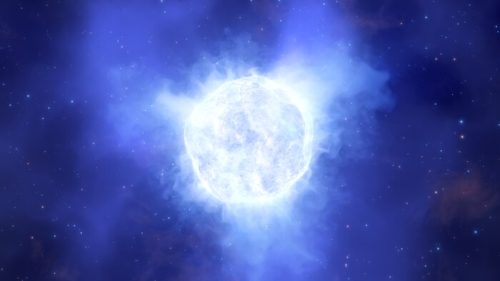
This illustration shows what the luminous blue variable star in the Kinman Dwarf galaxy could have looked like before its mysterious disappearance. Credits: ESO

Using the European Southern Observatory’s Very Large Telescope (VLT), astronomers have discovered the absence of an unstable massive star in a dwarf galaxy. Scientists think this could indicate that the star became less bright and partially obscured by dust. An alternative explanation is that the star collapsed into a black hole without producing a supernova.

“If true,” says team leader and PhD student Andrew Allan of Trinity College Dublin, Ireland, “this would be the first direct detection of such a monster star ending its life in this manner.”

Between 2001 and 2011, various teams of astronomers studied the mysterious massive star, located in the Kinman Dwarf galaxy, and their observations indicated it was in a late stage of its evolution. Allan and his collaborators in Ireland, Chile and the US wanted to find out more about how very massive stars end their lives, and the object in the Kinman Dwarf seemed like the perfect target. But when they pointed ESO’s VLT to the distant galaxy in 2019, they could no longer find the telltale signatures of the star.

Instead, we were surprised to find out that the star had disappeared!” says Allan, who led a study of the star published today in Monthly Notices of the Royal Astronomical Society.

Located some 75 million light-years away in the constellation of Aquarius, the Kinman Dwarf galaxy is too far away for astronomers to see its individual stars, but they can detect the signatures of some of them. From 2001 to 2011, the light from the galaxy consistently showed evidence that it hosted a ‘luminous blue variable’ star some 2.5 million times brighter than the Sun. Stars of this type are unstable, showing occasional dramatic shifts in their spectra and brightness. Even with those shifts, luminous blue variables leave specific traces scientists can identify, but they were absent from the data the team collected in 2019, leaving them to wonder what had happened to the star.

“It would be highly unusual for such a massive star to disappear without producing a bright supernova explosion,” says Allan.

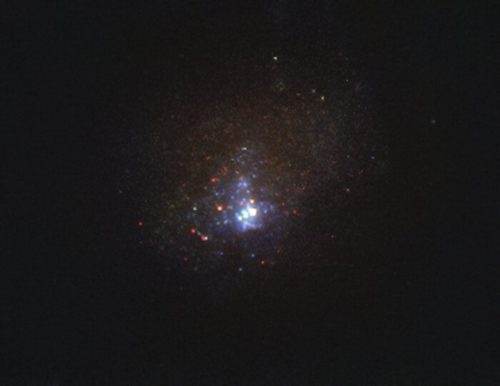
Image of the Kinman Dwarf galaxy, also known as PHL 293B, taken with the NASA/ESA Hubble Space Telescope’s Wide Field Camera 3 in 2011, before the disappearance of the massive star. Located some 75 million light-years away, the galaxy is too far away for astronomers to clearly resolve its individual stars, but in observations done between 2001 and 2011, they detected the signatures of the massive star. These signatures were not present in more recent data. Credits: ESO

The group first turned the ESPRESSO instrument toward the star in August 2019, using the VLT’s four 8-metre telescopes simultaneously. But they were unable to find the signs that previously pointed to the presence of the luminous star. A few months later, the group tried the X-shooter instrument, also on ESO’s VLT, and again found no traces of the star.

“We may have detected one of the most massive stars of the local Universe going gently into the night,” says team-member Jose Groh, also of Trinity College Dublin. “Our discovery would not have been made without using the powerful ESO 8-metre telescopes, their unique instrumentation, and the prompt access to those capabilities following the recent agreement of Ireland to join ESO.” Ireland became an ESO member state in September 2018.

The team then turned to older data collected using X-shooter and the UVES instrument on ESO’s VLT, located in the Chilean Atacama Desert, and telescopes elsewhere.

“The ESO Science Archive Facility enabled us to find and use data of the same object obtained in 2002 and 2009,” says Andrea Mehner, a staff astronomer at ESO in Chile who participated in the study. “The comparison of the 2002 high-resolution UVES spectra with our observations obtained in 2019 with ESO’s newest high-resolution spectrograph ESPRESSO was especially revealing, from both an astronomical and an instrumentation point of view.”

The old data indicated that the star in the Kinman Dwarf could have been undergoing a strong outburst period that likely ended sometime after 2011. Luminous blue variable stars such as this one are prone to experiencing giant outbursts over the course of their life, causing the stars’ rate of mass loss to spike and their luminosity to increase dramatically.

Based on their observations and models, the astronomers have suggested two explanations for the star’s disappearance and lack of a supernova, related to this possible outburst. The outburst may have resulted in the luminous blue variable being transformed into a less luminous star, which could also be partly hidden by dust. Alternatively, the team says the star may have collapsed into a black hole, without producing a supernova explosion. This would be a rare event: our current understanding of how massive stars die points to most of them ending their lives in a supernova.

Future studies are needed to confirm what fate befell this star. Planned to begin operations in 2025, ESO’s Extremely Large Telescope (ELT) will be capable of resolving stars in distant galaxies such as the Kinman Dwarf, helping to solve cosmic mysteries such as this one.

Links

=== Amazon Ad ===

The Demon in the Machine:
How Hidden Webs of Information Are Solving the Mystery of Life


Asteroid Day: June 30, 2020

The annual Asteroid Day returns again this Tuesday, June 30th: Asteroid Day LIVE 2020

Asteroid Day is held on 30 June each year to mark the date of Earth’s largest asteroid impact in recorded history, the Siberia Tunguska event. Asteroid Day was co-founded by astrophysicist and famed musician Dr Brian May of the rock group QUEEN, Apollo 9 astronaut Rusty Schweickart, filmmaker Grig Richters, and B612 Foundation President Danica Remy, to educate the public about the importance of asteroids in our history and the role they play in the solar system. In 2016, with the leadership of the Association of Space Explorers (ASE), the United Nations declared Asteroid Day to be a global day of education to raise awareness and promote knowledge in the general public about asteroids. Major events in past years have taken place in London, San Francisco, Washington, DC, Tanzania, Milan and Rimini, Italy; Garching, Germany; and Rio de Janeiro, Brazil; in addition to thousands of events worldwide.

Asteroid Day’s major partners include: Association of Space Explorers, B612 Foundation, Broadcasting Center Europe, EC GROUP, European Space Agency, Luxembourg Space Agency, OHB SE, and SES. Asteroid Day, Asteroid Day LIVE, Asteroid Day TV and SpaceConnectsUs are all programmes of Asteroid Foundation, a Luxembourg based non-profit.

The day’s Programme of presentations, interviews, and panel discussions will be hosted by Luxembourg and webcast at AsteroidDay on Twitch.TV.

This year, the event is a fully digital celebration of asteroid science and exploration. Panel discussions and one-on-one interviews with astronauts and world experts will be broadcast on 30 June 2020.

Each year Asteroid Day presents the public with a snap-shot of cutting-edge asteroid research from the largest telescopes on Earth to some of the most ambitious space missions. Topics of discussion this year include the acceleration in the rate of our asteroid discoveries and why it is set to accelerate even faster, the imminent arrival of samples from asteroid Ryugu and Bennu, the exciting preparations for the joint US-Europe mission to binary asteroid Didymos, and much more. 

Asteroids are the leftover remnants of the birth of the planets in the Solar System, and many are the shattered fragments of these diminutive proto-planets that never made it to maturity. “Asteroid exploration missions tell us about the birth of our own planet and reveal how asteroids can serve astronauts as stepping stones to Mars,” says Tom Jones, PhD, veteran astronaut and planetary scientist, and Asteroid Day Expert Panel member.

Each asteroid is an individual with its own story to tell. And that’s what Asteroid Day is all about: bringing those stories to the widest audience possible. “Space and science have been an endless source of inspiration for SES! This is one of the reasons why we and our partners continue to do extraordinary things in space to deliver amazing experiences everywhere on earth,” says Ruy Pinto, Chief Technology Officer at SES. “Through satellite broadcasting, we are able to reach millions of TV households and this enables us to unite people around science, space, and technology topics.”

“The valuable expertise of SES and BCE play a central role in making Asteroid Day an international success and enabling us to have a global conversation about space, space resources, and asteroids in these COVID-19 times.” says Mark Serres, the CEO of the Luxembourg Space Agency.

The panel discussions include:

A highlight of this year’s events will be the official premier of the documentary Apollo 9 & Beyond (at Vimeo.com), which profiles Apollo 9 astronaut Rusty Schweickart,  who has been a leader in efforts to deal with the threat of asteroid impacts on Earth:

In this profoundly beautiful and moving film, Apollo 9 Astronaut Rusty Schweickart discusses the Apollo 9 mission, his life-altering spacewalk, and our cosmic birth. Rusty describes testing the Lunar Module, the first true spaceship that would four month later land men on the moon, his historic spacewalk, the first EVA of the Apollo era, and the incredible beauty of the Earth from space.

Beyond the Apollo 9 mission itself, Rusty goes much deeper to explore the philosophical and evolutionary implications of humanity’s first steps into the cosmos, describing the powerful effects of his “five minutes” alone on the Lunar Module porch as he observed the Earth below and pondered the big questions of existence – questions he would come to answer back on Earth.

More at  Apollo 9 and Beyond Film – Rusty Schweickart – Asteroid Day.

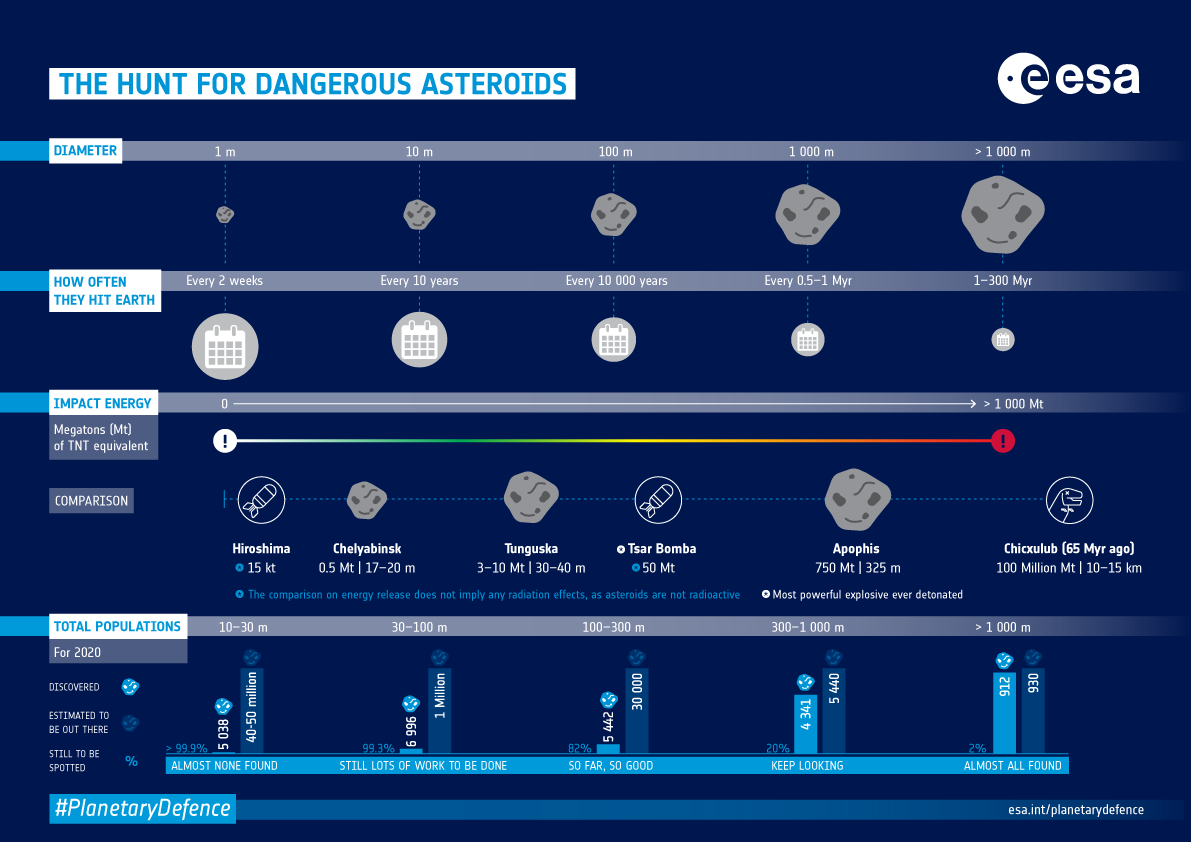
Here is an infographic illustrating the rate of impacts on earth versus the size of the asteroids: Asteroid danger explained – ESA

Chart showing impact rate vs asteroid size. (Click for full size.) Credits: ESA

=== Amazon Ad ===

Fire in the Sky:
Cosmic Collisions, Killer Asteroids, and
the Race to Defend Earth