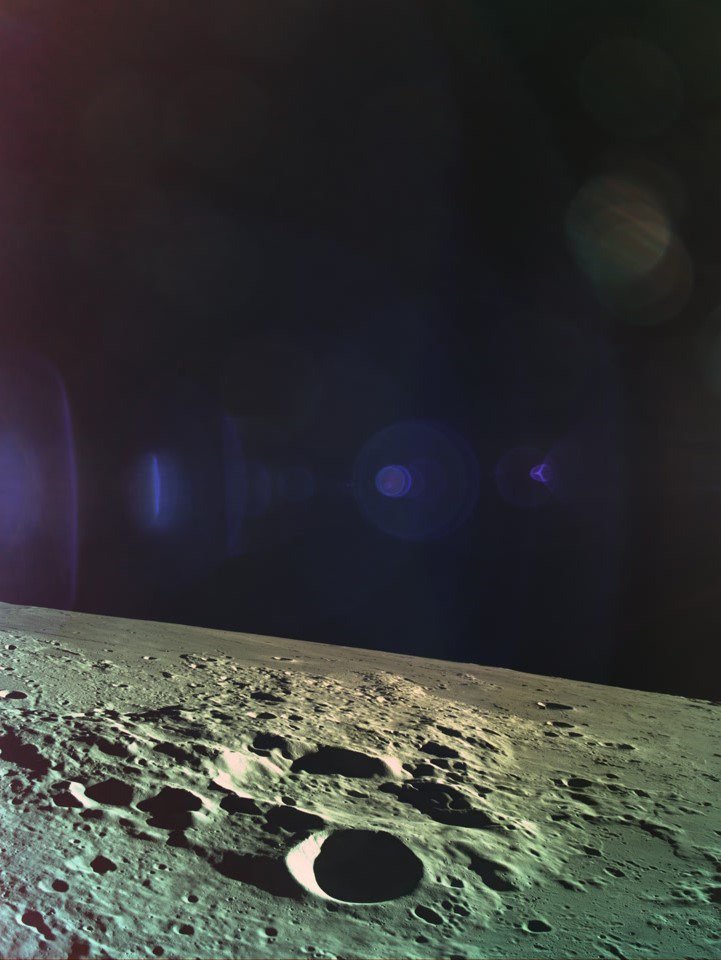
[ Update 2: The final image returned from Beresheet as it came down the lunar surface:
Update 3:30 pm EDT: Unfortunately, Beresheet failed to make a soft landing. The descent was going as planned but then the main engine cut off and could not be restarted before it was too late.
The good news is that a low-cost privately funded and designed lunar project successfully for the first time reached the Moon’s surface after successfully going into lunar orbit, also a first for a private project.
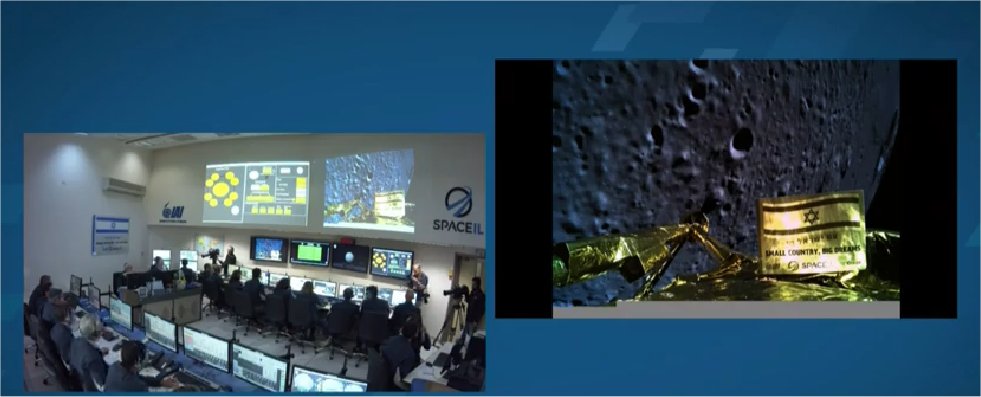
The spacecraft made a selfie made during the descent:
]
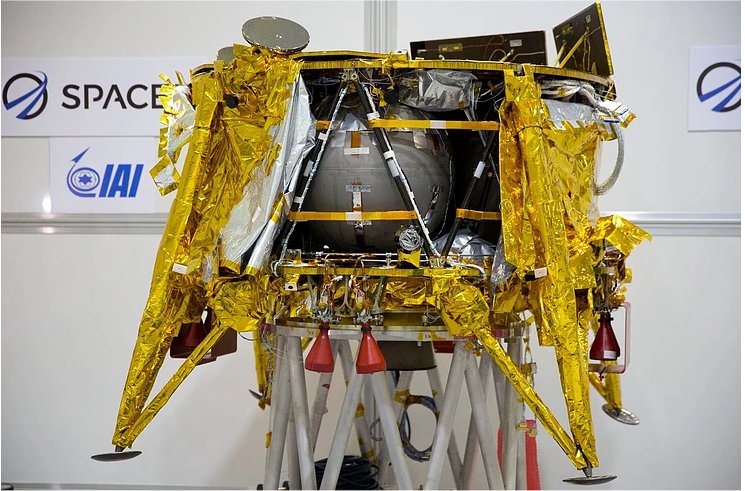
Today Israel’s SpaceIL team plans to send the Beresheet (which translates to “genesis” or “in the beginning”) spacecraft from its orbit around the Moon down to the surface for a soft (we hope) landing. The de-orbit operation will start at 22:05 Israeli time (UTC+03:00) or 04:05 in Tokyo, 05:05 in Sydney,12:05 in Los Angeles, 14:05 in Mexico City, 15:05 in New York, 16:05 in Rio, 20:05 in London, 21:05 in Paris. The landing should happen about 20 minutes later.
A live webcast of the landing will begin about 20 minutes before de-orbiting begins:
SpaceIL‘s Beresheet lunar spacecraft successfully fired its engine to extend its orbit to the Moon:
🌗 Moon Travel Report #6 🌗
Another successful maneuver! The engine was activated for 60 sec & all systems are functioning👍🏽. #Beresheet is on an elliptical orbit, will meet the #moon – the furthest point from #Earth: 405,000 k”m. #IsraelToTheMoon@ILAerospaceIAI@ILSpaceAgency
This diagram shows the change in the orbit with the 20.3.2019 burn:
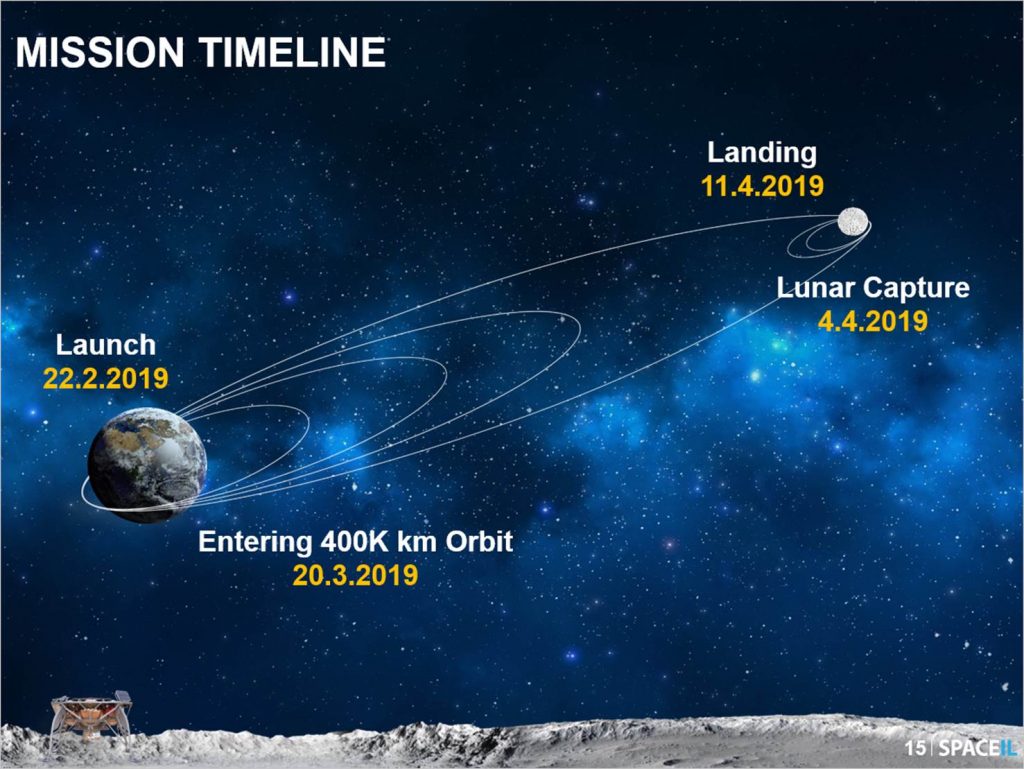
A graphic timeline of the major events in the Beresheet mission.
When the spacecraft’s orbit reaches the Moon on April 4th, another firing of the engine will slow the vehicle down sufficiently to put it into a highly elliptical orbit around the Moon. After several orbits, another burn will circularize the orbit. Finally, on April 11th the engine will fire to slow the vehicle such that it falls towards the surface. At 5 meters above the lunar ground, the engine will cut off and the Moon’s low gravity will pull the spacecraft slowly down to the surface.
SpaceIL founder Yonatan Winetraub gives the basics of how the spacecraft’s engine firings get it to the Moon:
This video shows the full sequence of orbital maneuvers from launch to landing:
SpaceIL is a non-profit volunteer organization in Israel that began a quest for the Moon as an entrant in the Google Lunar XPRIZE. Thought the GLXP ended last year without a winner, SpaceIL raised sufficient funds to continue with development of the spacecraft and to buy a secondary payload ride on the SpaceX Falcon 9 that launched in February.
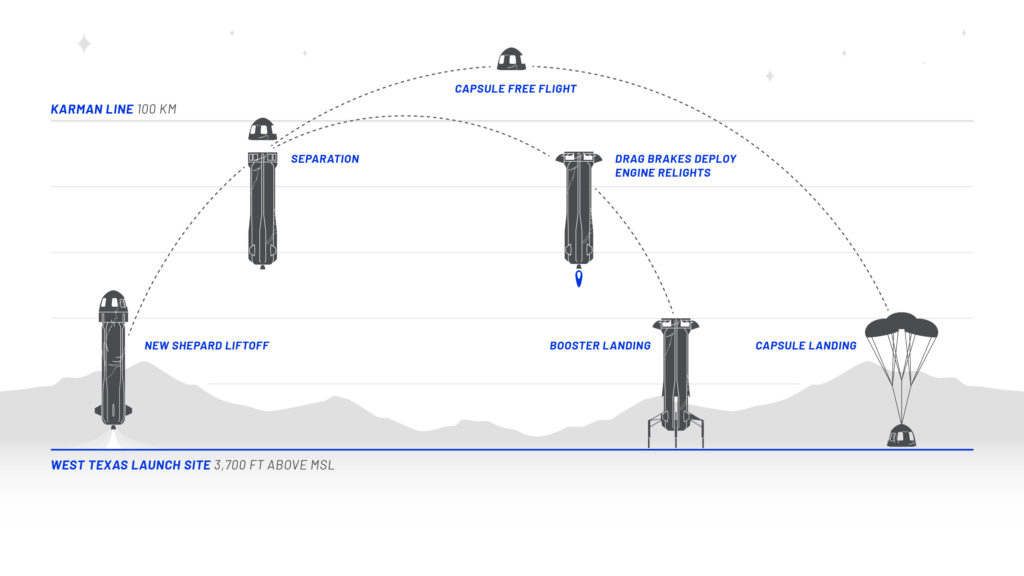
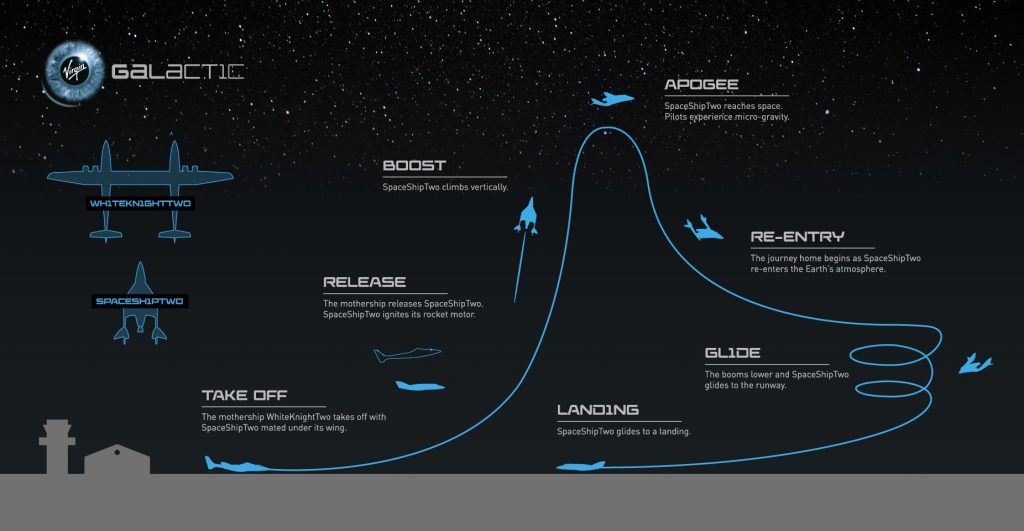
** Suborbital space tourism should finally get underway this year as Blue Origin and Virgin Galactic expect to begin taking “spaceflight participants” to the edge of space and back after they complete the remaining test flights:
George Whitesides wants participants to unbuckle and experience weightlessness as well as a marvelous view of the earth:
Such experiences, of course, don’t come cheap with the price tag at around US$250,000 per trip. From take-off to the return landing will take 90 minutes, and passengers are likely to be at zero gravity for just five minutes. “There will be a section of the flight when passengers will be able to unbuckle their seatbelts and float around, and people can look down on to planet Earth and out into space,” he adds.
The SpaceShipTwo rocketplane is operated by two pilots and can carry up to 6 passengers to an altitude over 90 kilometers.
** Orbital space tourism will resume soon. Visits to the ISS by paying customers were suspended nearly a decade ago due to the disappearance of spare seats in Russian Soyuz spacecraft. All the Soyuz seats were needed for transporting new crew members to the station following the end of the Space Shuttle program. Now with the SpaceX Crew Dragon and the Boeing CST-100 Starliner about to start taking people to the ISS, there will be a several opportunities for paying customers to go to the station each year.
State Space Corporation “Roscosmos” and Space Adventures, Inc. signed a contract for the implementation of the short duration space flight of two spaceflight participants on board the same “Soyuz” spacecraft to the Russian segment of the International Space Station. The flight is scheduled to launch in late 2021.
Roscosmos and Space Adventures have been cooperating in space tourism since 2001, when the first space tourist – Dennis Tito – flew on orbit. In total, seven people have visited the space station in the frame of space tourism program with Charles Simonyi visiting the ISS twice.
“Over the last 18 years, our partnership has provided the opportunity for non-professionals to experience life in space. Our clients have spent in total close to three months in space and traveled over 36 million miles,” said Eric Anderson, Chairman and CEO of Space Adventures, Inc. “We look forward to continuing to work with Roscosmos in the pursuit of opening the space frontier to all.”
Until now, it has been fairly easy to call men and women who have gone to space astronauts (or cosmonauts in Russia, and taikonauts in China). About 560 humans have gone to space, nearly all of them into orbit, and a lucky two dozen have gone beyond. Twelve have walked on the Moon.
In 2004, the private SpaceShipOne venture clouded the picture a little bit by making a private suborbital flight. The pilots, Mike Melvill and Brian Binnie, had not trained as government astronauts, so the US Federal Aviation Administration created a new designation for them—commercial astronauts. Since then, the five crew members of Virgin Galactic’s VSS Unity flights in December and February have also earned that designation. But the FAA will only recognize “crew,” not passengers.
For now, there remains no official word on what to call non-crew members. Are they astronauts, too? Space passengers? Astro-nots? In the hopes of finding a consensus, we put that precise question to the companies, some bonafide NASA astronauts, and some experts in the aerospace community.
Space has it all. Circular mountain ranges! Metallic asteroids! Geysers of sulfur! Oceans on a steady boil! It may just be the ultimate vacation destination. But how do you pack for the moon? What are you looking at for lodging? Will you get carsick in a rocket? In the era of space tourism, these are things you need to know.
So here’s the first thing: They call it “The Overview Effect.” It’s what happens when you see the Earth from space, all you’ve ever known just a glittering orb in the cosmic emptiness. Your sense of humanity grows. Your perception shifts. You are forever changed.
Sounds kind of scary. But then, isn’t it exactly why we travel?
** Public response to space tourism has always been robust even when such trips for the public were not feasible:
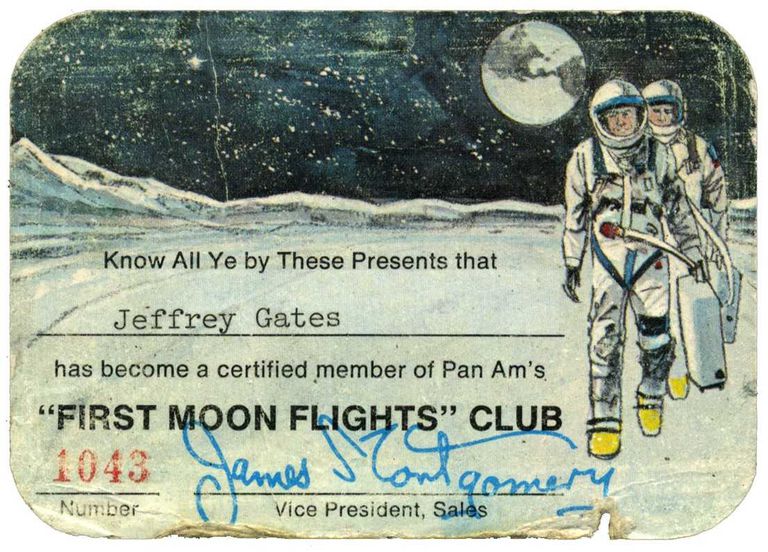
In other words, everything was in place for Pan Am’s moon mania. Pistor’s initial moon-flight booking spawned a craze that would ultimately see Pan Am field 100,000 moon reservation requests under its First Moon Flights Club, which finally closed in 1971. All members were given cards with a number—an indication of one’s place on the ever-growing queue of layman astronauts.
The StarHopper is a low altitude suborbital test vehicle, with nearly the same dimensions as the StarShip, that the company will use to master the vertical takeoff and landing techniques needed to operate the massive reusable StarShip upper stage.
This week we bring on Dr. Tamitha Skov to talk about Space Weather and it’s impact on your daily life. We also go over how she got started and her journey to becoming the Space Weather Woman.
The previous show dealt with the Asgardia space nation project:
This week we welcome on Lena De Winne, the Deputy Head of Administration of Asgardia to talk about what Asgardia is, what they hope to accomplish and how they will get there. Asgardia is the first Space Nation and you can get more information at asgardia.space.
Flight Follows December’s Fourth Rocket-Powered Flight and First Space Flight
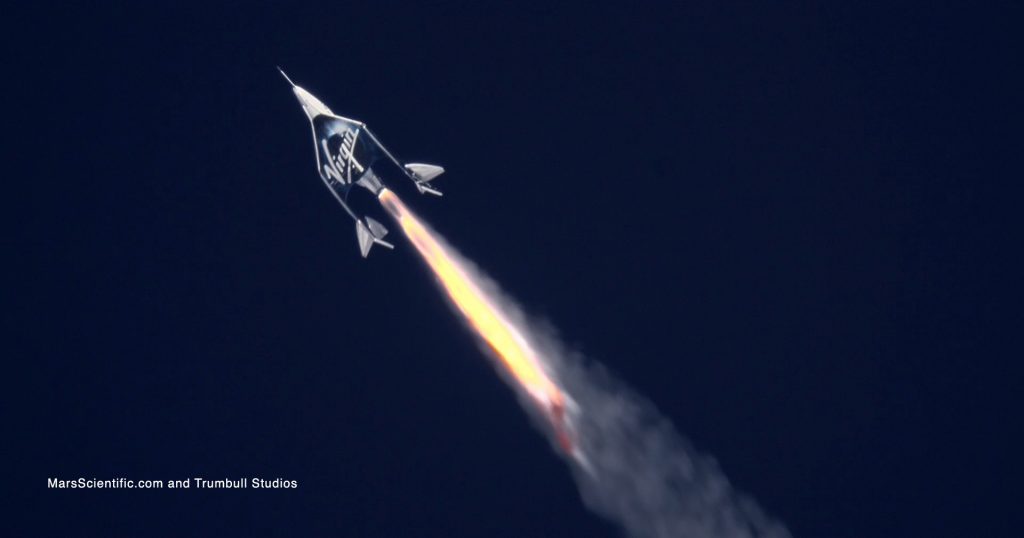
Mojave, California, USA (22 Feb 2019): Today, Virgin Galactic conducted its fifth powered test flight and second space flight of its commercial SpaceShipTwo, VSS Unity. Please find reporting materials below for news coverage and multimedia reporting.
[ Update: Will add new media here as it becomes available.
B-roll & Images: Getty Press FTP: https://www.image.net/virgingalactic Please visit periodically throughout the day and week for updates and additional test flight content.
News of the day and Richard Branson reaction quotes, per full copy below. Available for immediate use. Please cite original source: Virgin Galactic.
In its fifth supersonic rocket powered test flight, Virgin Galactic reached space for the second time today in the skies above Mojave CA. Spaceship VSS Unity reached its highest speed and altitude to date and, for the first time, carried a third crew member on board along with research payloads from the NASA Flight Opportunities program.
Virgin Galactic Makes Space for Second Time in Ten Weeks with Three On Board
This space flight means Chief Pilot Dave Mackay and co-pilot Michael “Sooch” Masucci become commercial astronauts and the 569th and 570th humans in space. Beth Moses, Virgin Galactic’s Chief Astronaut Instructor, flew as the third crew member in a first, live evaluation of cabin dynamics. She is the 571st person to fly to space and the first woman to fly on board a commercial spaceship.
In addition to this element of envelope expansion, VSS Unity flew higher and faster than ever before, as its world record-holding hybrid rocket motor propelled the spaceship at Mach 3.04 to an apogee of 295,007ft.
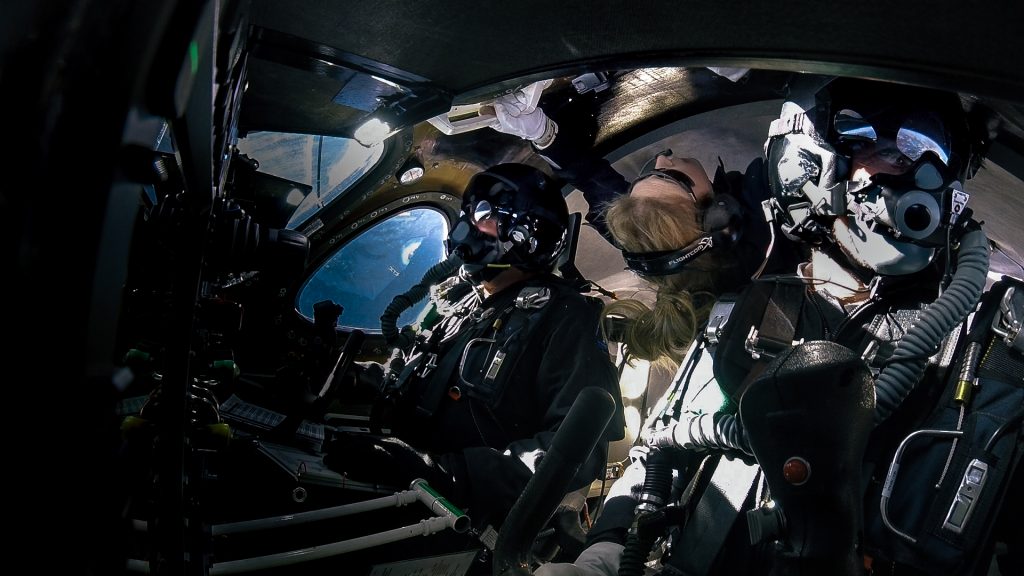
Beth Moses unbuckles and floats inside SS2.
The crew enjoyed extraordinary views of Earth from the black skies of space and, during several minutes of weightlessness while the pilots “feathered” the spaceship in preparation for a Mach 2.7 re-entry, Beth floated free to complete a number of cabin evaluation test points. The human validation of data previously collected via sensors, and the live testing of other physical elements of the cabin interior, are fundamental to the provision of a safe but enjoyable customer experience.
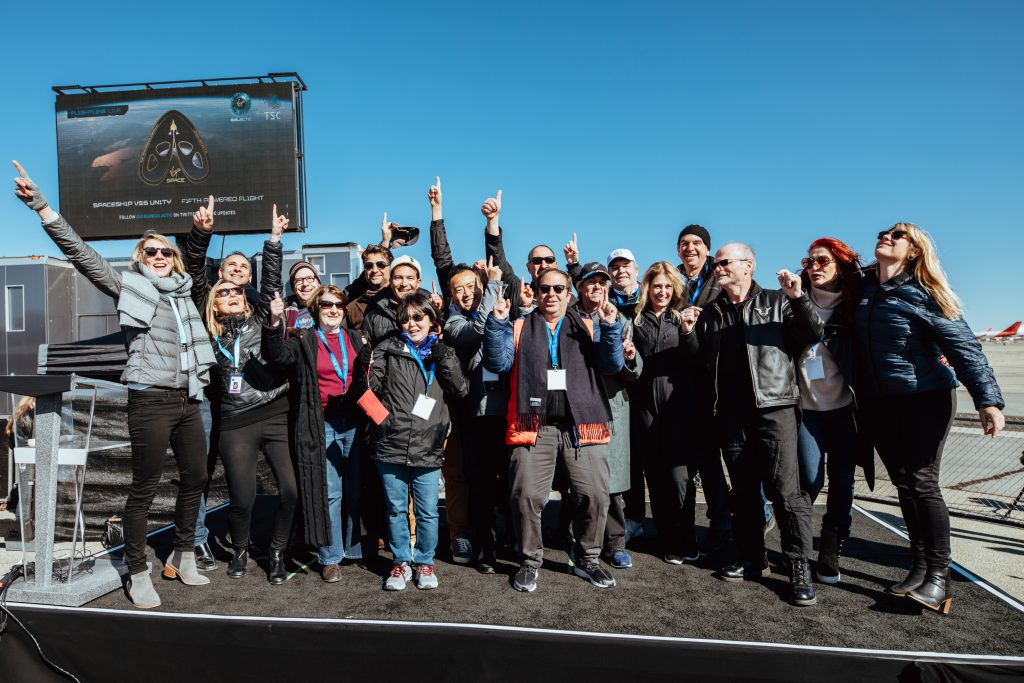
The glide back home was followed by a smooth runway landing and a rapturous reception from the crowd on the flight line, which included staff and some of Virgin Galactic’s 600 Future Astronaut customers.
Chief Pilot Dave Mackay, a born and bred Scotsman as well as an ex-RAF test pilot and Virgin Atlantic Captain, led his crew of newly qualified astronauts from VSS Unity accompanied by a kilted piper.
Post flight celebration.
Today’s flight notched several additional firsts for the industry: The flight was the first time that a non-pilot flew on board a commercial spaceship to space, and it was the first time that a crew member floated freely without restraints in weightlessness in space onboard a commercial spaceship; it was the first time that three people flew to space on a commercial spaceship, and Dave Mackay became the first Scottish-born astronaut (Brian Binnie, who was raised in Scotland, flew to space in 2004).
Addressing colleagues and guests Dave said:
“Beth, Sooch and I just enjoyed a pretty amazing flight which was beyond anything any of us has ever experienced. It was thrilling yet smooth and nicely controlled throughout with a view at the top, of the Earth from space, which exceeded all our expectations. I am incredibly proud of my crew and of the amazing teams at Virgin Galactic and The Spaceship Company for providing a vehicle and an operation which means we can fly confidently and safely. For the three of us today this was the fulfillment of lifelong ambitions, but paradoxically is also just the beginning of an adventure which we can’t wait to share with thousands of others.”
Sir Richard Branson said:
“Flying the same vehicle safely to space and back twice in a little over two months, while at the same time expanding the flight envelope, is testament to the unique capability we have built up within the Virgin Galactic and The Spaceship Company organizations. I am immensely proud of everyone involved. Having Beth fly in the cabin today, starting to ensure that our customer journey is as flawless as the spaceship itself, brings a huge sense of anticipation and excitement to all of us here who are looking forward to experiencing space for ourselves. The next few months promise to be the most thrilling yet”