1. Monday, June 9, 2014, 2-3:30 PM PDT(5-6:30 PM EDT, 4-5:30 PM CDT): RAND SIMBERG returns to discuss Russia, NASA, the ISS, sanctions, & his recent book.
2. Tuesday, June 10, 2014:, 7-8:30 PM PDT (10-11:30 PM EDT, 9-10:30 PM CDT): We welcome FRANK VAN RENSSELEAR of Schafer Corp. Our guest is the SVP for Aerospace and Strategic Business Development.
3. Friday, June 13, 2014, 9:30 AM-11 AM PDT (12:30-2 PM EDT; 11:30 AM-1 PM CDT): We welcome back ED WRIGHT who has new information for us and will be discussing The United States Rocket Academy and Citizens in Space.
TheISEE-3 Reboot Project(see the recent post ISEE-3 Reboot Project takes command of the spacecraft) continues to make progress in the effort to resurrect and re-target NASA’s International Sun-Earth Explorer (ISEE-3) spacecraft, launched in 1978 to study the earth’s magnetosphere but re-targeted to study two comets. the Reboot Project will try to return the spacecraft to its original job.
A group picture of all the teams at the Mars Society’s Mars Desert Research Station in Utah where the competition took place:
From the Mars Society post:
From an initial field of 31, 23 rovers from six countries descended upon the Mars Society’s Mars Desert Research Station (MDRS) in remote southern Utah for the 2014 University Rover Challenge(URC). Over the course of a grueling three day competition, student teams and their robotic creations had to complete a series of complex tasks in a Mars-like setting, providing a glimpse at the technology that could one day support future astronauts on the Red Planet.
In the end, Team Hyperion from the Bialystok University of Technology (Poland) walked away with the top spot, earning a total of 368 points (out of 500 possible). The victory was the second consecutive for the Hyperion team. Their rover impressed judges and left the competition behind, in large part due to its overall reliability which scored high marks in each event.
The Mars Rover Design Team from the Missouri University of Science & Technology (USA) took second place with 342 points, while the Legendary Rover Team from Rzeszow University of Technology (Poland) finished close behind in third place with 338 points.
The BYU Mars Rover Team from Brigham Young University (USA) came in fourth place and also received the first ever Judges’ Award for the Most Innovative Design. This was awarded in recognition of the team’s novel suspension system that utilized custom Kevlar suspension springs. “Each of the teams on the podium demonstrated remarkable ingenuity, skill and teamwork,” said Kevin Sloan, Director of URC. “Their passion for their work was evident in their rovers and was emblematic of the passion all of the teams had on display this year.” URC is the world’s premier robotics competition for college students, placing them in a stunning and expansive setting faced with myriad challenges that span multiple fields of study. URC is hosted by the Mars Society, the world’s largest space advocacy group dedicated to the human exploration and settlement of the Red Planet, and is sponsored by the IEEE Robotics and Automation Society (IEEE RAS) and the Louis L. Stott Foundation. URC 2014 had the largest field of student teams of any previous competition, more than doubling last year’s record of ten teams. Through eight years of the event, URC has engaged 100 teams and more than 1,000 students from across the globe. URC was founded on the principle of challenging ambitious students with ambitious goals and providing students with a world class project experience in a unique environment.
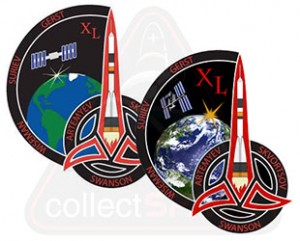 Two designs by Steven Swanson and his daughter Caroline.