Space policy roundup – Nov.8.13

Some space policy/politics related items

Copenhagen Suborbitals: Breitling award ceremony + Slashdot video interview

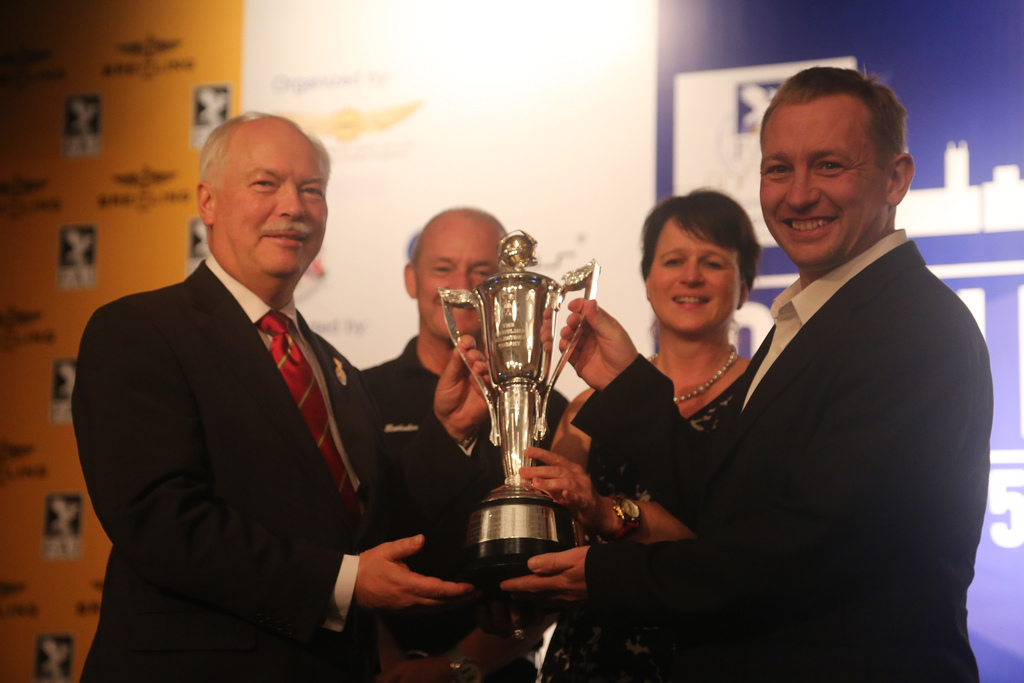
Peter Madsen of Copenhagen Suborbitals was presented the Breitling Milestone Trophy from the FAI (Fédération Aéronautique Internationale or  World Air Sports Federation) at the 2013 FAI Awards Ceremony held in Kuala Lumpur, Malaysia this week.

FAIBrietlingAward

===

Kristian von Bengtson of CS was interviewed by Timothy Lord for Slashdot this week: Slashdot Video Chat About Copenhagen Suborbitals – Wired Science


Copenhagen Suborbitals: HEAT2X rocket, TDS-80 capsule, and interning

Kristian von Bengtson of Copenhagen Suborbitals had a couple of items out today at Wired. One is about opportunities for interns with the organization: Interning at Copenhagen Suborbitals – Wired Science.

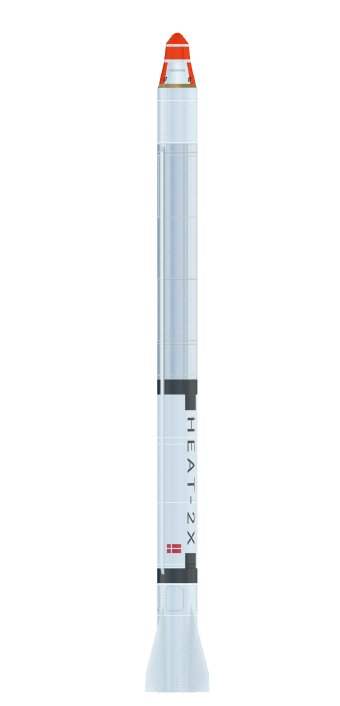
The other is about the work going on with the development of the HEAT2X rocket and the TDS-80 capsule, which they aim to fly next summer: Copenhagen Suborbitals Aims for Space Shot 2014 – Download Preliminary Simulation Data – Wired Science

HEAT2X

More details about the systems are available in these docs:

Winners announced for Philip K. Dick European Science Fiction Film Festival


The Philip K. Dick European Science Fiction Film Festival
Announces Award Winners for First International Event
Numerous Films Take Home Coveted Honors In Groundbreaking Three-Day France Gathering

Brooklyn, N.Y. November 5, 2013 – The Philip K. Dick European Science Fiction Film Festival has announced the award winners from its first international event which honored one of the most respected writers within the literary world. The three-day experience was one of the most popular weekend events and marked  the first of many worldwide gatherings in the beautiful and historic Lille, France. Huge crowds attended the famous L’Hybride Cinema to view 20 revolutionary films and shorts which were adapted or inspired from the works of Philip K. Dick and entertained and enthralled the innumerable fans who have continued to honor his enduring legacy within the genre of science fiction.
The honorable list of award winners from the event:

Best Horror Feature Film
THANATOMORPHOSE
by ÉRIC FALARDEAU

Best Philip K. Dick Short Film
UN MONDE MEILLEUR
by SACHA FEINER

Best Science Fiction Short Film
EXIT
by MICHEL GOOSSENS

Best Horror Short Film
HAMBRE
by MARIO DE LA CORTE

Best Documentary
NO RELATION
by KIERAN DICK

Best Trailer
NACH EINEM TRAUM
by TOBIAS SCHMUEKING

The inaugural international festival in Lille, France launched with the highly anticipated screening of Radio Free Albemuth (2010) on Friday, October 25. Written and directed by John Alan Simon the award-winning film adaptation of Dick’s final novel stars Jonathan Scarfe (“Perception”), Shea Whigham (“Boardwalk Empire”), Katheryn Winnick (“Bones”) and Grammy Award-winning singer Alanis Morissette. The evening featured a science fiction theme with shorts including Evander Reeves’ L’Esplanade (2012, France/USA), Jonathan Rio’s Meddlers (2011, France), Rafael Mathé’s Hello World (2013, France), Kieran Dick’s No Relation (2011, Canada) and Greg Tosolini’s Singularity (2013, France). The following night on Saturday, October 26 took on a horror supernatural theme with Thanatomorphose (2012, Canada). Written and directed by Éric Falardeau the film stars Émile Beaudry, Eryka Cantieri and Roch-Denis Gagnon. The evening also featured Mario de la Corte’s Hambre (2012, Spain), Tobias Schmuecking’s Nach Einem Traum (2013, Germany), Migdia Chinea’s Anonymous (Street Meat) (2010, USA) and Tiyam Yabandeh Jahroumi’s Impression-xps160 (2013, Iran). On Sunday, October 27 the event concluded with Sacha Feiner’s Un Monde Meilleur (2013, Belgium), Jose Manuel Meneses’ Defeated (2012, Spain), Natalie Berning’s Breathe (2012, France/USA), Olivier Perrier’s L’échappée (2013, France), Fabien Montagner’s Le Passage (2011, France), Michel Goossens’ Exit (2013, Spain/Netherlands), Helmut Dosantos’ Dissent (2011, France/Italy/Mexico/USA), Keaton Smith’s Years In Bardo (2012, USA) and Yann Sinic’s La Cité du Soleil (2013, France).

As festival ventured and succeeded in its first global outing the first New York City gathering in 2012 saw record crowds of over 1,000 participants for the exclusive screening of Radio Free Albemuth which was based on Dick’s 1985 novel posthumously published three years after his death. The weekend-long festival also held numerous film screenings and panels with Simon, esteemed professors Ronald Mallet and Enrique Ricardo Miranda, distinguished writers Angela Posada-Swafford, Walter Mosley and Dennis Paoli and science fiction experts Richard Dolan and Peter Robbins. The team behind the annual festivities will also pioneer its second annual Brooklyn event in December 2013 for a record five-day gathering and a Spring 2014 cyberpunk festival in Tokyo.

The Philip K. Dick European Festival of Science Fiction, Science, The Fantastic, Horror and The Supernatural will delight its attendees with its entertaining and visually captivating themes which have made the event a favorable and continued success. The event took place at L’Hybride Cinema at 18 Rue Gosselet 59000 in Lille, France from October 25-27, 2013. Contact the venue at www.lhybride.org. For more information please visit www.philipkdickfilmfestival-europe.com and always be sure to stay informed of all ongoing announcements on the festival’s Facebook page at www.facebook.com/ThePhilipKDickFilmFestival and Twitter page at www.twitter.com/PhilipKDickFest.
Hubble sees multiple comet-like tails on an object in asteroid belt

An oddball object on an asteroid-like orbit has multiple comet-like tails:

When is a comet not a comet? 

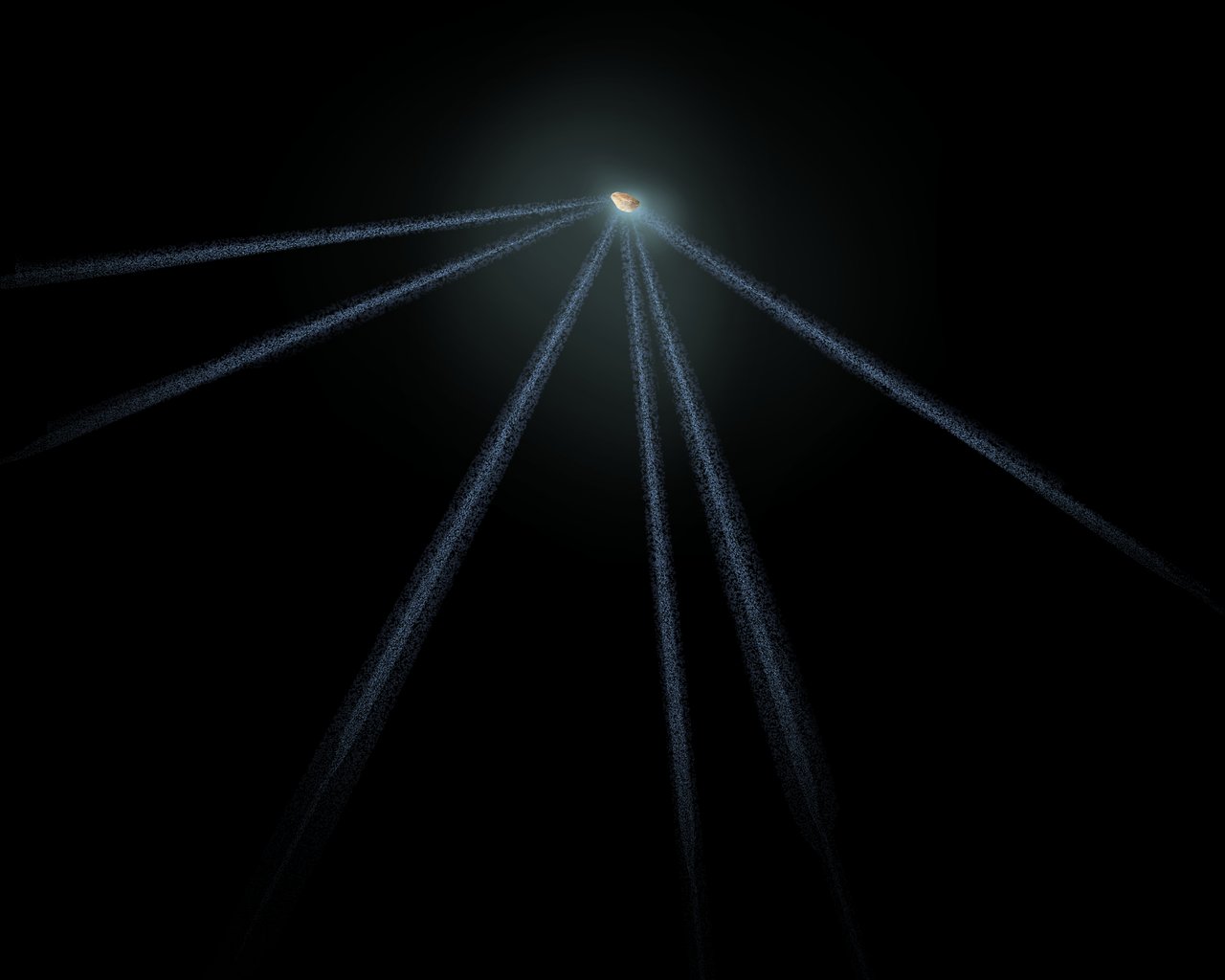
Astronomers using the NASA/ESA Hubble Space Telescope have observed a unique and baffling object in the asteroid belt that looks like a rotating lawn sprinkler or badminton shuttlecock. While this object is on an asteroid-like orbit, it looks like a comet, and is sending out tails of dust into space.

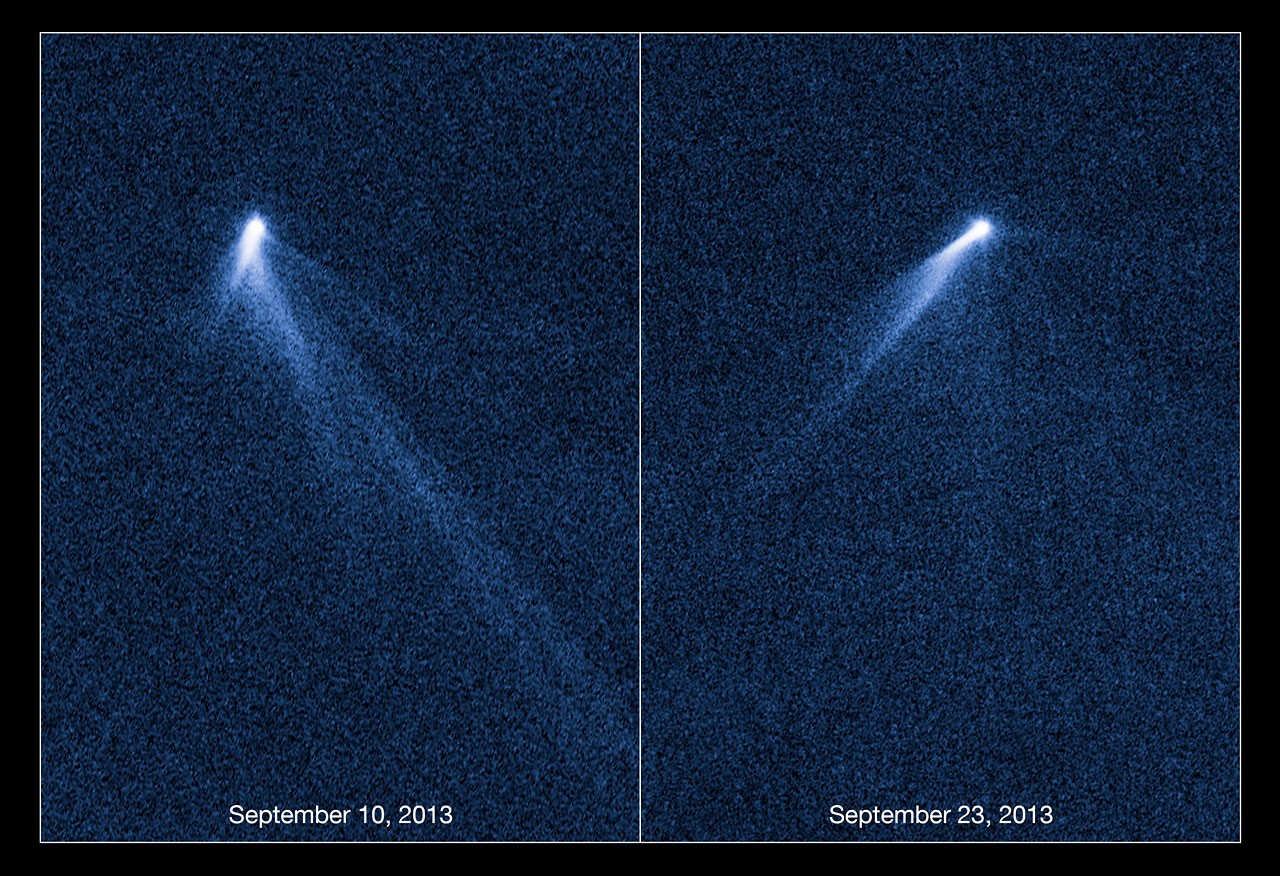
Normal asteroids appear as tiny points of light. But this asteroid, designated P/2013 P5, has six comet-like tails of dust radiating from it like the spokes on a wheel. It was first spotted in August of this year as an unusually fuzzy-looking object by astronomers using the Pan-STARRS 1 telescope in Hawaii [1].

Hubble views extraordinary multi-tailed asteroid P/2013 P5Hubble views extraordinary multi-tailed asteroid P/2013 P5 | ESA/Hubble
(Click to Enlarge)

Because nothing like this has ever been seen before, astronomers are scratching their heads to find an adequate explanation for its mysterious appearance.

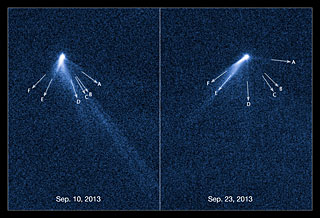
The multiple tails were discovered in Hubble images taken on 10 September 2013. When Hubble returned to the asteroid on 23 September, its appearance had totally changed. It looked as if the entire structure had swung around.

We were literally dumbfounded when we saw it,” said lead investigator David Jewitt of the University of California at Los Angeles, USA. “Even more amazingly, its tail structures change dramatically in just 13 days as it belches out dust. That also caught us by surprise. It’s hard to believe we’re looking at an asteroid.

Labelled view of extraordinary multi-tailed asteroid P/2013 P5
Labelled view of extraordinary multi-tailed asteroid P/2013 P5 | ESA/Hubble
 (Click to Enlarge)

One explanation for the odd appearance is that the asteroid’s rotation rate increased to the point where its surface started flying apart, ejecting dust in episodic eruptions that started last spring. The team rules out an asteroid impact because a lot of dust would have been blasted into space all at once, whereas P5 has ejected dust intermittently over a period of at least five months [2].

Careful modelling by team member Jessica Agarwal of the Max Planck Institute for Solar System Research in Lindau, Germany, showed that the tails could have been formed by a series of impulsive dust-ejection events [3]. Radiation pressure from the Sun smears out the dust into streamers. “Given our observations and modelling, we infer that P/2013 P5 might be losing dust as it rotates at high speed,” says Agarwal. “The Sun then drags this dust into the distinct tails we’re seeing.

The asteroid could possibly have been spun up to a high speed as pressure from the Sun’s light exerted a torque on the body. If the asteroid’s spin rate became fast enough, Jewitt said, the asteroid’s weak gravity would no longer be able to hold it together. Dust might avalanche down towards the equator, and maybe shatter and fall off, eventually drifting into space to make a tail. So far, only a small fraction of the main mass, perhaps 100 to 1000 tonnes of dust, has been lost. The asteroid is thousands of times more massive, with a radius of up to 240 metres.

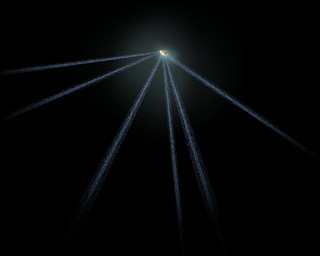
Schematic of active asteroid P/2013 P5Schematic of active asteroid P/2013 P5 | ESA/Hubble 
(Click to Enlarge)

Follow-up observations may show whether the dust leaves the asteroid in the equatorial plane, which would be quite strong evidence for a rotational breakup. Astronomers will also try to measure the asteroid’s true spin rate.

Jewitt’s interpretation implies that rotational breakup may be a common phenomenon in the asteroid belt; it may even be the main way in which small asteroids “die” [4]. “In astronomy, where you find one, you eventually find a whole bunch more,” Jewitt said. “This is just an amazing object to us, and almost certainly the first of many more to come.

The paper from Jewitt’s team appears online in the 7 November issue of The Astrophysical Journal Letters.