Category Archives: Rockets

Space access roundup – Feb.1.2019

A sampling of items about space transport projects:

** Virgin Orbit Payload Processing – The latest video from VO “gives you an inside look at how we take care of our payloads once they’re delivered to our front door in Long Beach”:

** ABL Space Systems smallsat launcher design has been modified and the price lowered: ABL Space Systems increases performance and cuts price of its small launch vehicle – SpaceNews.com

[ABL] is offering an upgraded version of the RS1 rocket at a price of $12 million a launch, down from an earlier price of $17 million. The vehicle’s performance has been increased from 900 to 1,200 kilograms to low Earth orbit.

Company executives say the change in performance and cost comes after a year and a half of work to refine the design of the vehicle and better understand what it would take to produce the vehicle.
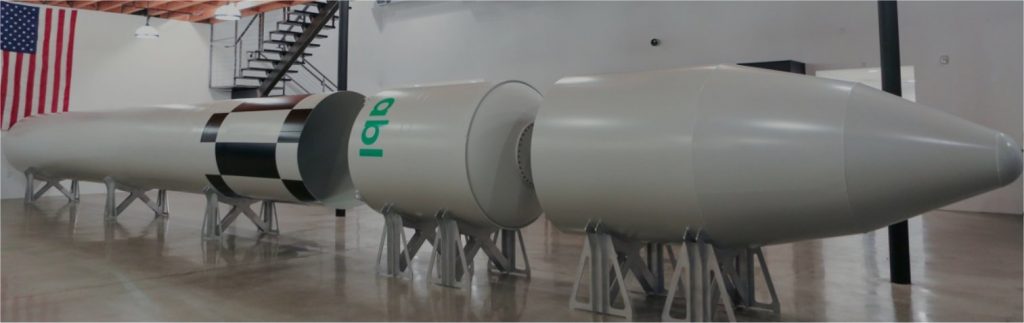
Prototoype of the ABL Space Systems RS1 rocket

** Copenhagen Suborbitals presents the non-profit volunteer project’s “next generation of rocket engines, the BMP100, which will propel our manned Spica rocket above the edge of space. Here we discuss our current progress on the engine design after our initial design project called BPM100 in 100 days.”

** Blue Origin New Glenn, which is to start flying in 2021, gets another customer: Blue Origin to Launch Telesat’s Advanced Global LEO Satellite Constellation – Blue Origin

Blue Origin is honored that Telesat has selected our powerful New Glenn rocket to launch Telesat’s innovative LEO satellite constellation into space. We are excited to be partnering with this industry leader on their disruptive satellite network architecture. New Glenn’s 7-meter fairing, with its huge mass and volume capabilities, is a perfect match for Telesat’s constellation plans while reducing launch costs per satellite.

** ULA Atlas V to launch NASA asteroid mission – ULA wins contract to launch NASA’s Lucy mission to visit unexplored asteroids – Spaceflight Now

The launch contract is valued at $148.3 million, a figure that includes the launch service and other mission-related costs, according to NASA.

ULA said NASA selected the Atlas 5 rocket after a “competitive launch service task order evaluation” by the space agency’s Launch Services Program. ULA’s Atlas 5 and Delta 4 rockets are certified to launch NASA’s robotic interplanetary science missions, alongside SpaceX’s Falcon 9 launcher. Both companies are expected to submit bids for each task order competition managed the Launch Services Program.

** SpaceX:

**** A nose-cone fairing “catch” comes tantalizingly close to success:

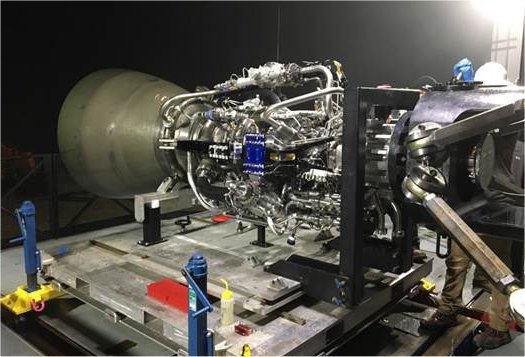
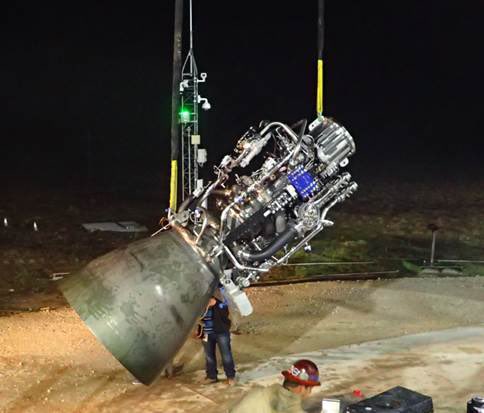
**** New photos of the first operational Raptor engine, which will be test fired at the company’s McGregor, Texas facility:

More on Elon’s latest comments on the

**** New photos from Boca Chica Beach

**** Rocketing from composites to steel – Tim Dodd, the Everyday Astronaut, explains Elon’s rationale for changing the structure of the Super Heavy booster and Starship: from carbon composites to stainless steel:

Here’s another view of the change:

**** A report on SpaceX’s crew transport:

** For more space transport news, see Rocket Report: Secret CIA smallsat launcher, Falcon 9 test, Soyuz passes 50 | Ars Technica.

====

Telescopes and Binoculars at Amazon

Space access roundup – Jan.29.2019

A sampling of items regarding rockets, spaceships, etc:

** China’s Long March 5, the country’s largest heavy lift rocket, is set to launch again this year : China Plans Return-to-Flight of Long March-5 Booster – LeonardDavid.com

An essential launcher for China’s future space station and Moon exploration plans is being readied for a July flight.

The third Long March-5 takeoff follows a mishap of this booster-class on July 2, 2017. An intensive investigation was carried out to identify why the rocket failed less than six minutes after liftoff.

China’s Xinhua news agency reports that Yang Baohua, vice president of the China Aerospace Science and Technology Corporation (CASC), that the cause of the failure had been found.

2019 will be another busy launch year for China: China will attempt 30-plus launches in 2019, including crucial Long March 5 missions – SpaceNews.com.

And Chinese commercial launch companies are ramping up as well: Chinese companies OneSpace and iSpace are preparing for first orbital launches – SpaceNews.com.

** The USAF’s X-37 reusable spaceplane is still in orbit after nearly a year and a half: U.S. Air Force Space Plane Wings Past 500 days of Earth Orbiting – LeonardDavid.com

The secretive mission of a U.S. Air Force X-37B mini-space plane has winged past 500 days of flight. This robotic drone is performing classified duties during the program’s fifth flight.

This mission – tagged as Orbital Test Vehicle (OTV-5) — was rocketed into Earth orbit on September 7, 2017 atop a SpaceX Falcon 9 booster from Launch Complex 39A at NASA’s Kennedy Space Center in Florida.

** Feb 19: An Arianespace Soyuz rocket will launch the first ten satellites of the OneWeb global broadband Internet constellation, which will eventually total over 900 satellites.

** Firefly Aerospace shows off an engine test:

** Vector Launch is testing as well:

** SpaceX:

*** A local TV news station reports on activity at the SpaceX launch facility near Brownsville, Texas:

*** The first Falcon Heavy commercial mission, and the second flight of the launch system, looks to happen in March and a third flight with mostly military payloads could happen in April: After government re-opened, SpaceX sought two Falcon Heavy permits | Ars Technica

Of potentially more interest are applications for two permits related to the launch of the next Falcon Heavy mission, Arabsat 6A, and the landing of two side boosters and the central core. These applications indicate that the launch of the Arabsat 6A mission will occur no earlier than March 7 from Kennedy Space Center’s Launch Complex 39A. This is consistent with existing estimates for the current launch date.

The landing permit also confirms that SpaceX will seek to land the two side boosters at its landing zone along the Florida coast—setting up for a repeat of the dramatic side-by-side landings during the inaugural Falcon Heavy test flight last February. The company will also attempt to land the center core on an ocean-based drone ship in the Atlantic Ocean about 1,000km offshore. During the first test flight of the Falcon Heavy rocket, SpaceX narrowly missed landing the center core.

There is a lot riding on these landings, as SpaceX intends to reuse both the side boosters and the center core for its third Falcon Heavy mission, Space Test Program-2. This flight could occur as early as April, although some slippage to the right seems likely, as a one-month turnaround of three boosters is ambitious. The payloads for this ride-share mission, bought by the US Air Force, include six weather research satellites, several demonstration missions, and academic projects.

See also:

*** Two Falcon 9 missions are set for February:

*** The Falcon 9 fairing catcher ship is traveling from the West Coast to Florida, where it will have more opportunities to use its net to snag nose-cone fairings ejected from the rockets during satellite launches: SpaceX fairing catcher Mr. Steven heads for Panama Canal after one last drop test – Teslarati.com

Iconic fairing recovery vessel Mr. Steven appears to have quietly departed for SpaceX’s Florida launch facilities a few days after completing (successfully or not) one final controlled fairing catch test in the Pacific Ocean.

While bittersweet for those that have closely followed the vessel’s development and many attempted Falcon fairing recoveries, this move should ultimately give Mr. Steven around three times as many opportunities to attempt fairing recoveries thanks to SpaceX’s significantly higher East Coast launch cadence.

For updates on Mr. Steven, check out: SpaceXFleet Updates (@SpaceXFleet) | Twitter.

** Other items:

====

Telescopes and Binoculars at Amazon

Space access: India’s PSLV launches, Scott Manley update, New Blue vids, & latest SpaceX activities

A selection of recent items related to space access:

** ISRO flew the latest version of the PSLV (Polar Satellite Launch Vehicle) launched on Thursday and put a military spysat (Microsat-R) and a student developed technology demo spacecraft (Kalamsat-V2) successfully into orbit:

** Scott Manley gives a

round up of big space news stories, with Blue Origin flying its first commercial mission while Elon Musk Starship Hopper falls over in high winds. We also got the details on why building the Super Heavy Booster from stainless steel was ‘counter intuitive. Stratolaunch’s Roc looks like it’s becoming the modern equivalent of the Spruce Goose and Vector Space Systems gears up for a test launch.

** Blue Origin released these videos following this week’s successful New Shepard flight:

We have a lean and mighty team in mission control on launch day – about 30 people who operate New Shepard. Meet our teammate Laura who, like all of us at Blue, is focused on lowering the cost of access to space.

New Shepard’s reusability is lowering launch costs and creating routine access to space. Lowering the cost of microgravity research increases the opportunities for universities, government researchers and entrepreneurs to test payloads and technologies in space.

When we delivered New Shepard PM 4 to our West Texas launch site in December, it was the first time we had two rockets in the barn in Texas. We’re building our fleet of versatile reusable launch vehicles step-by-step as we move towards operations.

Blue Origin demonstrated the versatility of the New Shepard system by taking 8 NASA-sponsored research and technology payloads into space today. 

** SpaceX:

*** A pad test firing was carried out at Cape Kennedy on Jan.24th of the Falcon 9 that is to send the first Dragon-2 vehicle to dock with the ISS. The demo mission, which will have no astronauts on board, is currently expected to happen sometime in the second half of February.

The firing starts at around 3:22 into this video from Florida Today:

*** Elon Musk explains why the structure of the SuperHeavy/Starship reusable space transport system has been changed from carbon composite to stainless steel:

*** A drone view on Thursday of the Boca Chica Beach facility shows the collapsed nose-cone section of the StarHopper, which was blown over earlier this week (see Scott Manley’s report above), under the roof of the open shelter:

Find latest images and videos of the facility and StarHopper at:

*** Top of a propellant tank was added to the lower section:

*** Fairing catching practice continues in California:

** Tom Mueller, head of SpaceX propulsion since the founding of the company, reviews the history of the Merlin engine, which powers both stages of the Falcon 9 rocket. He was accepting an award from the National Space Society at the NSS’s annual ISDC meeting last May. (Mueller’s comments start at 5:25):

====

Telescopes and Binoculars at Amazon

Blue Origin flies New Shepard reusable rocket vehicle to edge of space

Blue Origin today successfully flew a New Shepard reusable suborbital rocket vehicle to over 100 km altitude. There were eight research experiments aboard the capsule, which separated from the booster after its engine ended its burn. The booster made a powered landing while the capsule returned via parachutes. The flight took place at Blue’s facility in West Texas.

This was the tenth flight of this second NS vehicle. During the webcast, a video was shown of a third New Shepard being transported from the factory in Washington state to the West Texas facility. The webcast host said this new vehicle will be dedicated to carrying people while the vehicle that flew today will focus on uncrewed missions with scientific and technology R&D payloads.

The complete webcast:

See also:

====


Check out the Best Selling Electronics at Amazon

Space access roundup – June.21.2019

A sampling of news about rocket launches:

[ Update: Another delay:

]

** Blue Origin has postponed the 10th New Shepard test flight by at least one day due to winds above the company’s remote West Texas facilities:

** ULA launched a Delta-IV Heavy on Jan.19th with the NROL-71 spy-sat from Vandenberg AFB after several weeks of delays:

** A Chinese Long March-11 launched two remote sensing satellites and two test satellites today:

China sent four satellites into the preset orbit via the Long March-11 (Y6) on Monday, marking the second successful orbital launch of 2019. The four satellites including Jilin 1-01 and Jilin 1-02, Lingque-1A, and Xiaoxiang 1-03 were blasted off from the Jiuquan Satellite Launch Center in northwest China at 13:42BJT.

** A Japanese Epislon rocket on Jan. 17th launched the Rapid Innovation Payload Demonstration Satellite (RAPIS-1) plus six other science and technology research satellites.

** Iran launched a Simorgh rocket on Jan. 15th but the Payam-e Amirkabir satellite failed to reach orbit due to a problem with the third stage:

** Stratolaunch has canceled plans to develop its own rockets for air launch from the giant aircraft the company has built in Mojave:

Perhaps Richard Branson’s Virgin Galactic/Virgin Orbit enterprises, which use air launch for the SpaceShipTwo and LauncherOne rocket vehicles, will buy Stratolaunch and use the aircraft for its own operations.

** SpaceX:

*** The DM-1 crew systems demonstration mission is set to launch during February. This first Dragon-2 vehicle, which will have no one on-board, will dock with the ISS using its own automated systems rather than attaching to the station via the berthing procedure used for the cargo Dragon in which the vehicle is grabbed by a robotic arm, under the control of a ISS crew member, that brings the vehicle up to the airlock attachment mechanism.

*** Latest views of developments with the Boca Chica Beach launch facility in South Texas and the StarHopper low altitude test vehicle:

====

Telescopes and Binoculars at Amazon