Category Archives: Rockets

Space transport roundup – May.7.2019

A sampling of recent articles, videos, and images dealing with space transport:

** There were 4 successful launches by 4 private rocket companies over 4 days in the past week:

*** May 2: Blue Origin‘s fully reusable New Shepard flew 38 experiments to 106 km on the vehicle’s fifth flight:

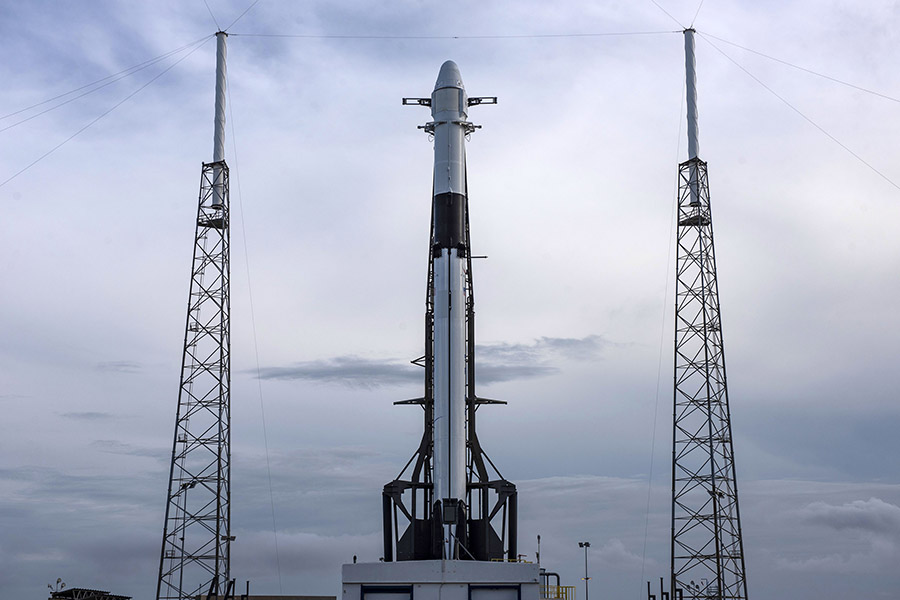
*** May 4: A SpaceX Falcon 9 launched a Dragon for the CRS-17 cargo mission to the ISS:

*** May 4: MOMO-F3 suborbital rocket launched by Interstellar Technologies reacged 113.4 km. This was the first rocket launched by a private Japanese company to reach space: Sounding Rocket MOMO F3: Flight Experiment Success – Interstellar Technologies (pdf)

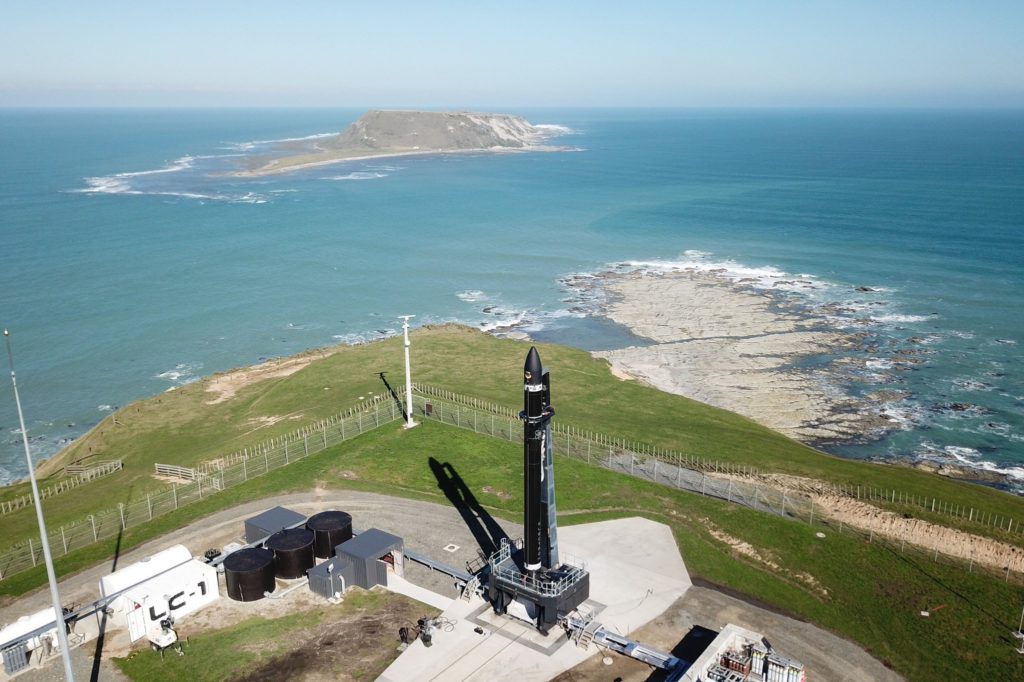
*** May 5: Rocket Lab launched an Electron rocket that placed 3 USAF satellites into low earth orbits:

** Chinese launch company news:

** Relativity Space gets third launch contract, though it will not attempt to fly its first rocket till late 2020:

** SpaceX:

*** SpaceX President Gwynne Shotwell talks about the satellite launch business: Exclusive: SpaceX’s Shotwell Talks SATELLITE 2019 | Via Satellite.

VIA SATELLITE: Do you believe the industry is entering a very uncertain period right now?

Shotwell: We believe the industry is entering an incredibly exciting period where competition is high, which is driving innovation. With innovation there’s always uncertainty, but also great opportunity. In just the last few years, Falcon 9 became the most frequently launched rocket worldwide and has taken over 50 percent of the commercial launch market. It’s exciting that the market has responded to our unique ability to provide reliable, affordable launch services.

We just launched our first commercial flight of Falcon Heavy, and last year we began testing and development for our Starship vehicle, which can carry payload greater than 100 mt. Our customers are taking advantage of these opportunities. Cost effective launches are allowing them to think about their businesses in different ways. While we may see a slowdown in the short term of traditional opportunities, as new technologies mature, new opportunities will take the place of the old.

*** NASA transitions from avoiding reused boosters to embracing them: With SpaceX scrub, NASA again demonstrates commitment to innovation | Ars Technica

NASA’s patience and openness to new ideas is all the more notable because while some improvements such as the Falcon 9’s lift capacity have benefitted the space agency, others such as rocket reusability haven’t provided an immediate benefit. “The agency is investing in keeping the United States on the leading edge of space travel, and that’s an important part of its founding mandate,” Autry said.

It’s safe to say the companies appreciate this approach. SpaceX founder Elon Musk recently acknowledged as much on Twitter, saying, “NASA support for reusability with high reliability, the critical breakthrough for orbital rockets, has made a big difference.”

*** CRS-17 Cargo Dragon vehicle reached the ISS on Monday morning:

*** Falcon 9 booster for the CRS-17 launch reaches Port Canaveral: SpaceX’s latest Falcon 9 booster returns to port as NASA hints at “vested interest” – Teslarati

** Falcon 9 launch of 3 Canadian Radarsat spacecraft set for not earlier than June 11th from Vandenberg SpaceX’s next West Coast Falcon 9 landing could be decided by baby seals – Teslarati

SpaceX and the Canadian Space Agency (CSA) have – at long last – officially announced a launch date for the Radarsat Constellation Mission (RCM), a ~$1B trio of Earth observation satellites.

Delayed from November, February, March, and May, RCM is now scheduled to launch on a flight-proven Falcon 9 booster from California’s Vandenberg Air Force Base (VAFB) no earlier than June 11th. The three flight-ready spacecraft were shipped from Canada in September 2018 and have now been awaiting launch in a Southern California storage facility for more than half a year. The blame for such an egregious delay can be largely placed on SpaceX, but CSA and launch customer Maxar Technologies are also partially responsible. On a lighter note, the location of RCM’s subsequent Falcon 9 landing might end up being decided by seal pupping – baby harbor seals, in other words.

====

Delta-v

Space transport roundup – May.4.2019

A sampling of recent articles, videos, and images dealing with space transport:

** SpaceX Falcon 9 successfully launches Cargo Dragon on CRS-17 mission to the ISS. Rendezvous and berthing to the station is set for early Monday morning. NASA TV coverage will start at 5:00 am EDT.

The full webcast:

More about the launch and the CRS-17 cargo mission:

** Rocket Lab Electron launch postponed to run more checks on the satellite payloads. Next chance will be Sunday morning.

Updates at:

** More about the MOMO-F3 launch by Interstellar Technologies in Japan on Friday:

This suborbital mission, the first success after two failures, is a boost to the company, which aims eventually to send a payload to orbit. From AP:

The company, founded in 2013 by entrepreneur Takafumi Horie, who was a former Livedoor Co. President, aims to develop low-cost commercial rockets to carry satellites into space. Horie expressed high expectations for his new business.

From Interstellar:

Interstellar Technologies Inc.(Hokkaido-Hiroo-Taiki JAPAN, CEO: Takahiro Inagawa, hereafter referred to as “IST”)announces that Flight 3 of the sounding rocket MOMO has successfully launched and achieved designated trajectory.

MOMO, the third in it’s series of sounding rockets designed and fabricated in IST, lifted off at 05:45 AM (JST), May-04-2019 from IST’s launch pad in Taiki, Hokkaido.

The vehicle successfully carried it’s payload to the designated trajectory, becoming the first privately funded rocket in Japan to exceed an apogee of 100km.

Details of the launch are as follows:

    • Flight duration : 515 seconds
    • Maximum altitude : 113.4 km [preliminary value]
    • Downrange : 37 km from the launch site

This was the first successful attempt following two consecutive failures for the previous MOMO series, and has provided valuable telemetry data for further development within IST. IST expresses deep gratitude towards all sponsors, companies, institutions, and individuals who have supported the success of the MOMO project. IST is geared towards continuous development of both the MOMO series and the upcoming orbital rocket “ZERO”, with the goal of providing affordable, flexible access to space.

** SpinLaunch constructing a catapult-style launch system at Spaceport America in New Mexico:

From the SVBJ article:

The Sunnyvale, California-based company signed a multiyear lease for acreage from the commercial space hub near Truth or Consequences in January, and its facility is set to house at least 20 people, spokeswoman Diane Murphy previously told Business First.

SpinLaunch will invest $7 million in construction and $1 million in infrastructure development, Business First previously reported. The deal is important for the $220 million taxpayer-subsidized Spaceport, which has struggled in the past to secure tenants.

SpinLaunch has been shy about giving details of its system, but it appears to be similar to the Slingatron concept. The modules launched will need to be hardened for the tremendous heating from the atmosphere. The catapult would provide about three quarters of orbital speed so the module would still need a propulsion system of its own to provide the final kick to reach a stable orbit.

In 2018, the company convinced investors to provide enough capital to build an initial system: Stealth space catapult startup SpinLaunch is raising $30M | TechCrunch

[SpinLaunch founder Jonathan Yaney ] explains that reaching orbital velocities typically “requires a rocket to carry massive quantities of propellant, leaving only a small fraction (a few percent) of the overall vehicle’s mass for ‘cargo.’” But SpinLaunch replaces rocket boosters with a kinetic launch system using principles “similar to those explored by several ground-based mass accelerators that date back to the 1960s. Modern adaptations include electromagnetic rail and coil guns, electrothermal-chemical guns, light gas guns, ram accelerators, and blast wave accelerators.”

He says “SpinLaunch employs a rotational acceleration method, harnessing angular momentum to gradually accelerate the vehicle to hypersonic speeds. This approach employs a dramatically lower cost architecture with much lower power.” SpinLaunch is targeting a per launch price of less than $500,000, while Yaney says “all existing rocket based companies cost between $5 million and $100 million per launch.”

Total funding has reached about $45M according to Leonard David. See also This Startup Got $40 Million to Build a Space Catapult – Bloomberg.

The NM spaceport is an inland site intended for suborbital missions. It will be interesting to see if SpinLaunch plans to use the system there only for suborbital tests or will try to take advantage of the nearby Nevada Test and Training Range to obtain sufficient buffer distance to get to orbit before overflying civilian areas. Years ago, Kistler Aerospace seriously considered orbital rocket launches from the Nevada Range.

The tremendous accelerations and heating involved with catapult launchers limit the kinds of payloads they can send to space. However, such a launcher would be great for providing a low cost method to deliver a continuous stream of bulk supplies (e.g. food, fuel, water, etc) once there are large scale habitats and other facilities in orbit.

====

The Space Barons: Elon Musk, Jeff Bezos, and the Quest to Colonize the Cosmos

Space transport roundup – May.3.2019

A sampling of recent articles, videos, and images dealing with space transport:

** SpaceX to try again to launch a Falcon 9 early Saturday morning with the Cargo Dragon for mission CRS-17 to the ISS. The liftoff is set for 2:48 am EDT (6:48 UTC) from Space Launch Complex 40 (SLC-40) at Cape Canaveral Air Force Station, Florida. The weather forecast gives a 70% chance of acceptable conditions for the 1 second launch window.

The SpaceX webcast will go live about 15 minutes before the launch time.

Falcon 9 with Crew Dragon for CRS-17 mission.

** Rocket Lab is also set to launch an Electron tomorrow morning with three USAF payloads

There will be a webcast on the website.

** Interstellar Technologies of Japan successfully launched the MOMO 3 suborbital rocket on Friday. The liftoff is at just after 1:29:00 into this video of the webcast:

[ Update: A nicer video with views from the rocket:

]

The rocket reached beyond the Kármán line according to this Tweet (Google translated):

The launch time of “shift MOMO3 to space quality” is at 5:45:0, and the arrival altitude is 113.4 km as a preliminary value, and the combustion time is about 118 seconds. The detailed values will be determined by the future analysis and will be announced again.

** Blue Origin released this video of highlights of yesterday’s New Shepard flight:

New Shepard had a great mission on May 2, 2019. This particular rocket has flown to space and back 5 times. The mission flew 38 payloads for a variety of schools, universities, government agencies and private companies.

More at Blue Origin | New Shepard Mission NS-11 Updates.

====

Space 2.0: How Private Spaceflight, a Resurgent NASA, and International Partners are Creating a New Space Age

Space transport roundup – May.2.2019

A sampling of recent articles, videos, and images dealing with space transport:

** Blue Origin New Shepard flies successfully:

Reports on the flight and the research payloads on board:

New Shepard hardware is produced at Blue Origin’s headquarters in Kent, Wash., and shipped down to Texas for flight. Cornell said people wouldn’t ride in the New Shepard capsule that was tested today, but in an upgraded capsule that’s currently sitting in Blue Origin’s “barn” in Texas.

“Because it’s such a special capsule to us, we actually decided to name the newest capsule that’s just in the barn the ‘RSS First Step,’ ” Cornell said. ” ‘RSS’? Reusable Spaceship, of course. And ‘First Step’ because it is our first capsule that is going to be taking people. It’s going to enable our vision of millions of people living and working in space

** CRS-17 Cargo Dragon launch set for early Friday morning following a fix to the ISS power problem that delayed the flight from Wednesday. However, weather is an issue. Only a 40% chance for suitable conditions for liftoff according to the USAF launch range forecast. This improves to 70% if the launch is postponed till Saturday morning

The rocket will blast off from the Space Launch Complex 40 (SLC-40) at Cape Canaveral Air Force Station. You can watch the launch on the SpaceX webcast, which will start about 15 minutes before liftoff, currently set to occur during a 1 second window at 3:11:33 am EDT, or 7:11:33 UTC.

There will also be a NASA TV webcast as well.

The CRS-17 Mission press kit provides info on launch events, the payloads and other aspects of the mission.

Note that this Cargo Dragon vehicle also flew on the the CRS-12 mission in August 2017. The Falcon 9 booster is new. The booster will attempt to land on a sea platform not far off the coast of Florida.

** Interstellar Technologies MOMO 3 suborbital launch scrubbed today due to high winds. Next try is set for Friday:

A new launch attempt for the MOMO sounding rocket is tomorrow, May 3rd. A 75-minute launch window would open at 11:15 JST, or 2:15 UTC.

Updates at なつのロケット団公式 (@natsuroke) | Twitter.

** Scott Manley discusses a NASA report on 2 rocket failures caused by a manufacturer’s flawed materials:

In 2009 a Taurus XL rocket failed because the fairing at the top refused to separate, then in 2011 the same things happened again. A multi year investigation traced the problem to materials from a supplier which had been fabricating test results.

** Additional SpaceX:

*** More about Crew Dragon explosion in today’s CRS-17 pre-launch briefing:

Hans Koenigsmann of SpaceX said that the investigation is continuing and he would not speculate on the cause of the explosion. He did say,

  • The explosion started during the preparation for the firing of the SuperDraco thrusters and about a half second before they fired.
  • The Crew Dragon was destroyed.
  • He doesn’t think a SuperDraco itself failed.
  • He doesn’t think that the composite over-wrapped pressure vessels (COPVs) are to blame. These are not the same type of COPVs as the one that caused a Falcon 9 upper stage to explode on the pad in 2016.
  • The site of the test has not yet been fully cleared. There are, for example, pressurized COPVs visible so they must be careful when approaching the site.
  • He said the resulting cloud from the propellant mixture of monomethylhydrazine fuel and dinitrogen tetroxide oxidizer became benign as it mixed with air.
  • Several Crew Dragon vehicles are in various stages of construction and so can be modified relatively easily to install the fixes required by the results of the investigation.

More at Dragon was destroyed just before the firing of its SuperDraco thrusters | Ars Technica.

*** Progress towards next Falcon Heavy flight in June: SpaceX’s third Falcon Heavy launch on track as custom booster aces static fire – Teslarati

SpaceX has successfully completed a static fire of its newest Falcon Heavy center core, a sign that the most challenging hardware is firmly on track for a late-June launch target.

Currently penciled in for June 22nd, Falcon Heavy’s third launch is of great interest to both SpaceX and its customer, the US Air Force. Most of the two-dozen payloads manifested on the mission are admittedly unaffiliated with the US military. However, the rideshare – known as Space Test Program 2 (STP-2) – was acquired by the USAF for the branch to closely evaluate and certify SpaceX’s Falcon Heavy rocket for critical military launches. The potential upsides of a successful demonstration and evaluation are numerous for both entities and would likely trigger additional positive offshoots.

====

Delta-v

Space transport roundup – May.1.2019

A sampling of recent articles, videos, and images dealing with space transport:

** Blue Origin plans to fly a New Shepard rocket vehicle on Thursday morning at the company’s facilities in West Texas. The website will provide a webcast.

The FAA window for the flight lasts till Sunday: 9/0236 NOTAM Details.

*** A description of nine NASA sponsored payloads on the New Shepard including the Stratospheric and Suborbital Flight Experiments and Equipment for the Teachers in Space program: NASA and Blue Origin Help Classrooms and Researchers Reach Space | NASA

“We are now on the verge of giving students and teachers the ability to build and fly affordable experiments in space. When teachers are this excited about putting experiments in space, their students can’t help but get excited about space, too.”

Elizabeth Kennick, president of Teachers in Space, does not take the opportunity to fly an experiment to space for granted. The nonprofit organization has worked with educators and engineers to design and test standard equipment for classroom-developed experiments, including 3D-printed frames, customizable processors, power adaptors and more. The equipment first flew on high-altitude balloons and more recently on a stratospheric glider. Now, thanks to support from NASA’s Flight Opportunities program, the equipment will fly higher than ever before: to space on the next launch of Blue Origin’s New Shepard rocket.

** The ISS crew has made progress towards fixing the power fault that caused the delay of the launch of the SpaceX Falcon 9 rocket with the CRS-17 Dragon Cargo vehicle. No word yet, though, if the mission will be allowed to take off early (3:11 am EDT) Friday morning.

** Rocket Lab preparing for an Electron launch of three USAF satellites during a two week window that opens this Saturday: Next launch | Rocket Lab

** Virgin Orbit shows off “Cosmic Girl”, the company’s rocket carrier aircraft in this report from Loren Grush: What it takes to fly Virgin Orbit’s huge plane that launches rockets into space – The Verge

Virgin Orbit has developed a small rocket called LauncherOne that can put satellites the size of washing machines into orbit. And its launchpad resides at 35,000 feet. Virgin Orbit owns a Boeing 747 airplane, called Cosmic Girl, which carries LauncherOne up into the sky. From there, the rocket will drop from underneath Cosmic Girl’s left wing and then ignite, climbing the rest of the way to orbit.

** Vector Launch moves towards test flights this year:

** UK startup Skyrora looking for a launch site for the company’s rockets, starting with the suborbital SKYRORA 1 rocket: UK’s Skyrora In Hunt For British Launch Sites For Upcoming Rocket Tests – SpaceWatch.Global

Skyrora will make three test launches over the next 12 months, the first expected to take place over the next few months, as part of its effort to certify its Skyrora XL satellite launch vehicle that will be 10 metres tall and will be able to loft a 100 kilogram payload into low-Earth orbit. The company conducted one of its first tests near Evanton, Scotland, in August 2018 when it launched its SkyLark Nano sounding rocket to an altitude of 6 kilometres, reaching a speed of Mach 1.45.

Among the launch tests planned for the coming year is one aiming to breach the so-called Kármán line, the altitude at which atmospheric flight ends and orbital dynamics begin – 100km.

** The X-37B launched on a Falcon 9 in September 2017 remains in orbit after 600 days: X-37B Military Space Plane’s Latest Mystery Mission Passes 600 Days | Space.com

It’s unclear what exactly the spacecraft is doing up there. X-37B missions are classified, and Air Force officials tend to speak of project goals in general terms, as this excerpt from the X-37B fact sheet shows: “The primary objectives of the X-37B are twofold: reusable spacecraft technologies for America’s future in space and operating experiments which can be returned to, and examined, on Earth.”

Still, the Air Force does divulge some payloads flying on X-37B missions. For example, we know that OTV-5 includes the Advanced Structurally Embedded Thermal Spreader experiment (ASETS-II), which is measuring the performance of electronics and oscillating heat pipes in the space environment.

====

Delta-v