Category Archives: Education

Student and amateur CubeSat news roundup – Sept.16.2019

A sampling of recent articles, press releases, etc. related to student and amateur CubeSat / SmallSat projects and programs (find previous smallsat roundups here):

** Cambodian student CubeSat program formed with help of Cal Poly in San Luis Obispo: Cal Poly team travels to Cambodia to help set up CubeSat program – KSBY

Aerospace Engineering Assistant Professor Pauline Faure and Computer Engineering Senior Justin Nguyen traveled to Cambodia in August to visit the Liger Leadership Academy in Phnom Penh.

Students there wanted to build and launch a softball-sized CubeSat, along with a mini-ground station to communicate with it.

** CubeSat club launched at Villanova University: They May be Building Nanosatellites, but there’s Nothing Small about Villanova’s CubeSat Club | Villanova University

The CubeSat club’s 2018-2019 year was packed with a variety of workshops and projects, including:

    • Setting up temporary ground stations called SatNOGS (Satellite Network Operators Group)
    • Building Yagi-Uda antennas from tape measurers and scrap wood and using them to track low earth orbit satellites as they flew over Villanova
    • Building an AMSAT CubeSat Simulator, a functional satellite model
    • Assisting with the freshman CubeSat mini-design projects
    • Earning amateur radio licenses and ham radio callsigns
    • Assembling and selling electronic transceiver boards used in CubeSats as a fundraiser

** Univ. of Kansas opens new facility for student smallsat projects: KU Engineering launches new Satellite Design and Development Lab | The University of Kansas

The Hill Space Systems Laboratory in Learned Hall features a 12-by-12-foot clean “white room” where students don protective clothing while they build nano-satellites, which weigh in at just under 10 kilograms, for a planned launch into Earth orbit. A second room in the same lab is stocked with computer equipment so students can design and test their creations.

“We’re hoping to have student satellite launches — microsatellites, nano-satellites — every other year,” said Rick Hale, Spahr Professor and chair of the Department of Aerospace Engineering. “The first launch could be as early as spring 2020.”

** Profile of an Embry-Riddle grad student developing an improved antenna for CubeSats: Graduate Student’s Work Advances Space Communication Systems – Embry-Riddle Aeronautical University

[Noemí Miguélez Gómez’s] current CubeSat project with Dr. Eduardo Rojas in the Embry-Riddle Wireless Devices and Electromagnetics (WiDE) Laboratory is focused on bolstering communication using deployable antennas. Small research CubeSats may offer only one-tenth of a cubic meter of space, and therefore “you don’t have a lot of power for communications,” Miguélez Gómez explained. To improve communication, she has been working on a foldable antenna that would reflect signals in space to improve transmission performance. The work involves 3D printing and testing dozens of components. This antenna is part of an academic-industry partnership.

The newly opened WiDE lab is located in the John Mica Engineering and Aerospace Innovation Complex, or MicaPlex, the cornerstone building in Embry-Riddle’s Research Park. It gives students like Miguélez Gómez access to a design room with state-of-the-art software, advanced manufacturing equipment including 3D printers, and a testing area, among other perks.

** AMSAT news on student and amateur CubeSat/smallsat projects: ANS-258 AMSAT News Service Special Bulletin

  • Request For Cooperation in Receiving FO-29 (Fuji 3)
  • NO-104 Camera Will be ‘Live’ This Week
  • Chinese Taurus-1 Amateur Satellite Launched
  • Amateur Radio Digital Communications (ARDC) Awards Grant to ARISS
  • IARU Region 3 Approves New 15m Satellite Allocation
  • Improvements to the AMSAT Live OSCAR Satellite Status Page
  • Volunteer Opportunity – AMSAT Looking for Graphics Designer
  • Nine US Schools Moved Forward in ARISS Selection Process
  • AMSAT-UK International Space Colloquium, October 12-13
  • Final Steps Taken Toward ELaNa 25 Amateur Satellite Launch
  • AMSAT Academy at the Albuquerque Duke City Hamfest
  • Upcoming ARISS Contact Schedule
  • DM02 Satellite Expedition Sunday, September 22 – N6O/MM
  • Upcoming Satellite Operations
  • Satellite Shorts From All Over

General CubeSat/SmallSat info:
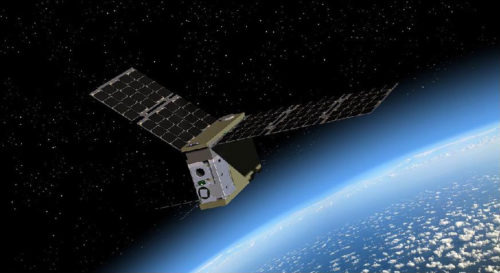
TEMPEST-D CubeSat
Artist’s rendering of TEMPEST-D (Temporal Experiment for Storms and Tropical Systems – Demonstration) CubeSat. Credits: NASA JPL

** Smallsats, Sensors and Real-Time Decision-Making Data | Kratos Communications – Jim Marshall, Director of the Space Dynamics Laboratory, is interviewed about

… how smallsat technology is being used in innovative ways to solve technical challenges faced by the military, science community, and industry. Find out how custom sensor, software, hardware, and thermal management solutions are making significant contributions to national defense and scientific discoveries. Hear about the programs where this technology is being applied to better understand global temperature changes in the thermosphere, identify the population of potentially hazardous near-Earth objects (NEOs) and mitigate the adverse effects of space weather.

====

Introduction to CubeSat Technology and Subsystem:
Orbit Design, Debris Impact, and Orbital Decay Prediction

Student and amateur CubeSat news roundup – Sept.9.2019

A sampling of recent articles, press releases, etc. related to student and amateur CubeSat / SmallSat projects and programs (find previous smallsat roundups here):

** HARP cubesat developed by Utah State and Univ. Maryland at Baltimore County teams will measure  aerosol and cloud properties of the atmosphere: Space Dynamics Lab Delivers Small Satellite in Preparation for Launch to ISS

Utah State University’s Space Dynamics Laboratory announced today that it has delivered a small satellite designed for NASA to measure the microphysical properties of cloud water and ice particles.

The HARP CubeSat satellite was built by SDL to carry the HyperAngular Rainbow Polarimeter payload built by the University of Maryland, Baltimore County under the direction of principal investigator J. Vanderlei Martins. HARP is currently being prepared for launch by International Space Station small satellite launch service provider NanoRacks, LLC. HARP is scheduled to launch to the ISS in October aboard Northrop Grumman’s robotic resupply space freighter Cygnus at the Mid-Atlantic Regional Spaceport. HARP will be ejected into space following its placement on the ISS.

HARP Cubesat

** More about the Arizona State Univ. Phoenix cubesat project: ASU students create miniature space satellite that can track climate change – msn.com

** AMSAT news on student and amateur CubeSat/smallsat projects: ANS-251 AMSAT News Service Special Bulletin

  • AMSAT Board of Directors Election Ballots Due September 15
  • 2019 AMSAT Space Symposium Preliminary Schedule Now Available
  • 2019 AMSAT Symposium Early-Bird Registration Ends September 15
  • DM02 Satellite Expedition Sunday, September 22 – N6O/MM
  • VUCC Awards & Endorsements for August 2019
  • How to Support AMSAT
  • Upcoming Satellite Operations
  • Satellite Shorts from All Over

General CubeSat/SmallSat info:

SmallSat [Conference] was last week which meant a flurry of announcements. This year was launch heavy, so I break down some announcements from SpaceX, Arianespace, and Rocket Lab.

====

Introduction to CubeSat Technology and Subsystem:
Orbit Design, Debris Impact, and Orbital Decay Prediction

Student and amateur CubeSat news roundup – Sept.3.2019

A sampling of recent articles, press releases, etc. related to student and amateur CubeSat / SmallSat projects and programs (find previous smallsat roundups here):

** Oman university student team builds CubeSat:  SQU team develops sultanate’s first CubeSat – Oman – Muscat Daily

Oman’s first non-commercial CubeSat is a reality now. A team comprising faculty members and students from the Department of Electrical and Computer Engineering of the College of Engineering at Sultan Qaboos University (SQU) has executed the project.

It is a type of miniaturised satellite for space research. The project was proposed and supervised by Dr Amir Mohamed Abdulghani and Sayyid Dr Samir al Busaidi. The students who worked to design the satellite’s payload comprised Abdulaziz Mohammed al Qamshaoui, Luay Khalifa al Yaqoubi and Ali Abdulhamied al Shamali.

** Arizona State University team building Phoenix CubeSat for study of “the Urban Heat Island (UHI) Effect: a phenomenon in which the structure of the city causes a rise in surface temperature”: Mini-spacecraft built by ASU students will study urban heat island effect – ASU Now

If all goes as planned, one day this October a spacecraft the size of jumbo loaf of bread will leave from Wallops, Virginia, packed aboard a cargo rocket bound for the International Space Station.

The spacecraft is a cubesat named Phoenix, and it is the creation of more than 100 science and engineering students, faculty and researchers at Arizona State University.

On Aug. 18, the Phoenix spacecraft was hand-delivered by the student team to Nanoracks, a launch integrator, at their facility in Houston. There it underwent final tests and preparations for its launch to the Space Station, planned for Oct. 21, 2019. After it arrives at the Space Station, Phoenix will be sent into low-Earth orbit sometime early next year.

The Phoenix spacecraft is designed for a two-year mission to take thermal images of several American cities (including its namesake, Phoenix) by day and by night.

ASU Phoenix Cubesat Diagram
Components of the ASU Phoenix Cubesat.

** AMSAT news on student and amateur CubeSat/smallsat projects: ANS-244 AMSAT News Service Special Bulletin

  • 2019 37th AMSAT Space Symposium and Annual General Meeting
  • 2019 AMSAT Symposium Early-Bird Registration Rate Until September 15
  • Second Call for AMSAT 2019 Symposium Papers
  • Mark Johns, KØJM, Appointed Editor-in-Chief AMSAT News Service
  • Emergency Traffic Relayed over AO-92 Satellite
  • University of Tsukuba YUI Satellite Project D-ATV User Survey
  • ARISS Activities
  • AMSAT SA Dual Band Yagi Now Available for Export
  • Upcoming Satellite Operations
  • German CEPT Response States Sharing of 144-146 MHz Not Realistic
  • Talks by Radio Amateurs at UKHAS Conference London Sept 7
  • CAMSAT Applies for IARU Coordination for Four V/U Transponder Satellites
  • Satellite Shorts From All Over

General CubeSat/SmallSat info:

====

Introduction to CubeSat Technology and Subsystem:
Orbit Design, Debris Impact, and Orbital Decay Prediction

NASA opens contest to name next Mars rover

NASA has opened Name the Rover Contest for the Mars 2020 mission, which is set to launch in July of next year.  Here is the announcement from NASA:

NASA Invites Students to Name Next Mars Rover

Red rover, red rover, send a name for Mars 2020 right over! NASA is recruiting help from students nationwide to find a name for its next Mars rover mission.

Starting Tuesday, K-12 students in U.S. public, private and home schools can enter the Mars 2020 Name the Rover essay contest. One grand prize winner will name the rover and be invited to see the spacecraft launch in July 2020 from Cape Canaveral Air Force Station in Florida.

The Name the Rover contest is part of NASA’s efforts to engage students in the STEM enterprise behind Mars exploration and inspire interest in science, technology, engineering and mathematics.

“This naming contest is a wonderful opportunity for our nation’s youth to get involved with NASA’s Moon to Mars missions,” said NASA Administrator Jim Bridenstine. “It is an exciting way to engage with a rover that will likely serve as the first leg of a Mars Sample return campaign, collecting and caching core samples from the Martian surface for scientists here on Earth to study for the first time.”

The Mars 2020 rover is a 2,300-pound robotic scientist that will search for signs of past microbial life, characterize the planet’s climate and geology, collect samples for future return to Earth, and pave the way for human exploration of the Red Planet.

“Our Mars 2020 rover has fully taken shape over the past several months, as the project team installed various components onto the chassis: the computer brain and electronics; wheels and mobility system; robotic arm; remote sensing mast; the seven science instruments; and finally, the sample caching system,” said George Tahu, Mars 2020 program executive. “All that’s missing is a great name!”

To enter the contest, students must submit by Nov. 1 their proposed rover name and a short essay, no more than 150 words, explaining why their proposed name should be chosen. The essays will be divided into three groups, by grade level – K-4, 5-8, and 9-12 – and judged on the appropriateness, significance and originality of their proposed name, and the originality and quality of their essay, and/or finalist interview presentation.

Fifty-two semifinalists will be selected per group, each representing their respective state or U.S. territory. Three finalists then will be selected from each group to advance to the final round.

As part of the final selection process, the public will have an opportunity to vote online on the nine finalists in January 2020. NASA plans to announce the selected name on Feb. 18, 2020 – exactly one year before the rover will land on the surface of Mars.

For complete contest and prize details, visit: https://mars.nasa.gov/mars2020/participate/name-the-rover/

The naming contest partnership is part of a Space Act Agreement between NASA, Battelle of Columbus, Ohio, and Future Engineers of Burbank, California, in educational and public outreach efforts.

Name the Rover Contest

Register to be a Judge

NASA is seeking volunteers to help judge the thousands of contest entries anticipated to pour in from around the country. U.S. residents over 18 years old who are interested in offering approximately five hours of their time to review submissions should register to be a judge at: https://www.futureengineers.org/registration/judge/nametherover

Rover Update

With all major elements onboard and initial functional checks complete, Mars 2020’s Assembly, Test, and Launch Operations team is preparing the rover and its sky crane descent stage for the next big test: simulating the vibration dynamics of launch and the thermal environment the rover will experience on the surface of Mars.

NASA’s Jet Propulsion Laboratory in Pasadena, California, manages rover development for the agency. The Launch Services Program at NASA’s Kennedy Space Center in Florida is responsible for launch management.

For more about NASA’s Moon to Mars plans, visit: https://www.nasa.gov/topics/moon-to-mars

====

The Case for Space:
How the Revolution in Spaceflight Opens Up
a Future of Limitless Possibility

Student and amateur CubeSat news roundup – Aug.12.2019

A sampling of recent articles, press releases, etc. related to student and amateur CubeSat / SmallSat projects and programs:

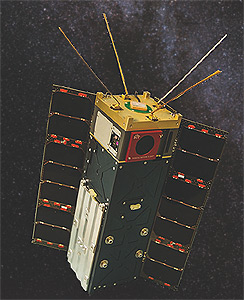
** Virginia Tech awarded NASA contract to launch and operate the LAICE CubeSat (Lower Atmosphere/Ionosphere Coupling Experiment) as a part of the agency’s CubeSat Launch Initiative program. Lower Atmosphere/Ionsphere Coupling Experiment CubeSat – Gov Mik

The spacecraft will study to

…what extent do Gravity Waves influence the coupling of the Earth’s upper atmosphere and the lower ionosphere/mesosphere/thermosphere. 

The Virgin Tech team led the LAICE CubeSat project but they were

unable to attain an FCC license and therefore LAICE has been shelved indefinitely. The 2013 National Academy Solar and Space Physics Decadal Survey Key Science Goal 2 has made this an attractive opportunity as launch and operation of the LAICE CubeSat will address key aspects of the goal. 

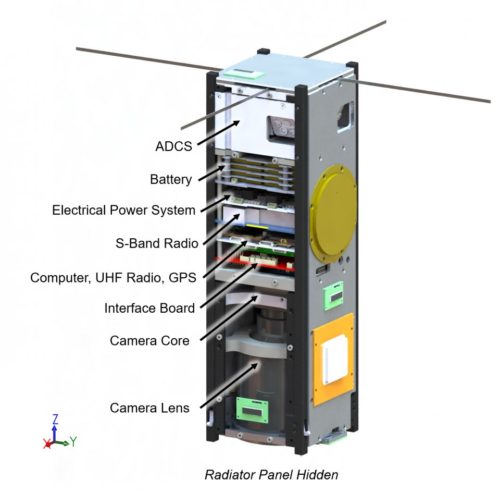
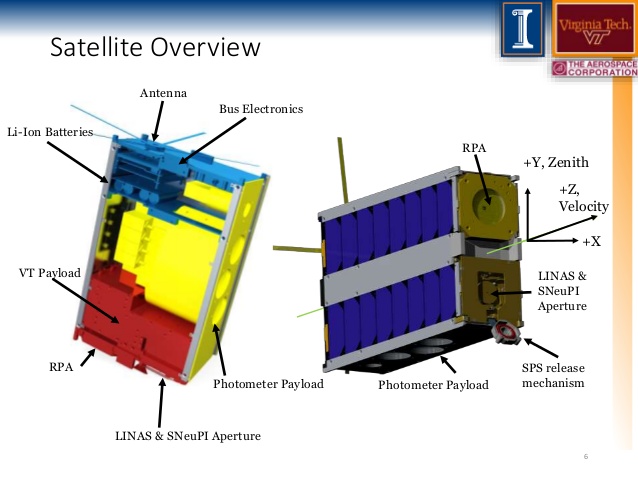
LAICE diagram
Diagram of the Lower Atmosphere/Ionosphere Coupling Experiment (LAICE) CubeSat. Credits: LAICE Overview presentation

** University Würzburg Experimental Satellite 4 (UWE-4) demonstrates Morpheus Space miniature electric thrusters: Electric thrusters changed attitude of University Würzburg cubesat – SpaceNews.com

The University Würzburg Experimental Satellite 4 has four 160-gram Morpheus Nano Field Effect Electric Propulsion (NanoFEEP) thrusters integrated in its rails, facing the same direction. In May, mission controllers fired the thrusters, which combine a liquid gallium propellant with a chip-based neutralizer, for slightly more than six minutes.

While the thrusters fired, the satellite’s rotation increased from approximately 1.7 degrees per second to more than four degrees per second, according to “Hybrid attitude control on-board UWE-4 using magnetorquers and the electric propulsion system NanoFEEP,” by Alexander Kramer, Philip Bangert and Klaus Schilling of University Würzburg.

University Würzburg Experimental Satellite 4 (UWE-4)
“UWE‑4 with Thrusters, Neutralizer and a new kind of sun sensors on each panel.” – University Würzburg

** AMSAT news on student and amateur CubeSat/smallsat projects: ANS-223 AMSAT News Service Special Bulletin

  • 50th Anniversary AMSAT Space Symposium Banquet Speakers Announced – Tickets Now Available
  • FUNcube-1/AO-73 Entering Continuous Sunlight
  • ARRL/TAPR 2019 Digital Communications Conference Call for Papers
  • BRICSAT2 and PSAT2 Get OSCAR Designations
  • 19th Global Symposium for Regulators
  • SSA Defends 23cm Band Against Galileo Threat
  • Upcoming Satellite Operations
  • ARISS News
  • Satellite Shorts from All Over

General CubeSat/SmallSat info:

====

The Race to the Moon Chronicled in Stamps, Postcards, and Postmarks:
A Story of Puffery vs. the Pragmatic (Springer Praxis Books)