Category Archives: Rocketry

Hybrid rocket test at Indian university + 15th NASA Student Launch Competition

A couple of university rocket items:

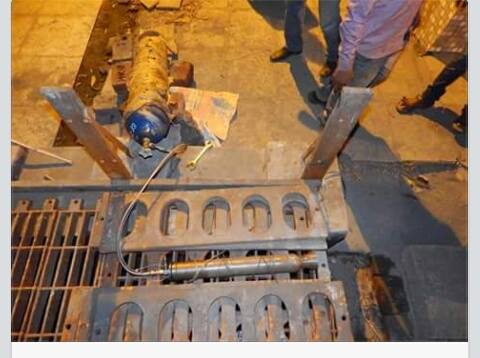
** Aerospace Engineering Department Research – Sounding Rocket Systems – Rajesh Muneshwar,  head of Aerospace Engineering Department at the International School of Professional Studies in India tells me his student group has built and test fired their first hybrid rocket motor. This is the first non-government Indian hybrid as well. It is a prototype for a motor that will power the upper stage of their planned 45 km Gyan darshan Rocket.
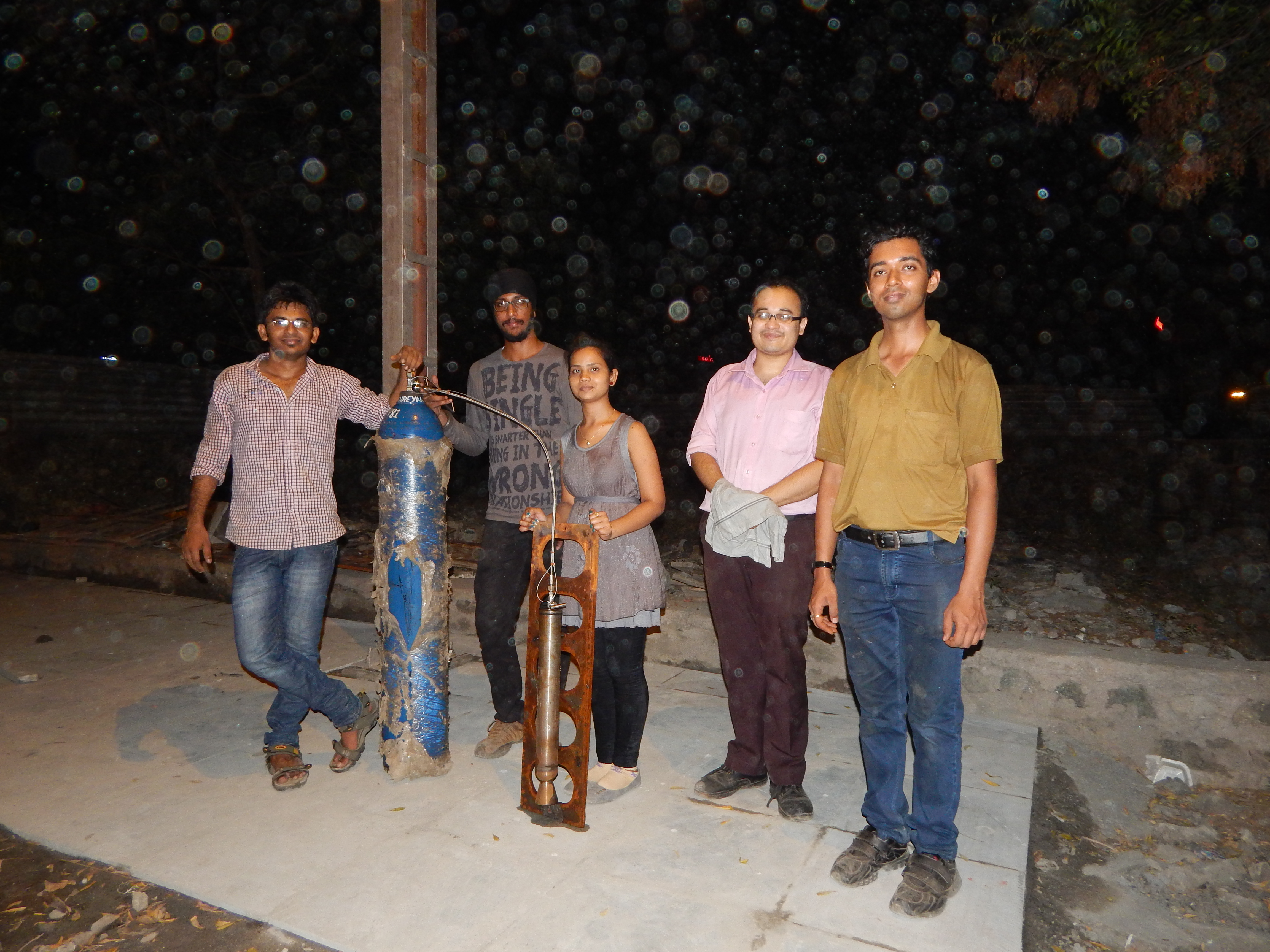
DSCN0954

10408656_847447802007359_5681048160843474833_n

See a video of a test. (I worry about the student being a little too close to the test…)

** NASA Hosts Student Rocket Fair, Helps Students Launch High-Power Rockets

vandy_team_[2]University students prepare their rocket for launch at NASA’s
2012-2013 Student Launch challenge near NASA’s Marshall
Space Flight Center in Huntsville, Alabama. 
Image Credit: NASA/MSFC/Fred Deaton

 More than 30 high school, college and university teams will launch student-built rockets during the 15th annual NASA Student Launch event April 10-11 near NASA’s Marshall Space Flight Center in Huntsville, Alabama.

Middle school and high school teams will launch their rockets to an altitude of one mile, deploy onboard science experiments and land safely using a system of recovery parachutes. University and college teams will participate in either the Mini-Mars Ascent Vehicle (Mini-MAV) or the Maxi-Mars Ascent Vehicle (Maxi-MAV) divisions. Mini-MAV teams must use a robotic system to autonomously load a payload into their rocket, launch to half a mile and eject the payload during descent. Maxi-MAV teams, competing for a share of $50,000 in prize money, will attempt to meet more autonomy requirements before also launching to a half mile.

All launches will take place at Bragg Farms in Toney, Alabama. Maxi-MAV launches begin at 10 a.m. CDT and will run until approximately 5 p.m. on April 10. Mini MAV and middle and high school launches begin at 7:30 a.m. and run until completed April 11. In the event of rain, the event will move to April 12.

From 11 a.m. to 1 p.m., April 9, students will participate in a Rocket Fair at Marshall’s Activities Building 4316, where they will give technical presentations to, and get valuable feedback from, engineers and team members from NASA and Student Launch corporate sponsor Orbital ATK.

….

Student Launch is open to public viewing and will be aired live on NASA Television and Marshall’s Ustream and Twitter accounts, at:

For more information on Student Launch, visit: www.nasa.gov/education/studentlaunch

Continue…

‘Team America Rocketry Challenge’ – thousands of students participate in rocketry competition

An announcement from the Aerospace Industries Association about the annual Team America Rocketry Challenge:

Thousands of students participate in world’s
largest rocketry competition

The Team America Rocketry Challenge launches into
qualifying rounds for the 2015 contest

Arlington, Va. – Nearly 4,000 middle and high school students across the country are gearing up for the 2015 Team America Rocketry Challenge (TARC), the aerospace and defense industry’s flagship program to inspire young people to explore careers in science, technology, engineering and math (STEM). This year, close to 700 teams representing 48 states, the District of Columbia, Puerto Rico and the U.S. Virgin Islands are designing and building model rockets as they contest to qualify for the national finals scheduled for Saturday, May 9 in The Plains, VA.

Structured to emulate the aerospace industry’s engineering design process, TARC challenges teams to design and build a model rocket that can travel to a height of 800 feet and back within 46 to 48 seconds. Each rocket will carry one raw egg that must return safely to the ground undamaged. Scores are determined by how close the rockets come to the required height and time; damaged eggs disqualify flights. To encourage ingenuity and creativity, students are challenged with new design and flight requirements each year.

Sponsored by the Aerospace Industries Association, the National Association of Rocketry and 27 industry partners, the contest aims to strengthen U.S. student engagement with STEM. “TARC has evolved from a one-time celebration of flight to an established and globally-recognized STEM education program,” said AIA President and CEO Marion C. Blakey. “We’re confident that the contest will continue to inspire students to advance their studies in science and math, and eventually consider career opportunities in the aerospace and defense industry.”

This year’s contest has attracted a wide variety of American youth including 41 all-girl teams, several teams utilizing 3-D printers to develop rocket components, a marching band and six Boy Scout troops. Teams have until March 30 to launch and submit their qualifying flight scores. The top 100 scoring teams will advance to the National Finals.

Participants compete for scholarships and prizes totaling more than $60,000 and the title of champions of the world’s largest student rocketry competition. The winning team will also travel to the Paris International Air Show in June courtesy of the Raytheon Company to compete in the International Rocketry Challenge. The American team will face off against teams from the United Kingdom and France in hopes of claiming the gold.

For more information about the Team America Rocketry Challenge, please visit www.rocketcontest.org. TARC is made possible by the generous support of our industry sponsors listed below:

Diamond Sponsor:         The Raytheon Company

Platinum Sponsors:       Lockheed Martin Corporation and Thales USA

Gold Sponsor:                  Microsemi Corporation

Silver Sponsors:              Accenture, Aerojet Rocketdyne, Aurora Flight Sciences, The Boeing Company, Cubic Corporation, Elbit Systems of America , Embraer Aircraft Holding, GE Aviation, Harris Corporation, Honeywell Aerospace, Iron Mountain, Kaman Aerospace, L-3 Communications Corporation, LMI Aerospace, Micro-Coax, Northrop Grumman Corporation, Parker Aerospace, Rockwell Collins, Rolls Royce North America, RTI International Metals, Space Exploration Technologies, United Technologies Corporation, and Woodward, Inc.

Here’s a video from last year’s competition:

South African Rocketry Association building and launching hybrid rockets

Justin Gomersall dropped me a note about SARA – South African Rocketry Association. He says that they

have been around since the early 90’s and have been experimenting in amateur rocketry ever since.

In 2013 we built, launched, tracked and recovered an N-class hybrid rocket (Vulcan 2) to 9.5 kilometers. We will have another attempt this year hopefully in March to go higher with Vulcan 3 – More info on www.sarocketry.co.za and on Facebook – SARA rocketry.

image020[1]Vulcan 2 hybrid rocket launch by SARA on Sept. 23, 2013.

PIC10[1]GPS tracking of the Vulcan 2 trajectory. 

PIC3[1]The SARA team at the launch.

Video: Wild giant Thai circular twirling rocket

A reader sends a link to this video of an impressive circular fireworks rocket in Thailand:

Update on the Register’s LOHAN high-altitude model rocket plane adventure

I’ve posted a couple of times (see here and here) about the Register newspaper’s LOHAN (Low Orbit Helium Assisted Navigator) somewhat tongue-in-cheek project, which aims to launch a small rocket powered plane (named Vulture 2) from a high altitude balloon. The launch will start from Spaceport America in New Mexico.

Here is an update on the project:  This rocket-powered toy plane will soon jet off to stratosphere – CNN.com –

It took the team four years, thousands of volunteer hours, and $60,000 from crowdfunding, to complete the “Lohan.” The nickname is short for “Low Orbit Helium Assisted Navigator” and, its inventors say, a reference to the Hollywood star Lindsey Lohan.