Category Archives: Space participation

Ares Institute seeks to crowd-fund a solar sail project

News from Ares Institute of a Kickstarter campaign to fund a lunar solar sail :

For the first time, a solar sail powered spacecraft will orbit another celestial body.

CAPE CANAVERAL, FL – In 1969, Neil Armstrong and Buzz Aldrin became the first humans to walk on the Moon. Forty-four years later, an enterprising non-profit is building the first privately-owned spacecraft for launch into lunar orbit and using crowdfunding and social media on the internet to enable the public to participate. Named LunarSail, the goal of the project is to give students and the public the opportunity to participate in developing a spacecraft that will not only go into space, but also travel to the Moon while conducting science experiments.

LunarSail will use what is known as a CubeSat to demonstrate the ability of a spacecraft under solar sail propulsion to navigate itself into a lunar trajectory and insert itself into lunar orbit. It will show the practical application of solar sail technology for propulsion, trajectory/attitude control and rendezvous with another body in space. This will be a first of its kind mission to use a solar sail to send a spacecraft to the Moon and then utilize the sail’s unique characteristics to navigate into lunar orbit.

LunarSail will be the first spacecraft to orbit another body in the solar system using only the propulsion provided by a solar sail. Fundamentally, solar sails utilize the solar wind to provide the “push” to propel a spacecraft through space. Theoretically, they may be effective anywhere inside the solar system where the solar wind is present. In practice, a solar sail uses an ultrathin membrane that is deployed in space to form a sail not unlike that on a sailboat. The sail is controlled and maneuvered so that it is able to use the force and direction of the solar wind to literally sail through space, guiding itself much as a sailboat changes trajectory by altering the position of its sail against the wind.

To date, the most successful solar sails that have been launch were NASA’s NanoSail-D which orbited Earth in 2010-11 and the Japanese IKAROS that was sent from Earth toward the inner solar system and even flew by Venus. NASA plans to launch a giant solar sail to an orbit past the Moon next year. However, LunarSail will be both the first solar sail to orbit a planet or moon and the first “nanosatellite” to do so. It will also be the first crowdfunded CubeSat to be sent beyond Earth orbit.

Real science in a small package

Assembled in cube-shaped packages with dimensions just 10 centimeters on each side, CubeSats have enabled economical space access for industrial, academic and private organizations. These groups previously have had a difficult time affording the high costs associated with developing and launching larger satellites. CubeSats, however, can cost less than $50,000 from design to launch, putting them within reach of universities and mid-sized organizations. In fact, it has been possible for some groups to obtain rides to orbit at no cost, bringing the total cost down closer to $10,000.

Despite their small size, CubeSats are capable of doing meaningful science experiments and observations, thanks to the widespread availability of miniaturized electronic components. Our project has two primary science objectives. The spacecraft will take several months to reach the Moon and this will enable us to make detailed observations of the region of space between the Earth and Moon. The spacecraft will measure the environment, including radiation and solar wind dynamics as well as micrometeoroid impacts in this region of space. Once captured by the Moon’s gravity, LunarSail will follow a complex orbital pattern as it settles into a final stable lunar orbit. During this time, we will be able to create detailed 3D maps of the gravitational field and flow of the solar wind around the Moon. Mapping the gravity around the Moon will enable us to create an accurate picture of its internal structure.

A space mission for everyone, by everyone

We are using this project to promote space exploration and STEM education and so we are inviting the public and student especially to take an active role in the mission using various activities in a concept we call “citizen space mission”.

First, engineering students, amateur radio enthusiasts and others with similar interests will be involved in the assembly, testing and science observations of the mission. Individuals will also contribute hardware, labor, programming and their own ideas and will be participants and co-owners of the mission and its success.

To bring the public into the project at the most basic level, we are utilizing crowdfunding on the internet via Kickstarter, Indiegogo and Rockethub to raise the funds needed to complete the spacecraft. Crowdfunding has become a popular means of raising money for grass-roots individual creative and technology projects. Recently, a crowdfunded spacecraft project raised over $1.5 million on Kickstarter. We aren’t looking to raise nearly that much but there has been an enthusiastic response from people around the country and we are already well over halfway to meeting our fundraising goal. The money raised will go directly to purchasing the components that will make up the spacecraft. It will be built solely with volunteer labor.

Because of the focus on public outreach, we’re integrating social media into every aspect of the project, from development and assembly through launch and once the spacecraft is in space. The public is invited to submit messages, graphics, music and short video clips that will be stored onboard the spacecraft. We are particularly interested in contributions from students, artists, musicians and other creative individuals. Once in lunar orbit, LunarSail will play back each recording on a small video screen while a camera is trained on it with the Moon in the background. The video will be played back for viewing by anyone in the world with internet access. The sight of Earth rising over the Moon behind someone’s video recording being played back will become a highly-prized memento of the mission for the contributor.

We are also creating interactive educational materials and classroom lessons that will enable young students and their teachers to participate in activities designed around mission and learn about the important of space exploration and science, technology, engineering and math (STEM) education.

An open source space mission

LunarSail is an open source project. Except for restricted or third-party proprietary material, hardware designs and source code will be available to the general public on the project website. LunarSail’s primary computer is planned to be based on the Raspberry Pi single-board computer running an open source real-time operating system. As with other aspects of the project, anyone with skills that may contribute to the success of the mission is being invited to participate.

LunarSail will make history as the first successful solar sail mission conducted by the private sector and the first solar sail to orbit another celestial body. Most importantly, LunarSail is a mission of inspiration and exploration. It will inspire young students to pursue careers in science and engineering. For the wider public audience, the mission will demonstrate the importance of a vibrant commercial space industry and space exploration.

To see our campaign on Kickstarter, go to:

http://www.kickstarter.com/projects/aresinstituteinc/lunarsail-the-worlds-first-crowdsourced-solar-sail

For more information about LunarSail, visit the project at:

http://www.lunarsail.com.

ABOUT ARES INSTITUTE, INC.

Founded in 2002, the Aerospace Research & Engineering Systems Institute, Inc. is a 501 (c)(3) tax-exempt non-profit organization dedicated to promoting space exploration and STEM education through hands-on educational projects and public outreach. The Institute manages innovative programs such as LunarSail in order to give young students and the public the opportunity to work on real-world space-related projects, ARES Institute also engages in extensive public outreach including the online publication Zero-G News (zerognews.com) and a forthcoming trade magazine, Aerospace Florida. Contributions to ARES Institute are tax-deductible to the full extent permissible by law. For more information, visit http://www.aresinstitute.org.
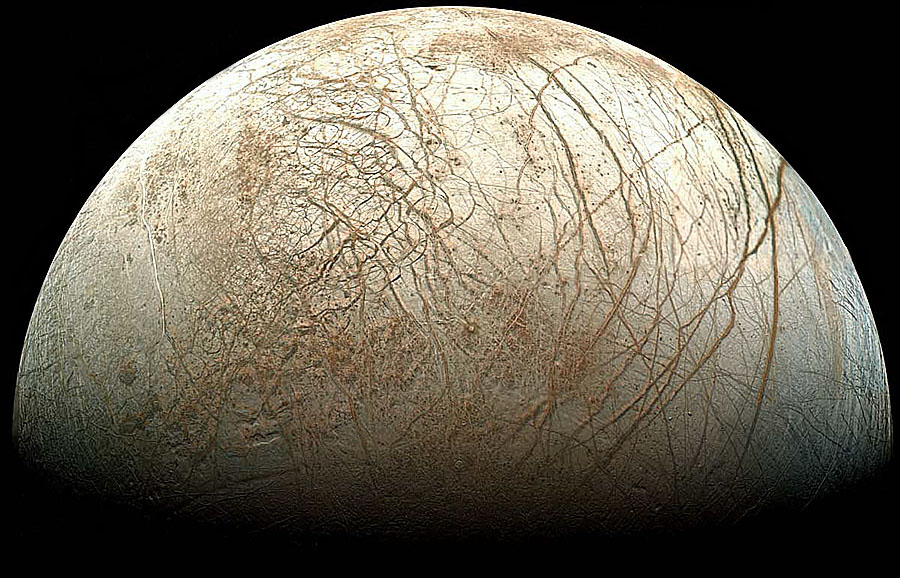
Objective Europa – A crowd researching a manned mission to Europa

Kristian von Bengtson of Copenhagen Suborbitals is also leading a separate project to develop a plan for a manned mission to the Jupiter moon Europa: The First Manned Mission to Jupiter’s Moon Will Be Crowd-Researched – Motherboard.

They are calling their approach “crowd-research”. While crowd-funding invites whoever is interested to contribute money to a project, crowd-research invites interested people to participate in the design of such a mission.

Objective Europa is

an open research phase of a manned mission to Europa – someone has to start the work on this.
There will be topics for open research, new topics to be suggested, concepts sketches to be made,
and forum discussion to be begun – everyone serious who finds this project interesting may join us.

Participation is based on volunteering dedicated work.

We are currently looking for someone to take charge of these tasks:
– Running our Twitter page (https://twitter.com/ObjectiveEuropa).
– Creating and running our Facebook page.
– Finishing our report template.
– Continuous proofreading of our site.
– Being contact person and admin for researchers and future participants.
– Being admin/mod on the upload of reports and research and for the site.
– Simply joining us if you have something else to offer the project.

If you are interested in participating in general research on the manned mission, you should wait with contacting us until the page is launched.

Contact us at : contact @ objective-europa.com

Follow updates on the project at Objective Europa (ObjectiveEuropa) on Twitter.

Europa_NASA[1]

Last Chance – Reach for the Stars ~ National Rocket Competition

A message from Jack Colpas The Rocketman:

Less than 2 months to get your kids into the 7th annual Reach for the Stars ~ National Rocket Competition.   

Deadline August 31st

To help you get started we are including a FREE Launch Set (value over $25) with every order for one dozen or more Competitor Packs (less than $14 each)

Competitor Packs include: rocket kit, supplies for 2 launches, certificate & Registration in the national competition.

Total cost – $165 for 12 Competitor Packs & Launch Set – delivered to you.
Available from Estes or Quest.

Competition is held at your location. No travel hassle or expense.
www.TheRocketman.net

E-mail or call for details.   Limited time offer

 Your kids can’t win it – if they’re not in it!

Citizens in Space selects Greg Kennedy as astronaut candidate

An announcement from Citizens in Space:

Citizens in Space, a project of the United States Rocket Academy, has announced the selection of its fifth citizen-astronaut candidate.

Informal educator and aerospace historian Greg Kennedy will join four other citizen-astronaut candidates who are training to fly as payload operators on the Lynx spacecraft, currently under construction by XCOR Aerospace in Mojave, CA. XCOR expects to begin Lynx test flights later this year.

“We are pleased to welcome Greg to our astronaut group, “ said Edward Wright, citizen-astronaut candidate and project manager for Citizens in Space. “His experience and skills will help to strengthen our program and expand our outreach in new directions.”

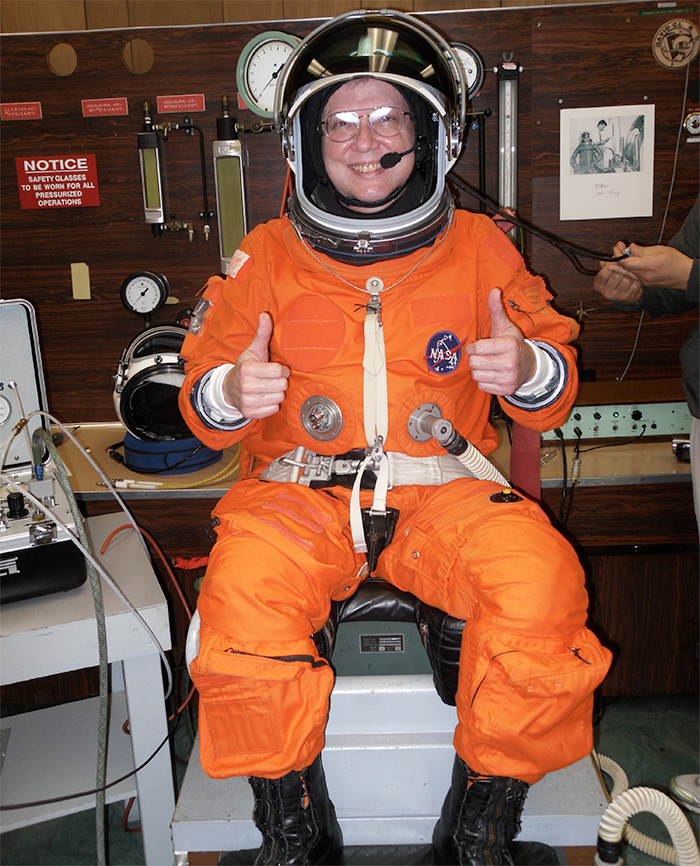
Greg Kennedy is currently director of education at NASTAR Center, a leading provider of spaceflight training for commercial vehicles, in Southampton, Pennsylvania. Previously, he was associate curator for manned spaceflight at the Smithsonian Institution’s National Air and Space Museum in Washington, DC; director of the Frontiers of Flight Museum in Dallas, Texas; founding director of the American Airlines C.R. Smith Museum in Fort Worth; executive director of the Space Center in Alamogordo, New Mexico; executive director of the Mid Atlantic Air Museum in Liberal, Kansas; and executive director of the American Helicopter Museum in West Chester, Pennsylvania.

“I am proud to join this program, which is providing everyday citizens with ground-breaking opportunities to participate in space science and space exploration,“ said Greg Kennedy.

Kennedy is a noted aerospace historian whose books include Touching Space: The Story of Project Manhigh, Apollo to the Moon, The First Men in Space, Rockets and Missiles of White Sands Proving Ground, and Vengeance Weapon Two: Germany’s V-2 Rocket. He was also a co-author of The Space Shuttle Operator’s Manual and Rockets, Missiles, and Spacecraft of the National Air and Space Museum.

Kennedy is a qualified spacesuit technician and commercial spaceflight instructor. At NASTAR Center, he conducts training for commercial spaceflight participants and suborbital scientists, along with various workshops and summer-camp programs which he has created for teachers and students.

Citizens in Space was originally known as “Teachers in Space.” Lt. Col. Steve Heck, a retired Air Force pilot and science teacher from Milford, Ohio was one of the first astronaut candidates to be recruited. “In 2012, the program was renamed and expanded to include a broader range of participants, including informal educators, university students, hardware hackers and science hobbyists,” Heck said. “Greg Kennedy represents our first outreach to the informal-education community. Today’s announcement is only a taste of things to come.”

Citizens in Space has purchased 10 flights on the XCOR Lynx spacecraft. To fill those flights, Citizens in Space is seeking 100 citizen-science experiments and 10 citizen astronauts to fly as payload operators.

Current citizen-astronaut candidates include Greg Kennedy; Maureen Adams, an elementary-school teacher and principle from Killeen, Texas; Michael Johnson, an aviation instructor from Dallas, Texas; Lt. Col. Steve Heck (USAF-ret.), and Edward Wright.

Greg Kennedy

Wave at Saturn for your picture

About time to go outside and wave at Saturn. NASA’s Cassini spacecraft will be taking a picture of earth today between 2:27 and 2:42 PDT (5:27 and 5:42 p.m. EDT, or 21:27 and 21:47 UTC).

NASA’s MESSENGER spacecraft in orbit around Mercury will take images with earth in the picture at 4:49 a.m., 5:38 a.m. and 6:41 a.m. PDT (7:49 a.m., 8:38 a.m. and 9:41 a.m. EDT, or 11:49, 12:38, and 13:41 UTC) on Saturday.

NASA Interplanetary Probes to Take Pictures of Earth From Space

This simulated view from NASA's Cassini spacecraft shows the expected positions of Saturn and Earth on July 19, 2013, around the time Cassini will take Earth's picture
This simulated view from NASA’s Cassini spacecraft shows the expected positions of Saturn and Earth on July 19, 2013, around the time Cassini will take Earth’s picture. Cassini will be about 898 million miles (1.44 billion kilometers) away from Earth at the time. That distance is nearly 10 times the distance from the sun to Earth. Image credit: NASA/JPL-Caltech

PASADENA, Calif. — Two NASA spacecraft, one studying the Saturn system, the other observing Mercury, are maneuvering into place to take pictures of Earth on July 19 and 20.

The image taken from the Saturn system by NASA’s Cassini spacecraft will occur between 2:27 and 2:42 PDT (5:27 and 5:42 p.m. EDT, or 21:27 and 21:47 UTC) Friday, July 19. Cassini will be nearly 900 million miles (nearly 1.5 billion kilometers) away from Earth. NASA is encouraging the public to look and wave in the direction of Saturn at the time of the portrait and share their pictures via the Internet.

The Cassini Earth portrait is part of a more extensive mosaic — or multi-image picture — of the Saturn system as it is backlit by the sun. The viewing geometry highlights the tiniest of ring particles and will allow scientists to see patterns within Saturn’s dusty rings. Processing of the Earth images is expected to take a few days, and processing of the full Saturn system mosaic will likely take several weeks.

Inspired in part by the Cassini team’s plans to obtain a picture of Earth, scientists reexamined the planned observations of NASA’s MESSENGER spacecraft in orbit around Mercury. They realized Earth is coincidentally expected to appear in some images taken in a search for natural satellites around Mercury on July 19 and 20. Those images will be taken at 4:49 a.m., 5:38 a.m. and 6:41 a.m. PDT (7:49 a.m., 8:38 a.m. and 9:41 a.m. EDT, or 11:49, 12:38, and 13:41 UTC) on both days. Parts of Earth not illuminated in the Cassini images, including all of Europe, the Middle East and Central Asia, will appear illuminated in the MESSENGER images. MESSENGER’s images also will take a few days to process prior to release.

Details on how to find Saturn in the sky and participate in the event are available at: http://saturn.jpl.nasa.gov/waveatsaturn .

The public can share pictures by using the hashtag #waveatsaturn on Twitter, or uploading pictures to the event’s Flickr page at: http://www.flickr.com/groups/wave_at_saturn/ .

The event’s Facebook page is: http://bit.ly/waveatsaturn .

Cassini mission scientists also will be participating in a live Ustream show on Friday from 2 to 2:30 p.m. PDT (5 to 5:30 p.m. EDT): http://www.ustream.com/nasajpl2 .

For more information about the two NASA spacecraft, visit: http://www.nasa.gov/cassini , http://saturn.jpl.nasa.gov and http://www.nasa.gov/messenger .