This collage highlights a small selection of regions of the Milky Way imaged as part of the most detailed infrared map ever of our galaxy. Here we see, from left to right and top to bottom: NGC 3576, NGC 6357, Messier 17, NGC 6188, Messier 22 and NGC 3603. All of them are clouds of gas and dust where stars are forming, except Messier 22, which is a very dense group of old stars. The images were captured with ESO’s Visible and Infrared Survey Telescope for Astronomy (VISTA) and its infrared camera VIRCAM. The gigantic map to which these images belong contains 1.5 billion objects. The data were gathered over the course of 13 years as part of the VISTA Variables in the Vía Láctea (VVV) survey and its companion project, the VVV eXtended survey (VVVX).
Astronomers have published a gigantic infrared map of the Milky Way containing more than 1.5 billion objects ― the most detailed one ever made. Using the European Southern Observatory’s VISTA telescope, the team monitored the central regions of our Galaxy over more than 13 years. At 500 terabytes of data, this is the largest observational project ever carried out with an ESO telescope.
“We made so many discoveries, we have changed the view of our Galaxy forever,”
says Dante Minniti, an astrophysicist at Universidad Andrés Bello in Chile who led the overall project.
This record-breaking map comprises 200 000 images taken by ESO’s VISTA ― the Visible and Infrared Survey Telescope for Astronomy. Located at ESO’s Paranal Observatory in Chile, the telescope’s main purpose is to map large areas of the sky. The team used VISTA’s infrared camera VIRCAM, which can peer through the dust and gas that permeates our galaxy. It is therefore able to see the radiation from the Milky Way’s most hidden places, opening a unique window onto our galactic surroundings.
This gigantic dataset [1] covers an area of the sky equivalent to 8600 full moons, and contains about 10 times more objects than a previous map released by the same team back in 2012. It includes newborn stars, which are often embedded in dusty cocoons, and globular clusters –– dense groups of millions of the oldest stars in the Milky Way. Observing infrared light means VISTA can also spot very cold objects, which glow at these wavelengths, like brown dwarfs (‘failed’ stars that do not have sustained nuclear fusion) or free-floating planets that don’t orbit a star.
This image from ESO’s VISTA telescope captures a celestial landscape of vast, glowing clouds of gas and tendrils of dust surrounding hot young stars. This infrared view reveals the stellar nursery known as NGC 6357 in a new light. It was taken as part of the VISTA Variables in the Vía Láctea (VVV) survey, which is currently scanning the Milky Way in a bid to map our galaxy’s structure and explain how it formed.
The observations began in 2010 and ended in the first half of 2023, spanning a total of 420 nights. By observing each patch of the sky many times, the team was able to not only determine the locations of these objects, but also track how they move and whether their brightness changes. They charted stars whose luminosity changes periodically that can be used as cosmic rulers for measuring distances [2]. This has given us an accurate 3D view of the inner regions of the Milky Way, which were previously hidden by dust. The researchers also tracked hypervelocity stars — fast-moving stars catapulted from the central region of the Milky Way after a close encounter with the supermassive black hole lurking there.
The new map contains data gathered as part of the VISTA Variables in the Vía Láctea (VVV) survey [3] and its companion project, the VVV eXtended (VVVX) survey.
“The project was a monumental effort, made possible because we were surrounded by a great team,”
says Roberto Saito, an astrophysicist at the Universidade Federal de Santa Catarina in Brazil and lead author of the paper published today in Astronomy & Astrophysics on the completion of the project.
The VVV and VVVX surveys have already led to more than 300 scientific articles. With the surveys now complete, the scientific exploration of the gathered data will continue for decades to come. Meanwhile, ESO’s Paranal Observatory is being prepared for the future: VISTA will be updated with its new instrument 4MOST and ESO’s Very Large Telescope (VLT) will receive its MOONS instrument. Together, they will provide spectra of millions of the objects surveyed here, with countless discoveries to be expected.
Notes
[1] The dataset is too large to release as a single image, but the processed data and objects catalogue can be accessed in the ESO Science Portal.
[2] One way to measure the distance to a star is by comparing how bright it appears as seen from Earth to how intrinsically bright it is; but the latter is often unknown. Certain types of stars change their brightness periodically, and there is a very strong connection between how quickly they do this and how intrinsically luminous they are. Measuring these fluctuations allows astronomers to work out how luminous these stars are, and therefore how far away they lie.
[3] Vía Láctea is the Latin name for the Milky Way.
Here is this week’s selection of videos, articles, and news items concerning space habitats (govt and commercial), living in space, and space settlement.
** Space to Ground: Sunita in Charge: Sept. 20, 2024 – NASA Johnson
** NASA’s Starliner astronauts talk about watching their ride leave ISS without them – VideoFromSpace
NASA astronauts Suni Williams and Butch Wilmore talk about Starliner’s return trip and requesting an absentee ballot for the US election in November. Watch Starliner land: https://www.space.com/boeing-starline…
** Tracy C. Dyson Powers Space Station Research – NASA Johnson
NASA astronaut Tracy C. Dyson is returning home after a six-month mission aboard the International Space Station. While on orbit, Dyson conducted an array of experiments and technology demonstrations that contribute to advancements for humanity on Earth and the agency’s trajectory to the Moon and Mars. Here is a look at some of the science Dyson conducted during her mission: https://go.nasa.gov/4euV5kt
** NASA Aatronaut Discusses Life in Space with KCRA-TV, Sacramento – NASA Video
Aboard the International Space Station, Expedition 71 Flight Engineer Tracy C. Dyson of NASA discussed life and work aboard the orbital outpost during an in-flight interview Sept. 20 with KCRA-TV. Dyson is in the midst of a long-duration mission aboard the microgravity laboratory to advance scientific knowledge and demonstrate new technologies for future human and robotic exploration flights as part of NASA’s Moon and Mars exploration approach, including lunar missions through NASA’s Artemis program.
=== Commercial space habitats
** Updates on NASA’s transition from ISS to commercial space stations – Laura Forczyk
The International Space Station will soon be deorbited, and NASA is preparing to rely on commercial space stations, or commercial LEO destinations. In today’s NASA Advisory Council’s Human Exploration and Operations Committee meeting, NASA gave various updates on avoiding a gap in LEO, salvaging ISS items, the ISS deorbit timeline, the future of NASA microgravity research, and more.
Axiom Space is facing significant financial headwinds as the company attempts to deliver on two key commercial programs for NASA—the development of a private space station in low-Earth orbit and spacesuits that could one day be worn by astronauts on the Moon.
Forbes reports that Axiom Space, which was founded by billionaire Kam Ghaffarian and NASA executive Mike Suffredini in 2016, has been struggling to raise money to keep its doors open and has had difficulties meeting its payroll dating back to at least early 2023. In addition, the Houston-based company has fallen behind on payments to key suppliers, including Thales Alenia Space for its space station and SpaceX for crewed launches.
— Progress on construction of Axiom’s first space habitat:
Axiom Station’s Habitat One pressure vessel nears completion! @Thales_Alenia_S has welded the Axial Bulkhead to the Cone Panel and is moving toward quality inspection. With this, only three more welds remain until the pressure vessel is complete and Hab One is prepared for… pic.twitter.com/wHrkVFDEaU
The @Axiom_Space Station crew quarters will be about 20% bigger than the ones currently on Space Station, and unlike current quarters, each one will have a window. pic.twitter.com/eUqxT39GE1
On Sept. 11, we hosted NASA at our Eldorado campus for Milestone 5 of our Interim Design Review under CCSC-2, part of our NASA Space Act Agreement, where we summarized our Pathfinder mission and introduced our route to launch. pic.twitter.com/KKrArvUAYs
Sierra Space is collaborating with NASA for the development of the company’s commercial low Earth orbit ecosystem, including next-generation space transportation, in-space infrastructure, and expandable and tailorable space facilities providing a human presence in low Earth orbit.
Sierra Space, a leading commercial space company and defense tech prime that is Building a Platform in Space to Benefit Life on Earth®, announced today the company’s proprietary Carbothermal Oxygen Production Reactor has successfully completed thermal vacuum testing at NASA’s Johnson Space Center, heralding the first time in history that oxygen has been extracted from simulated lunar soil, or regolith, using an automated, standalone system in a lunar environment. The technology, when scaled up, is designed to produce oxygen in bulk to support one of the primary objectives of NASA’s Artemis program: establishing the first long-term presence on the moon.
“The Apollo program took us to the moon to study and learn. Artemis is taking us back to the moon, this time to stay,” said Tom Vice, CEO of Sierra Space. “Our company is focused on building the infrastructure necessary to enable continuous human presence on the lunar surface. This sustainable future begins with developing the core technology and systems that create oxygen in that environment, using local natural resources.”
Sierra Space test engineers spent two weeks in August operating the company’s oxygen extraction system inside a thermal vacuum chamber at Johnson, working with lunar regolith simulant in an environment the hardware would recognize as similar to the water-ice-laden south pole region of the moon. Under lunar temperatures and pressures, the Sierra Space system executed all of the regolith handling steps and performed the carbothermal reduction reaction that extracts oxygen from minerals in the regolith simulant.
This disruptive innovation, a system developed at Sierra Space’s facilities in Madison, Wisconsin, represents a major leap forward in enabling long-term human habitation on the moon and future space exploration endeavors. …
We’ve successfully completed thermal vacuum testing of our Carbothermal Oxygen Production Reactor at @NASA_Johnson, marking the first extraction of oxygen from simulated lunar soil (regolith) using an automated, standalone system in a lunar environment.https://t.co/CFkkVpim5Dpic.twitter.com/lcWqDuHJu2
Vast CEO, @maxhaot, spoke with @washingtonpost’s @wapodavenport about the future of the ISS and Vast’s role in creating the first commercial space station at the @USChamber 2024 Global Aerospace Summit. As NASA plans the ISS’s retirement, we’re excited to partner with innovators… pic.twitter.com/dSWzqWY4TB
During the spacewalk (also known as an extravehicular activity, or EVA), Polaris Dawn crewmembers Jared Isaacman (seen here) and Sarah Gillis exited their fully depressurized Crew Dragon spacecraft in specially-designed SpaceX spacesuits.
The Polaris Dawn crew Jared Isaacman, Scott “Kidd” Poteet, Sarah Gillis and Anna Menon explain the experiments conducted during the mission. Also, see a time-lapse of Isaacman’s spacewalk.
=== Chinese space habitats
** Chinese astronauts conduct experiments and more on Tiangong space station – VideoFromSpace
China’s Shenzhou-18 crew is seen conducting experiments and maintenance on the Tiangong space station.
Artist’s animation of a futuristic TESSERAE habitat that self-assembles in orbit, forms a multi-module space station, and can also be transported to the surface. Based on the real-life research project out of the MIT Space Exploration Initiative and Dr. Ariel Ekblaw’s PhD Thesis. To learn more: tesserae.arielekblaw.com
TESSERAE (Tessellated Electromagnetic Space Structures for the Exploration of Reconfigurable, Adaptive Environments). The name and nature of the structure hearken to the small, colored tiles used in Roman mosaics, where many standard pieces, or “tesserae,” interlock to create the image. We make this reference to ancient history, while designing an artifact of our space exploration future, to tie architectural elements together across scales and across millennia.
Rendering courtesy of TU Dortmund Fraunhofer Institute as part of a collaboration with MIT Media Lab SEI. Collaborator credit: Aswin Karthik Ramachandran Venkatapathy. Artist credit: David Knozowski.
“…webinar moderated by Beyond Earth’s Executive Vice President, Courtney Stadd, where subject experts will discuss the aggressive human spaceflight initiatives of China and India. These emerging space powers are challenging the long-held assumption that the U.S. will continue to lead in the development of beyond earth in-space human communities. The discussion will focus on the current status of these nations’ efforts toward permanent occupation of Earth orbit and beyond, the motivations behind their ambitious programs, and the broader geopolitical implications of their advancements. This event is designed to inform our audience about the dynamic changes in the global space landscape, without advocating for or against these developments.“
Beyond Earth Symposium 2024 – Nov. 12-13, 2024, American University Washington College of Law, Washington DC.
“The acceleration of space innovations that will enable space migration is outpacing public policy and international law regimes. Beyond Earth Institute’s mission is to create a policy and legal framework to support the robust development of an in-space economy and the expansion of human civilization beyond Earth. At the Beyond Earth Symposium 2024, we will wrestle with the critical current issues of the day and delve into the bleeding edge issues that must be moved to the center of international debate. What we do in a post-ISS era is an urgent, immediate concern. Policies that can foster the creation of a lunar-based economy are equally important.“
NASA EHDC6 Live views of the Earth from the International Space Station
** Highlight: Brazil – Aug 31 2024 10:03 BRT – ISS Above
* Live Video from the International Space Station (Official NASA Stream) – NASA
Watch live video from the International Space Station, including inside views when the crew aboard the space station is on duty. Views of Earth are also streamed from an external camera located outside of the space station. During periods of signal loss due to handover between communications satellites, a blue screen is displayed.
The space station orbits Earth about 250 miles (425 kilometers) above the surface. An international partnership of five space agencies from 15 countries operates the station, and it has been continuously occupied since November 2000. It’s a microgravity laboratory where science, research, and human innovation make way for new technologies and research breakthroughs not possible on Earth. More: https://go.nasa.gov/3CkVtC8
Did you know you can spot the station without a telescope? It looks like a fast-moving star, but you have to know when to look up. Sign up for text messages or email alerts to let you know when (and where) to spot the station and wave to the crew: https://spotthestation.nasa.gov
Astronomers have captured a sequence of images of a star other than the Sun in enough detail to track the motion of bubbling gas on its surface. The images of the star, R Doradus, were obtained with the Atacama Large Millimeter/submillimeter Array (ALMA), a telescope co-owned by ESO, in July and August 2023. This panel shows three of these real images, taken with ALMA on 18 July, 27 July and 2 August 2023. The giant bubbles — 75 times the size of the Sun — seen on the star’s surface are the result of convection motions inside the star. The size of the Earth’s orbit is shown for scale.
For the first time, astronomers have captured images of a star other than the Sun in enough detail to track the motion of bubbling gas on its surface. The images of the star, R Doradus, were obtained with the Atacama Large Millimeter/submillimeter Array (ALMA), a telescope co-owned by the European Southern Observatory (ESO), in July and August 2023. They show giant, hot bubbles of gas, 75 times the size of the Sun, appearing on the surface and sinking back into the star’s interior faster than expected.
“This is the first time the bubbling surface of a real star can be shown in such a way,“[1]
says Wouter Vlemmings, a professor at Chalmers University of Technology, Sweden, and lead author of the study published today in Nature.
“We had never expected the data to be of such high quality that we could see so many details of the convection on the stellar surface.”
Stars produce energy in their cores through nuclear fusion. This energy can be carried out towards the star’s surface in huge, hot bubbles of gas, which then cool down and sink — like a lava lamp. This mixing motion, known as convection, distributes the heavy elements formed in the core, such as carbon and nitrogen, throughout the star. It is also thought to be responsible for the stellar winds that carry these elements out into the cosmos to build new stars and planets.
Convection motions had never been tracked in detail in stars other than the Sun, until now. By using ALMA, the team were able to obtain high-resolution images of the surface of R Doradus over the course of a month. R Doradus is a red giant star, with a diameter roughly 350 times that of the Sun, located about 180 light-years away from Earth in the constellation Dorado. Its large size and proximity to Earth make it an ideal target for detailed observations. Furthermore, its mass is similar to that of the Sun, meaning R Doradus is likely fairly similar to how our Sun will look like in five billion years, once it becomes a red giant.
“Convection creates the beautiful granular structure seen on the surface of our Sun, but it is hard to see on other stars,”
adds Theo Khouri, a researcher at Chalmers who is a co-author of the study.
“With ALMA, we have now been able to not only directly see convective granules — with a size 75 times the size of our Sun! — but also measure how fast they move for the first time.”
The granules of R Doradus appear to move on a one-month cycle, which is faster than scientists expected based on how convection works in the Sun.
“We don’t yet know what is the reason for the difference. It seems that convection changes as a star gets older in ways that we don’t yet understand,”
says Vlemmings. Observations like those now made of R Doradus are helping us to understand how stars like the Sun behave, even when they grow as cool, big and bubbly as R Doradus is.
“It is spectacular that we can now directly image the details on the surface of stars so far away, and observe physics that until now was mostly only observable in our Sun,”
concludes Behzad Bojnodi Arbab, a PhD student at Chalmers who was also involved in the study.
Check out the night sky this month, September 2024. Here are several videos highlighting the top sights to observe.
** What’s Up: September 2024 Skywatching Tips from NASA – NASA JPL
What are some skywatching highlights in September 2024?
Five planets each make appearances, the Harvest supermoon shows us a partial eclipse, then slices through the Pleiades. Plus International Observe the Moon Night and solar sail sightings!
0:00 Intro 0:18 Sept. planets visibility 1:06 Moon & planet highlights 2:58 Solar sail visibility 3:38 International Observe the Moon Night 4:34 August photo highlights 4:48 September Moon phases
Additional information about topics covered in this episode of What’s Up, along with still images from the video, and the video transcript, are available at https://solarsystem.nasa.gov/skywatch….
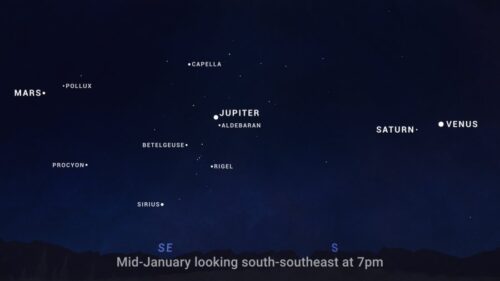
“Sky chart showing The Moon near Jupiter in the morning sky before sunrise on September 24, along with some of the well-known (Northern Hemisphere) winter stars and constellations.” Credits: NASA/JPL-Caltech
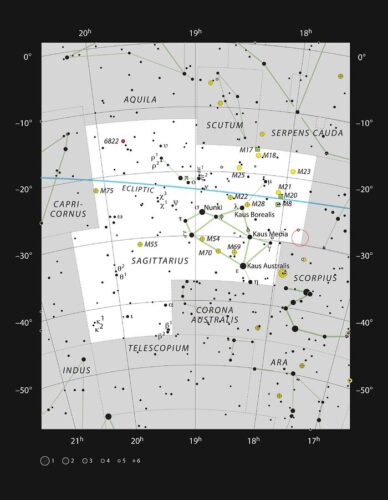
In September, Pegasus becomes increasingly prominent in the southeastern sky, allowing stargazers to locate globular star clusters and a nearby double star, Alpha Capricorni. Keep watching for space-based views of densely packed, spherical collections of ancient stars in visible and X-ray light
About this Series … “Tonight’s Sky” is a monthly video of constellations you can observe in the night sky. The series is produced by the Space Telescope Science Institute, home of science operations for the Hubble Space Telescope, in partnership with NASA’s Universe of Learning. This is a recurring show, and you can find more episodes—and other astronomy videos—at https://hubblesite.org/resource-gallery/tonights-sky.
Pete Lawrence and Paul Abel reveal what’s in the night sky this month, including the planets improving, a partial lunar eclipse on 18 September and Saturn and Jupiter moon events.
Looking to expand your astronomy knowledge even further? The Astronomy Hub is the place to learn everything from what’s in the sky this month, to what gear can help you capture the best celestial images. Learn more here ➡️ https://www.highpointscientific.com/a…
…
#highpointscientific #astronomy #september
Chapters 00:00 – Introduction 00:37 – Nearest Neighbors 02:02 – Saturn & Neptune at Opposition 03:01 – NGC 7000 04:04 – Messier 39 04:30 – Messier 2 04:59 – Messier 15 05:33 – Conclusion
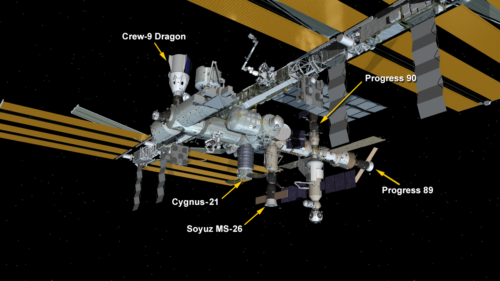
These are the 6 visiting spaceships currently docked to the Space Station. It’s a shell game to make room for new ships as they arrive. Delaying @Boeing Starliner has made it more complicated – final decision tomorrow: https://t.co/hLcFwxgtrV
image: @NASApic.twitter.com/fuhpdblCXK
** Progress 89 Cargo Ship Docking – Saturday, August 17,2024 – NASA Video
The uncrewed Roscosmos ISS Progress 89 cargo spacecraft docked to the Zvezda module August 17 after launching to the International Space Station from the Baikonur Cosmodrome in Kazakhstan August 14 on a Soyuz booster rocket. Progress is filled with over three tons of supplies and cargo and will remain docked to the space station for approximately six months.
** NASA’s Northrop Grumman 21st Cargo Resupply Services Rendezvous and Capture- Tuesday, August 6, 2024 – NASA Video
Loaded with food, fuel, and supplies, the unpiloted Northrop Grumman CRS-21 Cygnus cargo craft arrived to the International Space Station August 6 where it was installed to the nadir port of the Unity module. Dubbed the “SS Richard ‘Dick’ Scobee” for the late NASA astronaut who perished during the Challenger accident, Cygnus launched from the Cape Canaveral Space Force Station in Florida on August 4 atop an SpaceX Falcon 9 rocket and will remain docked to the space station for approximately six months.
** NASA’s Northrop Grumman 21st Cargo Resupply Services Installation – Tuesday, August 6, 2024 – NASA Video
Loaded with food, fuel, and supplies, the unpiloted Northrop Grumman CRS-21 Cygnus cargo craft arrived to the International Space Station August 6 where it was installed to the nadir port of the Unity module. Dubbed the “SS Richard ‘Dick’ Scobee” for the late NASA astronaut who perished during the Challenger accident, Cygnus launched from the Cape Canaveral Space Force Station in Florida on August 4 atop an SpaceX Falcon 9 rocket and will remain docked to the space station for approximately six months.
** Many questions remain with NASA’s plan to deorbit ISS with SpaceX – Laura Forczyk
SpaceX is building a Dragon-modified deorbit vehicle to send the International Space Station into the ocean. But many questions remain, such as the exact timeline, the budget, the salvaged materials, the transition to commercial space stations, and more.
** ISSRDC 2024 Day2 Fireside Chat: Technology Development on the ISS and Future LEO Platforms – ISS National Lab
During this session, launch providers and implementation partners that support the International Space Station Program highlighted the challenges and successes of launching projects to low Earth orbit (LEO), and highlighted some of the recent investigations they supported. This panel discussed the level of detail required behind the scenes to support a project or launch, while showcasing the diversity of experimentation taking place on this space station, and how the work supported now sets the foundation for research on future R&D platforms in LEO.
“In the short term, commercial space stations are an essential next step to fill the void left by the impending decommissioning of the ISS,” said Lauren Andrade, a spokesperson for the Beyond Earth Institute. “Beyond that, commercial space stations offer a flexibility and capital that government-run projects simply do not possess.”
NASA is working with at least three companies that are designing space stations to replace the International Space Station before it de-orbits in 2031.
“NASA can utilize those resources in our exploration of the heavens, back to the moon and on to Mars. Then we can rent space on a commercial space station to do our research, to prepare our astronauts for longer flights out into the cosmos,” NASA administrator Bill Nelson said. “We’ve given them seed money so that they can jump start developing space stations.”
The cost to the U.S. government is a factor, but Nelson believes the investment will pay off.
Axiom Space today announced the transition of CEO Mike Suffredini to a position on the company’s Board of Directors, following eight years of leading the company to significant achievements in the space industry.
— Fourth Axiom mission to the ISS on a SpaceX Dragon space ship to feature multi-national crew:
Axiom Space has announced that it is partnering with India, through the Indian Space Research Organisation (ISRO), Poland, with European Space Agency (ESA) support and Hungary to send three national astronauts to the International Space Station on Axiom Mission 4 (Ax-4), the company’s next commercial human spaceflight mission to the orbiting laboratory.
— The critical design review is the key final step before starting construction of the operational hardware:
Hab-1 reaches CDR! During Critical Design Review, Axiom Space updates NASA on its module design, soliciting Agency feedback & moving Axiom Station one step closer to LEO. pic.twitter.com/GkhEa26ill
Axiom Space has partnered with Nokia to integrate advanced 4G/LTE communication capabilities into the next-generation spacesuits that will be used for the Artemis III lunar mission.
Together, Nokia and Axiom Space will incorporate high-speed cellular-network capabilities in the Axiom Extravehicular Mobility Unit (AxEMU), supporting HD video, telemetry data and voice transmission over multiple kilometers on the Moon. This advancement will enable Artemis III crewmembers to capture real-time video and communicate with mission controllers on Earth while they explore the lunar surface.
In some cases, spacecraft operate in relative isolation, devoid of direct human interaction and decision-making. However, by integrating virtual assistants, we can revolutionize a spacecraft’s architecture and functionality. As humanity ventures farther from Earth, our reliance on artificial intelligence (AI) assistants will inevitably grow. Axiom Space, in collaboration with Amazon and Amazon Web Services (AWS), envisions a future where spacecraft interact with humans as seamlessly as humans interact with each other. A significant step in this direction occurred during Axiom Mission 3 (Ax-3), where Amazon’s Alexa voice assistant underwent a technology demonstration. During Ax-3, Axiom Space tested Alexa on an Amazon Echo device on the ground before flying it to the International Space Station (ISS) for evaluation. This milestone represents a crucial step toward creating “Earth-independent” AI assistants capable of supporting astronauts during future Mars missions.
— Space Station Foundations, with Colin Doughan (Gravitics) – Payload
This week’s Pathfinder features Colin Doughan, CEO of Gravitics, a Seattle-based startup that specializes in the development of modular space infrastructure to support the expansion of stations and orbital platforms. Their primary product is the StarMax module, which can be customized in various sizes to accommodate different launch vehicles and mission requirements. Colin shares his journey into the aerospace industry and his vision for building real estate platforms in space. With a background that includes nearly 20 years at Lockheed Martin and founding Altius Space Machines (acquired by Voyager), Colin brings a considerable amount of experience in infrastructure development.
We explore: – The approach Gravitics takes in developing scalable station modules – The market potential for free-flying stations and the impact of new launch vehicle capabilities – Operator vs builder model in space stations – Challenges in scaling manufacturing and testing for space environments – The future of artificial gravity and its importance for long-term space habitation
And much more…
• Chapters • 00:00 – Intro & Epsilon ad 02:04 – Colin’s background 03:23 – Colin’s first business venture 04:02 – Why start a space station business? 05:25 – Evolution of the Gravitics’s vision 06:57 – Zero G modules 07:36 – Business model 08:26 – Why not operate modules? 10:04 – How do you perceive the market opportunity for free-flying space stations? 18:19 – Design decisions 22:25 – Turning a competitor into a customer 25:02 – Gravitics’s approach vs existing providers 26:14 – Is there enough capital and investors to sustain this market? 30:26 – Countries creating their own launch capabilities 33:24 – StarMax 35:44 – Insourcing vs outsourcing 36:52 – Scaling manufacturing 40:05 – Testing 42:50 – Technical challengers that keep Colin up at night 44:42 – Commercial and government traction 48:34 – Long-term view 50:09 – ETA for Elysium? 50:35 – Who’s going to play Colin in the future movie about Gravitics?
that its expandable space station technology successfully passed a seventh key validation test, and second full-scale structural test, at NASA’s Marshall Space Flight Center in Huntsville, Alabama. The results herald a giant leap towards building the world’s first end-to-end business and technology platform in Low Earth Orbit, enabling humanity to find the answers to some of the toughest problems faced on Earth.
Completion of the successful Ultimate Burst Pressure test, which occurred on June 18 in collaboration with ILC Dover (an Ingersoll Rand Business) and NASA, accelerates Sierra Space’s revolutionary softgoods technology towards on-orbit operations. Planned for an initial stand-alone pathfinder mission before the end of the decade, the technology will also feature as a key element of the Orbital Reef commercial space station. The test will close out Milestone #8 for Orbital Reef with Blue Origin under NASA’s Commercial Low Earth Orbit Development Program.
Some data for the test:
Company’s second Ultimate Burst Pressure test of a full-size, inflatable space station structure occurred on June 18
Test unit stood over 20’ tall and was comparable in size to an average family home
The article was 300 m³ in volume, or 1/3rd the volume of the International Space Station
Test results exceeded NASA’s recommended x4 safety levels by 22%
Two 4-ft x 4-ft steel blanking plates were integrated into the highest loaded cylinder section of the article; both were 50 lbs. lighter than the ones used in the first full-scale test and accommodate larger windows
The test article in the company’s historic first full-scale burst test last December peaked at 77 psi, which well exceeded (+27%) NASA’s recommended level of 60.8 psi (maximum operating pressure of 15.2 psi multiplied by a safety factor of four). This most recent test in June showed similar results – within five percent of the pressure loading of December’s test article – with this one reaching 74 psi, exceeding NASA’s 4x safety factor by 22 percent. These back-to-back test results accelerate Sierra Space’s path to flight certification, verifying scalability for 10 cubic-meter and up to 1,400 cubic-meter structures based on the company’s current softgoods inflatable architecture. Sierra Space is currently gearing up for a first test of its 500 cubic-meter space station technology next year.
— Advancing Next-Gen Space Station Tech with Sierra Space and NASA – Sierra Space Youtube
At Vast’s Vibe Test Lab, we’re rigorously testing Haven Demo and Haven-1 components for launch dynamics to LEO. Our in-house setup means quick design iterations, faster timelines, seamless integration, and enhanced quality. pic.twitter.com/vj4DKXWfHD
— Starlab: the most international commercial space station – Laura Forczyk
Among the current commercial space station players, Starlab is the most intentionally international, forming partnerships all over the world. Will this help the small upcoming space station become profitable and sustainable? Other commercial space station companies should take note.
Innovating Space with Expandable Architecture: An Interview with Max Space”s Aaron Kemmer and Maxim de Jong
Join Torsten Kriening, Publisher at SpaceWatch.Global, in an enlightening conversation with Maxim de Jong and Aaron Kemmer from Max Space. Delve into the groundbreaking technologies behind expandable and inflatable space structures, their applications, and the future of real estate in space. Learn about Max Space’s mission to maximize usable space in orbit, from initial small modules to potentially vast habitats in space and on the Moon. This episode explores the challenges and innovations in creating habitable volumes for long-term human presence beyond Earth.
— Outline of the Max Space plan:
Max Space: Expandable Habitats for Space Commercialization
Key Points:
1. Launching in 2026: New expandable space habitat technology
2. Innovation: Larger, stronger, cheaper than current options
3. Founded by space industry veterans Aaron Kemmer and Maxim de Jong
While the US and its partners are planning to carry out the Artemis Program in the coming decade, China is preparing the competing “ILRS”, aka the International Lunar Research Station. In this episode, we do a deep dive into China’s permanent lunar base project and its scientific and political ramifications. …
00:00 Artemis and the ILRS (introduction) 00:43 China’s Moon Program: Early Beginnings 01:58 Chang’e 1 to Chang’e 6 02:35 First Mention of the ILRS 03:21 Private Internet Access 05:14 The ILRS Becomes a Sino-Russian Project 06:02 ILRS Phase 1 – Moon Base “Basic Model” 06:57 ILRS Phase 2 – Moon Base “Construction Phase” 10:09 How China plans to launch the ILRS hardware 11:20 Can the ILRS become international?
Science fiction is becoming reality. The Artemis program is taking us back to the Moon, and this time we’ll establish a presence that will eventually take us farther into space than ever before. The building blocks of space infrastructure required to carry humanity on this journey are in development today.
Dive into our vision of a water-based lunar architecture on the Moon that demonstrates our commitment to sustainable space exploration. This journey to the Moon is not just for knowledge, but securing our future, enabling Mars exploration, permanent bases and returning valuable resources to Earth.
Jump in our rover and take a tour of the lunar south pole to see the infrastructure needed to maintain a permanent presence on the Moon. Some of the highlights include: Transportation: technology like the Orion spacecraft to transport humans to and from the Moon. Mobility: vehicles to explore the Moon’s surface. Power: a grid providing continuous power regardless of the Sun’s position. Habitation: reliable, lightweight and spacious shelters made of inflatable softgoods technology. Space Resources: water ice harvesting and regolith mining to support life on the Moon.
Our approach for a responsible and effective path forward is water-based, nuclear-enabled and commercially-invested. To learn more about our vision for humanity’s future in space, visit: https://lmt.co/3YqBr48
To download our novella white paper to see our vision for how this future will play out, visit: https://lmt.co/3YtDAvZ
Tesla’s Cybertruck may look ungainly on Earth, but a pressurized version of the vehicle might be just the thing for gathering up samples of Martian rock and soil for return to Earth. That’s one of the way-out concepts that was discussed in Seattle during the past week’s convention of the Mars Society, a nonprofit advocacy group.
Robotically controlled Cybertrucks could be part of a Mars exploration system that also includes SpaceX’s Starship super-rocket as well as spaceworthy versions of all-terrain vehicles and humanoid robots built by Tesla, according to mission plans suggested by Mars Society co-founder Robert Zubrin, retired NASA engineer Tony Muscatello and business analyst Kent Nebergall.
Zubrin said the Starship-based concept could even accelerate progress toward crewed missions to Mars.
In this episode of the Space Café Podcast, host Markus discusses the intricacies of space habitation with Dr. Barbara Imhof, a prominent space architect from Liquifer. They explore the challenges and innovations in making off-Earth living comfortable and sustainable, including construction methods on the Moon, dealing with lunar dust, and creating multifunctional spaces. They also touch on the importance of cooperation for space missions and the influence of seeing Earth from space on human perspective. Barbara shares insights into upcoming projects and discusses ongoing efforts to develop near-future space habitats.
We welcomed attorney Camisha Simmons to the program to discuss private party and commercial space property rights and asteroid mining legal concerns for space development. Ms. Simmons is a speaker on these issues at conferences including ISDC [National Space Society‘s International Space Development Conference].
** Moonshot for Life: Smithsonian’s Lunar Biodiversity Preservation Project – SpaceWatch.Global TV
In episode 113 of the Space Cafe Podcast, host Markus explores a groundbreaking concept with Dr. Mary Hagedorn, a distinguished researcher at the Smithsonian Conservation Biology Institute. The discussion centers on the ambitious idea of creating a backup of Earth’s biodiversity on the Moon.Key Topics:
• The critical state of coral reefs and the impact of climate change • The concept of a lunar biorepository for safeguarding genetic material • Technical, logistical, and ethical aspects of the project • Implications for conservation, space exploration, and Earth’s future
Episode Breakdown: 00:00 Introduction to the Space Cafe Podcast 00:43 Exploring the concept of “Planet B” 01:48 Meet Dr. Mary Hagedorn 03:44 Current state of coral reefs 04:45 The ecological significance of corals 06:46 Conservation challenges and efforts 09:43 Cryopreservation (https://www.nature.com/articles/s4159…) and biorepositories 19:58 The Moon as a potential biorepository 29:36 Strategic selection of key species for preservation 30:38 Challenges in genetic diversity and permitting 31:24 Sampling and preservation techniques 38:16 Citizen science (https://www.nationalgeographic.org/en…) and global collaboration 43:25 Philosophical and practical considerations for space colonization 46:45 Technical challenges and future prospects 01:02:34 Inspirational vision and call to action
This episode offers a fascinating look at the intersection of conservation biology and space exploration, presenting innovative solutions to preserve Earth’s biodiversity for future generations.
Participants: Jim Crisafulli, Henk Rogers, Tom Matula, Jerry Stone, Susan Jewell, Dinis Afonso Ribeiro, Gary Barnhard, Werner Grandl, Joe Pelton, Madhu Tangavelu, Adriano V. Autino
=== Other space habitat and settlement news and articles:
** Highlight: California – Eureka – Sacramento – Central Valley – Wildfire smoke – Aug 18, 2024 12:55 PM – ISS Above
** Live Video from the International Space Station (Official NASA Stream) – NASA
Watch live video from the International Space Station, including inside views when the crew aboard the space station is on duty. Views of Earth are also streamed from an external camera located outside of the space station. During periods of signal loss due to handover between communications satellites, a blue screen is displayed.
The space station orbits Earth about 250 miles (425 kilometers) above the surface. An international partnership of five space agencies from 15 countries operates the station, and it has been continuously occupied since November 2000. It’s a microgravity laboratory where science, research, and human innovation make way for new technologies and research breakthroughs not possible on Earth. More: https://go.nasa.gov/3CkVtC8
Did you know you can spot the station without a telescope? It looks like a fast-moving star, but you have to know when to look up. Sign up for text messages or email alerts to let you know when (and where) to spot the station and wave to the crew: https://spotthestation.nasa.gov