Category Archives: In Space Infrastructure

FISO: Exploring earth’s minimoons

The latest presentation to the Future In-Space Operations (FISO) study group is now posted in the FISO Working Group Presentations Archive. There are slides and a video in a zip file plus an  audio file  (mp3) available for the talk, Minimoons: New Prospective Targets for Human Exploration, Bill Bottke, SWRI Boulder – Jan.15.14

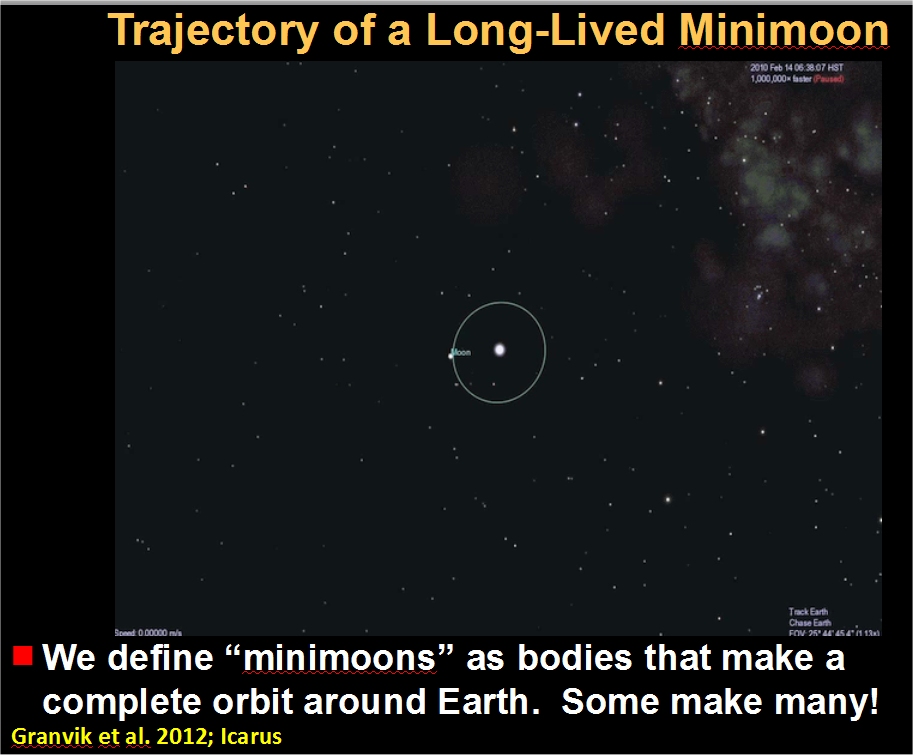
Occasionally, near earth asteroids are captured temporarily in orbits around earth. Bottke calls these Minimoons:

MinimoonDef

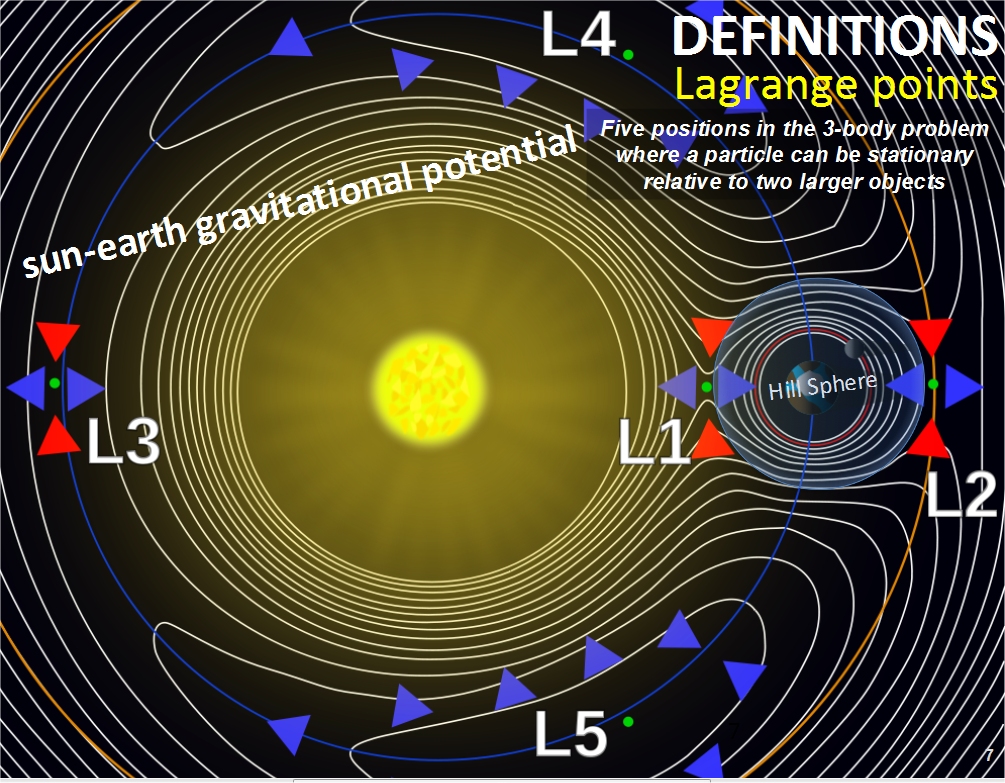
TheEarth-Sun Lagrange points minimum areas are of particular interest.

lagrangePts

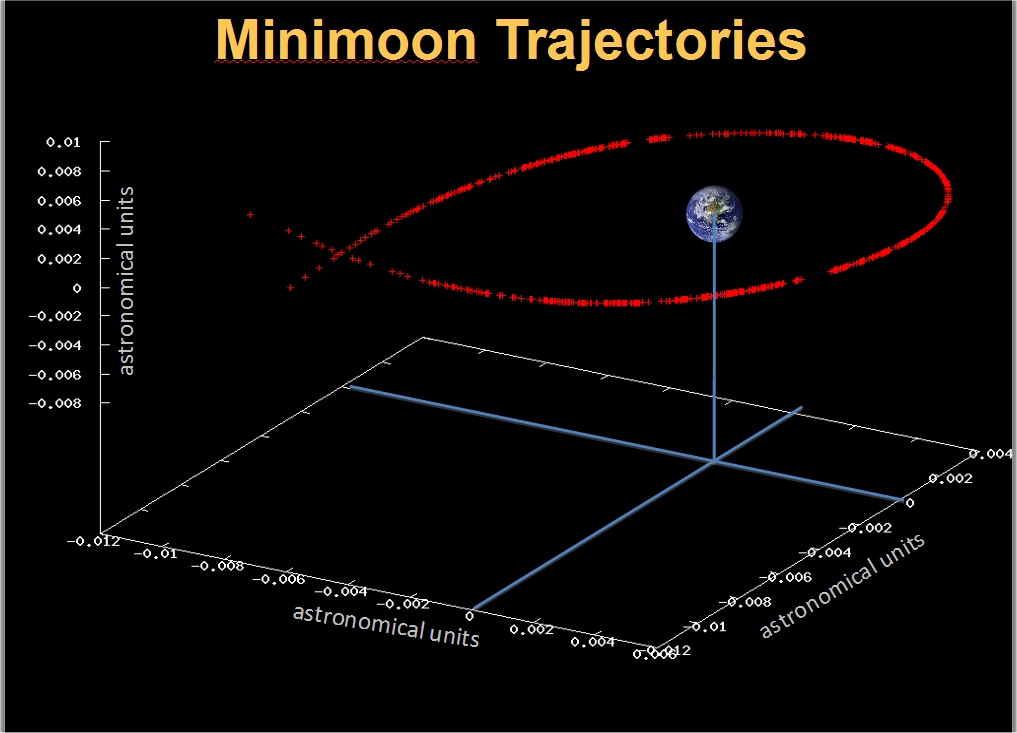
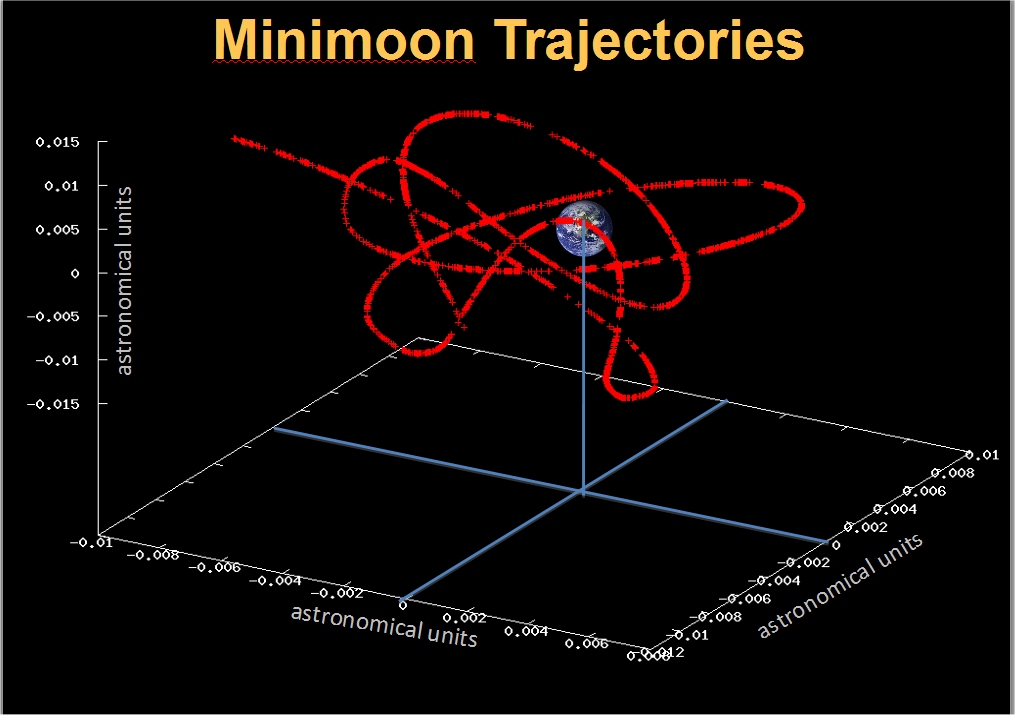
The objects can last for just one simple orbit –

MinimoonTraj1

Or for many complex orbits:

MinimoonTraj2

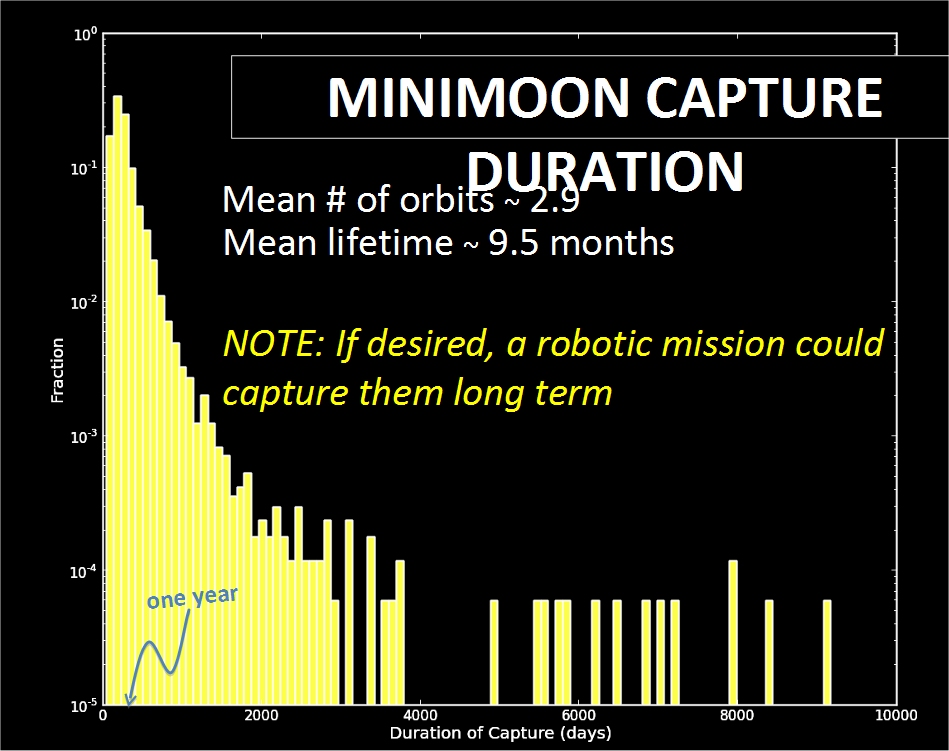
Lifetimes in the earth region can span many years:

MinimoonLifetime

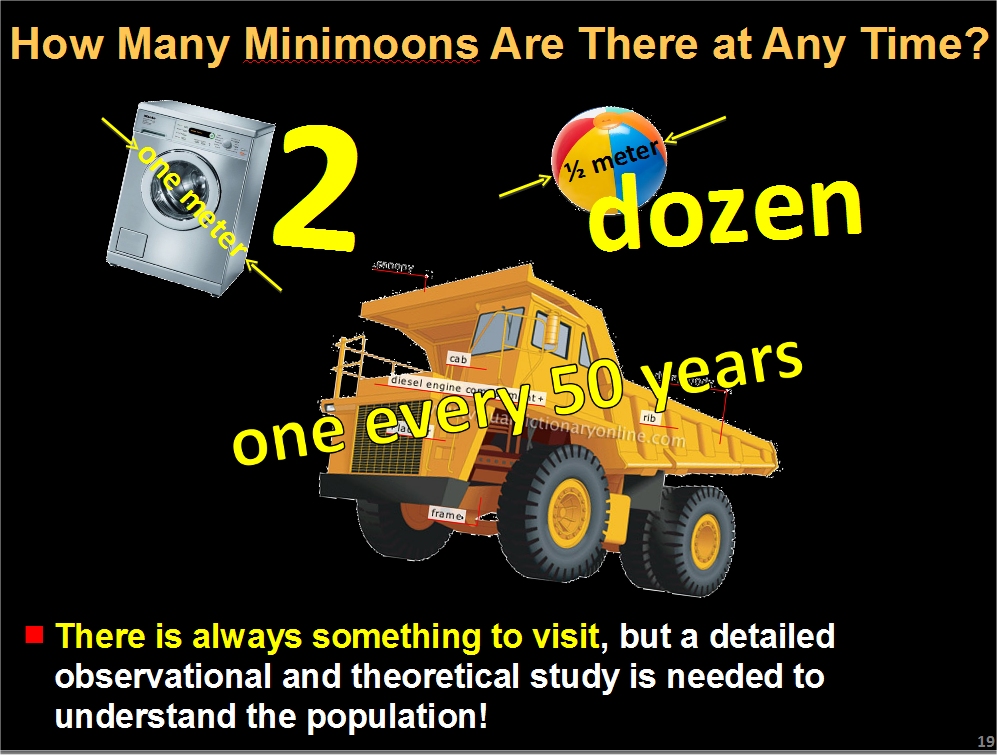
They estimate a couple of dozen such Minimoons are in orbit around earth at any given time:

MinimoonNum

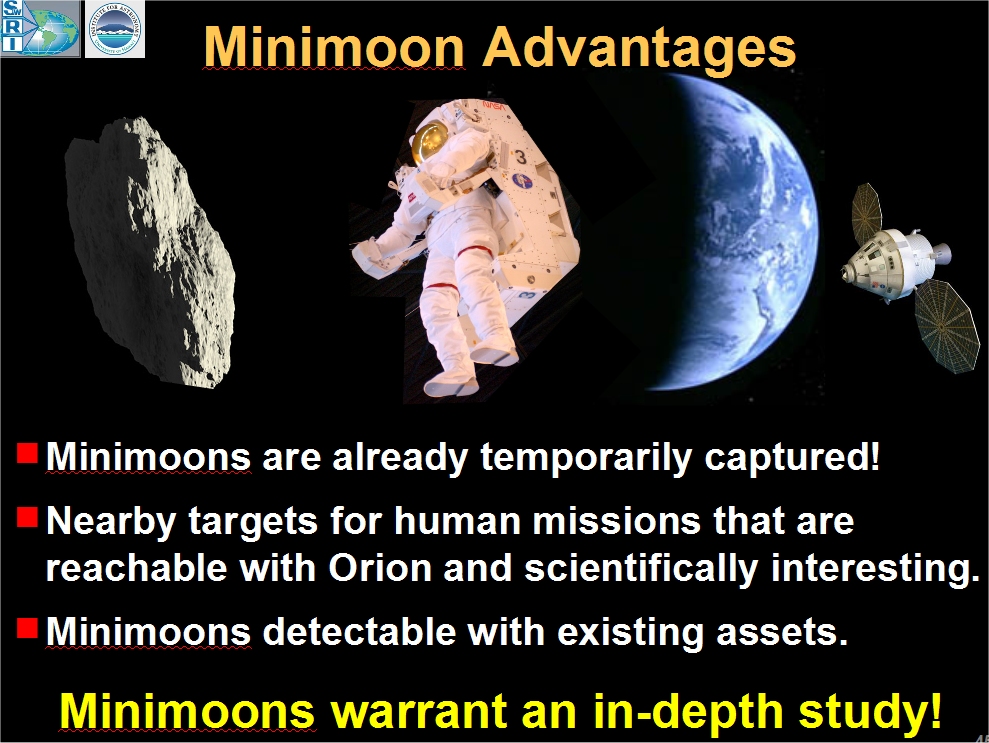
Bottke goes on to  discuss ideas for improving the detection of Minimoons and for targeting them for exploratory missions, including human missions.

MinimoonAdvantages

FISO: Co-Robots and the future of space activity – Madhu Thangavelu

The latest presentation to the Future In-Space Operations (FISO) study group is now posted in the FISO Working Group Presentations Archive. Both slides (pdf) and audio (mp3) are available for the talk,  Co-Robots and the Future of Space Activity, Madhu Thangavelu , USC – Jan.8.14

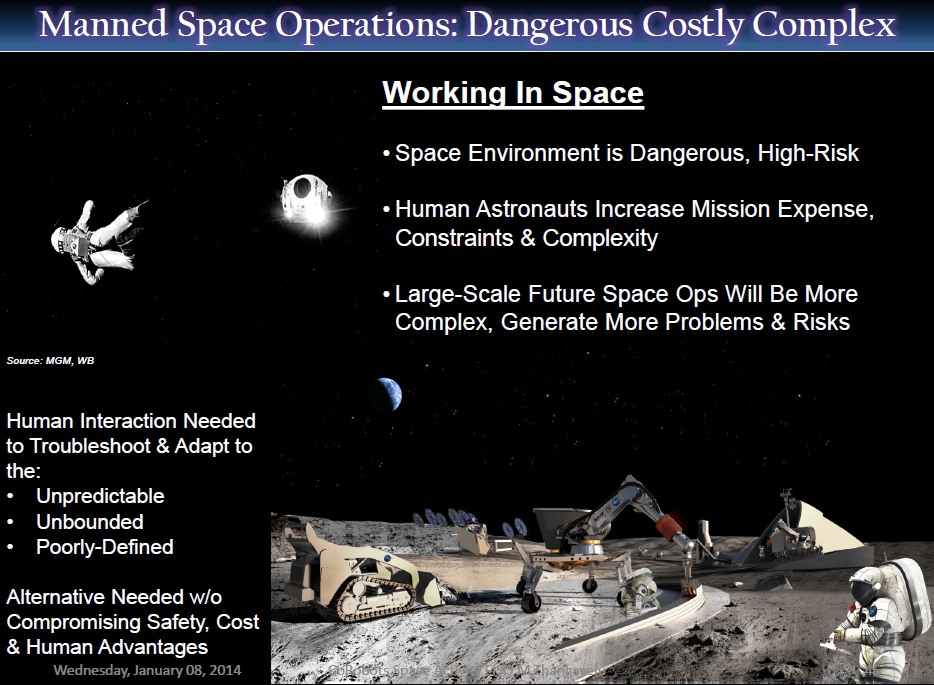
Space exploration and development is often presented as a robot versus manned binary choice but it is really robot versus manned + robot. To accomplish significant development in space, humans will need the productivity multipliers provided by robots, particularly tele-operated ones. Resource extraction and processing, construction, and other tasks in the vacuum and radiation of space, in the dust of the Moon, etc will be controlled by people nearby in safe and cozy habitats.

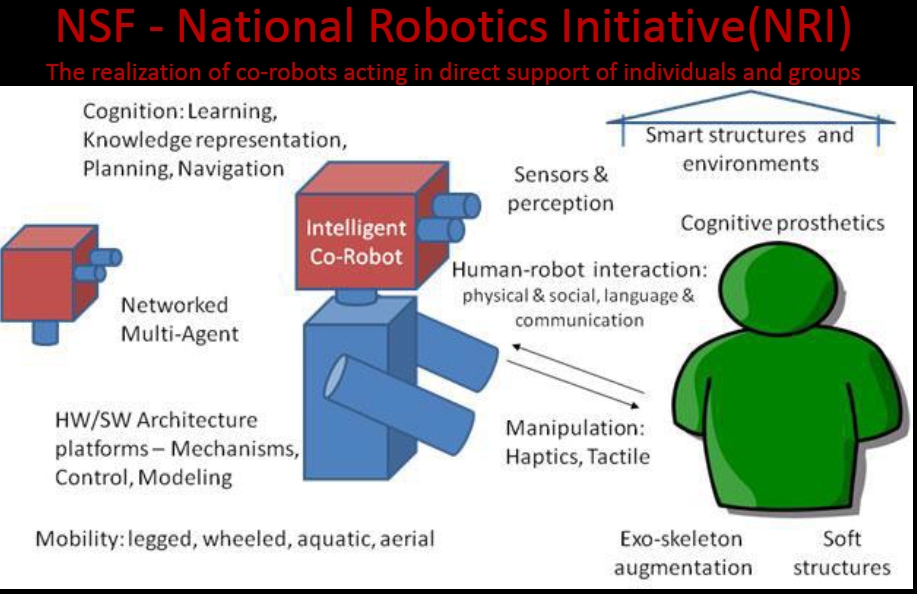
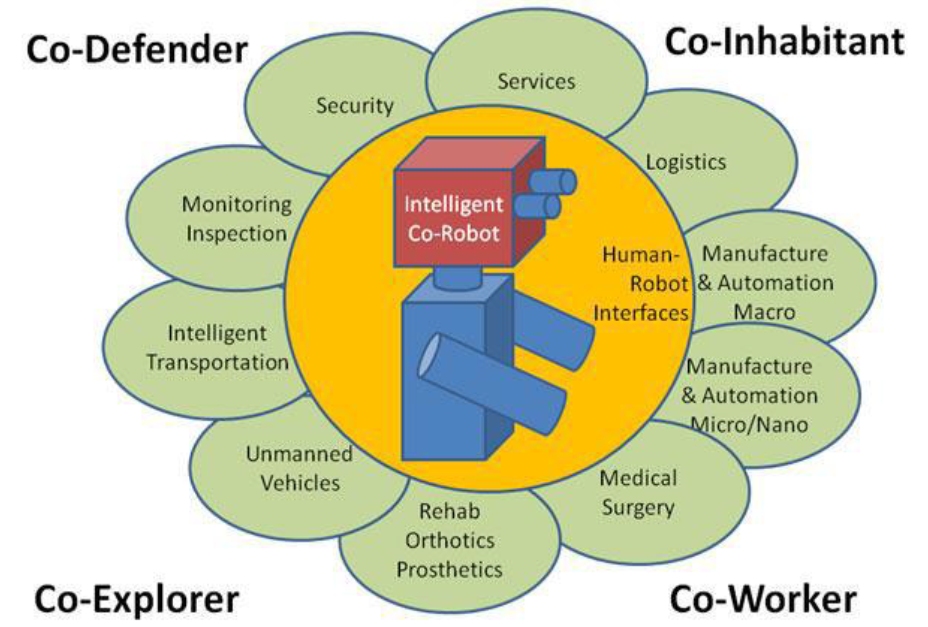
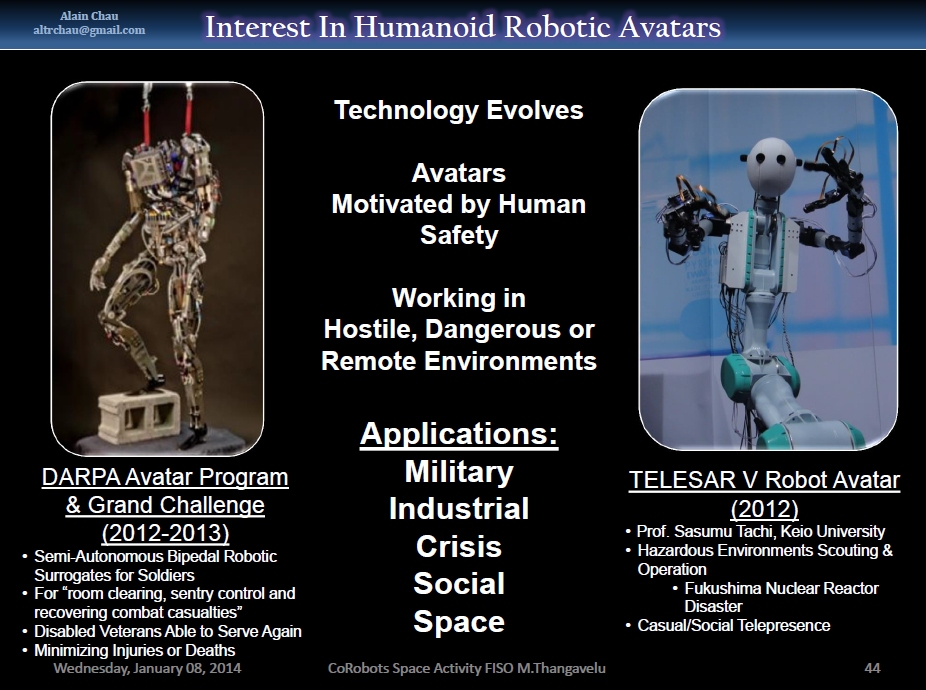
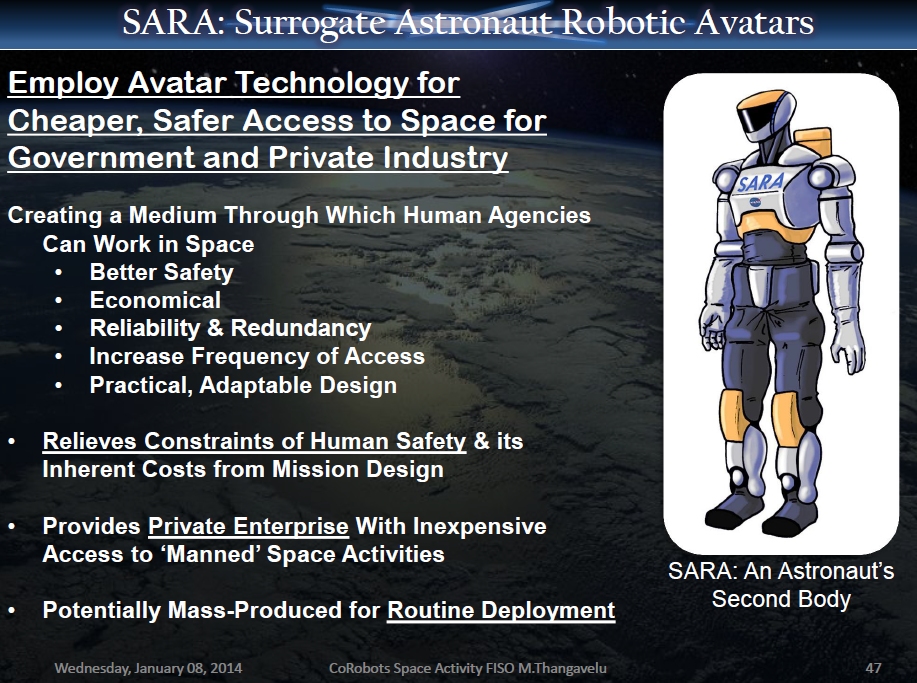
Thangavelu’s presentation discusses many topics related to such scenarios. He starts with the CoRobot concept, in which robots work closely with people to assist them in different ways. He then moves to the SARA (Surrogate Astronaut Robot Avatar) concept  in which a person wears an elaborate suit whose movements are mimicked by a robot out, say, on the surface of the Moon. Thangavelu  lays out a plan for developing and testing SARA systems starting with a facility on the ISS.

Here is a sampling of his many slides:
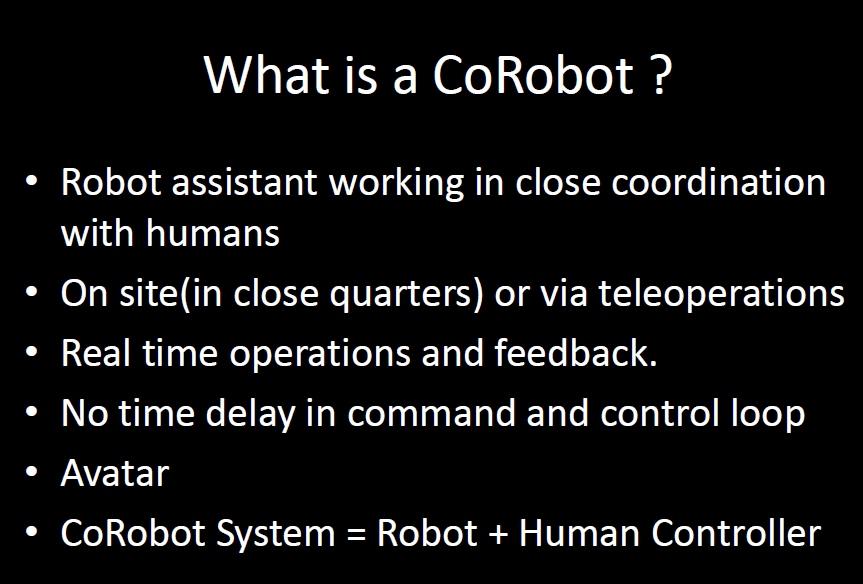
 
WhatIsACoRobot

NSF-NRI

Co-DefenderEtc

MannedSpaceOps.


RoboticAvatars

SARA

FISO: The Global Exploration Roadmap

The latest presentation to the Future In-Space Operations (FISO) study group is now posted in the FISO Working Group Presentations Archive. Both slides (pdf) and audio (mp3) are available for the talk, ISECG and Global Exploration Roadmap, Kathy Laurini, NASA JSC, Dec.11.13.

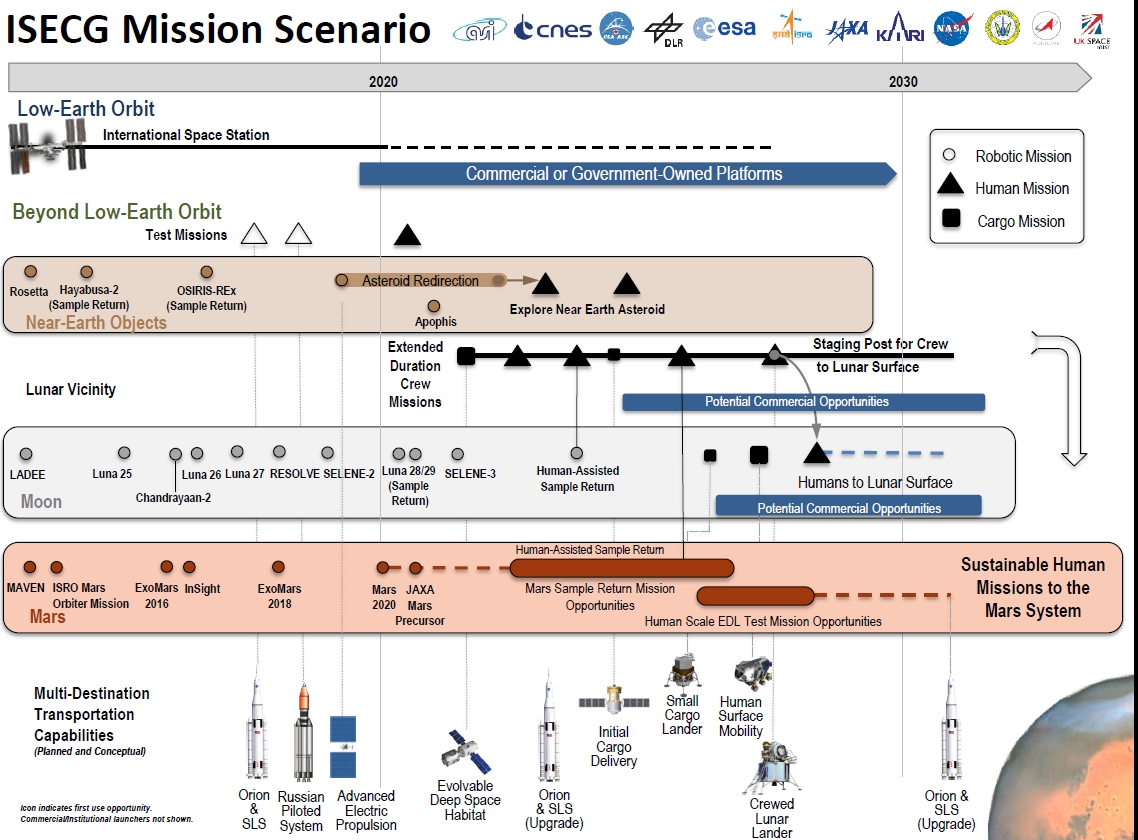
Laurini describes the grand Global Exploration Roadmap (or framework or scenario or dreamlike hallucination) that NASA and 11 other global space agencies (International Space Exploration Coordination Group or ISECG)have laid out for their human space exploration plans for the next few decades:

GER

ISECG_MissionScenario

See also


FISO: Laser communications relay demo project – Bernard Edwards, NASA Goddard

The latest presentation to the Future In-Space Operations (FISO) study group is now posted in the FISO Working Group Presentations Archive. Find slides and audio for the talk at Overview of the Laser Communications Relay Demonstration Project, Bernard Edwards, NASA GSFC – Oct.23.13

Here are some slides from the presentation about the successful demonstration of high bandwidth communications via laser between the LADEE orbiter at the Moon and stations on earth:

LLCDFoundation

LCRDMissionArchitecture

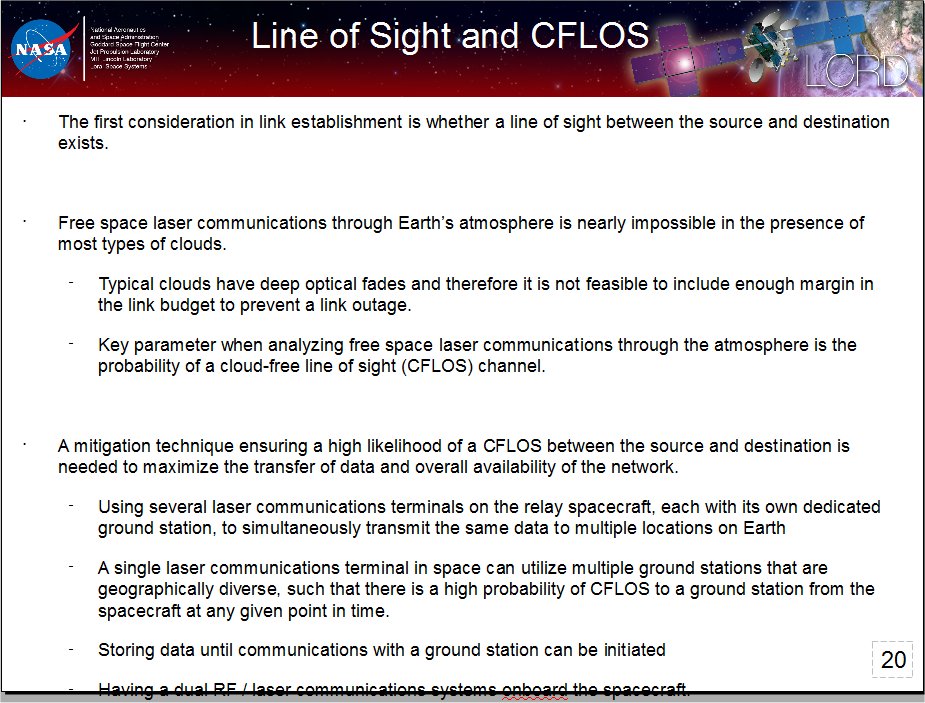
LineOfSightAndClouds

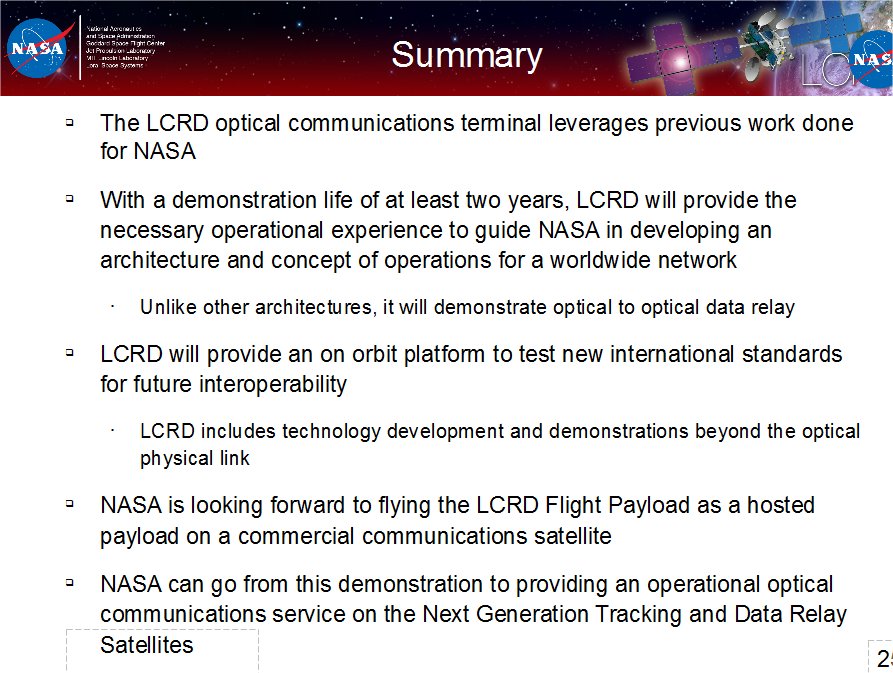
LCRDSummary


Here’s a NASA press release about the demonstration: NASA Laser Communication System Sets Record with Data Transmissions to and from Moon – NASA.

China’s unusual satellite trio

On July 19th,  China launched three satellites – Shijian 15, Chuangxin 3 and Shiyan 7. Since then they seem to be demonstrating formation flying, satellite servicing and/or anti-satellite techniques but it’s not really clear what they are doing: