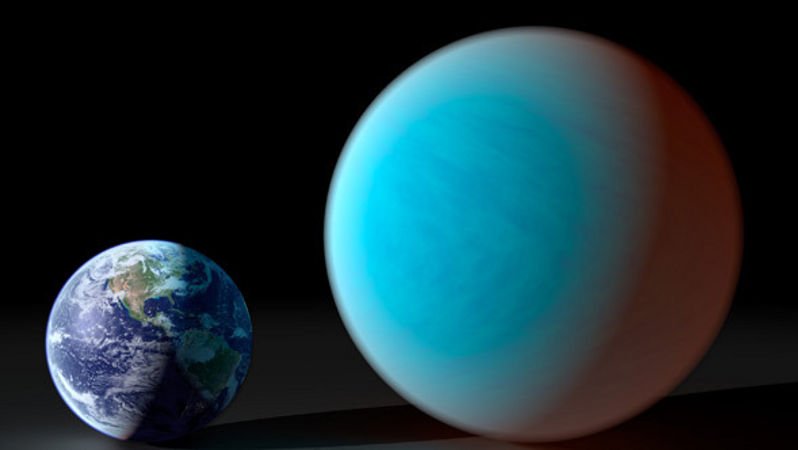
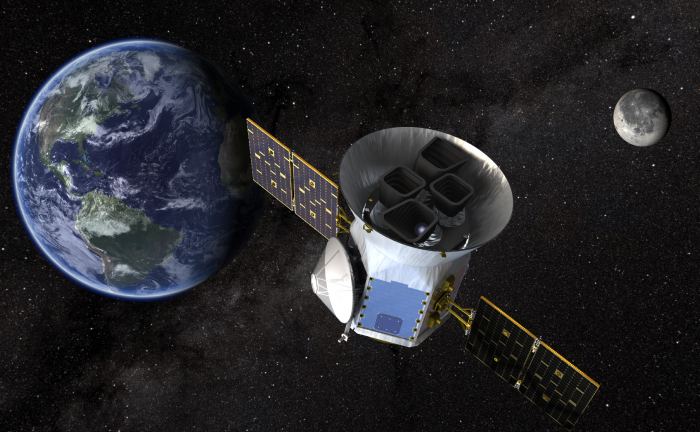
“About 35% of all known exoplanets which are bigger than Earth should be water-rich. These water worlds likely formed in similar ways to the giant planet cores Jupiter, Saturn, Uranus, Neptune in our own solar system. The newly-launched TESS mission will find many more of them, with the help of ground-based spectroscopic follow-up. The next generation space telescope, the James Webb Space Telescope, will hopefully characterize the atmosphere of some of them.” – NextBigFuture
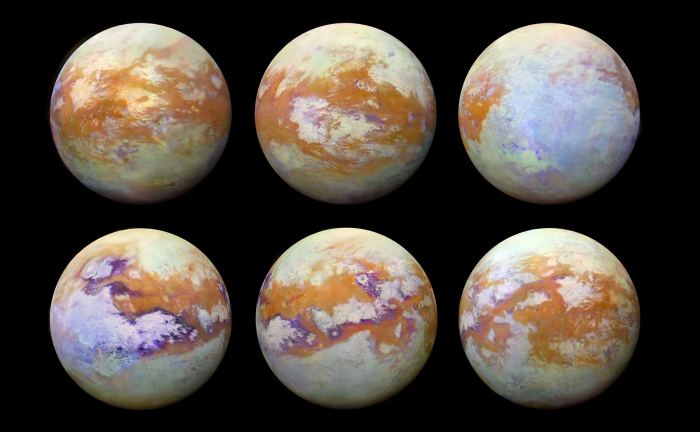
Infrared images of Saturn’s moon Titan, captured by Cassini’s the Visual and Infrared Mapping Spectrometer (VIMS) instrument. Credit: NASA/JPL-Caltech/Stéphane Le Mouélic, University of Nantes, Virginia Pasek, University of Arizona. Article at Universe Today
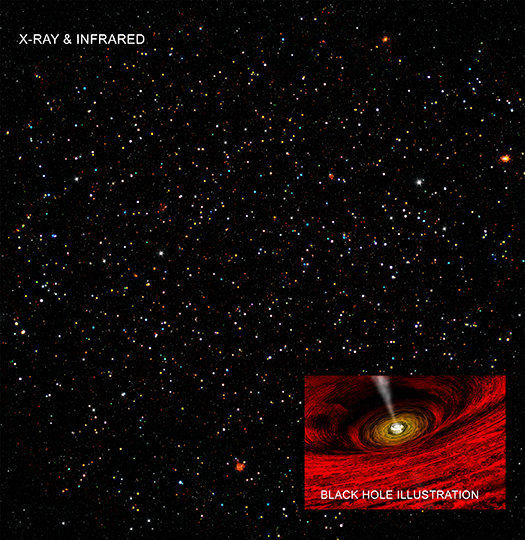
This image shows data from a massive observing campaign that includes NASA’s Chandra X-ray Observatory. These Chandra data have provided strong evidence for the existence of so-called intermediate-mass black holes (IMBHs). Combined with a separate study also using Chandra data, these results may allow astronomers to better understand how the very largest black holes in the early Universe formed, as described in our latest press release. Credit: X-ray: NASA/CXC/ICE/M.Mezcua et al.; Infrared: NASA/JPL-Caltech; Illustration: NASA/CXC/A.Hobart
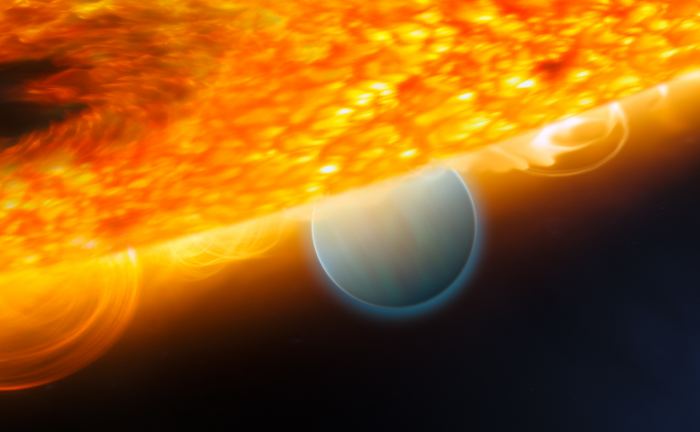
“Artist’s impression of the Jupiter-size extrasolar planet, HD 189733b, being eclipsed by its parent star. Credits: ESA, NASA, M. Kornmesser (ESA/Hubble), and STScI” – Universe Today