Here we
present several diverse genres of space inspired
music as well as natural
sounds that actually originate in space.
Ambient, New
Age & Electronic Space Music
We begin with electronic
space music. Electronic music ranges from Space
Age Pop to Progressive Rock and Spacerock
to New Age.
The term Space Music,
in fact, often implies New Age music. This probably
comes from the Hearts
of Space radio program that began playing meditative
music on Berkeley radio in the 1970's and is now syndicated
around the country.
Note that a sub-genre of New Age has developed with
music intended as soundtracks for planetarium presentations.
See, for example, the Loch
Ness Production albums.
We present here a few albums with a strong connection
to actual space exploration and to musician sites and
other resources !
SOMA
FM Space
Station Soma: Tune in, turn on, space out. Spaced-out
ambient and mid-tempo electronica. SomaFM
Mission Control - enjoy the audio from historical
NASA missions, or live audio during a Shuttle mission,
mixed in with ambient and experimental music.
Pioneer
10
"The music for this piece was recorded on June
13, 1983 in celebration of the
fact that Pioneer 10 was leaving our solar system that
day, headed for
interstellar space. I've coupled this with a video adaptation
of the official NASA
artwork created by Don Davis. The image is courtesy
NASA. Feel free to use the music
and video in new creations, provided you provide credit
to me, Don Davis and NASA.
I hope you enjoy this musical voyage that commemorates
a great day
in space exploration. --Fred Becker "
Fred
Becker
A long time space music creator & space activist.
Explorations of our musical universe via vintage and
contemporary keyboards and software. Electronic, space,
synthesizer, neoclassical, ambient, soundtrack music.
It is said that man can achieve anything in
his dreams. Well, this album takes this statement in
every aspect to the next level; just close your eyes
and join me on a cosmic trip to the Red Planet. Let
the music take you on a journey towards Mars.
Listen to the full album (2009) on line.
Apollo
- Synth.NL
Michel van Osenbruggen, who records under the name Synth.NL,
created this album (released on Oct. 1, 2011) because
he -
"was inspired by the Apollo Moon missions, undertaken
by NASA during the 60’s and 70’s of the previous century.
Since I was born in 1969, the same year that Neil
Amstrong set foot on the Moon, I have always felt
a very strong connection to this event. Listening
to this album will take you on a voyage from the Earth
to the Moon and back again. Many of the astronauts
that actually took this journey have stated that they
went up there to discover the Moon, yet really discovered
Earth. Before Apollo, no-one had ever traveled far
enough away to actually see the whole planet in one
view. Pictures of that beautiful blue marble floating
in space have become famous the world over and have
made mankind feel more interconnected than ever before.
In my opinion, the Moon landings represent human’s
greatest technological achievement up to date. I really
hope to live the day that we will be able to return
there."
Eleven
by Graham Smith
This project is "A musical tribute to Apollo 11, the
first mission to land a man on the moon". The website
provides samples of the eleven songs, which each depict
a phase of the Apollo 11 journey. The album offers "over
50 mins of melodic electronic instrumental music".
"This ambient melodic electronic album is a musical
journey of Apollo 11 - the first mission to land on
the moon. Graham Smith creates atmospheric soundscapes
with lush retro sounding keyboards reminiscent of
Air, Chicane and Orbital with a little Jarre and Vangelis.
Sit back, relax and enjoy a journey to the moon and
back with over 50 minutes of music."
Philip
Sheppard
Cellist, professor of music, and composer Philip
Sheppard has created several space inspired works.
This includes the soundtrack for the well reviewed documentary
In the Shadow of the Moon (2007). His Cloud Songs became
the basis of the music
for First
Orbit (2011).
Columbia:
We Dare to Dream
Musician and composer Anne
Cabrera has created "a musical tribute to the astronauts
of the NASA space shuttle Columbia". The music is described
as "instrumental, combining synthesizer sounds with
electronic versions of traditional orchestral instruments".
The web page Columbia:
We Dare to Dream describes the CD and provides
samples of several of the tracks.
Bodhi
Leaf Productions created the documentary short film
called MicroGravity about Anne Cabrera and the
making of the CD. Here is the trailer
(WMA) for the film.
The 30-year NASA veteran astronaut who flew six Space
Shuttle flights has developed a multimedia presentation
about his life and experiences in space.
Cosmic
Fireflies CD "combines Story's poetry with
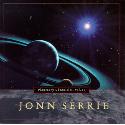
music from space luminaries; Harry Roberts, Jonn Serrie,
Brian Eno and Kevin Braheny. Perhaps the best space
music odyssey ever, this one hour journey creates
ambience, imagination and wonder".
"A
Space Story" DVD "is a galactic journey with
Story visiting the Hubble Space Telescope, viewing
Earth from Space, and reaching for the Heavens through
the eyes of Hubble with sounds from space music Luminaries."
BELLA
GAIA
A "Poetic Vision of Earth from Space" is a musical
multimedia creation of Kenji Williams. The project is
described as
a ‘Living Atlas’ multimedia journey of our
world, and expresses the deeply moving beauty of planet
Earth as seen through the eyes of astronauts by successfully
simulating space flight. Collaborating with NASA, BELLA
GAIA is a new immersive theater experience, a portal
for an audience to develop a deeper connection and empathy
with our planet Earth. Created by award winning director
and classically trained violinist Kenji Williams, BELLA
GAIA features a 45 minute live performance by Kenji
with orbiting visualizations of Earth from space. [continue]
John
Stanford
John Stanford describes his music as "Deep Space
| Ambient Music | Chillout". His website
and YouTube
Channel offer several samples such as the following:
..
Kurt Swinghammer-
Vostok 6 - 2000 Vostok
6 is an "electronic concept album inspired
by Russian cosmonaut Valentina Tereshkov".
Apollo Atmospheres Brian Eno, Daniel
Lanois, & Roger Eno Soundtrack for Al Reinert's documentary For
All Mankind. On the Brian
Eno's album Apollo: Atmospheres & Soundtracks
(1983 Editions EG - ENO 5). Some of the music can also
be found on Eno's Music for Films III.
Rendezvous
Jean Michael Jarre
This album was dedicated to the Challenger crew. As discussed
above,
Ron McNair during the Challenger mission was going to
play on his saxaphone a piece written for him by Jarre.
The piece appears on this album with the sax played
by Pierre Gossez: Track 6 - Last Rendez-Vous.
Film score includes extracts from "Orchestral
Tubular Bells", "Orchestral Hergest Ridge",
"Ommadawn", "Incantations" and "Portsmouth".
Music written by Mike Oldfield except "Portsmouth"
which is traditional. Directed by Tony Palmer
A film first televised in 1979 and later edited
on vhs in 1983. "The Space Movie" contains footage
specially made avaliable by NASA and The U.S.
National Archive of the lunar landscape to commemorate
the 10th anniversary of the first man landing
on the moon.
The soundtrack was supposed to be released
as an album, including the otherwise unreleased
"Orchestral Hergest Ridge", but it never was.
Vangelis has created a number of works inspired by
space themes. For example, he did the soundtrack for
the famous Cosmos documentary series created and hosted
by the astronomer Carl Sagan.
Recently, he released his Mythodea composition that
was dedicated to the 2001 Mars Odyssey mission that
is now orbiting the red planet. Audio
clips
A concert of the music was performed on June28, 2001in
a Greek temple in Athens and included sopranos Kathleen
Battle and Jessye Norman, the London Metropolitan Orchestra,
the 120-member chorus of the National Opera of Greece
and twenty-eight percussionists.
A 1996 compilation of Vangelis's space inspired compositions
such as Albedo 0.39 and Cosmos.
Vangelis also did an electronic version of his soundtrack
for Blade Runner, which takes place on earth
but had characters and background stories involved with
space travel.
Immersion
Theory
Ambient "space music" from John-Mark Austin.
The first release, "The Icarus Foray is
a transcendent auditory journey through the universe
and into the heavens."
"...Throughout four tracks Austin contemplates
the grandeur of the cosmos and mankind's attempts
at communion with it. With airy synth pads, deep sweeping
tones and reverberant waves of electronic harmonies
each composition builds a delicate atmosphere. Combining
this with astronaut voices, ethereal choirs, rumbling
spaceship effects and a dynamic musical range extending
from the sustaining quietude of space to exultant
orchestral crescendos gives us an album equally at
home in the planetarium as it is on a remote hillside
gazing at stars."
MURCOF Fernando Corona is a "Mexican electronica artist
and soundscaper" who has produced music for planetariums.
Fiorella
Terenzi
An astrophysicist, a science popularizer, and a musician,
Dr. Fiorella Terenzi has created several works that
use sounds derived from celestial radio signals:
Digital
Moonscapes by Wendy
Carlos Wendy
Carlos, of Switched-On Bach fame and composer of
soundtracks for A Clockwork Orange, The Shining,
and Tron, was inspired by the Voyager missions
to create a suite of musical portraits of the major
moons of the solar system.
Emulating a fully symphony orchestra with her GDS and
Synergy Digital Synthesizers (this was before samplers),
she performs two suites on the album:
Cosmological Impressions
with three movements: Genesis, Eden and .I.C ("Intergalactic
Communications").
The Moonscapes, in the spirit of Holst's Planets,
begins with an impression of Luna and then works outward
to the moons of Mars, Jupiter, and Saturn.
LifeTron Evolution
of the Sun
Mike Milillo and Henry Tarnecky are music composers
"who write music pertaining to the fusion of science
and music." Their most recent work is called "The
Evolution of the Sun"
The work "is a 20-minute musical, narrative depiction
of the scientific processes involved in the birth of
stars, their evolution and inevitable yet variant demise.
Experience a prelude of the big bang and the ultimate
coalescing of hydrogen to helium, the fundamental elements,
which make up our star and all stars in our perceived
universe."
Other projects in development include compositions
celebrating "The Science of Special and General Relativity,"
Timeship Boris
Belo and his wife Victoria are independent producers
of audiovisual programs that mainly invovle "sci-fi
audio theatres (radio drama) and audiobooks, plus all
that comes with it: music soundtracks, special effects
(SFX), foleys, moods, soundcapes, etc."
Samples
of their own music are available on their ACIDplanet.com
page, including a complete version of Mars
Cantata (to STS-107). They have created several
albums including: Spacewalk: From Eden to Mars
(2003).
Isao
Tomita
A pioneer in synthesizer music, Tomita has made several
albums with space themes. These include
The
Planets (1976) - his version of Holst's The
Planets Suite.
Kosmos (1978)
Space Walk (1984) - compiliation of previous
release pieces but each re-titled with a space related
label.
Dawn Chorus (1984) - includes radio astronomy
audio recordings.
Carola Kassner
Carola Kassner is a German composer and musican who
has released two albums Planetary Voyage (1994)
and The Space Experience (1999) for Planetarium
shows. The music is intended to "guide the listeners
to the universe and accompany them to fantasy journeys
through time and space."
This ambitious work tells the cosmic story "from
the 'Big Bang' to the end of the 'Ice Age'". It
consists of ten Acts with multiple Scenes. The CD comes
with " a twenty-page booklet that describes each
Act and each individual Scene."
"A contemporary soundtrack music that blends both
acoustic and electronic instruments along with scene
ambience and sound effects to create a delightfully
Classical, New Age, and Jazz musical journey through
time."
"Clinton S. Clark is an award-winning composer
and studio musician with experience in motion picture
scoring and music for planetariums (Voyager
and Where Time Began). "Piano
on the Net," another award winning project
by Clint, and has been featured on the NBC Nightly News
and on CNN."
Siddhartha
Barnhoorn
Siddhartha has long been fascinated with space and is
developing two albums inspired by space:
"Space Paranoid is going to be very complicated
because I want to make it into a very evolving album
beginning with symphonic rock and gradually changing
to progressive metal and from that to synth... with
those progressions I'm going to do various style like
jazz and blues... got samples on my site from things
finished."
"The Space Suite is all classical. I
use samples with that and a very deep mysterious reverb.
Also samples on my site."
Samples of his works can be found on his site.
Mar.28.04: The Opus 1: Space Suite - The Undiscovered
Journey was completed.
Furthermore, the composer says the background of the
music (the "objective" like organ sounds) is actually
a conversion of the jpg image to midi sounds using the
MIDImage
software. The melody is his "subjective" contribution
made with Mozart,
the Music Processor™ music notation software.
The compositions are available in the Mozart format
(".mz" files): Song
of Mars and In Aeternum. (A free Mozart
Viewer is available for playing the files.) The
Song of Mars is also available from The
Living Music Journal as a MIDI
file.
Flow
Motion British experimental electronic music group
consisting of Edward George and Anna Piva . They pursue
"exploration of different concepts of space and
their translation into music and art. In particular,
the group’s work demonstrates a preoccupation with the
cosmos."
George and Piva have also experienced weightlessness
via a plane in Russia flying parabolas and made recordings
during the flight. More about this in their entry
at spacearts.info.
Wheel
of Stars Jim
Bumgardner created this program, which generates
ambient music from star data gathered by the Hipparcos
satellite. Go to the Wheel
of Stars site to listen to the program and to get
the details of how it works.
Symphony
of Science
John Boswell created this project "to deliver scientific
knowledge and philosophy in musical form". He says
it "owes its existence in large measure to the
wonderful work of Carl Sagan, Ann Druyan, and Steve
Soter, of Druyan-Sagan Associates, and their production
of the classic PBS Series Cosmos, as well as all the
other featured figures and visuals."
The project has gotten the most attention with the
music videos created from the Cosmos series and the
"musicalizing" of Carl Sagan. See, for example
the following video titled, 'A Glorious Dawn":
He draws much of his inspiration from an intense interest
in electronic space music. Note that his columns overlap
with the Spacerock
genre.
He had a regular column at Space.com called SonicSpace.
These Space.com links are all broken but may be available
in Howarth's
index of columns and at archive.org.
Musically Applied Science - Dec.13.00
The Archeological Space Music of Mark Dwane - Dec.6.00
Vir Unis Sculpting the Sonic Romance of Space -
Nov.7.00
Arcane The Spooky Sound of Space - Oct.30.00
New Releases on the Space Station - Oct.25.00
The Lunar Melodies of Holger Czukay - Oct.18.00
Sonic Space: Explosive, Electronic, Galactic - Oct.4.00
Geodesium Makes Sweet Planetarium Music - Sep.13.00
Hawkwind Rocks Live (part one) - Sep.1.00
Prog Rock at the Atmosphere's Edge - Aug.23.00
The Cosmic Soundscapes of Saul Stokes - Aug.9.00
The Intergalactic Sound of Magma - July.26.00
The Intergalactic Sound of Magma, Part Two - Aug.2.00
Djam Karet: Dark Guitar Fusion - July.19.00
Spacecraft: Exploring the Aural Void - July.12.00
Blue Man Group - July 6.00
Independent Space Rock - June.28.00
Cuneiform Records and Surprise Space Music - June.21.00
Steve Jolliffe, Sonic Adventurer . June.15.00
Quarkspace, The Space Music Fusion of Hawkwind and
the Greatful Dead - June.7.00
Steve Roach, Trance Master - May.31.00
The Sounds of Quantum Music - May.25.00
Hawkwind, Individual Luminaries of Space Rock -May.17.00
Hawkwind, Masters of Space Rock - May.10.00
Robert Rich, Dream Master - May.3.00
Independent Space Music: Orbital Decay, Team Metlay,
Ozma - April.26.00
Music in the Shadow of Telescopic Arrays: Radio
Massacre International - Space.com - April.19.00
Sea
and Sky: Sky Gallery & Music - enjoy
a gallery of pictures from the solar system and the
cosmos with the otion of background new age music.
The Continuum by Tony Caracciolo -
"It's a frolicking retro-pop symphony where melody,
lyric and musical arrangements flutter over and under
a cool contemporary world-music vibe."
Dean
De Benedictis (aka Surface 10)
Dean De Benedictis's music
has ranged from "borderline space rock"
to "Techno, Trip Hop, Ambient"
Salvaging
The Past - "merging of deep space,
abstract ambient, Berlin school, and techno tribal
that incorporates native flute and other sacred
instruments."
Star Chronicles
- a series of audio and visual "journeys" in which
animation artist Charlie Case developed collaborates
with several musical artists including Jonn Serrie.
"French ETHNO AMBIENT musician with Malagasy
roots.I'm influenced by JORGE REYES, TUU , STEVE
ROACH,BRIAN ENO and ROBERT RICH as by indian raga
or African percussions I played dozens of exotic
instruments that I mix with computer aid music
or electronic instruments. A particularity of
my musical vision is that it seems to be ecstatic,
oniric and hypnotic, but it always comes out from
real events or characters that are still living
if not I've met in flesh. Sometime reality could
be more amazing than dreams."
Holst Planets Suite
is probably the earliest space music ever created and
is still among the most popular. Here we discuss the Planets
and other symphonic and classical style space music.
The
Planets by Gustav
Holst
Gustave Holst's most popular work, written between 1914
and 1917, was actually inspired by his love of astrology
and classical mythology rather than any astronomical
interest.
With an expressive late-romantic style, each piece
of the suite gives a vivid picture of a planet's mythic
persona. Mars and Venus, for example,
present a vivid contrast between warlike and peaceful
gods.
Holst was a very shy person who seemed overwhelmed
by the attention that Planets brought upon him.
He never wrote anything like it again.
Those HobbySpacers who
claim they never listen to classical,
have nevertheless heard, and probably enjoyed greatly,
music from the Planets, especially the Mars
movement, via soundtracks of innumerable space documentaries
and of films of all kinds.
The Houston Symphony premiered in January 2010 a
new concert in which they play The
Planets Suite by Gustav Holst to the accompaniment
of spectacular planetary imagery:
Pluto, the Renewer
by Colin Matthews
When the well respected composer Colin
Matthews was ask to write a companion piece to Holst's
Planets Suite for the planet Pluto (discovered after
the suite was composed but a few years before his death)
he initially demurred. But after thinking about it,
he decided to give it a shot. In the sleeve notes to
Holst:
The Planets, Matthews: Pluto (Amazon commission link)
he writes:
"'Pluto' is dedicated to the memory of Holst's
daughter Imogen, with whom I worked for many years
until her death in 1984, and who I suspect would have
been both amused and dismayed by this venture."
I've not heard the piece yet, here is one view:
"In 'Pluto' Matthews takes as his starting point
the choral fade-out of 'Neptune' and almost as a flash-back
produces a pianissimo world, a mercurial scurrying
of chromatic runs and scales. The long-held very soft
pedal points, evocative orchestral colour, and the
shining effect of harp and celesta, all add to the
almost tangible pictorial effect. Two great outbursts
are suddenly upon us and as quickly vanish, perhaps
a comet suddenly streaking into view, recalling the
impact of Matthew's earlier Suns Dance. Almost before
we realise it the distant vocalising choir floats
into our hearing again, as if it had been there throughout,
and Matthews is back with Holst confronting the infinite."
- Lewis Foreman, sleeve notes to Holst:
The Planets, Matthews: Pluto (Amazon commission link)
Cosmonaut: A Dance Opera
in Four Orbits By David Chesworth and librettist Tony MacGregor
Cosmonaut is a modern opera by composer David Chesworth
and librettist Tony MacGregor. It was inspired by the
fate of Soviet cosmonaut Sergei Krikalev, who was in
orbit as the USSR fell apart.
"..rich in content and eclectic in instrumental
approach, especially in the daring and unusual use of
pedal steel guitar normally reserved exclusively for
quality country music."
What happens when you spend your whole life—entire
generations—traveling toward a goal until the endpoint
becomes unattainable? As voyagers on the starship
Discovery are born and live their lives on a trip
to colonize a distant planet, their metal-encased
world becomes more tangible to them than Earth, which
they have never seen. Hsing and Luis know that the
ship's ultimate destination lies in the hands of future
generations, but the followers of Bliss—a religion
emerging from their cocoon in space—believe that they
should remain inside their spaceship heaven for eternity.
In this world premiere, a star-faring adventure transforms
into an inward journey of conflict and turmoil.
Paradises Lost, a 2002 science fiction novella by
Ursula K. Le Guin, tells the story of the Discovery,
on a 200-year voyage to explore and colonize a planet
known as New Earth, or Shindychew. The ship is almost
perfectly self-contained and self-sustaining, and
life aboard is lively and comfortable. Hsing and Luis,
members of the fifth generation, born during the voyage,
know no other life, no other world. They see their
purpose as keeping things going til the ship lands,
many years from now. They confront the followers of
Bliss, and plots arise on both sides: those who want
to land on the planet and those who want to travel
through heaven forever, in Bliss. When the voyage
is unexpectedly shortened, conflict becomes crisis.
Fresh Aire V
by Mannheim Steamroller
Chip Davis and his Mannheim Steamroller group bring
their rock'n'roll classical style to the story of Johannes
Kepler's book, The Dream, from 1609. In this
tall talem the dreamer travels to the moon and back.
With the help of the London Symphony Orchestra and
the Cambridge Singers, the Steamroller tells the tale
in 10 parts that include Lumen, Escape from
the Atmosphere, and Z-Row Gravity.
Winds
of Mars Bach music played by pianist
Roderick Kettlewell
While there was no actual microphone on the Mars Pathfinder,
the sounds in Winds of Mars are based on indirect
measurements (using a device that measured the direction
of winds via the cooling effects on heated sensors)
and some artistic interpretation to produce what is
probably a realistic representation of the actual sounds
on the surface.
(A microphone
was actually on the Mars Polar Lander that crashed on
Mars in Dec. 1999. It would have given a true measurement
of the sound in the very thin Martian atmosphere. Unfortunately,
we will have to wait several years for another lander
to carry such a mic.)
These sounds have been used as a background to Bach
piano music played by Roderick Kettlewell.
Voyage
Into Space by Peter
Nero
Peter Nero, maestro of the Philadelphia Pops Orchestra,
composed this work in commemoration of John Glenn's space
shuttle flight. It was used as wake up music one morning
during the flight.
Shattering
Suns by Stephen
Taylor
The composer Stephen Taylor of Illinois State University
was inspired by astronomy photos of celestial castrophes
such as those caught by the Hubble telescope to compose
a 5 movement work.
Descriptions of the five movements and RealMedia
sound files:
2001:
A Space Odyssey -
Soundtrack 2001: Space
Odyssey provided virtually a symphonic musical appreciation
course. It inspired many viewers, including this editor,
who had had no previous interest in classical music
to begin listening to it.
While many films have used classical music to great
affect, no film has so successfully made it a central
character in the film.
It's difficult, for example, to think of the film without
the main theme from the opening of Richard Strauss's
Also Sprach Zarathustra.
The unusual style of the film, especially the long
segements without dialog, brought special attention
to the music, which acted almost as a narrator to the
often baffling action on screen.
The film critic Roger
Ebert goes so far as to say that the movie was really
a silent movie with musical accompaniment.
At the time it was revolutionary to combine serious
classical music with science fiction. I remember shocked
gasps from some in the audience when Johann Strauss's
Blue Danubebegan serenading the transport
ship on its approach to the space station.
Kubrick did, in fact, commission a score for the film
from Alex
North, who had written the score for Kubrick's
Spartacus. However, Kubrick played classical music as
temporary background music during the making of the
film and by the end he liked it so much he decided to
use it instead.
2001:
Space Odyssey by Ramunas
Yaras Inspired by the film, Lithuanian composer Ramunas
Yaras created this truely beautiful work for two female
voices, flute, violin and cello. Consists of three movements.
Lyrics
from the works of Arthur C. Clarke.
Small Steps - Rachel Holstead - inspired
by the SOHO
satellite images of the sun. Premired at a special
concert in Ireland organized by a SOHO project scientist.
Jazz is clearly one of the most innovative and leading-edge
musical genres. Space themes often come up in the titles
of many jazz compositions, although they are typically
use space imagery as little more than light metaphors
such as Sinatra's famous Fly Me to the Moon.
A few jazz musicians, though, such as Jan
Ira Bloom have found great inspiration from
space exploration. Note that also much of the Space
Age Pop music was jazz styled.
Moon
MaidenDuke Ellington
Duke Ellington performed this song, his first vocal,
on television on the day of the Apollo 11 landing on
the moon. Later included on the album The Intimate
Ellington - 1977.
Space
is the Place by Sun Ra Sun
Ra (1914-1993) was probably best described as an
experimental musician (he referred to his band
members as tone scientists) who used space as
the central metaphor for both his music and his philosophy.
His sound ranged from big band to jazz to free-form
while his philosophy ranged from far-out to just plain
cosmically weird. He said he was born on Saturn and
was "here on the planet, you might say, for a mission".
Countdown Time in Outer Space - The Dave
Brubeck Quartet - 1961
Happy Blues for John Glenn - Sam "Lightnin"
Hopkins
Destination Moon (1962) - Dinah Washington,
album Dinah'62
C.J. Houtchens, A Discovery in Jazz, Final
Frontier, Aug. 1988. - about composer and saxophonist
Jane Ira Bloom who was invited by NASA to contribute
to its art program.
Natural space sounds refer to those sounds
obtained from natural physical processes such as the
pops and whistles produced by lightning in the very
low frequency (VLF) radio band. Pulsations of the sun,
galatic radio signals and even Mars wind data can be
presented in audible form. These sounds can have their
own musical nature or can be used to accompany musical
compositions.
Sun
Rings by Kronos Quartet / Terry Riley
For info about this work, see the entry
in the section on the NASA Arts Program music .
See Don Gurnett below. He supplied
the space sounds that inspired this production.
Don
Gurnett: Space Audio - Univ. of Iowa
Prof. Donald A. Gurnett at the University of Iowa specializes
in the study of space plasma physics and has participated
in many space science missions. He also has a side interest
in "sounds of space", referring to natural
periodic signals emitted from various sources such as
the Sun, the earth's aurora, Jupiter's ionosphere ,
etc.
Cassini-Huygens
and The Sounds and Music of Saturn
The mission to the Saturn system has found lots of fascinating
sounds generated by various electrical phenomena there.
Some of these have been used to create music here on
earth.
"For the first time in history, the sounds of
the Aurora Borealis and the EMF discharges of lightning
bolts bouncing and stretching through the earths magnetosphere
have been captured recorded and presented to the public
in this ground breaking double CD set."
The
Space Project Lefse
Records produced this album (April 2014), which
is a collection of songs by 14 different artists who
were challenged to use sounds transmitted from the Voyager
spacecraft as inspiration for their songs.
The
Heart of the Sun - Stephen
Taylor
A few years ago it was discovered that our sun oscillates,
i.e. expands and contracts rythmically. A Stanford scientist,
Alexander Kosovichev, sped up a month of oscillation
data to produce some audible sounds which he made available
on his web page.
The composer Stephen Taylor came across these recordings
of the eerie sounds and decided to include them in this
movement of his Shattering Suns symphony described above.
Ragas
across Space
Created by space physicist Chanchal Uberoi and performed
by several artists. the album combines "the sounds of
the Earth, Sun, Jupiter and Saturn" with Indian classical
ragas and compositions.
Ragas across Space is a unique album in which sounds
from the Earth, Jupiter and Saturn, gathered by NASA's
Polar, Voyager and Cassini spacecrafts are harmonized
with Indian Classical Music. The project was spearheaded
by Dr. Chanchal Uberoi, retired Professor from the
Indian Institute of Science, Bangalore, and features
many wonderful artists from the Seattle, WA area.
From the album notes:
The solar system is full of "sounds" - electromagnetic
radiation in audio and radio frequencies. This album
is a harmonization of the sounds of the sun and the
planets, with Ragas, as visualized by Chanchal Uberoi
and performed by -- Chanchal Uberoi (Vocal), Daniel
Shurman (Rudra Veena), Pran - Greg Powers (Trombone)
& Stuart Dempster (Brass Didjeridu), Chaz Hastings (Tabla),
Arijit Mahalanabis (Vocal), Vibhavaree Gargeya (Vocal).
The CDBaby
page has samples of the tracks and the complete album
notes.
James
R. Webb
Professor of physics at Florida International University
in Miami who is also a musician who likes to write and
play songs inspired by space.
Blazar
Music - music derived from variations in the electromagnetic
radiation output from blazars, which "are believed
to be distant galaxies in the process of formation".
Symphonies of the Planets
A CD made in 1992 from NASA Voyager Recordings
of electromagnetic fields processed with digital sampling
techniques.
"These recordings are the most unique approach to
deep level relaxation and inner expansion through
the use of sound in the world today."
While no longer in production, you might find it in
used CD shops. (LaserLight Digital, catalog number 12
127.) I found the information here listed on an online
space auction.
Sonifying Planetary Movements
Astronomer Gregory Laughlin at University of California
at Santa Cruz studies the dynamics and evolution of
planetary systems. In the course of his work he found
that the repetitive aspects of planetary orbits could
be "sonified" in various ways. An event with
composer Philip Glass is described in a campus publication
article
as follows:
Laughlin said he and Glass will explore commonalities
between music and orbital dynamics. The museum's initiative
to pair the two was sparked in part by Laughlin’s
articles on his blog oklo.org
that delve into ways to "sonify" planetary movements.
He developed software to map planetary systems as
audible waveforms. He said he became intrigued by
the realization that planetary systems can be used
as a type of nonlinear digital synthesizer and can
provide an enormous palette of sound -- sounds never
before heard.
integrates the model planetary system specified
by the state of the console sliders and produces a
.wav format CD-quality audio file of the resulting
radial velocity waveform. Not interested in planets?
The console is a stand-alone non-linear digital synthesizer.
It’s capable of producing strange, remarkable, musically
useful sounds. They merely need to be located within
the uncountable infinity of solutions to the gravitational
N-body problem.
Sounds in Alien Atmospheres
Atmospheres on other worlds would likely have quite
different pressures and compositions than that on earth.
This will alter the sounds emitted from various musical
instruments. Here are some reports on studies of how
music would sound on different worlds.
Space
Sounds
No music per se but this site is quite interesting.
It is devoted to space generated sounds and has become
quite popular. Check out the navigator,
which makes it easy and fun to hear clips of various
space sounds.
Moonbell
The Japanese Kaguya
spacecraft has been orbiting the Moon since 2007. This
unusual applet program converts surface elevation measurements
made by the orbiter into musical tones.
.. Janna
Levin: The sound the universe makes
"We think of space as a silent place. But physicist
Janna Levin says
the universe has a soundtrack -- a sonic composition
that records some of
the most dramatic events in outer space. (Black holes,
for instance, bang
on spacetime like a drum.) An accessible and mind-expanding
soundwalk
through the universe."


 .
.